


Regency Foot Stool
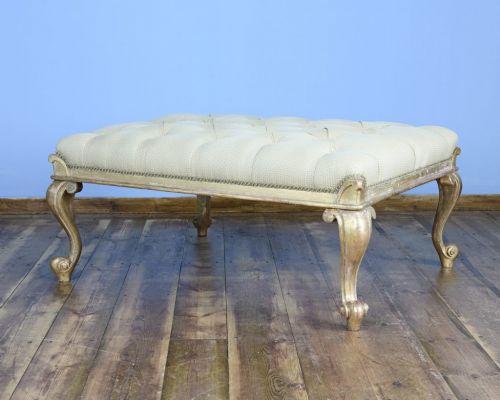
Regency foot stools combine classical form with domestic comfort, offering low seating or foot rests shaped in mahogany, rosewood and giltwood.
Regency Foot Stool
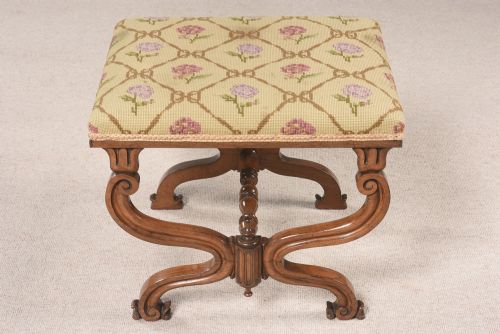
A regency foot stool brings early nineteenth-century seating forms into domestic spaces, appearing across Georgian, Regency, and William IV periods. These pieces take various configurations including scroll top designs, x-framed curule shapes, sarcophagus bodies, and low centre footstools supported by sabre or turned legs.
Buyers meet forms designed for multiple interior uses, from fireside rests and gout stools with adjustable foot rests to piano stools and dressing seats. The underlying wooden frames draw on mahogany, rosewood, walnut, and giltwood, paired with diverse seat coverings.
Proportions range from long, low centre stools to grand scale parcel gilt examples and matching pairs. The aesthetic reflects Neoclassical design influences, incorporating brass details, carved leaf motifs, and lions paw feet.
Materials and construction
Cabinet makers utilised dense hardwoods including mahogany, rosewood, walnut, and ebony for the structural frames, sometimes applying parcel gilt, ebonisation, or red lacquer finishes. Giltwood and brass components provided decorative contrast on formal parlour pieces.
Upholstery techniques involved traditional fillings and webbing finished in textiles such as leather, velvet, ticking stripe, beadwork, needlepoint tapestry, and floral trellis fabrics. X-frame and curule constructions required specialised joinery to distribute weight across curved intersecting supports.
Listings feature mahogany, rosewood, and giltwood frames paired with textiles including leather, ticking, and needlepoint.
Assessing quality in construction and finish
Quality resides in the precision of the timber framing and the crispness of carved elements like leaf motifs, scrolls, and lions paw feet. Dense grain timbers such as rosewood and figured mahogany indicate superior material selection by the maker.
The integrity of the structural joinery, particularly on complex x-framed or curule forms, separates standard domestic seating from finer workshop productions. Original surface treatments and period-appropriate upholstery methods retain the integrity of the piece.
Miles & Edwards·Mathew Gregson
The Regency Foot Stool Glossary
- Curule stool
- A form of seating based on ancient Roman magistrate chairs, featuring intersecting X-shaped frames that provide sturdy support. These pieces often incorporate decorative cross-stretchers.
- Gout stool
- A specialised medical and domestic rest designed with an adjustable inclined platform. Users rested afflicted feet upon its leather-covered surface.
- Sarcophagus
- A heavy, box-like form with sloping sides derived from monumental stone coffins. Cabinet makers applied this symmetrical profile to the bodies of larger footstools.
- Parcel gilt
- A surface decoration technique where thin gold leaf is applied selectively to carved highlights or specific architectural details on a wooden base. This method accentuates specific decorative motifs.
- Sabre leg
- A concave curving support that tapers toward the floor, originating in ancient Greek furniture design. It provides a stable stance for low Regency seating forms.
Regency Foot Stool: Frequently Asked Questions
What is a gout stool?
A gout stool is an adjustable platform designed to elevate and support the foot at an ergonomic angle. These pieces typically feature leather upholstery and scrolling wooden forms.
They served as specialised medical furniture in period drawing rooms and parlours. Today, collectors value them for their mechanical adjustments and uncommon profiles.
How do I style a footstool?
These low seats function effectively beside firesides, armchairs, or at the foot of a bed. Their compact scale allows them to be moved easily around a room.
Pairing a centre stool with a sofa or placing an x-framed piece in a hallway introduces historical texture. Modern interiors benefit from the contrast of figured rosewood and traditional ticking or needlepoint textiles.
Are these stools comfortable?
Period seating relies on traditional padding materials, webbing, and springs depending on the specific decade of manufacture. Many surviving examples retain buttoned ticking or firm upholstery.
Comfort varies according to the original intended function, whether for resting feet during a music recital or sitting at a dressing table. Some pieces feature recent restorations to internal padding for modern utility.
How do I distinguish Regency from William IV?
Regency pieces typically display refined neoclassical lines, slender sabre legs, and restrained brass or gilt detailing. Proportions tend to be lighter and more linear.
William IV examples often present a heavier, grander scale with bolder carved motifs and substantial mahogany frames. Cabinet makers of the later period favored robust structural silhouettes.