


Antique Leg Rest
An antique leg rest provides comfort and support, and finding the right period stool transforms a fireside or study.
Antique Leg Rest
When you search for an antique leg rest, you encounter a range of nineteenth-century seating and support pieces designed to elevate tired feet or hold items close at hand. These items span Victorian, Edwardian, William IV, and Regency periods, taking the form of footstools, gout stools, and occasional stands.
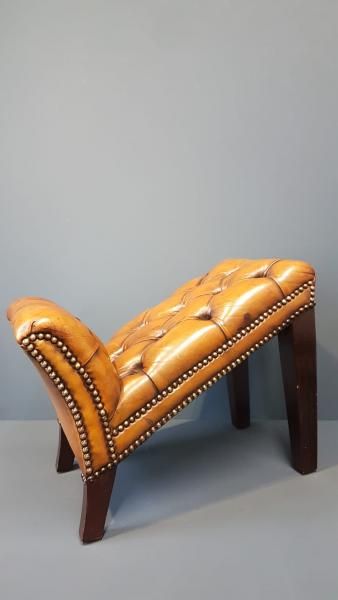
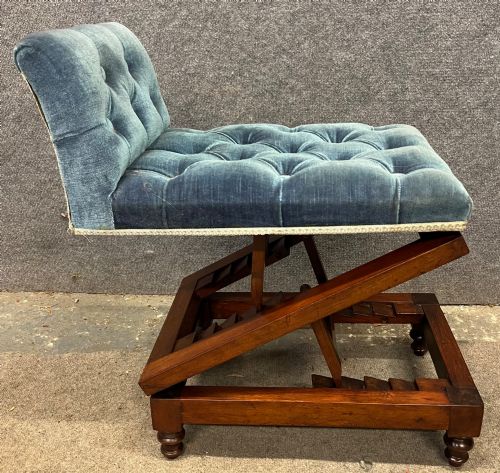
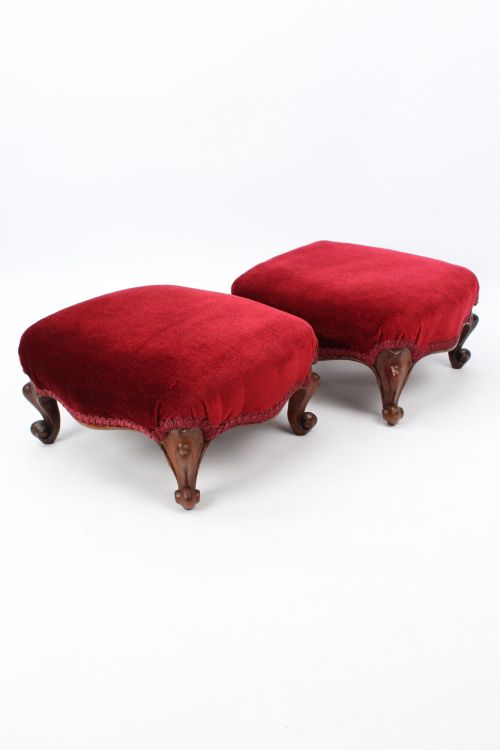
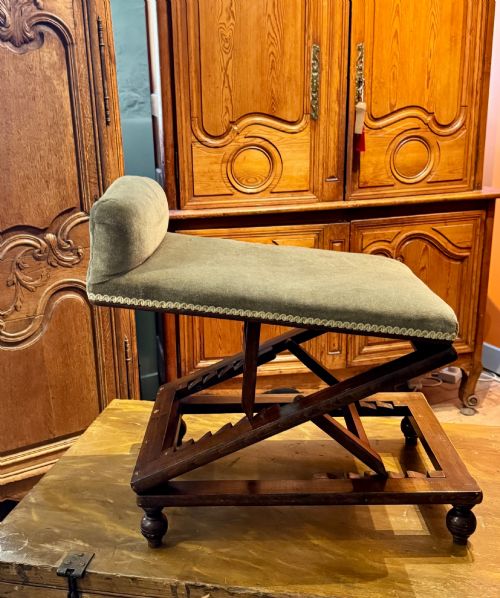
The version you are most likely to meet on this page is the Victorian walnut or mahogany footstool, often upholstered in velvet, leather, or wool tapestry. Metamorphic gout stools with adjustable angles appear frequently alongside simple mahogany and walnut frames resting on cabriole or sabre legs.
How they were made
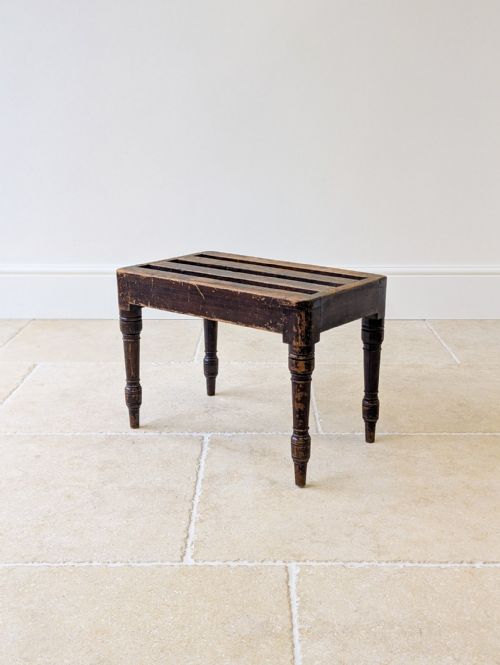
Cabinetmakers utilised hardwoods such as mahogany, walnut, beech, and rosewood to construct sturdy frames that could withstand daily pressure. Joinery techniques relied on traditional mortise and tenon methods, while turning and carving created decorative legs and mouldings.
Upholstery was applied over webbing and stuffing using durable textiles including leather, velvet, wool tapestry, damask, and original needlepoint. Brass hardware and mechanisms allowed adjustable gout stools to tilt to the desired angle for the user.
The listings here span the nineteenth and early twentieth centuries, featuring walnut, mahogany, beechwood, and rosewood combined with wool tapestry, leather, and velvet.
What varies in quality
The grade of timber and the depth of carving separate standard examples from superior pieces. Fine items display crisp hand-carving on mahogany or walnut frames, whereas lesser pieces show simpler turned members and plain secondary woods.
The integrity and originality of the upholstery materials also dictate worth. Pieces retaining their original needlepoint, velvet, leather, or bergere panels hold greater interest than those with modern replacements.
Thonet
The Antique Leg Rest Glossary
- Gout stool
- An adjustable footrest designed to elevate a foot affected by gout or strain. These items often feature a ratcheted mechanism to alter the angle.
- Cabriole leg
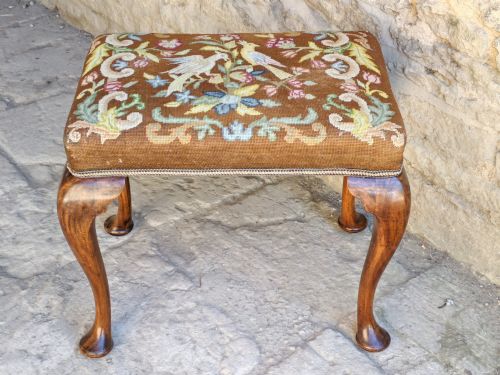
- A furniture leg that curves out and then in, resembling the leg of an animal. This form appears frequently on mid-nineteenth-century footstools.
- Bergere
- A traditional woven cane panel used in seating. Examples with original bergere demonstrate fine craftsmanship.
- Needlepoint
- Stitched textile work executed on canvas. Many nineteenth-century stools retain hand-worked wool needlepoint covers.
- Sabre leg
- A concave-tapering furniture leg curving outwards at the base. This style is characteristic of the Regency period.
Antique Leg Rest: Frequently Asked Questions
How do I use a gout stool?
Adjust the ratcheted mechanism to set the platform at a comfortable angle for elevating your feet. Sit back in an armchair and rest your legs fully upon the upholstered surface.
Ensure the mechanism locks securely into place before applying weight. These pieces function best beside a traditional fireside or reading chair.
What is the difference between a footstool and a gout stool?
Standard footstools provide a fixed, flat surface for supporting the feet while seated. Gout stools incorporate an adjustable mechanism to angle the support upward.
This adjustability catered specifically to nineteenth-century users seeking relief from joint ailments. Both forms utilise similar timber frames and upholstery.
How do I clean nineteenth-century upholstery?
Gentle surface brushing removes dust from velvet, tapestry, and damask without disturbing the underlying fibres. Avoid chemical cleaners that can degrade fragile antique textiles.
Consult a professional textile restorer if deeper cleaning becomes necessary. Preserving the original fabric maintains the historical integrity of the piece.
How do I date a mahogany leg rest?
Examine the timber density, colour, and secondary woods used in the hidden construction. Regency and William IV pieces often display heavier proportions and sabre or turned legs.
Later Victorian and Edwardian examples introduce stained beech and different carving styles. Tool marks and screw types also offer clues to the decade of manufacture.