


Regency Flame Mahogany Buffet
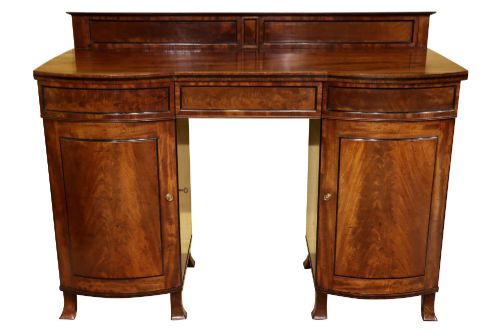
A regency flame mahogany buffet brings bold timber figures and classical proportions into a dining room or hall.
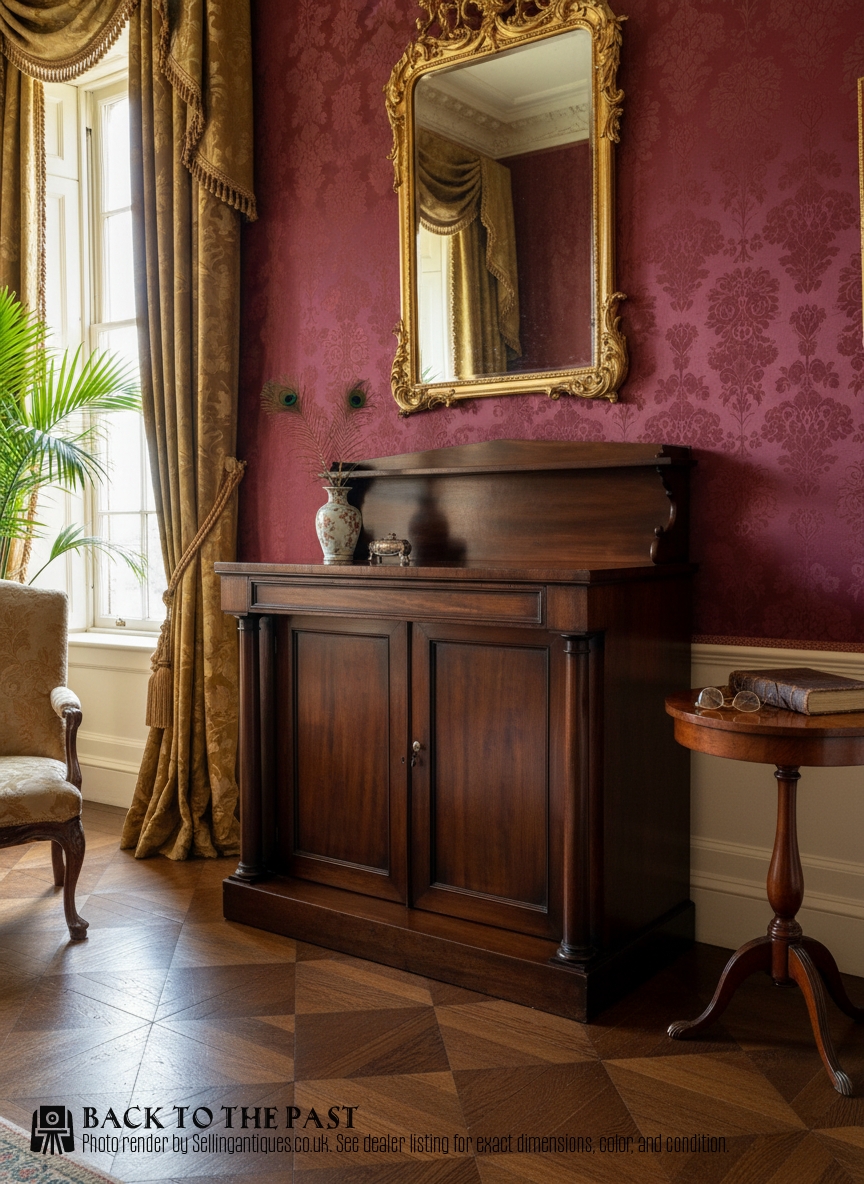
Regency Flame Mahogany Buffet
When searching for a regency flame mahogany buffet, you encounter formal dining furniture designed to hold silver, linen, and wine during the nineteenth century. These serving pieces include sideboards, side cabinets, and chiffoniers originating from the Regency, Georgian, and William IV periods.
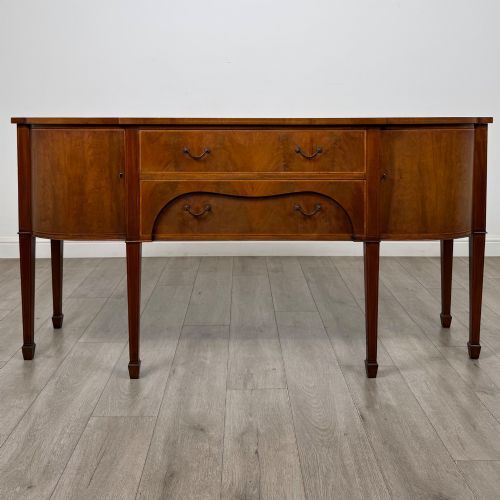
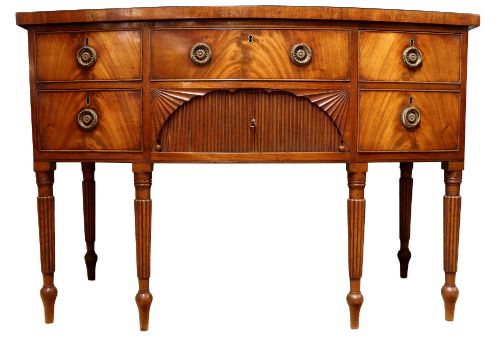
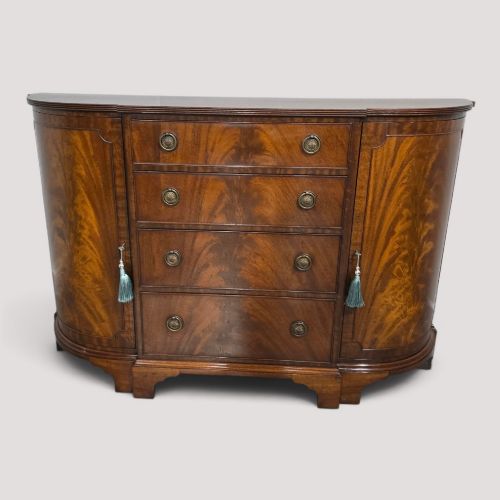
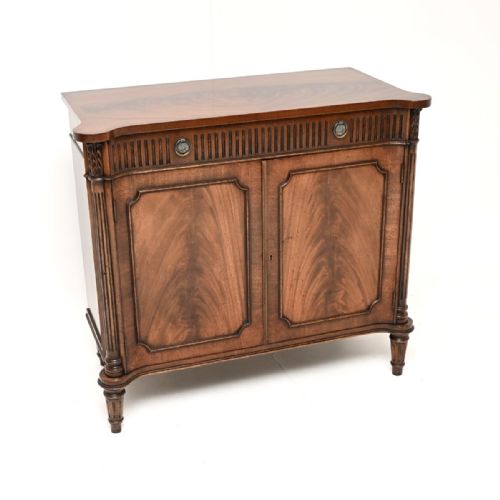
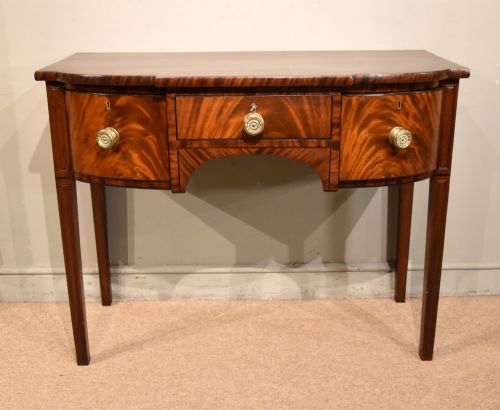
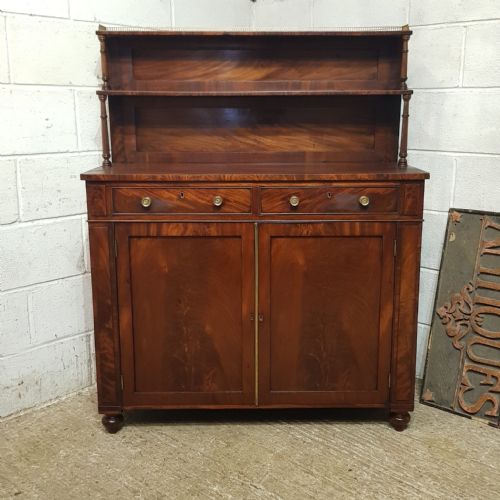
The version you most frequently meet on this page is the bow front sideboard or side cabinet built in mahogany, often featuring figured timber veneers. Makers of the period utilised curvilinear shapes and pedestal bases to anchor dining spaces with considerable presence.
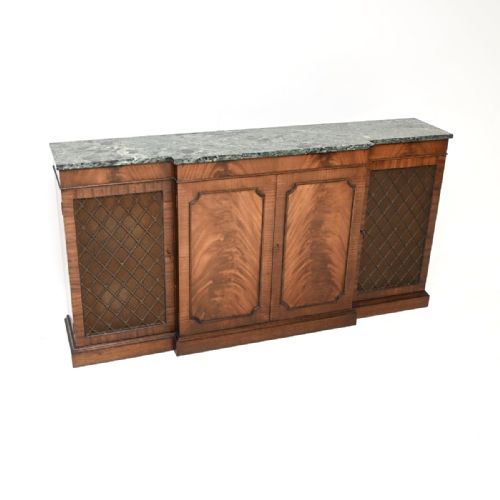
Beyond standard sideboards, the selection encompasses serving tables and grill front cabinets spanning the eighteenth century through to later twentieth-century reproductions. Each form serves the same domestic function while displaying the cabinetmaker's skill in handling dense tropical hardwoods.
What varies in quality
The choice of timber grain separates standard utility items from top-tier examples, particularly the vibrancy and book-matching symmetry of the flame mahogany veneer. Superior pieces exhibit intense figuring across every primary surface rather than plain stock.
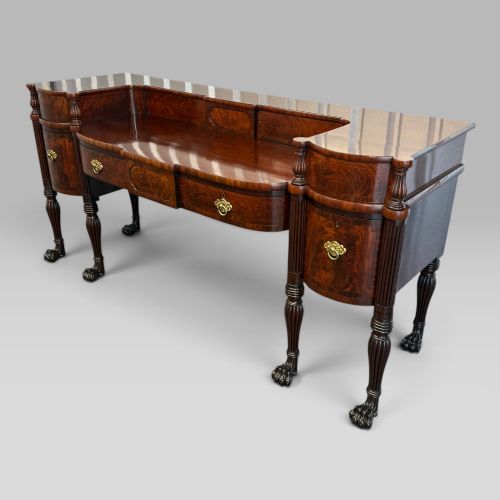
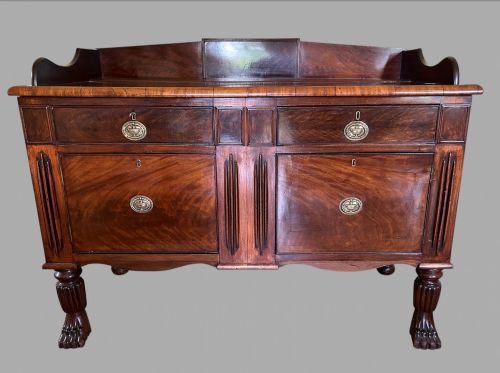
Execution of carving and mounts defines the upper echelon of these dining pieces, seen in crisp lion paw feet, detailed brass galleries, and precise inlay work. The overall proportion and balance of the pedestal or bow front structure further determine the distinction between average workshop production and master cabinetwork.
Several pieces stand firmly on carved lion paw feet, ready to pounce across the dining room floor.
Gillows
The Regency Flame Mahogany Buffet Glossary
- Flame mahogany
- A veneer cut from the branch junctions of the mahogany tree, showing a distinctive ripple pattern resembling flickering fire. This figured wood was prized for drawer fronts and cabinet doors.
- Bow front
- A convex, curved cabinet front that projects outward in a smooth arc. It softens the rigidity of dining room furniture.
- Chiffonier
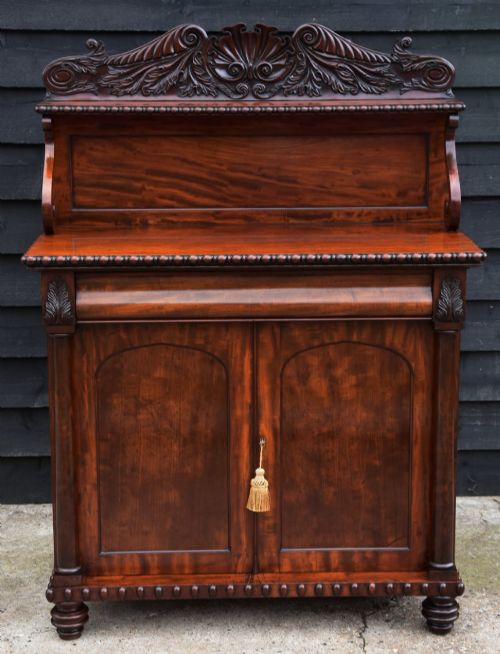
- A low cabinet featuring shelves or doors below, developed during the Regency period for storing china and serving accessories. It often includes a small shelf on top.
- Pedestal sideboard
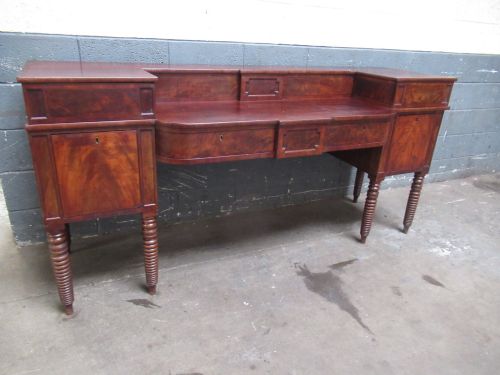
- A form consisting of two separate pedestals linked by a central serving table or board. These imposing pieces dominated larger dining rooms.
- Brass gallery
- A decorative metal rail mounted on top of a sideboard or serving table to prevent items from sliding off. They frequently incorporate intricate pierced designs.
Regency Flame Mahogany Buffet: Frequently Asked Questions
What is a flame mahogany buffet used for?
These pieces served as functional dining room furniture designed for storing tableware, cutlery, and bottles during large meals. Their flat top surfaces provided ample space for serving food and displaying silver.
Today, they function as striking storage credenzas in dining rooms, hallways, or living spaces. Their generous proportions accommodate modern entertainment equipment while adding period character to an interior.
How do I identify a Regency period piece?
Regency furniture typically dates from the early nineteenth century, displaying classical architectural influences inspired by ancient Greece and Rome. Look for restrained classical lines, mahogany timbers, and brass mounts.
Later Victorian interpretations, such as William IV pieces, tend to feature heavier carving and bolder proportions. Examining the secondary timbers inside drawers helps confirm the age and regional origin of the cabinet.
Where should I place a large sideboard?
A sideboard requires a substantial wall where its length and depth can be appreciated without blocking household traffic. Dining rooms remain the traditional location for serving food and storing heavy crockery.
They also suit wide entrance halls or large living areas where a statement timber piece anchors the room. Ensure the floor is level so the doors and drawers operate smoothly.
How do I care for antique mahogany timber?
Protect antique mahogany by keeping it away from direct sunlight and sudden temperature shifts caused by radiators. Such conditions dry out the old wood and cause veneers to lift.
Apply a traditional beeswax polish occasionally to nourish the grain and maintain the natural lustre of the finish. Avoid silicone-based sprays that damage aged polish surfaces over time.