
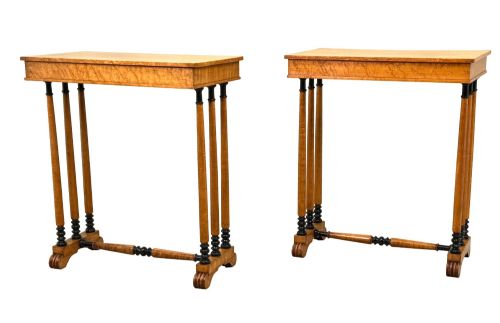
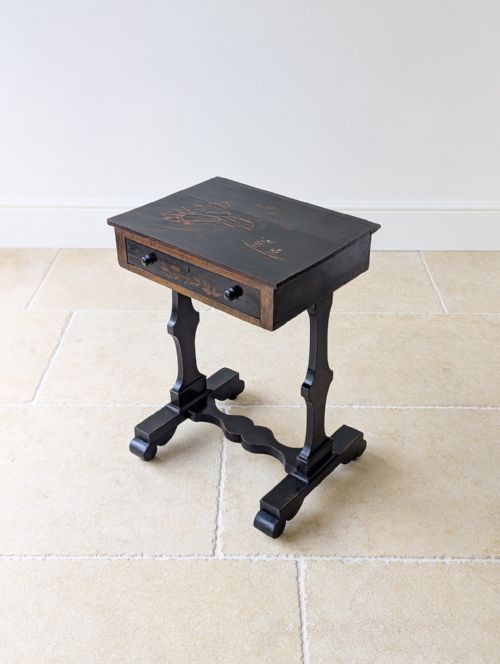
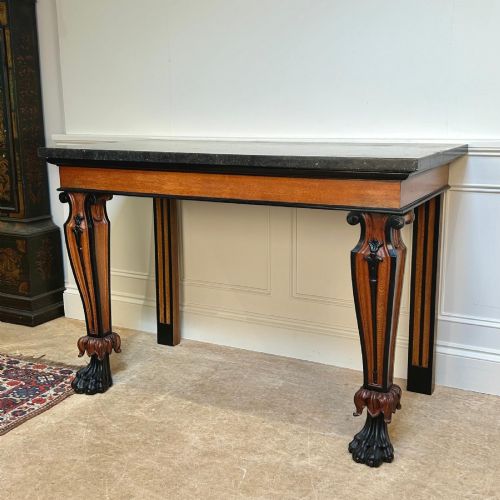
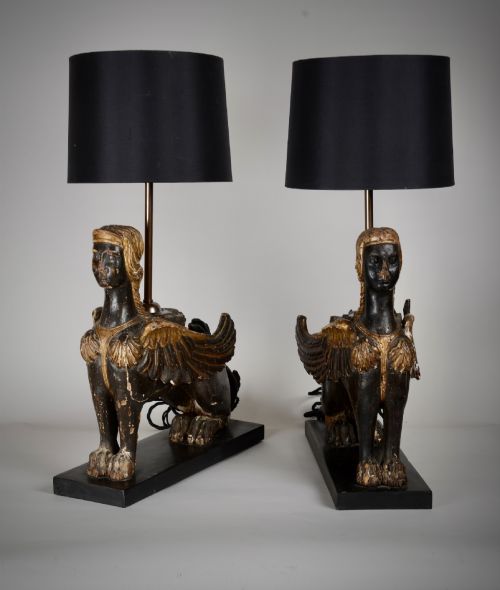






Regency Ebonised Side Table
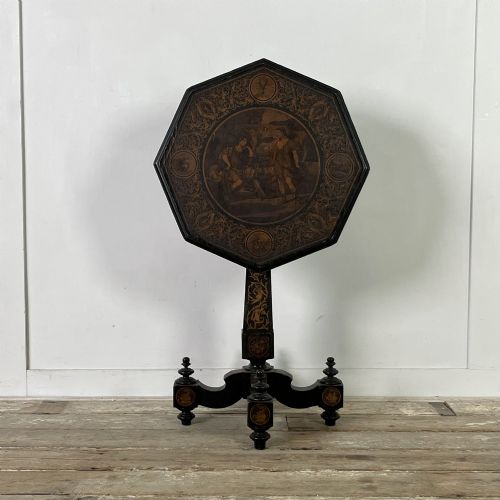
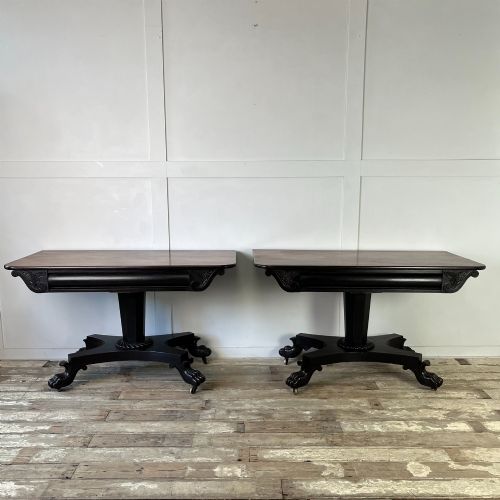
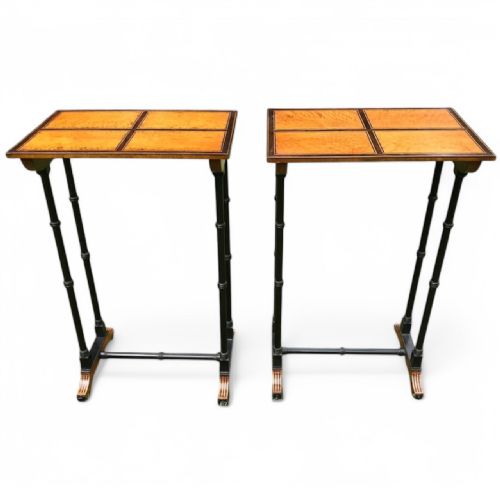
A regency ebonised side table brings sharp contrast and classical line to a room, offering a dark surface rooted in the early nineteenth century.
Regency Ebonised Side Table
A regency ebonised side table draws on the neoclassical taste of the early nineteenth century, using dark, polished finishes to mimic expensive ebony. The pieces found here span the Regency period itself alongside later nineteenth-century revivals and Georgian roots.
Forms extend beyond simple ledges to include console tables, work tables, and games tables featuring tripod bases or tapering legs. These surfaces served specific social functions in period interiors, from holding lamps to supporting card games.
Makers and craftsmen of the era often paired ebonised timber with contrasting brass details, mahogany, or marble tops. The selection reflects both authentic Regency output and later interpretations influenced by the style.
Materials and Construction
Carroty timbers like mahogany, oak, and birch provide the structural carcass for these pieces, coated in dark finishes to achieve the desired ebonised effect. Surface decoration frequently incorporates delicate penwork, ink details, and inlaid ebony or brass stringing.
Marble and specimen stone tops appear on heavier console and centre variants, offering cool, durable surfaces set upon timber frames. Brass mounts, paw feet, and handles punctuate the dark wood with metallic gleam.
Secret compartments tucked inside work tables once held the delicate sewing needles of Regency ladies.
Distinctions in Quality
The sophistication of the surface decoration separates standard workshop pieces from exceptional examples. Fine penwork, intricate ink motifs, and crisp gilding require steady hands and considerable time.
The selection of underlying timbers and the integrity of the ebonisation dictate longevity. Superior pieces use dense hardwoods beneath the finish, while secondary woods show careful seasoning to prevent warping.
The Regency Ebonised Side Table Glossary
- Ebonised
- Wood stained or painted to imitate true ebony, a technique popular during the Regency period to create stark contrast.
- Penwork
- A decorative technique using Indian ink applied with a quill to create fine, engraved-looking motifs on light wood.
- Console
- A table designed to stand against a wall, frequently supported by brackets or console legs rather than four independent vertical posts.
- Tripod base
- A three-legged support structure commonly found beneath small occasional and games tables of the Regency era.
Regency Ebonised Side Table: Frequently Asked Questions
How do I style a regency ebonised side table?
Pair the dark, contrasting timber with neutral walls to let the silhouette stand out in a modern or traditional room.
Keep objects placed on top minimal, such as a single lamp or bronze, to avoid crowding the surface.
Were these tables used for dining?
Most variants served auxiliary roles rather than main dining functions, acting as side, console, or games surfaces.
Smaller formats functioned as work tables or bedside stands depending on their specific configuration.
What is penwork decoration?
Penwork involves drawing intricate patterns directly onto light wood using black ink before sealing the surface.
This technique produced detailed neoclassical borders and pictorial scenes without the cost of heavy marquetry.
How do I spot a later revival piece?
Revival pieces often utilise machine-sawn timbers and standardised fixings that differ from early nineteenth-century construction methods.
Examine the secondary woods underneath and the wear patterns on the ebonised finish for clues to the exact age.