
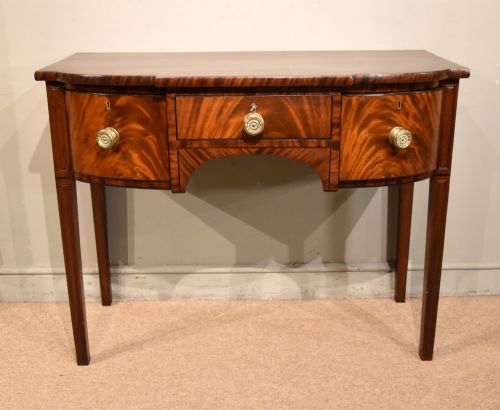
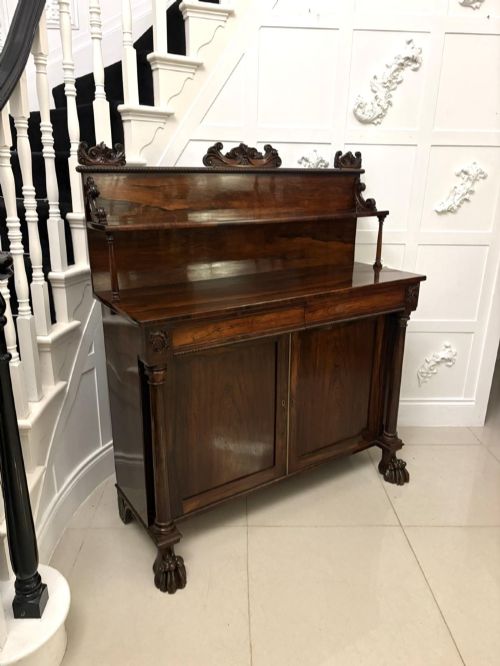
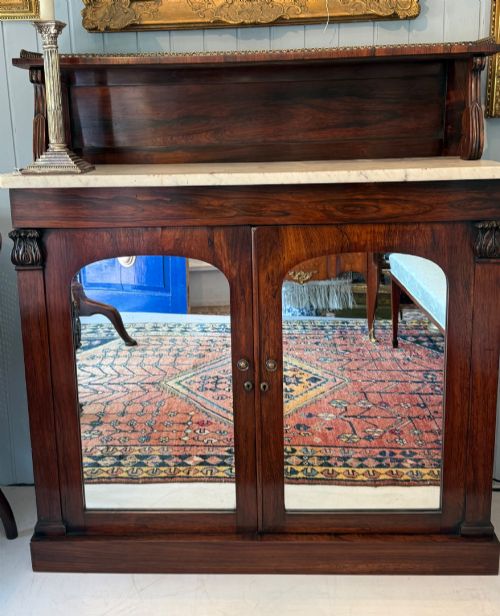
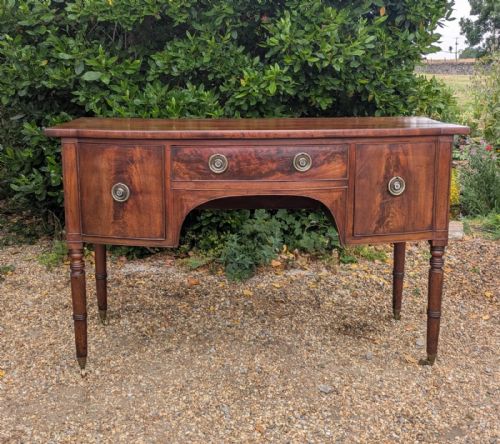
Regency Dining Sideboard
A regency dining sideboard grounds the formal dining room with architectural presence, offering generous storage and serving surface fashioned from rich timber.
Regency Dining Sideboard
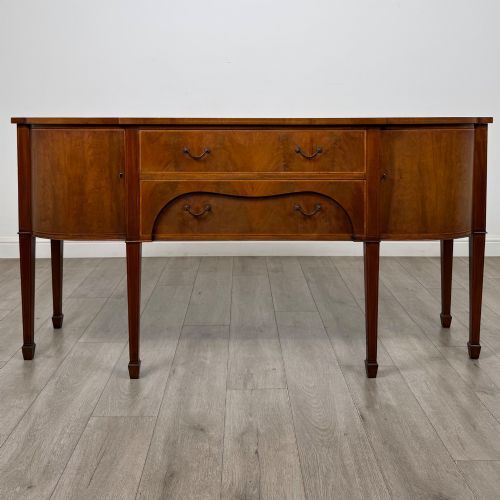
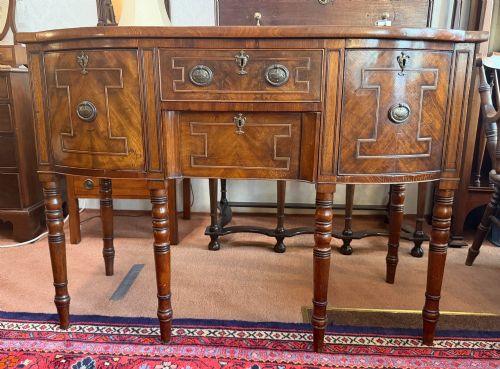
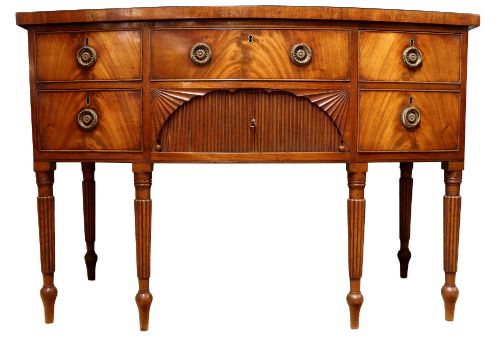
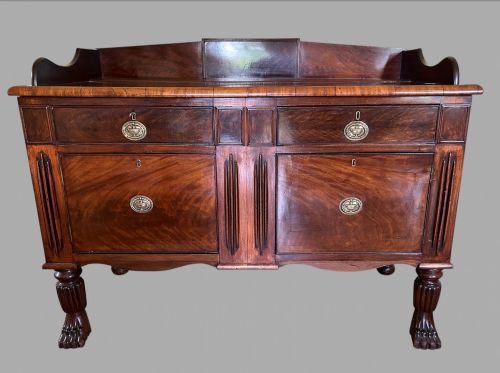
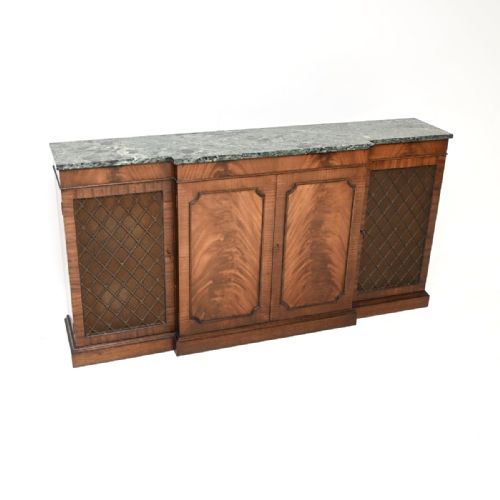
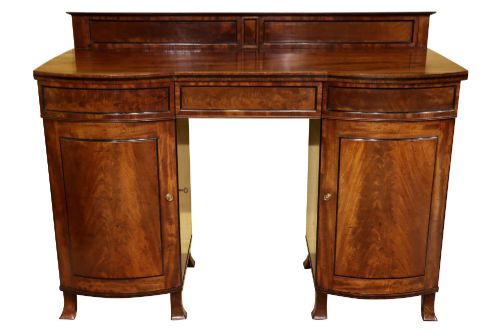
When searching for a regency dining sideboard, you encounter substantial serving furniture designed for elite dining rooms of the nineteenth century. These pieces primarily take the form of bow-fronted or breakfront cabinets constructed to hold dining china, silver, and wine.
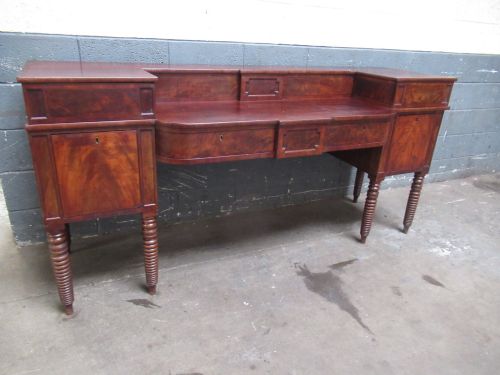
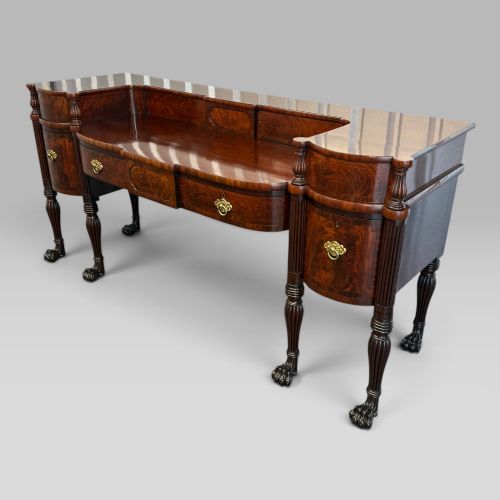
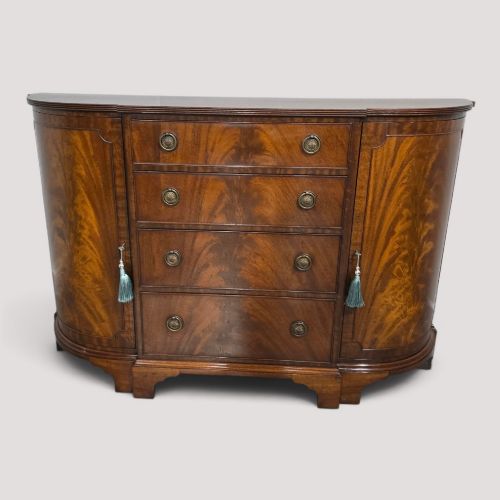
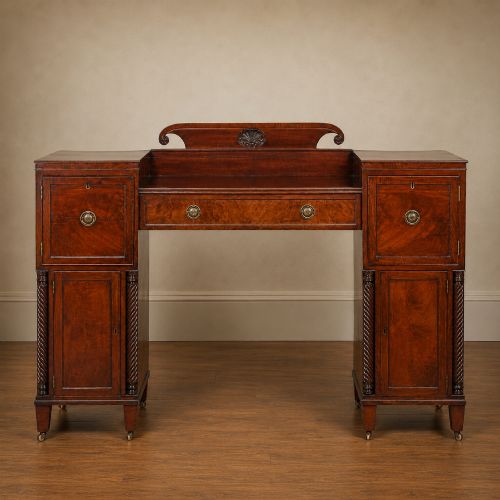
The inventory on this page spans distinct variations, from modest bow-front examples to grand pedestal sideboards and chiffoniers. Pieces emerge across the nineteenth century, including Georgian and William IV eras, alongside later revivals from the twentieth century.
Makers and regional workshops produced diverse formats, including Scottish and Irish variations of imposing scale. Flame mahogany predominates, supplemented by rosewood chiffoniers and serving tables designed for grand entertaining.
What varies in quality
Quality separates ordinary utility pieces from masterworks through the selection of timber veneers and the precision of inlaid details. Flame mahogany with deep, rolling figure elevates a sideboard, whereas plain grain indicates simpler workshop production.
Structural ambition defines the upper tier, where breakfront configurations, integrated pedestals, and crisp carving distinguish the output. Refined proportions and restrained brass or ebony contrasting lines separate superior cabinet work from heavier, later interpretations.
Listings feature mahogany, rosewood, and marble across 19th century, Regency, and Georgian periods.
Gillows
The Regency Dining Sideboard Glossary
- Bow-front
- A cabinet front curved outward in a convex arc, commonly seen on nineteenth-century sideboards. This shape softens the room's geometry while maximising internal storage depth.
- Flame mahogany
- A veneer cut from the branch junction of the mahogany tree, producing a distinctive flickering flame pattern. Cabinetmakers reserved this prized timber for primary drawer fronts and cabinet doors.
- Chiffonier
- A compact sideboard or low cabinet equipped with shelves or drawers, frequently fitted with enclosed cupboards below. These pieces served smaller dining spaces or drawing rooms.
- Breakfront
- A large piece of furniture whose central section projects forward from the flanking outer wings. This architectural arrangement creates depth and visual rhythm in formal dining rooms.
- Pedestal sideboard
- A form featuring two distinct pedestals flanking a central serving well, typical of the Regency period. These structures often incorporate cupboards or bottle storage within the pedestals.
Regency Dining Sideboard: Frequently Asked Questions
What is a regency dining sideboard used for?
These sideboards served dining rooms as monumental serving surfaces and storage units for heavy silver, linen, and wine reserves. Households utilised the deep drawers and cupboards to stage formal meals before service.
Today, they function as focal points in dining spaces, providing practical surface area and substantial internal storage for modern tableware.
How do I identify a true period piece?
Examine the secondary timbers inside drawers and back panels, looking for hand-cut joints and timber age consistent with the nineteenth century. Construction methods and wood species offer primary clues to the manufacturing era.
Compare the proportion of the brass inlay, veneer thickness, and carcase weight against documented examples from the Regency and William IV periods.
What is the difference between a sideboard and a chiffonier?
Sideboards are generally larger, wider units designed specifically for the dining room to handle heavy serving duties and extensive storage. They often feature multiple drawers and deep cupboards.
Chiffoniers are more compact cabinets, sometimes incorporating glazed doors or raised upper shelves, suited to versatile placement in smaller reception rooms.
Where were these sideboards manufactured?
Major cabinet-making workshops in London produced the majority of fine Regency pieces, setting stylistic standards emulated across the British Isles. Regional centres in Scotland and Ireland also produced distinctive local interpretations using heavy native mahogany.
Export markets and provincial cabinetmakers adapted these metropolitan designs, resulting in varied regional scales and decorative motifs.