

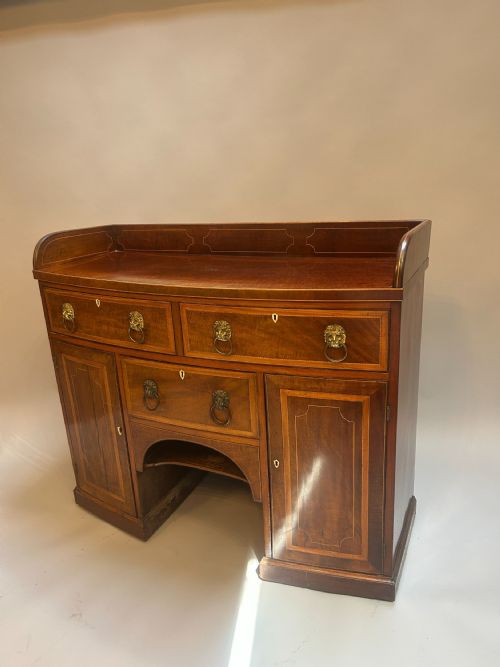


Regency Dining Room Server
A regency dining room server organises space with architectural discipline, combining figured timbers and functional storage for formal hospitality.
Regency Dining Room Server
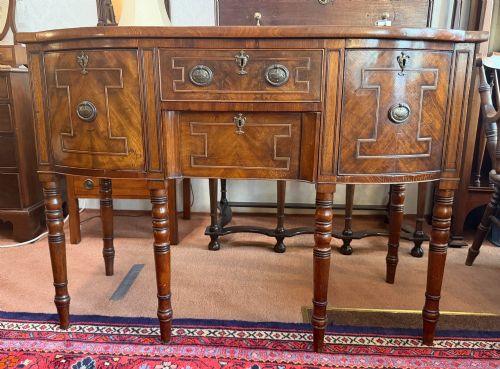
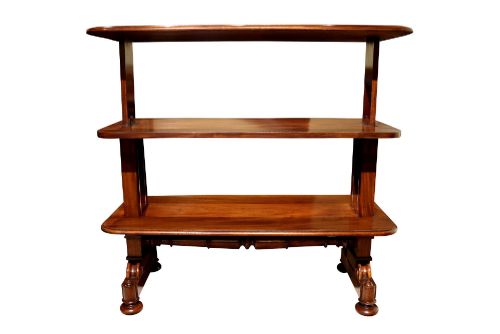
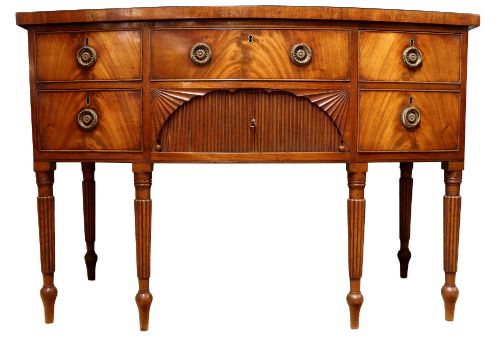
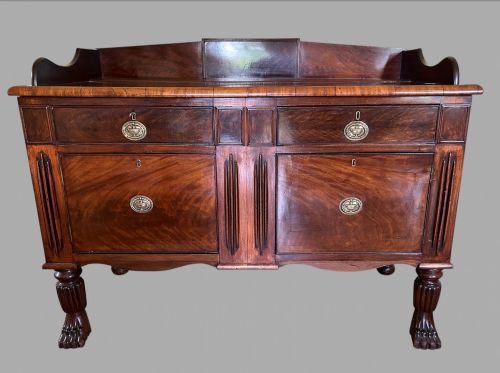
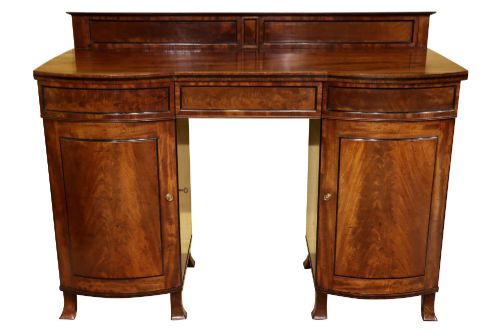
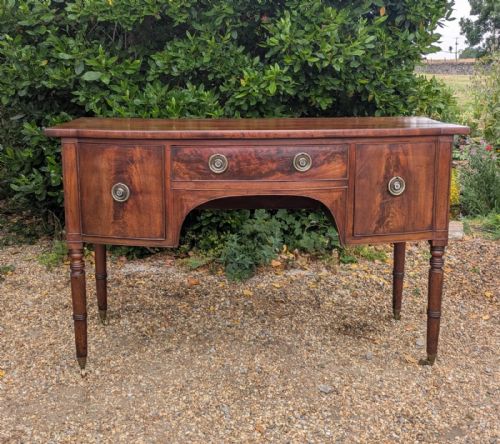
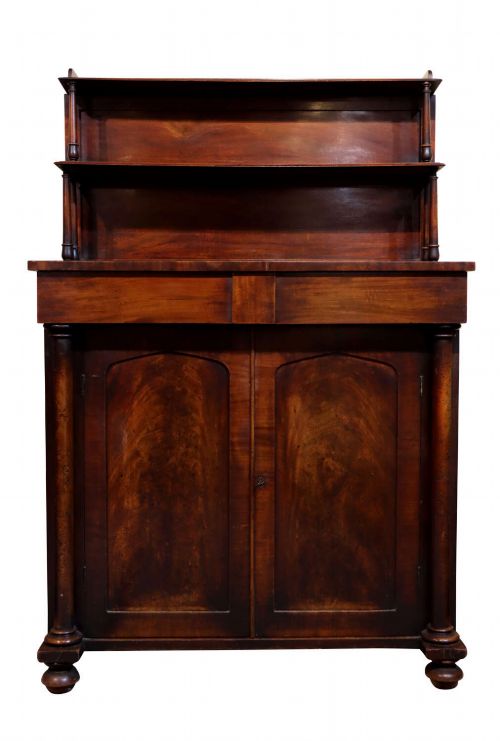
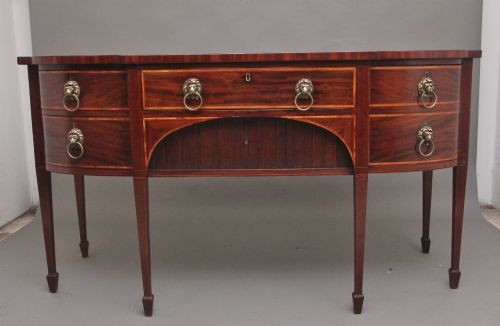
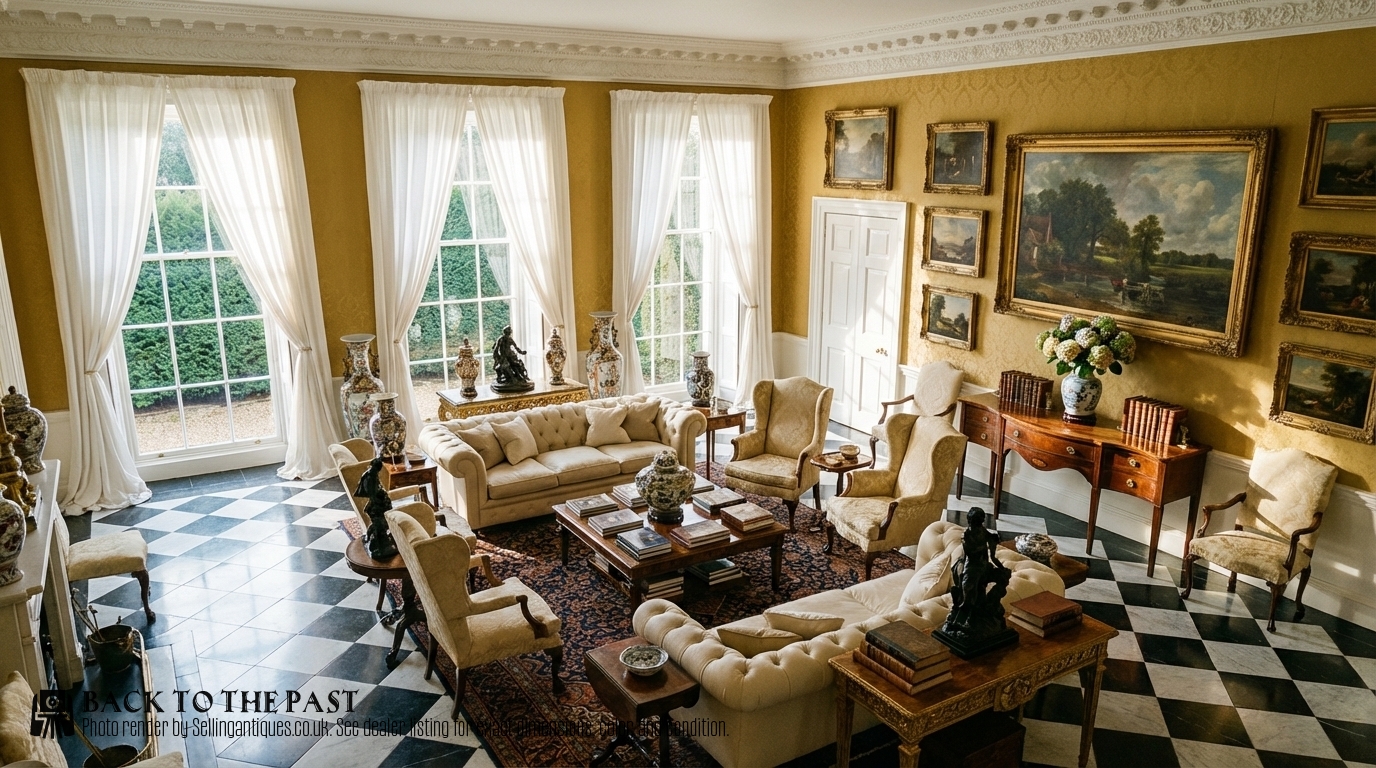
A regency dining room server encompasses large formal sideboards, serving tables, breakfronts, and tiered dumb waiters designed for dining spaces. These pieces appear primarily from the nineteenth century, including Georgian, Regency, and William IV periods, executed in substantial furniture forms. Buyers encounter bow-fronted sideboards, pedestal formats, and serving tables most frequently across these listings.
Makers and cabinet-makers built these servers to anchor dining rooms alongside matching tables and chairs, using rectilinear, breakfront, or curved silhouettes. The typology bridges static storage sideboards and movable serving furniture like dumb waiters and buffets. Such pieces reflect the domestic rituals of dining in grand houses during the early eighteen-hundreds.
Assessing craftsmanship and proportion
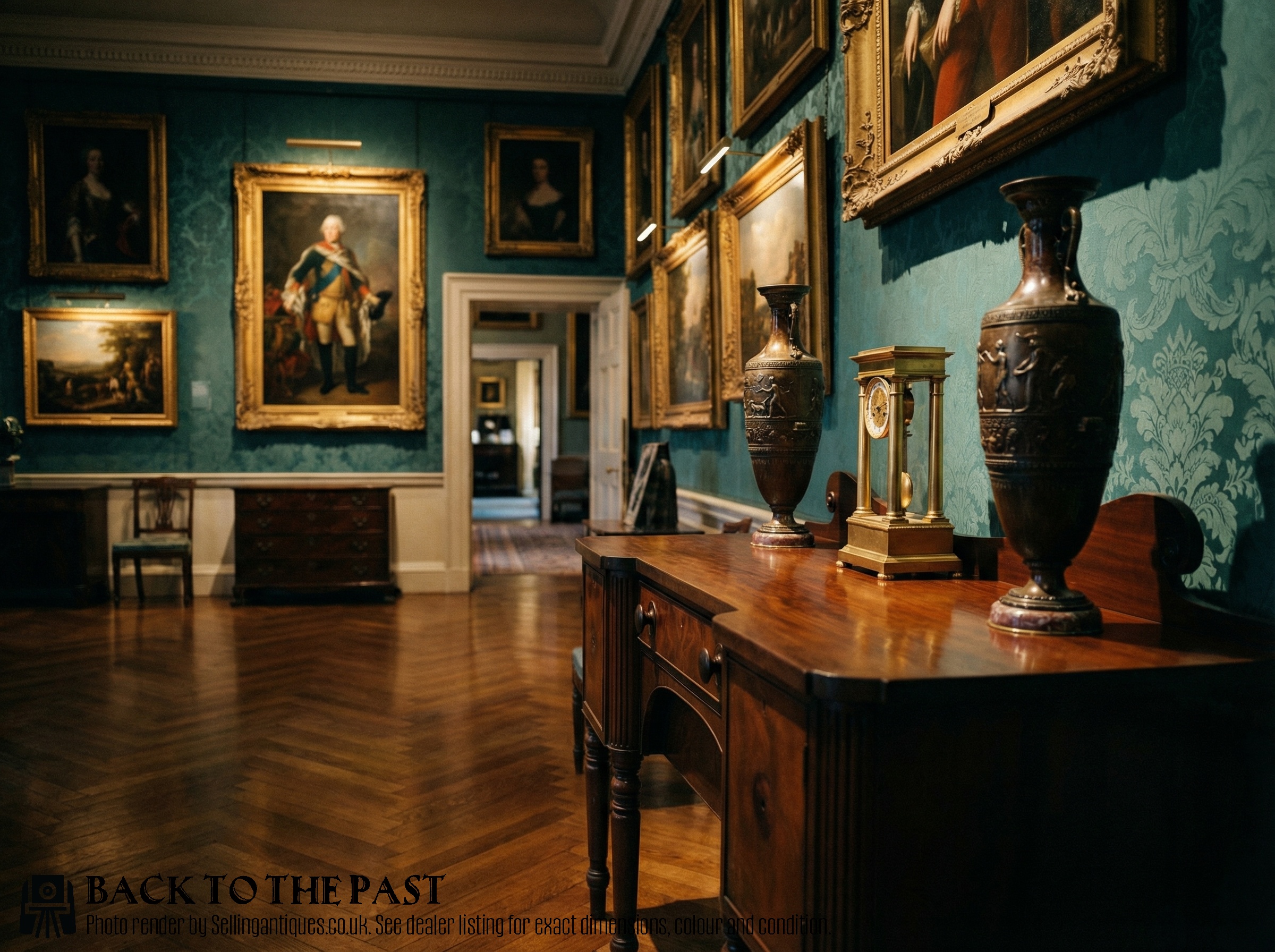
Quality rests upon the selection of timber veneers, where intensely figured flame mahogany or fiddleback grain elevates a piece above plain stock. The crispness of inlaid brass work and contrasting boxwood or ebony stringing distinguishes high workshop output from simpler provincial carpentry.
Proportion and architectural harmony separate superior servers from ordinary examples, particularly in how pedestals, legs, and carcases balance. Refinement in carved details, such as reeded columns or well-turned legs, indicates the degree of care invested by the original maker.
Regency Dining Room Server Retail Price Guide 2026
Typical asking prices for regency dining room server among the pieces listed under this phrase on Sellingantiques today, from the lower quarter to the upper quarter. They describe what is for sale here now, not the wider market.
Some dumb waiters feature revolving tiers so guests could spin the condiments toward themselves without stretching across the mutton.
Gillows·Mack Williams And Gibton·The Woodworkers Ltd Kilkenny
The Regency Dining Room Server Glossary
- Bow-front
- A cabinet front that curves outward in a convex arc. This shape softens the room's geometry while maximising internal storage depth.
- Breakfront
- A large piece of furniture where the central section projects forward from the flanking wings. It creates a bold architectural facade in formal dining rooms.
- Dumb waiter
- A tiered movable serving stand with revolving or fixed circular trays on a central column. It allowed diners to access extra dishes without domestic servants present.
- Chiffonier
- A compact sideboard or low cabinet typically fitted with shelves or drawers enclosed by doors. These pieces emerged as versatile side storage for dining and drawing rooms.
- Pedestal sideboard
- A sideboard comprising two distinct pedestals flanking a central section or recessed board. This format gained popularity during the Regency period.
Regency Dining Room Server: Frequently Asked Questions
What is a regency dining room server used for?
These servers held silverware, linen, and serving dishes during formal meals in nineteenth-century homes. They also provided a surface for placing dishes before serving.
Today, buyers use them in dining rooms for storage and display, or repurpose them in large hallways and living spaces.
How do I tell a Regency server from a Victorian one?
Regency pieces dating from around eighteen hundred to eighteen-thirty typically exhibit restrained classical proportions, brass inlay, and neat reeded details. Timber choice leaned heavily toward figured mahogany and rosewood.
Victorian pieces from later in the nineteenth century often feature heavier carving, darker finishes, and bulkier proportions without the precise neoclassical discipline of the Regency era.
How do I care for mahogany dining room furniture?
Keep wooden servers away from direct sunlight and heat sources to prevent the mahogany and its delicate veneers from drying out or splitting. Polish the surface periodically with traditional beeswax to maintain the timber's natural lustre.
Avoid placing wet glasses or hot dishes directly on the polished top without protective mats to prevent ring marks in the finish.