

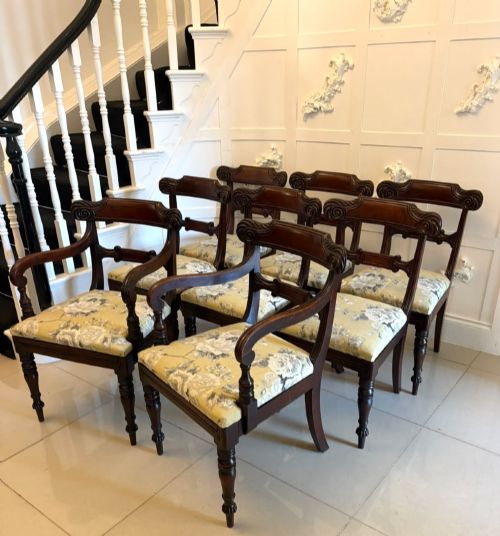
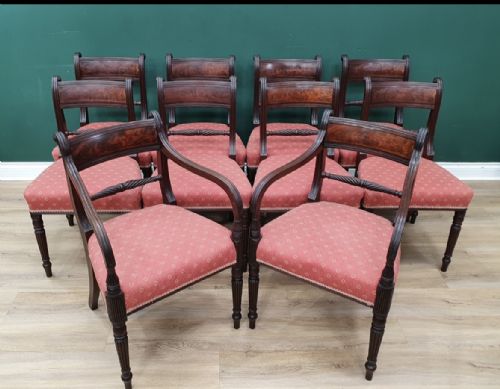
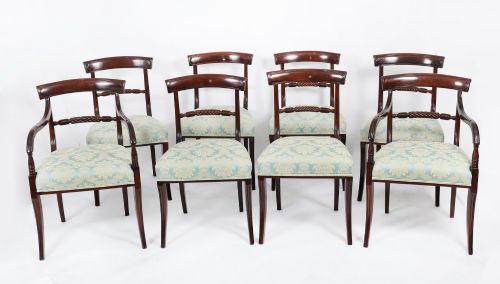
Regency Dining Carver
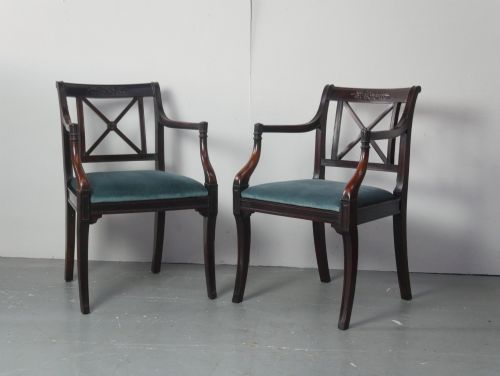
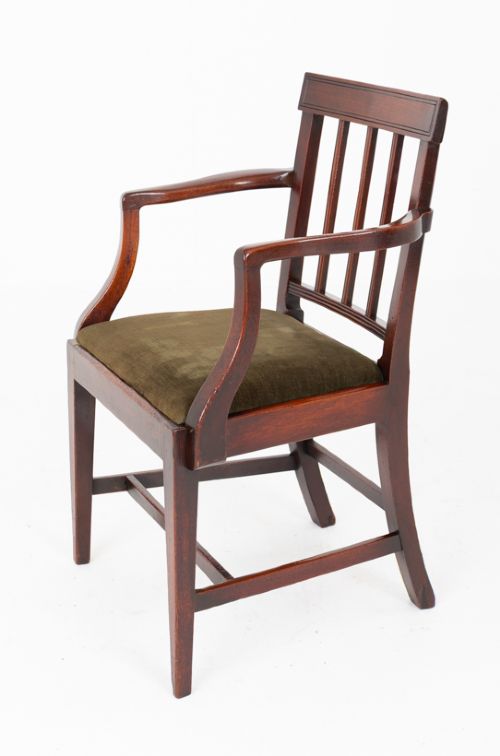
A regency dining carver is an armed armchair built for the dining table during the early nineteenth century, offering both upright posture and decorative presence.
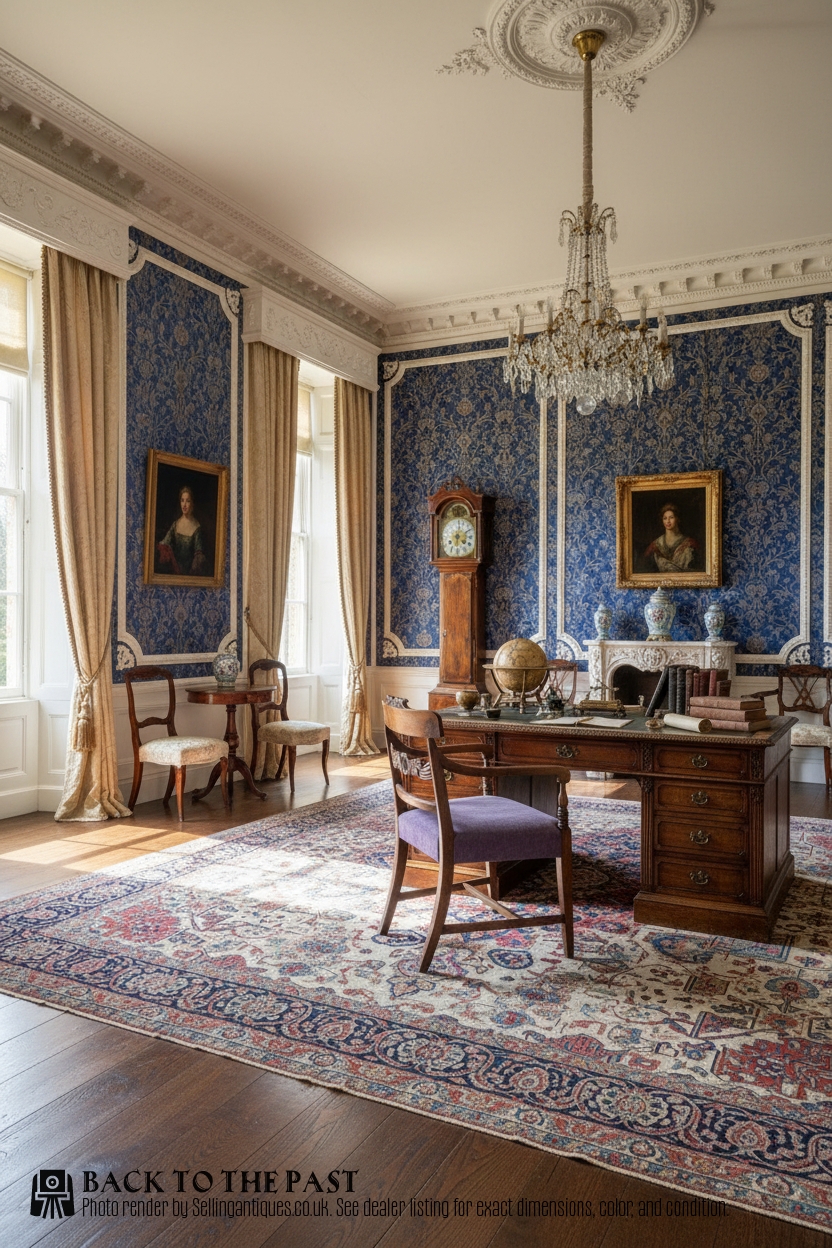
Regency Dining Carver
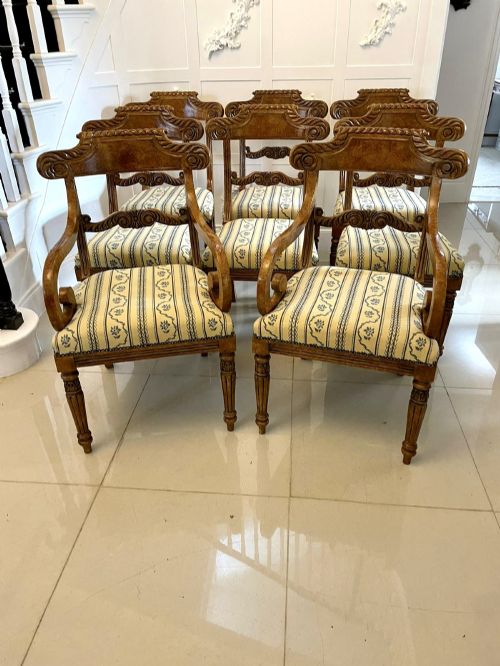
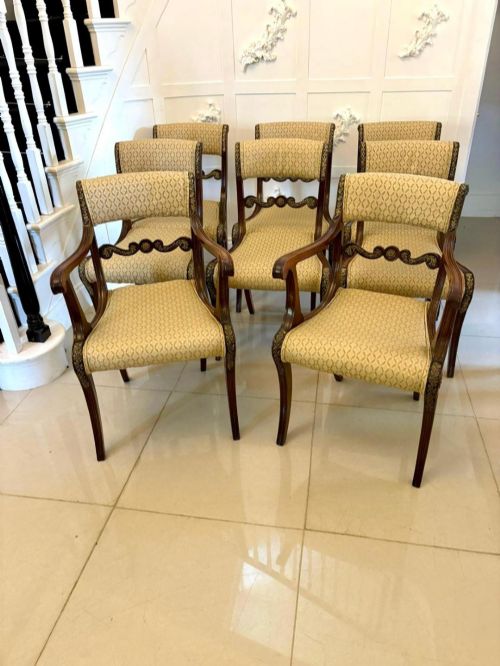
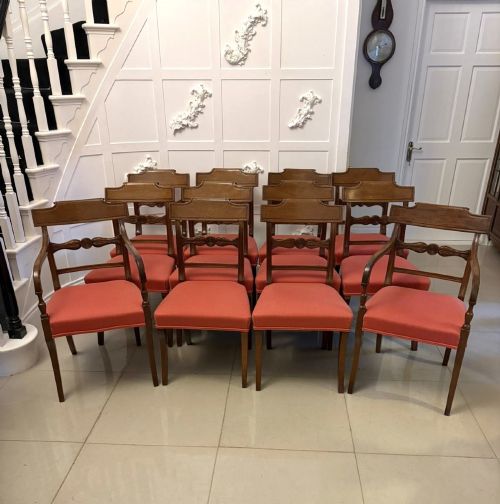
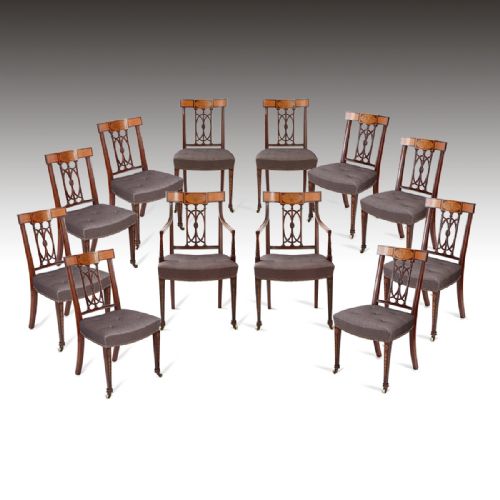
A regency dining carver sits at the head of a dining table, distinguished from single chairs by the addition of arms designed to support the elbows. These armchairs appear frequently in sets paired with matching side chairs, or as individual pairs originating from the Georgian and Regency periods.
The form spans the late eighteenth century through the Regency era, with later revivals appearing in the Edwardian period and the early twentieth century. Makers of the period produced these carvers in various regional English and Scottish workshops using traditional timber.
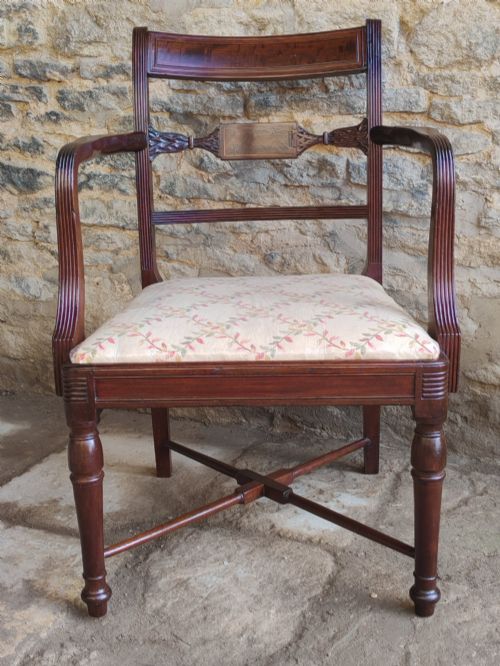
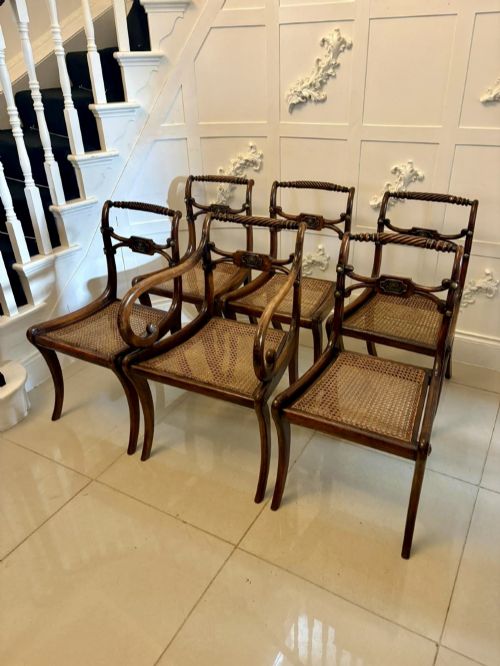
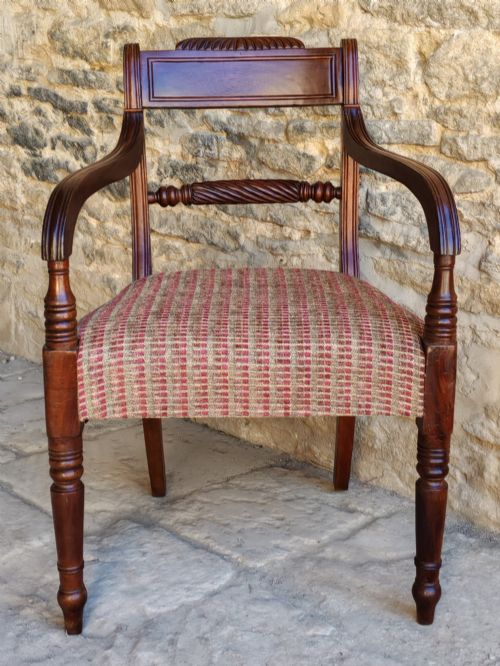
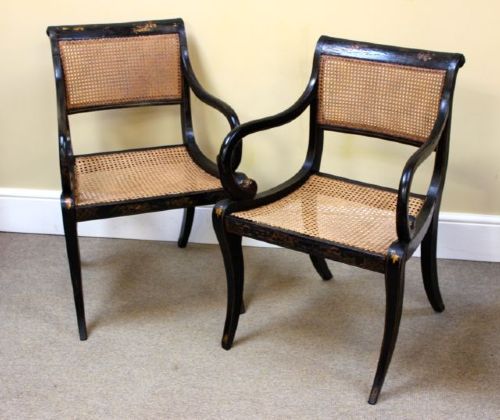
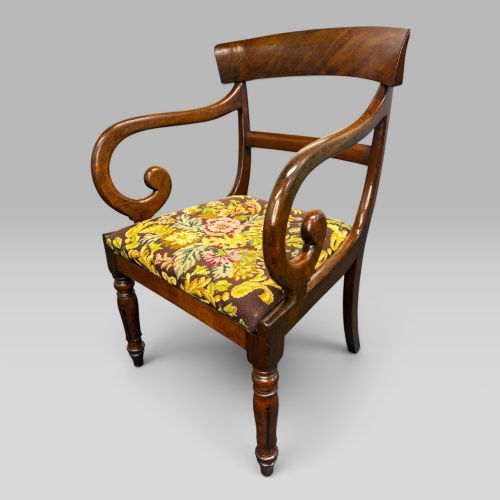
Buyers encounter forms ranging from simple bar-back and rope-back designs to elaborate scroll-armed library and desk chairs. The evidence records variations including cane seats, upholstered pads in velvet or textile, and shield backs.
How They Were Made
Cabinetmakers constructed these carvers predominantly from solid mahogany, alongside alternative woods like fruitwood, elm, yew, and decorative faux bird's-eye maple. Timber selection dictated the structural integrity of the curved top rails and slender legs.
Joinery methods relied on tightly fitted mortise and tenon joints to secure the arms and back rails without modern adhesives. Caning was woven by hand into the wooden frames for lighter seat bases, while upholstered versions used webbing and traditional stuffing materials.
Regency Dining Carver Retail Price Guide 2026
Typical asking prices for regency dining carver among the pieces listed under this phrase on Sellingantiques today, from the lower quarter to the upper quarter. They describe what is for sale here now, not the wider market.
Listings for this phrase include mahogany, elm, fruitwood, and yew, spanning Georgian, Regency, and Edwardian revival periods.
What Varies in Quality
The caliber of a carver depends on the crispness of carved details on the crest rail and the fluidity of the scroll arms. Finer examples display balanced proportions and well-figured timber grain across prominent surfaces.
Originality of components defines the standard of surviving pieces, particularly where frames retain their early or primary surface finishes. Matched sets show consistency in timber selection and joinery execution across all individual chairs.
Thomas Clarkson and Sons·Gillows
The Regency Dining Carver Glossary
- Carver
- An armchair designed to match a set of dining chairs, traditionally placed at the head of the table. These chairs feature integrated armrests for the host.
- Bar-back
- A chair back featuring a horizontal crossbar, often shaped or curved to fit the spine. This style gained popularity during the Regency period.
- Rope-back
- A chair design where the top rail and crossbars are carved to resemble twisted rope. It represents a neoclassical motif found on early nineteenth-century seating.
- Cane
- Woven rattan split into thin strips used to form light, resilient seat panels. Caned seats appear frequently on Regency and Georgian dining chairs.
Regency Dining Carver: Frequently Asked Questions
What is a regency dining carver?
A regency dining carver is an armchair designed for the dining room during the early nineteenth century. These chairs usually feature prominent armrests and were placed at the head of the table.
They share design characteristics with surrounding single dining chairs of the same period. Many survive today as part of larger matched or assembled dining sets.
How were carvers used originally?
Carvers served the head of the household or honoured guests at the dining table. Their armrests provided additional comfort and a distinct visual hierarchy.
Over time, similar armchairs also functioned at desks or in libraries. Their sturdy wooden frames supported daily domestic use.
How do I identify a Regency period chair?
Regency chairs typically display classical neoclassical motifs, sabre legs, or reeded frames. The timber is most commonly mahogany, reflecting the period's preference for dark hardwoods.
Proportions tend to be clean and architectural, drawing inspiration from ancient Greek and Roman designs. Maker traits and construction methods also help confirm the era.
Can I mix carvers with other chairs?
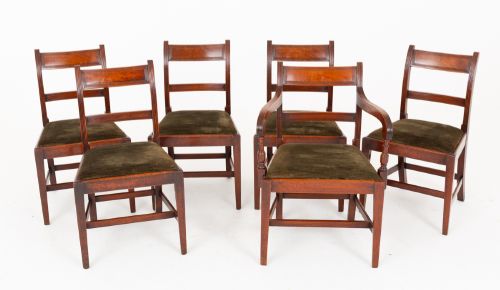
Mixing carvers with single dining chairs is historically accurate, as sets were frequently sold with a combination of both. Many surviving listings offer sets comprising six or eight single chairs alongside a pair of carvers.
Ensuring complementary wood tones and stylistic periods helps create a cohesive arrangement around the table.