



English Regency Armchair
An english regency armchair brings classical lines and functional elegance into a room, offering a seat designed for the library, study, or drawing room.
English Regency Armchair
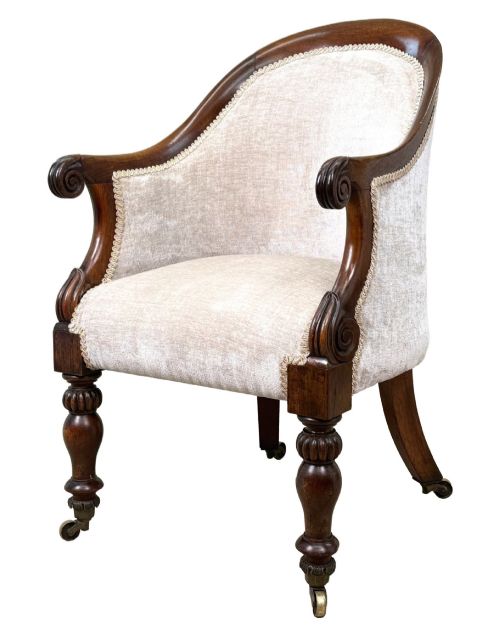
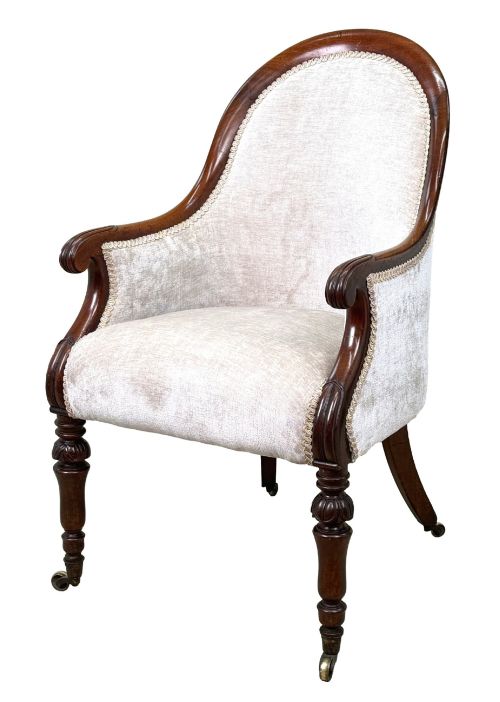
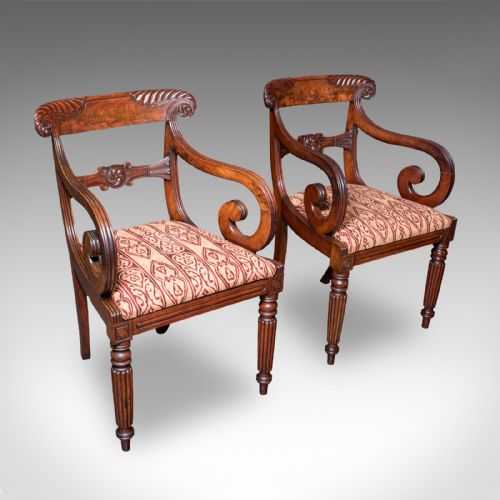
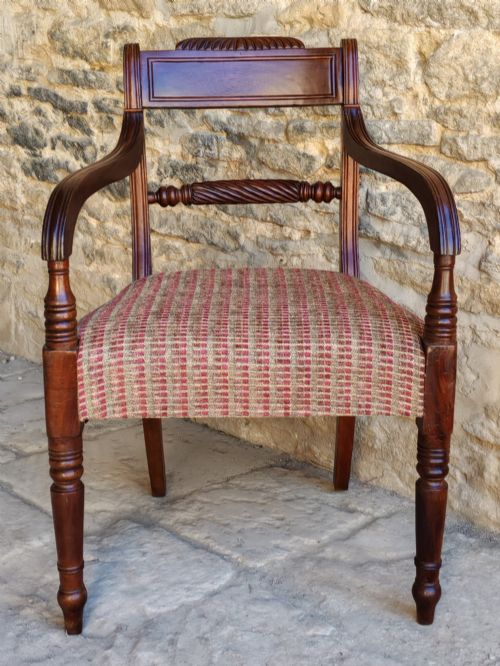
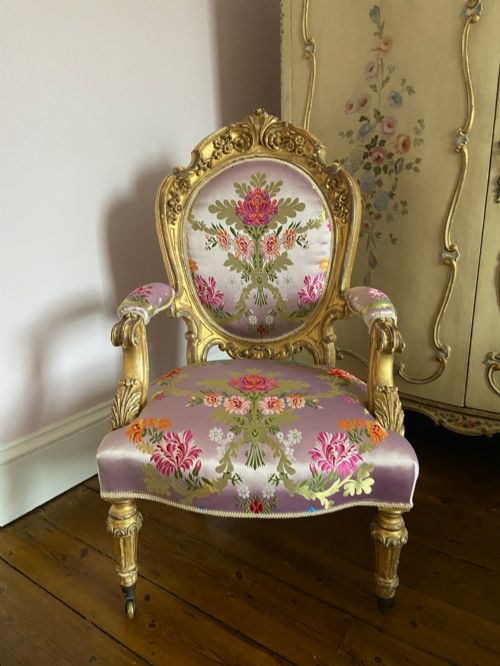
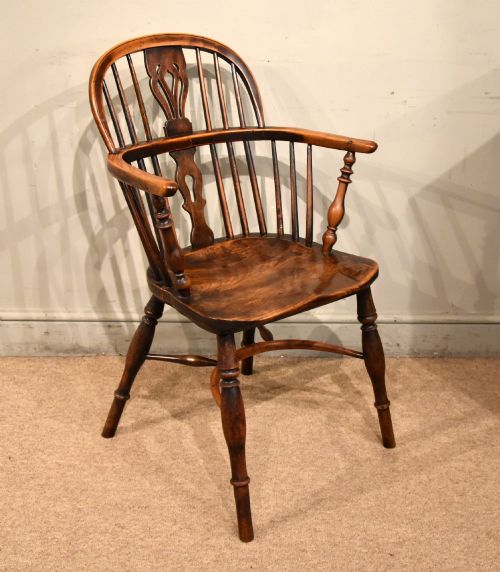
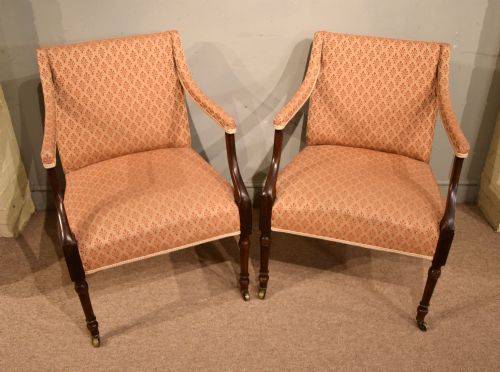
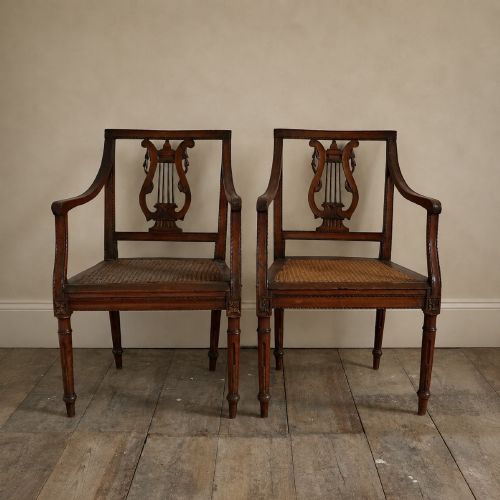
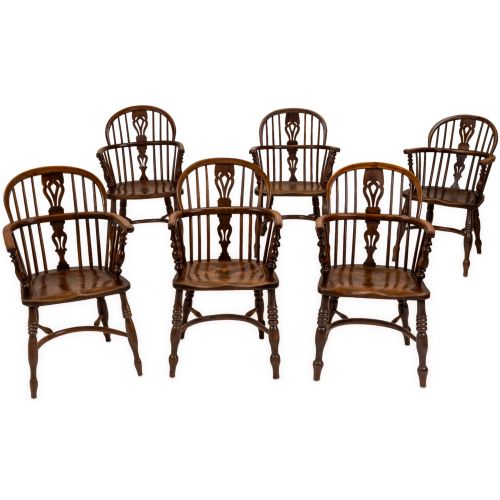
When searching for an english regency armchair, buyers encounter seating designed during the early nineteenth century, alongside later nineteenth century interpretations influenced by the period. The selection includes library armchairs, bergères, country Windsor designs, and carver chairs intended for desks or dining tables.
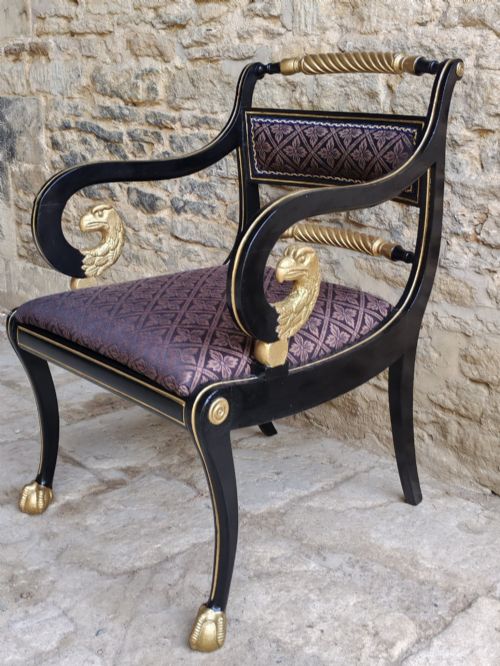
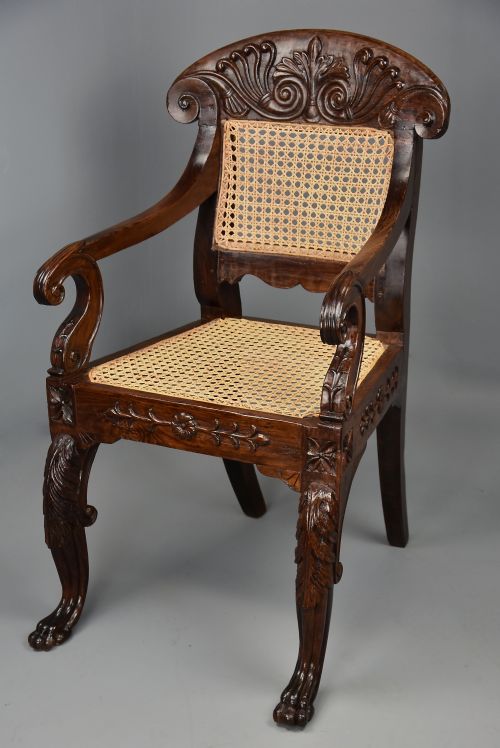
Most examples date from the Regency and George IV eras, utilising forms derived from classical antiquity with scrolling arms, lyre backs, and turned supports. Urban library chairs sit alongside country armchairs fashioned from elm and yew wood, reflecting both formal drawing room tastes and regional vernacular traditions.
Materials and Construction
Cabinetmakers constructed these frames primarily in mahogany and rosewood for urban commissions, while provincial makers utilised native timbers such as elm, oak, and fruitwood. Selected pieces incorporate decorative brass inlay, parcel-gilding, or ebonised finishes to emulate more costly materials.
Seating portions frequently employ cane panels, leather upholstery, or drop-in pads covered in needlepoint and silk cotton. Turned components, including bobbin-turned legs and crinoline stretchers, provide structural rigidity to country windsor and library variants.
Several armchairs retain their original paint, proving that Georgian ancestors enjoyed bright colours just as much as dark wood.
Distinctions in Execution
Superior examples display crisp carving on scroll arms and well-proportioned classical motifs, whereas lesser pieces rely on simpler turned members and plain timber surfaces. The integration of specialised mechanisms, such as metamorphic library steps or reclining frames, elevates the sophistication of certain library armchairs.
The integrity of original materials, including surviving painted finishes, cane work, and secondary timbers, separates untouched regional pieces from heavily restored examples. Refined execution in joinery and the selection of figured veneers distinguish workshop production from standard commercial output.
Gillows·Henry Maxwell·John Gee
The English Regency Armchair Glossary
- Bergère
- An enclosed upholstered armchair with cane or upholstered sides. This form gained popularity during the Regency period for library and drawing room use.
- Carver chair
- An armchair designed to match a set of dining chairs, typically featuring open arms and a wider seat. These often served at the head of a dining table or at a writing desk.
- Crinoline stretcher
- A curved under-framing brace found on Windsor chairs that links the legs and provides lateral stability. It takes its name from the hoop skirt fashion of the nineteenth century.
- Ropeback
- A chair back featuring carved horizontal rails that resemble twisted rope. This detail appears frequently on dining and elbow chairs from the early nineteenth century.
- Tub chair
- A curved, semi-circular armchair where the back flows continuously into the arms. These were built for warmth and comfort in studies and libraries.
English Regency Armchair: Frequently Asked Questions
How do I identify a genuine period piece?
Examine the timber patination, construction joints, and secondary woods used in the frame. Period pieces exhibit construction methods consistent with early nineteenth-century cabinetmaking rather than later reproduction techniques.
Look for hand-cut joinery and signs of genuine age in the wear patterns of the legs and arm supports. Comparing the proportions against documented designs from the era helps confirm authenticity.
Where were these chairs used historically?
These seats served primarily in formal libraries, drawing rooms, and studies of substantial homes. Library armchairs provided comfort for reading, while desk chairs accommodated writing and business tasks.
Country variations found places in farmhouse parlours and morning rooms. Dining carvers were positioned around large tables or utilised as occasional seats in reception rooms.
How should I care for antique leather and wood?
Maintain timber surfaces by applying quality beeswax periodically to preserve the grain and prevent the wood from drying out. Avoid placing the chair near direct heat sources or in strong sunlight.
Treat leather upholstery with specialised conditioners designed for antique hide to maintain flexibility. Clean cane panels gently with a damp cloth without saturating the material.
What distinguishes a library chair from a dining carver?
Library chairs prioritize deep seating comfort, often featuring upholstered armrests, enclosed bergère sides, or reclining mechanisms. They were built for extended periods of sitting and reading.
Dining carvers feature open arms and upright backs designed to fit beneath a table edge. Their frames focus on support and easy movement rather than deep cushioning.