
Regency Desk Cabinet
Regency desk cabinet pieces combine workspace and storage with architectural restraint, spanning Davenport desks, tall bookcases and compact chests.
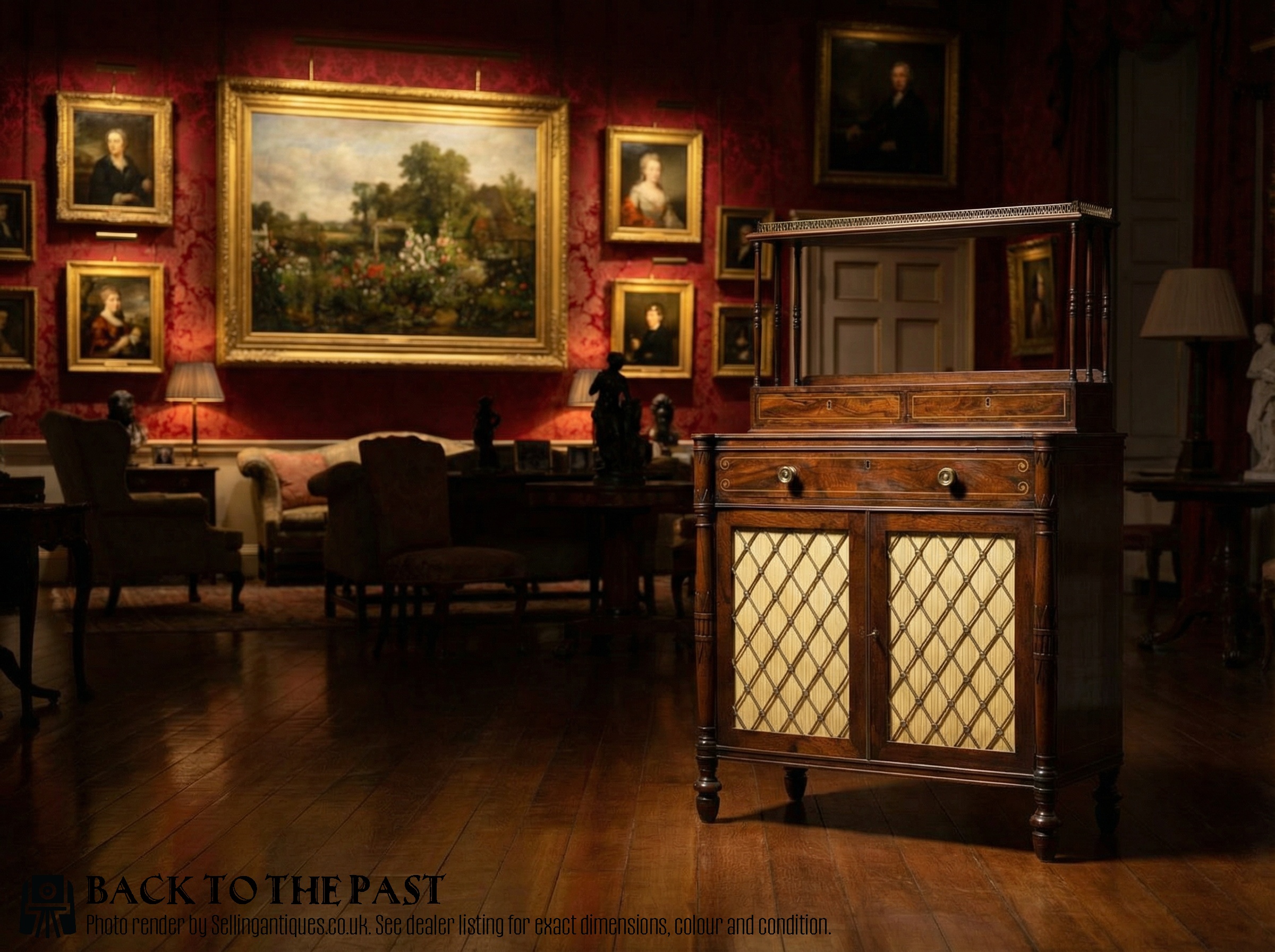
Regency Desk Cabinet
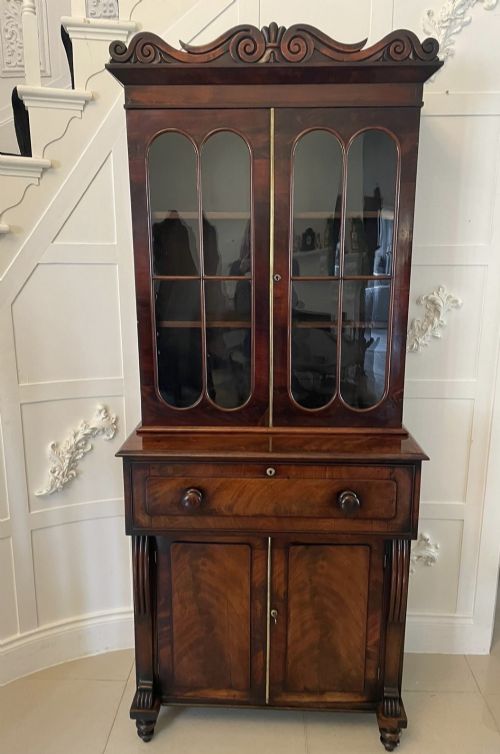
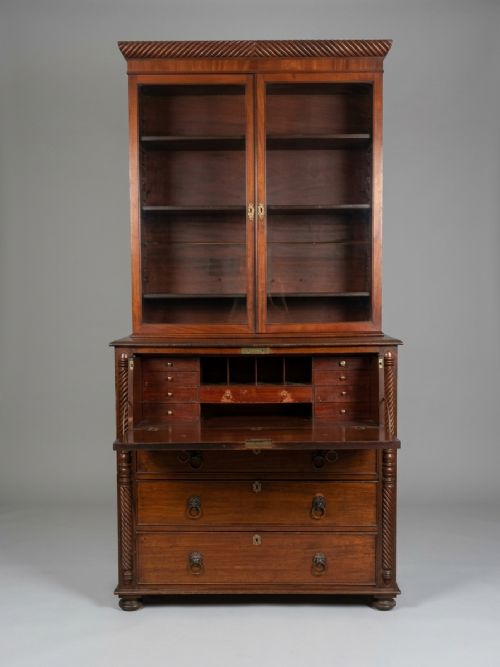
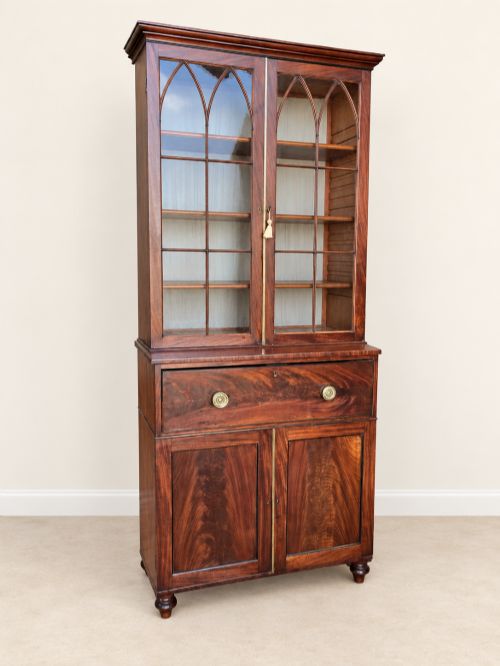
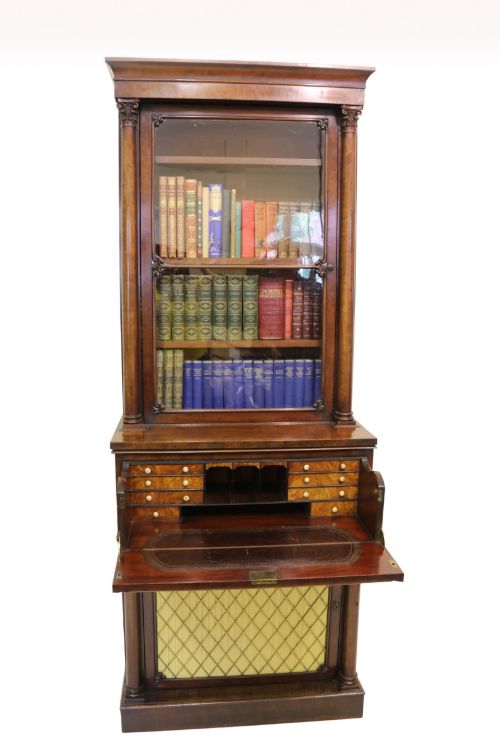
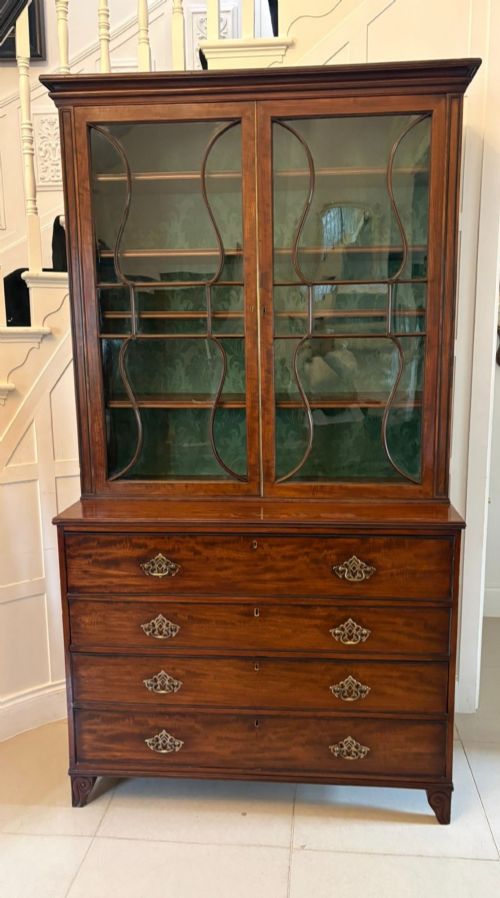
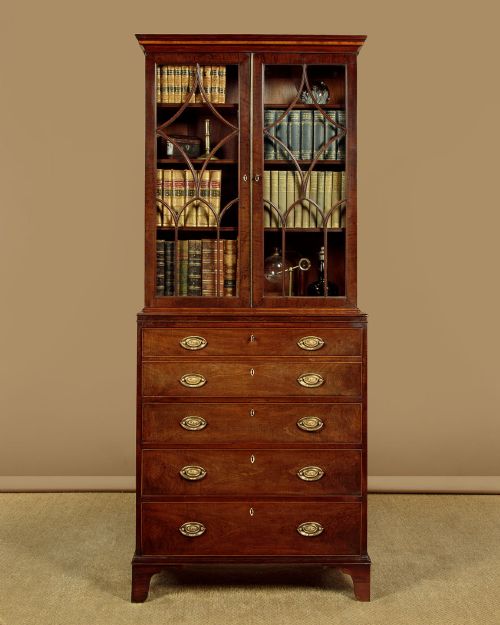
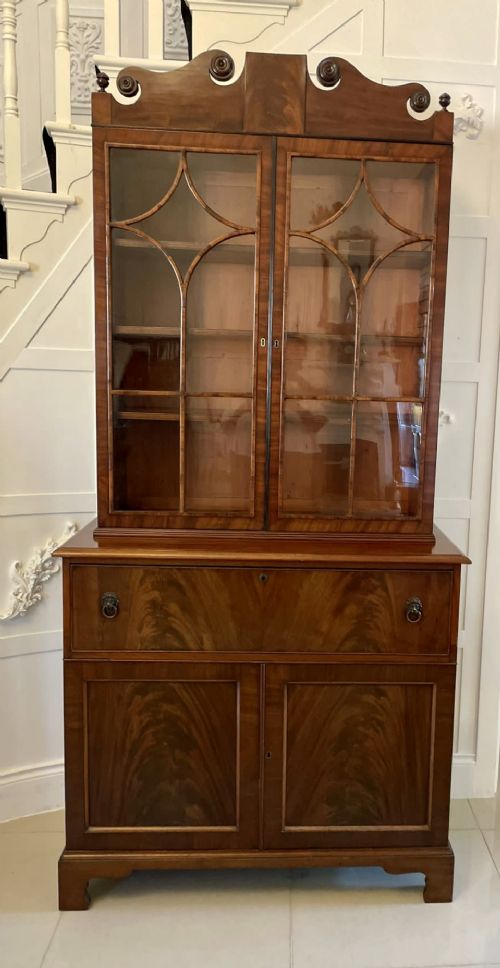
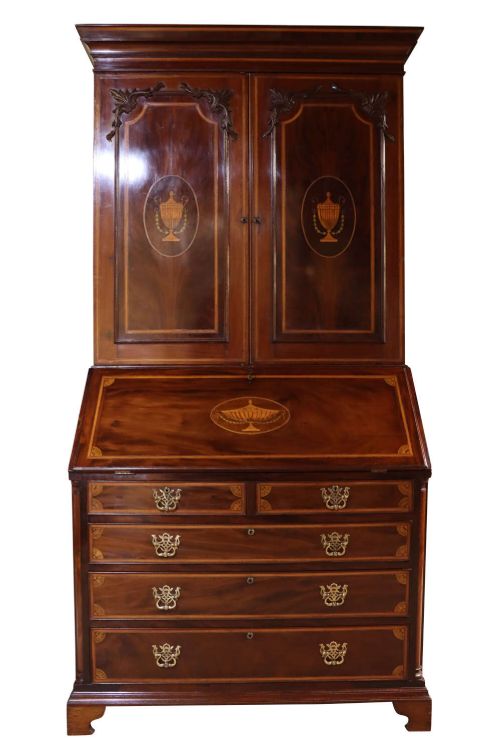
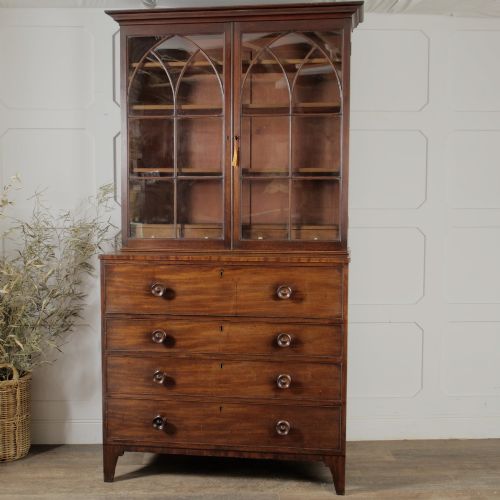
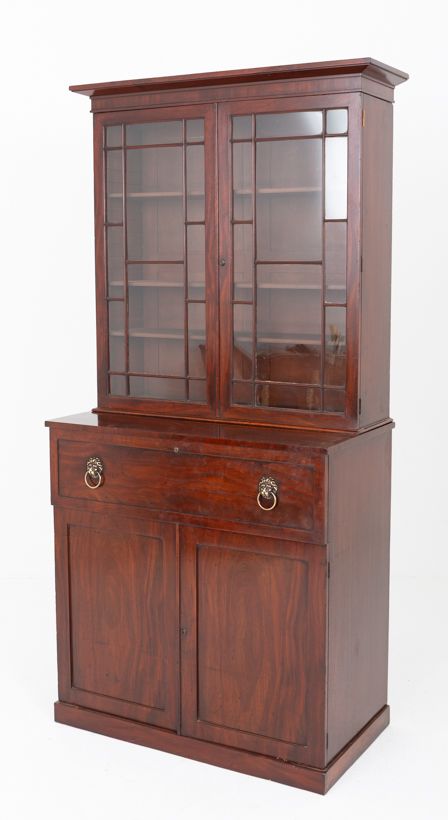
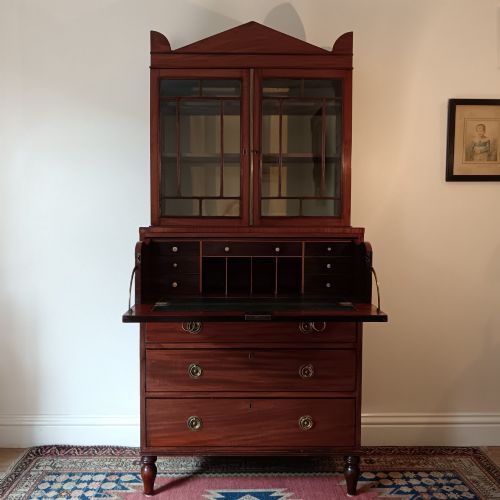
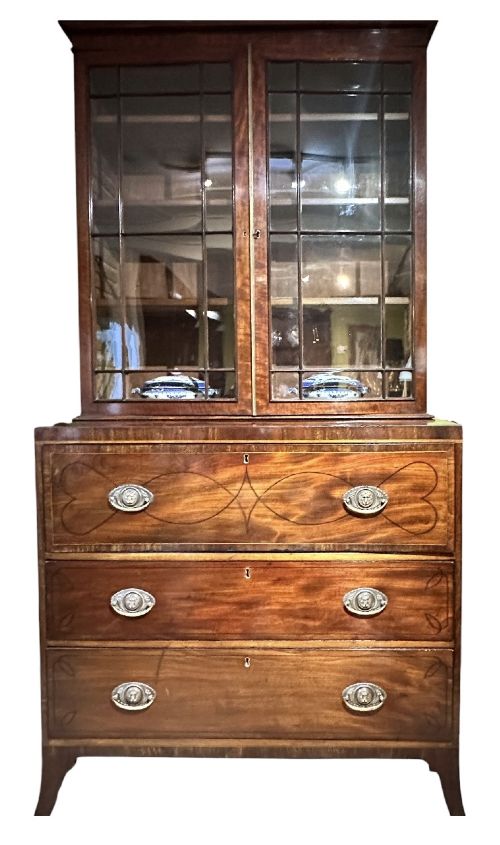
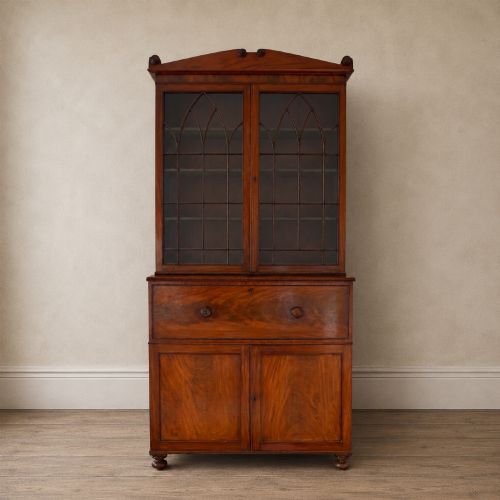
A regency desk cabinet brings together writing surfaces and enclosed storage, appearing primarily as tall secretaire bookcases, compact Davenport desks and drop-front escritoires. These forms date from the late eighteenth century through the nineteenth century, encompassing Georgian, Regency, William IV and George IV periods.
The pieces listed here rely heavily on mahogany, flame mahogany veneer, rosewood and walnut, frequently accented with glazed doors and fitted internal compartments. Makers such as Gillows of Lancaster and George Oakley produced notable examples that set the standard for this category.
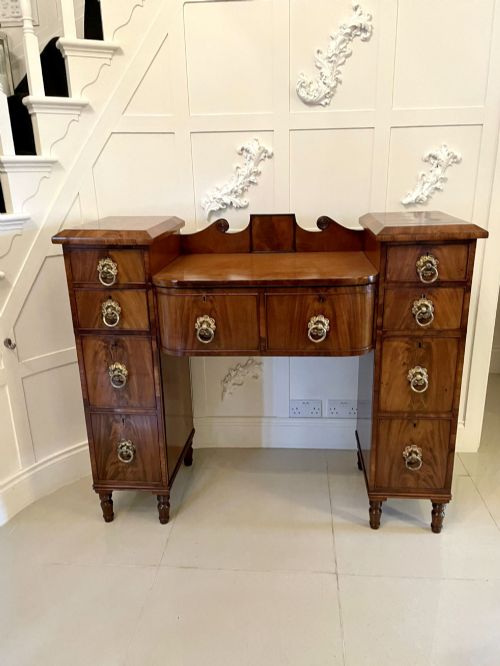
Buyers encounter grand breakfront secretaire cabinets alongside smaller writing chests and desktop cabinets designed for domestic studies. Each variant balances concealed drawers and pigeonholes with dignified exterior cabinetry.
Judging quality and craftsmanship
Quality rests in the selection of veneer timbers, where mirrored flame mahogany or figured walnut wraps continuously across drawer fronts to create a cohesive visual rhythm. Superior examples exhibit precise brass inlay work and tight joinery within the fitted writing interiors.
The architectural proportions of the upper bookcase section relative to the lower chest define the success of the piece. Master workshops ensured that internal pigeonholes, small drawers and hidden compartments operated with smooth precision.
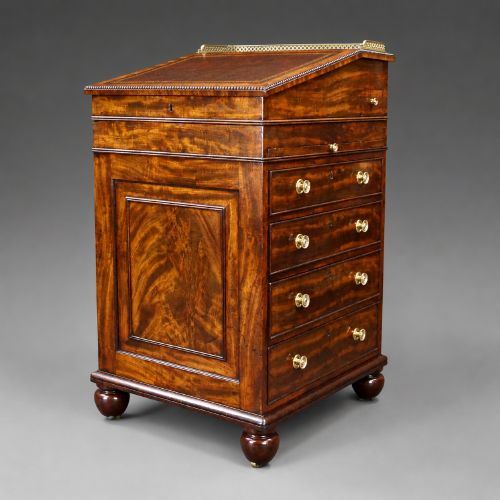
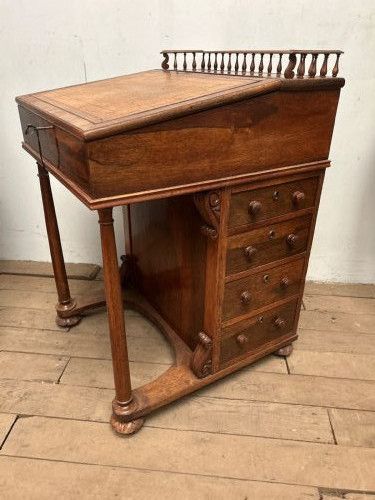
Object forms range from grand breakfront bookcases and Davenport desks to compact Wellington chests and Admiral writing stations.
Gillows of Lancaster·George Oakley
The Regency Desk Cabinet Glossary
- Secretaire
- A piece of furniture containing a concealed writing drawer or drop-front desk surface. This flap lowers to reveal a fitted interior of small drawers and pigeonholes.
- Davenport
- A compact desk featuring a sloped writing surface above a pedestal of drawers. It typically includes a stationery compartment on top.
- Escritoire
- A tall writing cabinet with a fall-front flap enclosing compartments. It represents an evolution of the bureau format.
- Breakfront
- A piece of furniture where the central section projects forward from the flanking cabinets. This configuration creates architectural depth in large bookcases and sideboards.
Regency Desk Cabinet: Frequently Asked Questions
How do I use a secretaire bookcase?
Lower the fall-front writing drawer to access the internal pigeonholes and small compartments for correspondence. The upper glazed section stores books and display items.
Keep the writing surface clear when not in use to preserve the hinge mechanisms and veneer finish.
What is the difference between a Davenport and a secretaire chest?
A Davenport is a compact pedestal desk with a sloped top, whereas a secretaire chest looks like a standard chest of drawers until the top drawer pulls out and folds down.
Both forms provide concealed writing space but suit different room sizes and storage needs.
How do I care for rosewood and mahogany surfaces?
Dust the timber regularly with a soft, dry cloth and avoid placing the cabinet near direct heat sources or strong sunlight. These precautions prevent the veneer from drying and cracking.
Apply a microcrystalline wax periodically to maintain the natural sheen of the wood.
How can I tell a Regency piece from a later revival?
Examine the secondary timbers inside the drawer linings, such as oak or pine, alongside the cut of the dovetails and the wear patterns on the brass hardware. Regency pieces display period-specific construction methods and timber ageing.
Revival pieces often feature machine-cut elements and standardised internal fittings characteristic of later manufacturing.