


Rosewood Writing Desk Cabinet
A rosewood writing desk cabinet is a fitted personal workstation combining storage and a writing surface, bringing dense grain and rich colour to a room.
Rosewood Writing Desk Cabinet
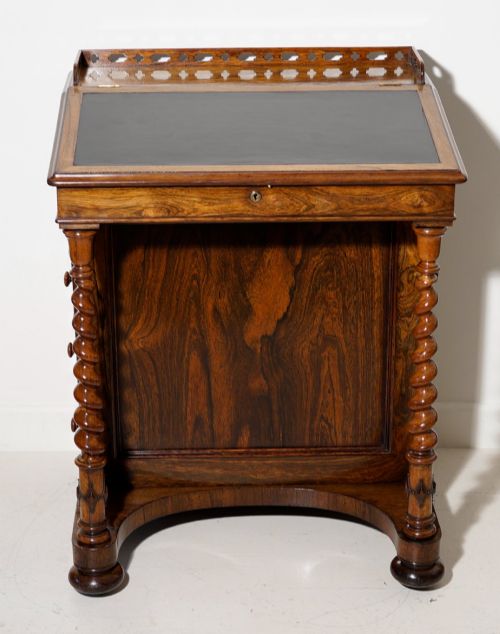
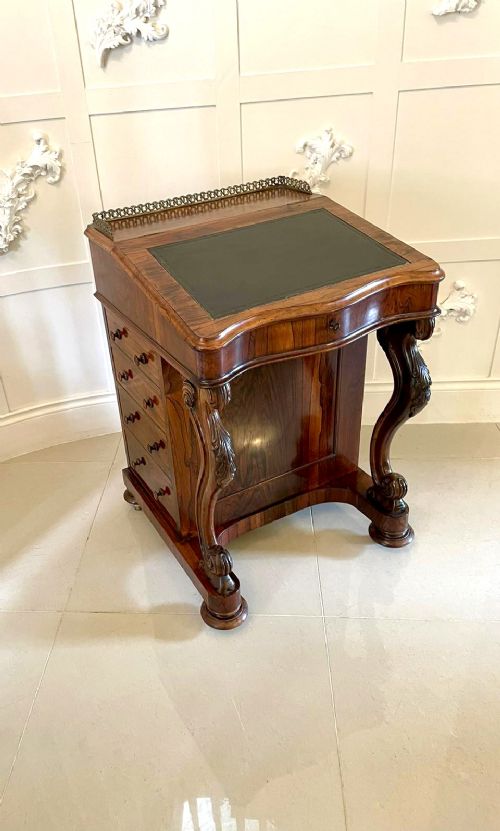
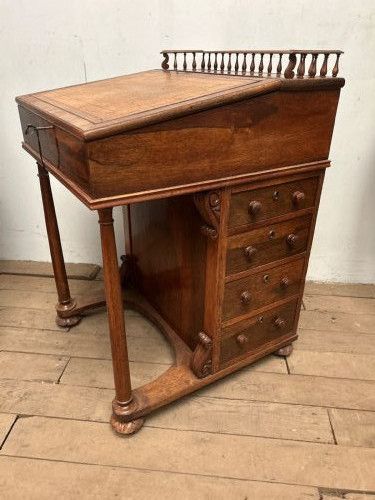
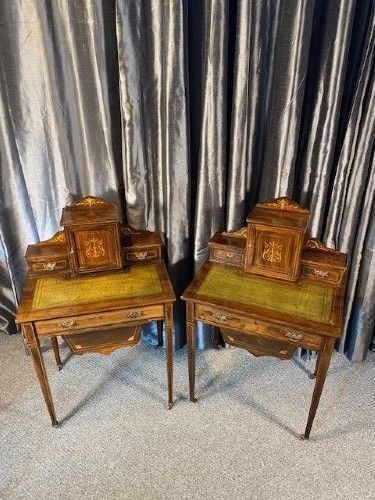
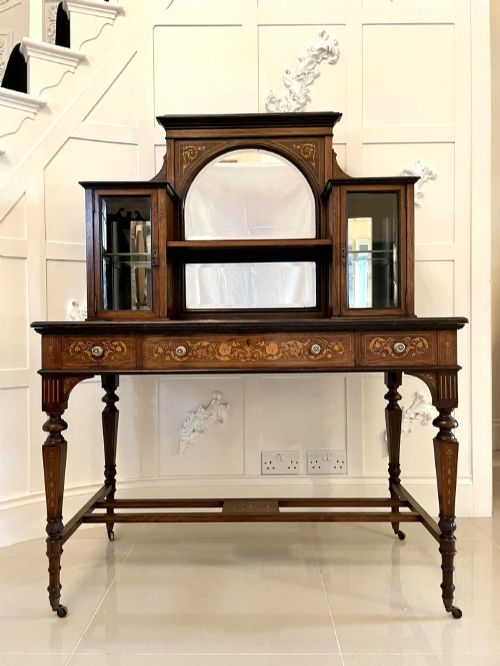
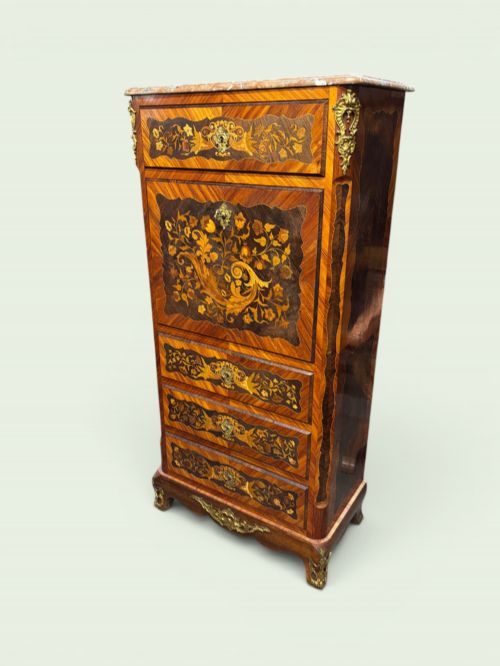
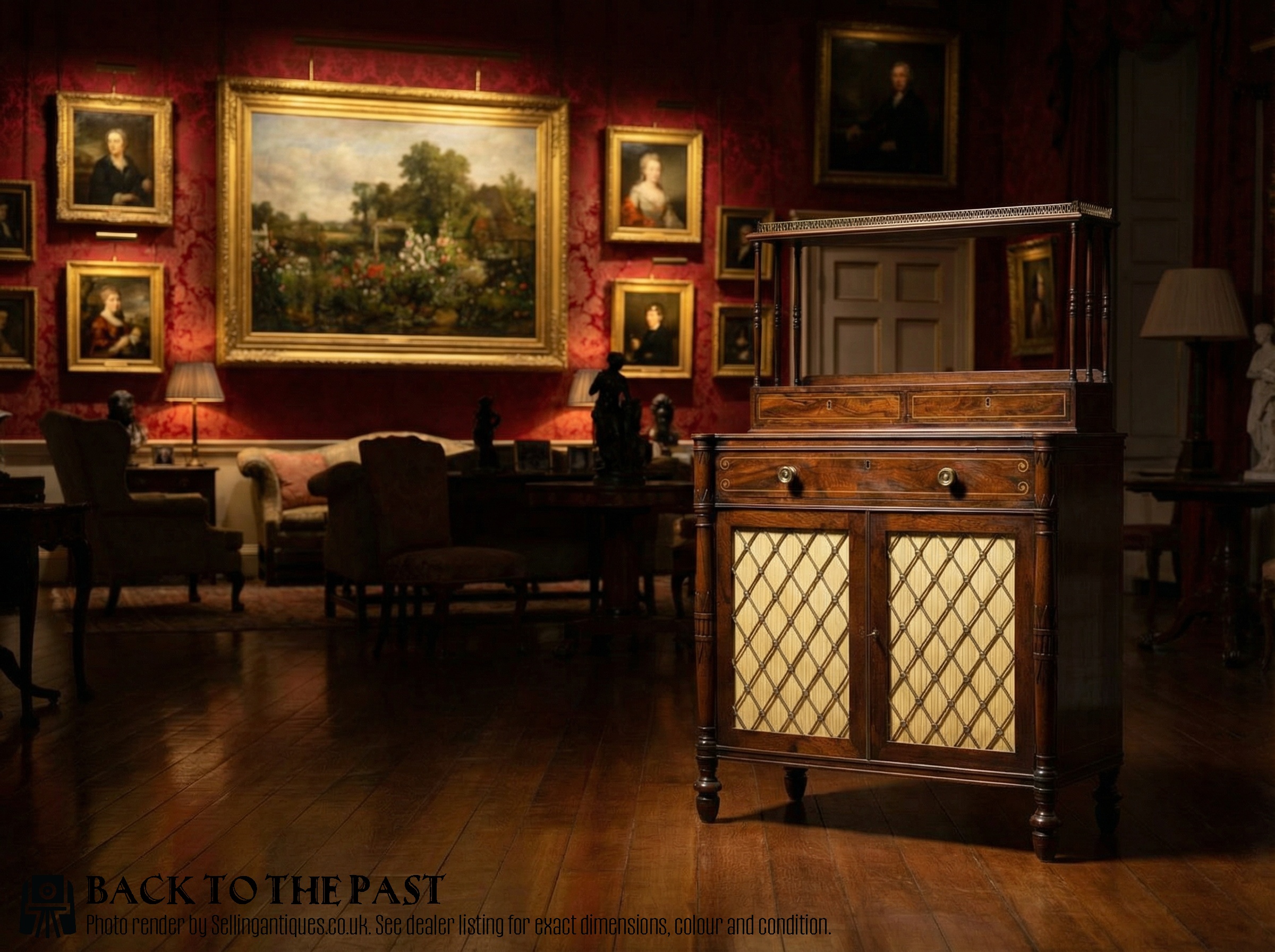
A rosewood writing desk cabinet brings together compact stationery storage and a dedicated writing surface, often taking the form of a Davenport, escritoire, or bonheur du jour. These pieces span the eighteenth, nineteenth, and early twentieth centuries, drawing on Georgian, Regency, Victorian, and Continental revival styles.
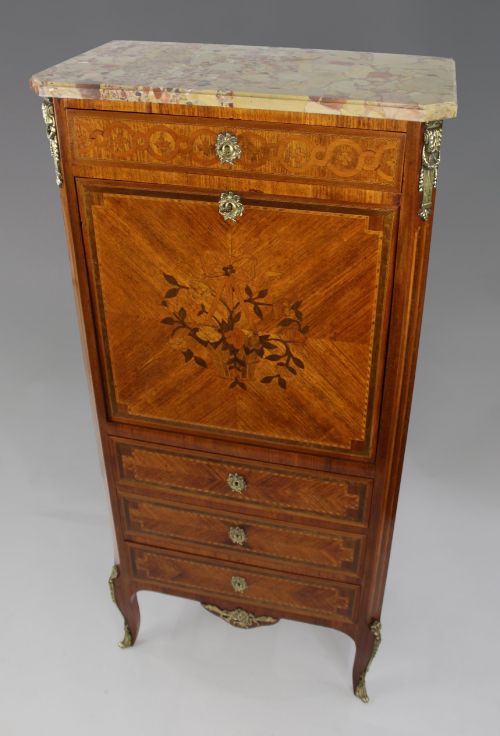
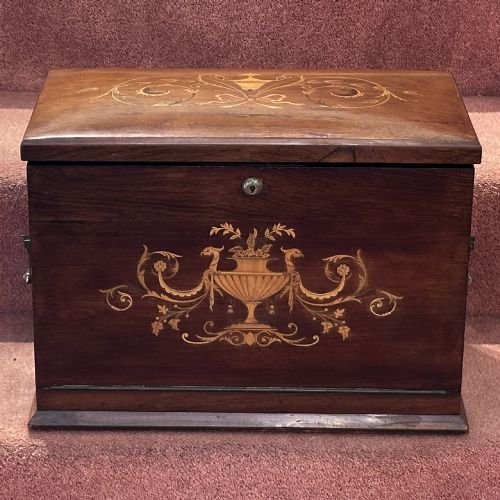
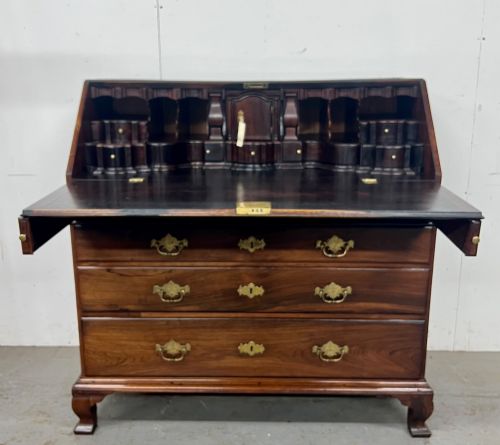
The most common formats met on this page are nineteenth-century Davenport desks and French marquetry escritoires. Many incorporate sliding tops, leather-lined writing slopes, fitted interior drawers, and upper cabinets or superstructure compartments.
Origins range from English cabinetmakers to French ateliers and Portuguese workshops. Surviving examples demonstrate how domestic workspace evolved from large bureau bookcases down to portable tabletop boxes and multi-drawer stationery cabinets.
Materials and construction methods
Makers utilised dense tropical hardwoods, applying rosewood veneers or solid construction over secondary timbers. Surfaces frequently receive decorative contrast through marquetry and inlay work using satinwood, boxwood, and other light timbers.
Metal mounts in brass and ormolu secure corners, frame doors, and form drawer pulls, while marble tops frequently crown French escritoires and cabinets. Interiors often conceal secret compartments, pivoting stationery wells, and tooled leather writing surfaces.
Many Victorian Davenports conceal side-mounted pen drawers that only slide open once the main desk lid is unlocked.
Assessing quality and execution
Quality rests in the selection of timber grain, the precision of marquetry, and the integration of mechanical sliding or pivoting elements. Superior pieces maintain crisp brass or ormolu mounts and clean structural joinery without excessive restoration.
Refined examples show careful attention to internal compartments, matching veneer patterns across drawer fronts, and original hardware. The distinction between standard workshop production and top-tier cabinet work lies in the fluidity of mechanical actions and the depth of hand-finishing.
John McClean·Maison Krieger
The Rosewood Writing Desk Cabinet Glossary
- Davenport
- A compact pedestal desk with a sloping writing surface above a bank of drawers. This form became popular during the Regency and Victorian periods for domestic correspondence.
- Escritoire
- A standing writing cabinet featuring a drop-front fall or abattant enclosing pigeonholes and small drawers. These pieces often include marble tops and elaborate French marquetry.
- Bonheur du jour
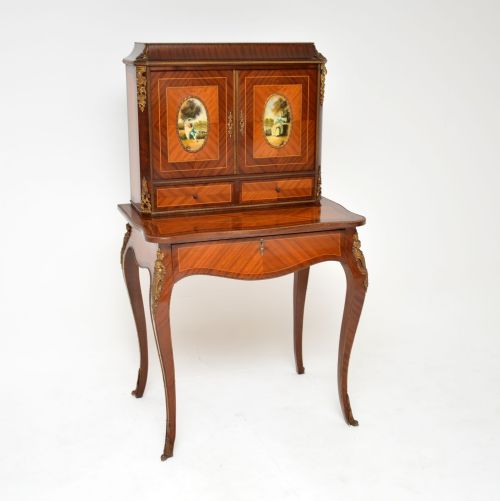
- A light lady's writing desk featuring a small cabinet or set of shelves superstructure upon a table base. Makers frequently decorated these with floral inlay and delicate mounts.
- Marquetry
- The art of forming decorative patterns by fitting together veneers of different coloured woods. Artisans applied this technique extensively on nineteenth-century French and English cabinets.
- Ormolu
- Gilded bronze used for decorative mounts, handles, and feet on furniture. This technique appeared frequently on French revival escritoires and cabinets.
Rosewood Writing Desk Cabinet: Frequently Asked Questions
What is a Davenport desk?
A Davenport is a compact writing desk featuring a sloping, leather-inset top that lifts or slides forward. Below this writing surface sits a pedestal of drawers, often with side compartments for inkwells and pens.
First appearing in the Regency period and remaining popular through the Victorian era, these pieces offered a practical writing station that occupied minimal floor space in a drawing room or study.
How do I care for rosewood furniture?
Rosewood requires stable indoor humidity levels and protection from direct sunlight to prevent the timber from drying out or fading. Dust regularly with a soft, dry cloth and avoid silicone-based polishes.
Applying a traditional beeswax conditioner occasionally helps maintain the lustre of the polished grain and protects antique veneer surfaces from minor scuffs.
What is the difference between an escritoire and a bureau?
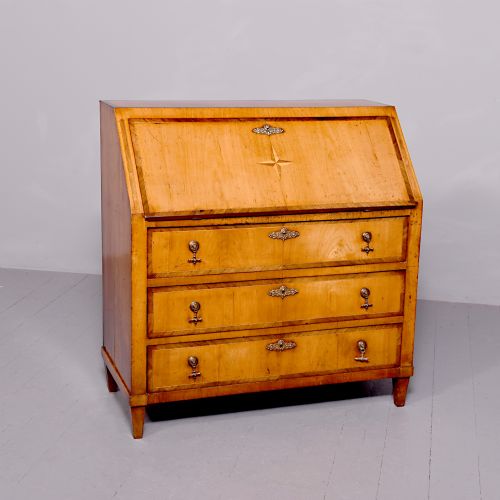
An escritoire typically refers to a vertical cabinet with a fall-front writing panel, frequently associated with French design and often topped with marble. A bureau more commonly describes a desk with a slanted lid enclosing a fitted interior.
Both forms served the same primary function of storing writing materials and correspondence while concealing private papers behind lockable doors.
Where were these cabinets placed in a historic home?
These writing cabinets and desks found places in private sitting rooms, bedrooms, and drawing rooms where personal correspondence took place. Ladies used lighter bonheur du jour pieces for morning letter writing.
Larger escritoires and bureau bookcases stood against reception room walls, serving both as decorative furniture and functional storage for family papers.