





Regency Decorative Urn
These regency decorative urn pieces bring classical gravity to a room, drawn from nineteenth-century metalwork, porcelain, and ironstone.
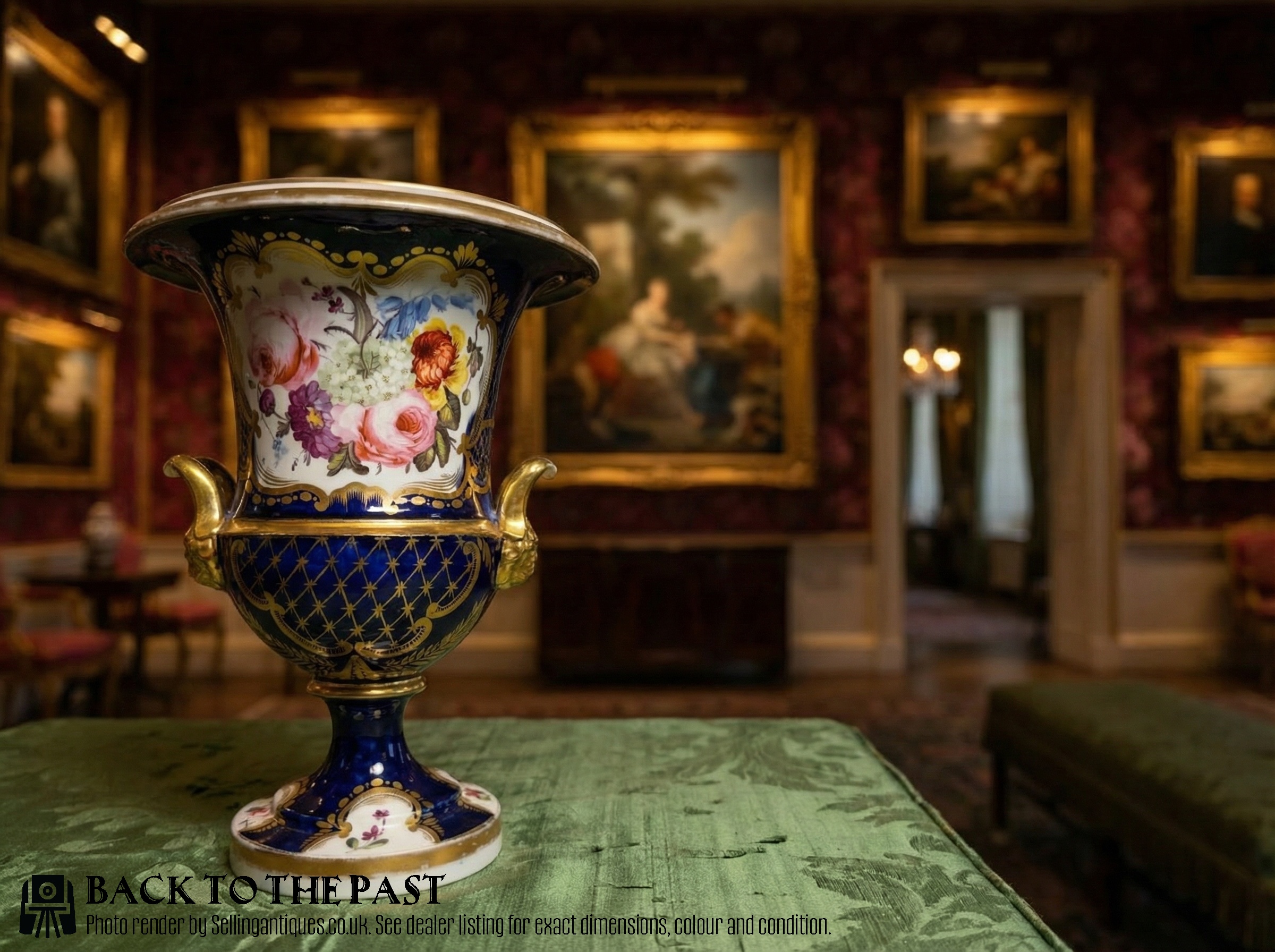
Regency Decorative Urn
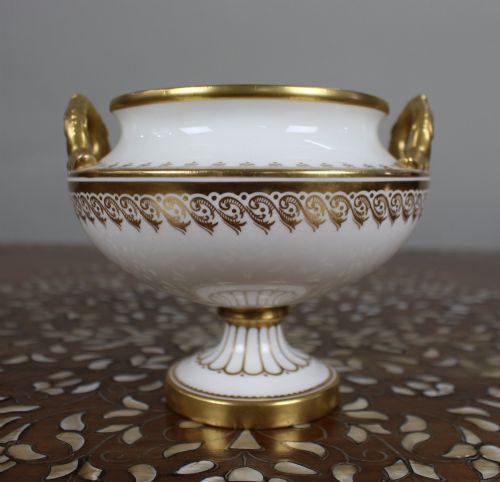
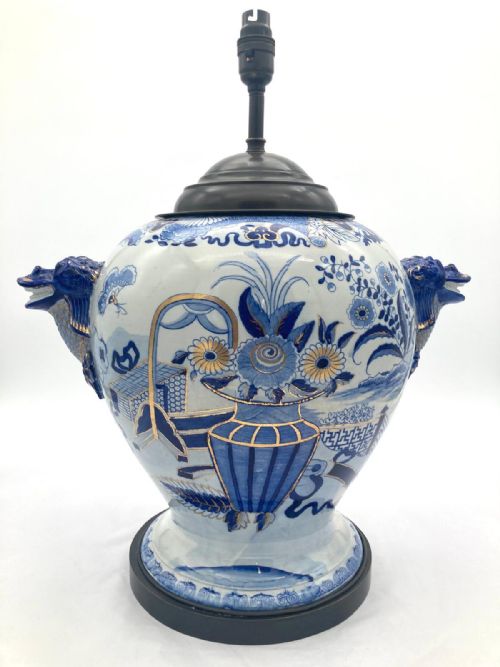
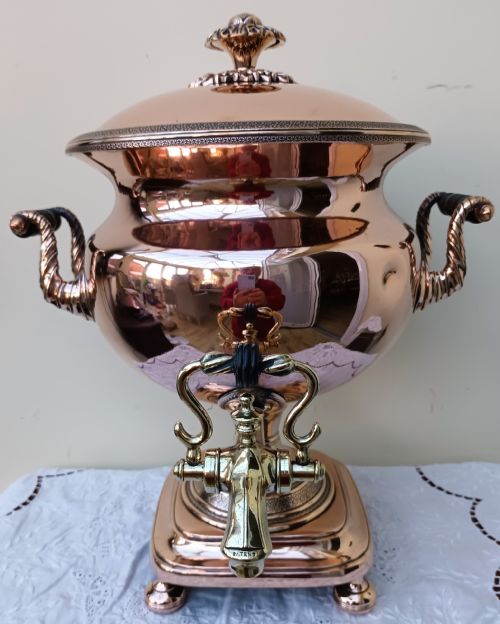
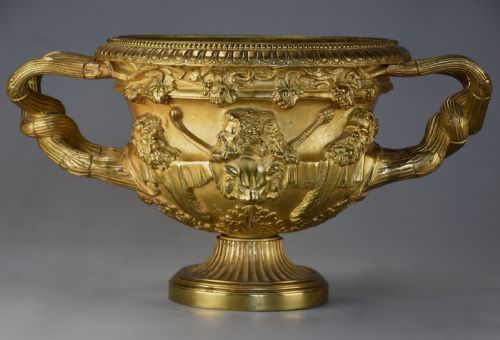
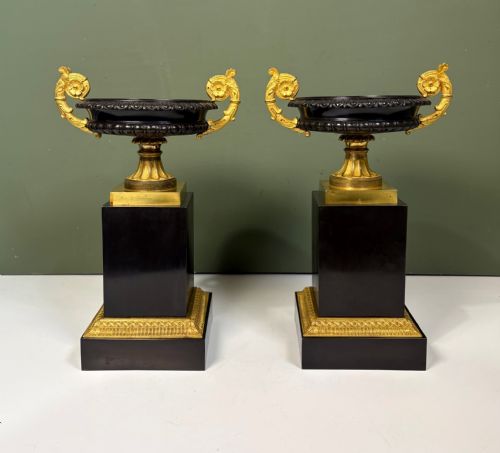
A regency decorative urn typically takes the form of a classical vessel, a campagna shape, or a tazza, originating from the nineteenth century. You will frequently encounter pairs of porcelain or bronze pieces carrying neoclassical motifs.
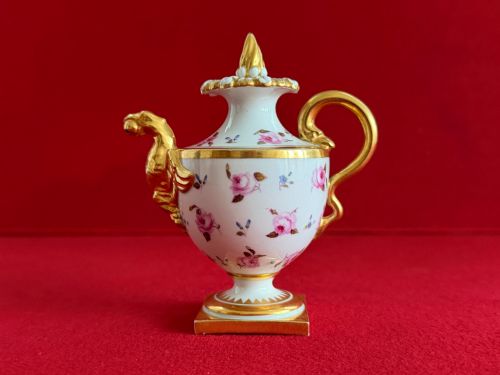
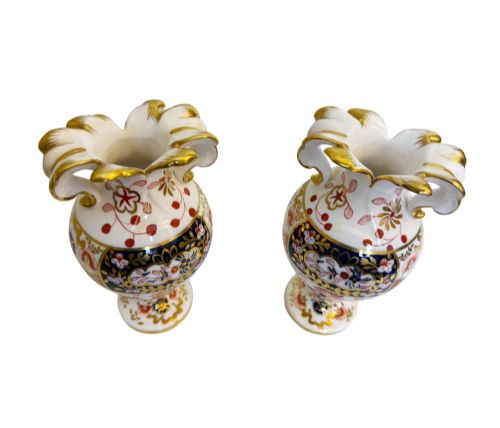
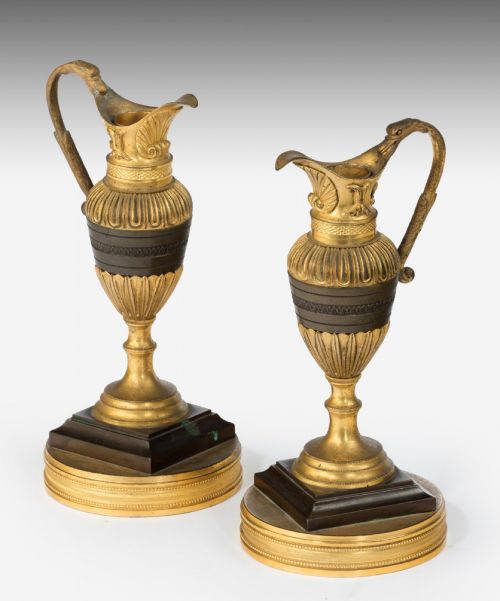
The selection spans from Worcester porcelain rose water sprinklers and Spode imari vases to heavy bronze and ormolu reductions of antique models. Ironstone and toleware examples also appear, reflecting both cabinet display and table service uses.
Most items date from the regency and georgian eras into the Victorian period, capturing a deep-rooted fascination with antiquity. Makers such as Flight, Barr & Barr and Mason's feature strongly among the porcelain and ironstone works.
What Varies In Quality
The refinement of the chasing upon bronze and ormolu surfaces dictates the distinction between standard production and exceptional studio work. Crispness in acanthus leaf carving and balanced proportions define superior metal casting.
Ceramic quality rests on the precision of the hand-painted enamelling and the richness of the gilding applied to porcelain and ironstone bodies. Surviving original covers and matched pairs elevate the desirability of individual urns.
Several pieces double as wine-coolers or abolitionist compotes, proving that nineteenth-century dining tables took politics and claret very seriously indeed.
Flight Barr And Barr·Spode·Masons Ironstone·Miles Mason·Coalport
The Regency Decorative Urn Glossary
- Campagna urn
- A bell-shaped vessel with a flaring rim on a pedestal foot, modelled after ancient Roman garden vases. It remains a defining silhouette of neoclassical design.
- Ormolu
- Gilt bronze produced by applying a finely ground gold-mercury amalgam to cast bronze. The technique yields a warm, durable golden lustre.
- Tazza
- A wide, shallow saucer-like vessel raised on a stem and foot, used for display or serving. Bronze and silvered examples are typical of the period.
- Jardiniere
- An ornamental pot or stand designed to hold growing plants or floral arrangements. They appear in porcelain and ironstone.
- Japanned
- A European imitation of East Asian lacquerwork achieved through layered varnishes and heat curing. It provides a dark, glossy surface often enriched with gilt motifs.
Regency Decorative Urn: Frequently Asked Questions
How were regency decorative urns used originally?
These vessels served primarily as interior ornament on mantelpieces, sideboards, and pedestals during the nineteenth century. Many drew inspiration from the Grand Tour, reflecting classical antiquity.
Some ceramic examples functioned as pot pourri containers or rose water sprinklers, perfuming drawing rooms. Others were later adapted into table lamps as domestic lighting evolved.
Are these urns heavy?
Bronze, cast iron, and marble examples possess substantial weight due to their dense metal and stone construction. Porcelain and ironstone pieces are lighter but still robust.
When positioning them on furniture, consider the base material, especially with heavy bronze and ormolu creations mounted on stone plinths.
How do I distinguish regency from Victorian pieces?
Regency items generally lean towards strict neoclassical restraint, drawing closely on ancient Greek and Roman archetypes. Bronze work from this period often displays sharper chasing and deep patination.
Victorian revival pieces tend to exhibit heavier ornamentation and broader stylistic mixtures, though quality remained exceptionally high across both eras.
Can I use them outdoors?
Most of these delicate porcelain, japanned tin, and gilt bronze items are strictly intended for interior display. Exposure to weather will damage painted enamels and gilding.
Cast iron or heavy bronze pieces tolerate sheltered outdoor placement better, though nineteenth-century gilt surfaces require protection from moisture.