
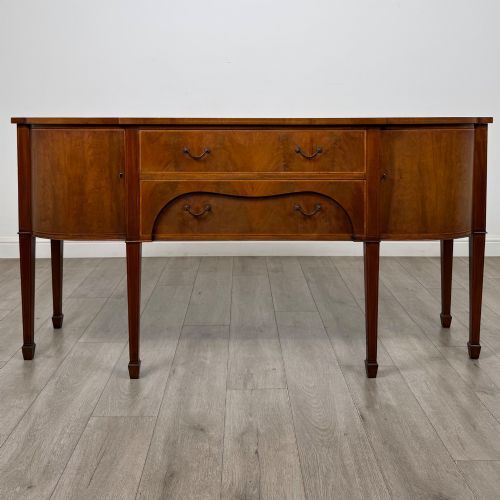
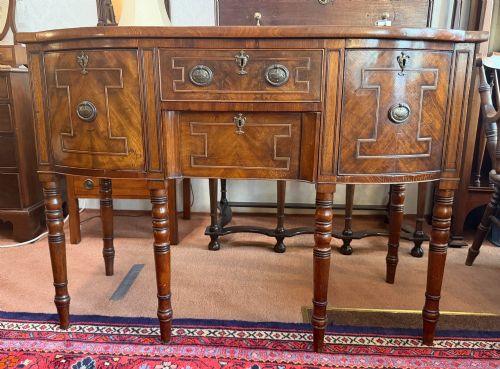
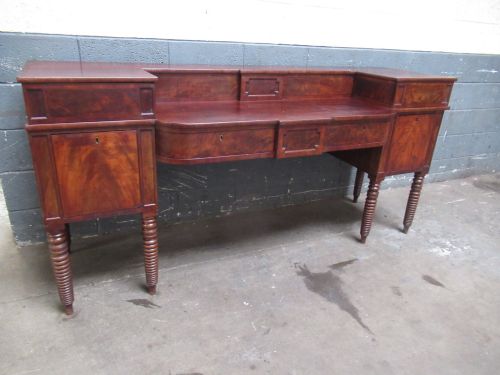
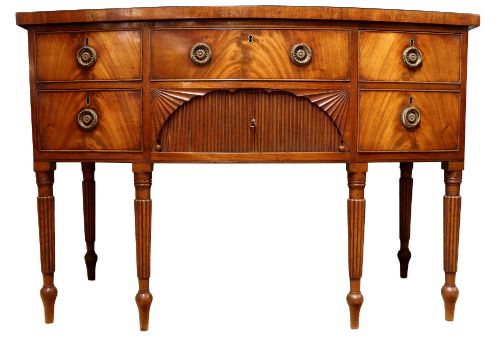
Regency Credenza Server
A regency credenza server brings architectural dignity to a dining room, offering deep drawers and cupboards configured for modern hosting.
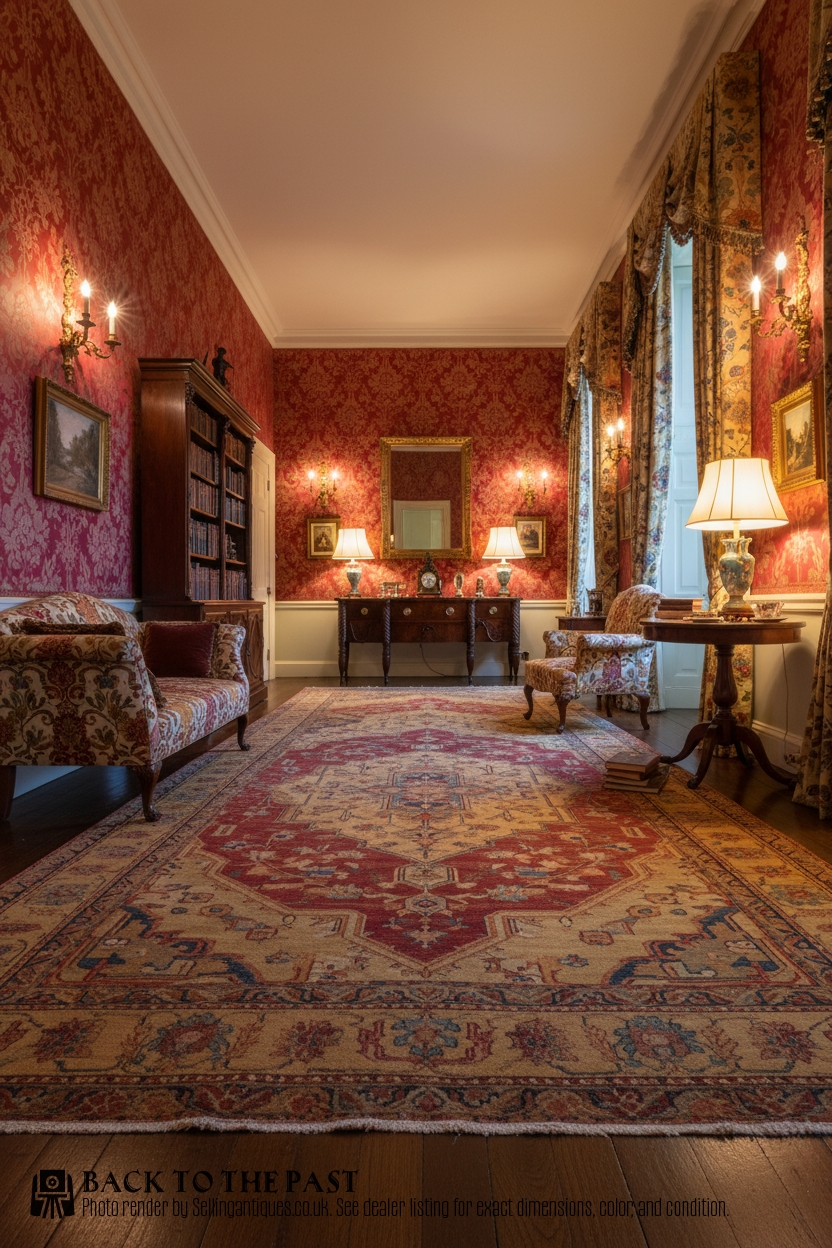
Regency Credenza Server
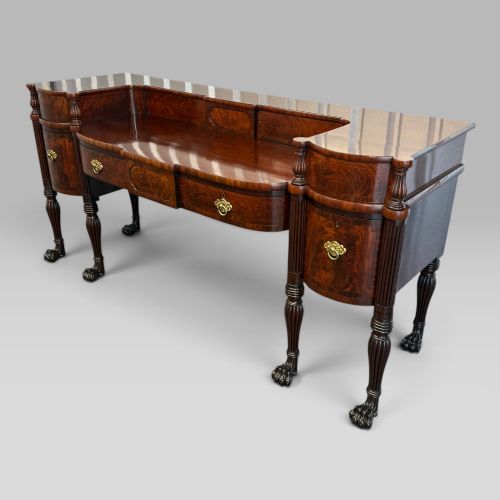
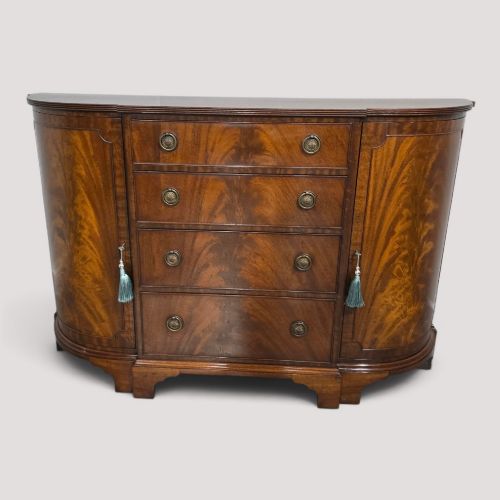
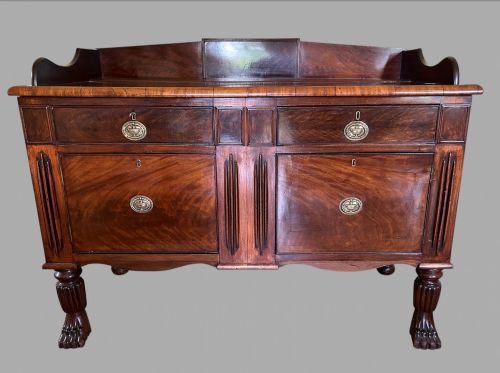
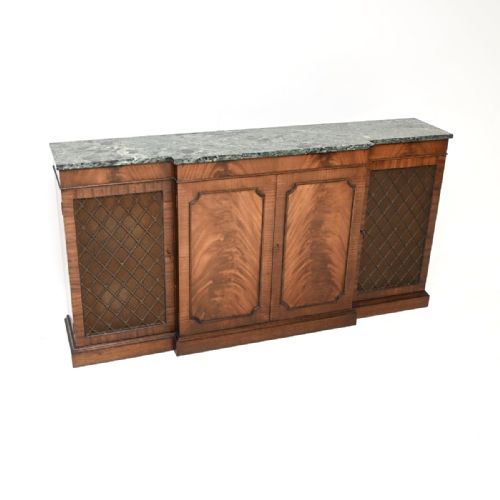
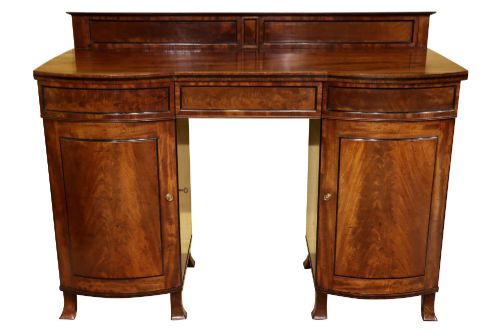
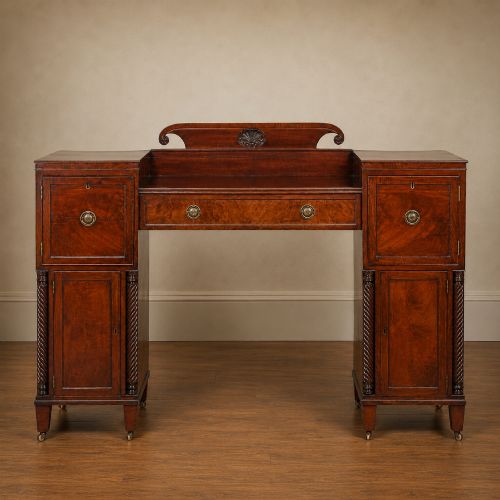
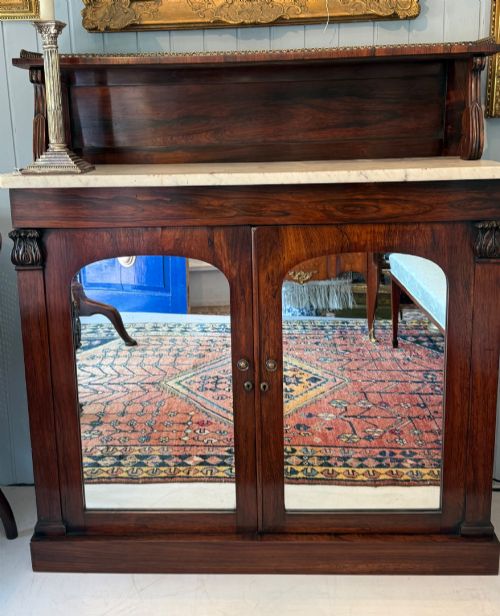
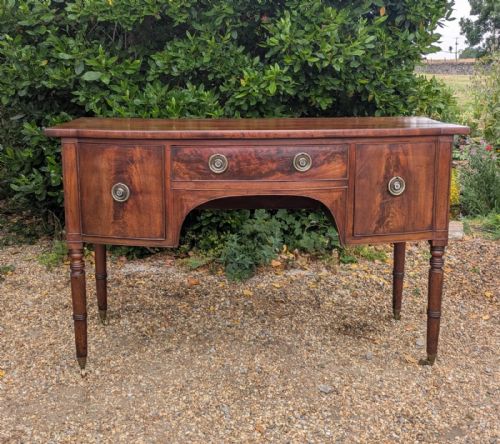
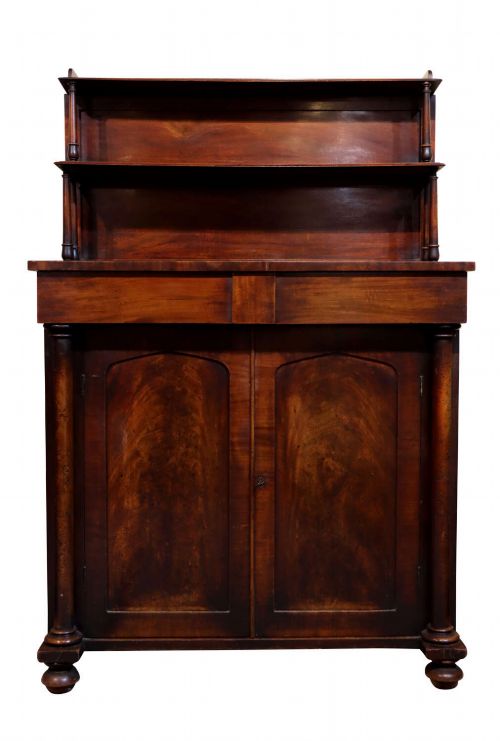
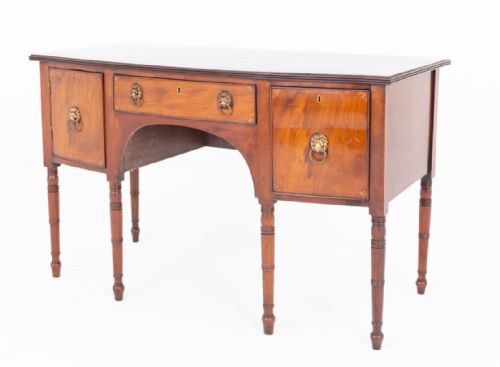
A regency credenza server combines the practical storage of a sideboard with the formal presence of a serving table, emerging from nineteenth-century dining traditions. Buyers searching for a regency credenza server typically encounter mahogany sideboards, breakfronts, and pedestal pieces spanning the Georgian, Regency, and William IV periods.
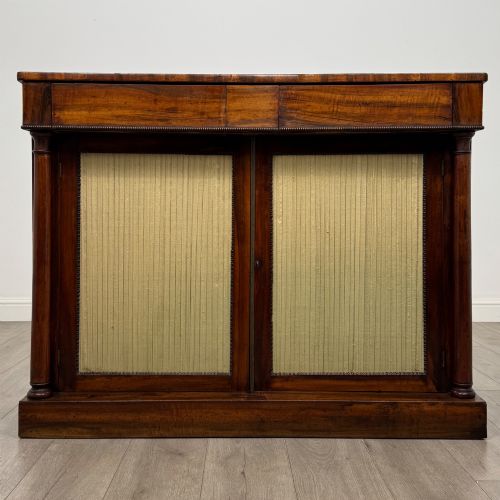
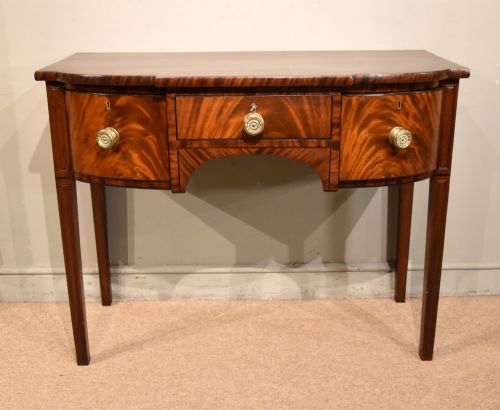
The selection ranges from bow-fronted and serpentine shapes to substantial pedestal forms and low chiffoniers. Most examples originate from the early nineteenth century, constructed with generous proportions suited to grand reception rooms.
Makers utilised architectural forms, incorporating brass inlay, ebony stringing, and flame mahogany veneers to create surfaces that caught candlelight. These pieces served primarily to store linen, silver, and wine, functioning as both workspace and display.
Materials and construction
Cabinetmakers built these servers using solid mahogany frames lined with secondary timbers, applying figured flame mahogany veneers to the drawer fronts and doors. The grain patterns were carefully matched across the facade to create symmetrical panels of rich colour.
Detailing often included contrasting boxwood and ebony stringing, alongside cast brass mounts, lion paw feet, and inlaid brass scrollwork set directly into the wood. Marble tops appear on specific cabinet variants, providing a cool, durable surface for serving dishes.
The archive records pedestal servers alongside bow-front, serpentine, and breakfront forms spanning the Georgian period.
Judging quality and proportion
Quality rests upon the selection of timber, where tightly figured flame mahogany and crisp, unbroken brass inlay distinguish superior examples from plain utility pieces. The depth of the carving on pedestal mounts and the weight of the original brass fittings indicate the standing of the original workshop.
Proportion and structural integrity define the best pieces, ensuring the doors hang true and the pedestals meet the floor with stable authority. Finer cabinets display meticulous dovetailing within the drawer construction and continuous grain wrapping across the front.
Gillows
The Regency Credenza Server Glossary
- Flame mahogany
- A veneer cut from timber where the branch meets the trunk, producing a distinctive flickering flame pattern across the surface. This cut was favoured for the primary display doors of formal serving pieces.
- Pedestal sideboard
- A form featuring two distinct architectural pedestals flanking a recessed central section, popular during the Regency period. They often house deep bottle drawers and cupboards.
- Breakfront
- A piece of furniture where the central section projects forward from the flanking wings, creating a strong three-dimensional facade. This architectural layout enhances the play of light across the mahogany surfaces.
- Stringing
- Thin inlaid lines of contrasting timber, such as boxwood or ebony, used to outline panels and drawers. It provides a sharp, linear definition to the rich brown tones of the surrounding wood.
- Chiffonier
- A compact low sideboard or cabinet featuring enclosed shelving below, developed during the early nineteenth century. They often incorporate brass gallery rails and mirror backs.
Regency Credenza Server: Frequently Asked Questions
What is a regency credenza server?
A regency credenza server is a formal dining room cabinet designed for storing tableware and serving food during nineteenth-century meals. These pieces combine cupboards, drawers, and sometimes pedestals into a unified architectural form.
They emerged from the Georgian and Regency periods, utilising figured mahogany and decorative brass inlay to reflect the status of the household. Today, they function as substantial sideboards in contemporary dining and living spaces.
How do I tell Regency from William IV pieces?
Regency furniture, dating roughly from the early nineteenth century, typically exhibits restrained classical lines, delicate brass stringing, and balanced proportions. The influence of ancient Greece and Rome appears in subtle reeding and graceful curved fronts.
William IV pieces, emerging towards the 1830s, tend to be heavier and more robust in construction. They frequently feature bolder carved details, substantial scrolling brackets, and heavier mahogany pedestals.
Where were these servers placed in a room?
These servers were traditionally positioned against the main dining room wall, directly behind or adjacent to the dining table. This placement allowed servants to carve meat and pour wine without crowding the main table.
The flat top surface held dishes and decanters during large dinner parties, while the internal cupboards kept silver and linens close at hand.
How do I care for mahogany surfaces?
Mahogany furniture requires stable indoor humidity away from direct heat sources and strong sunlight, which can fade the rich reddish-brown colour. Regular dusting with a soft, dry cloth preserves the finish without building up greasy residues.
Occasional applications of traditional beeswax nourish the wood and maintain the natural lustre of the vintage polish. Avoid placing wet items directly on the timber to prevent water rings.