

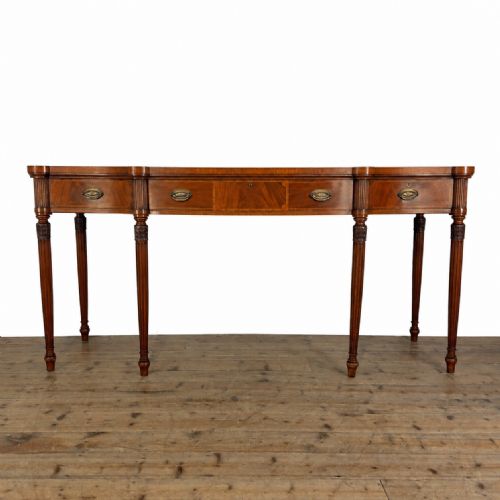
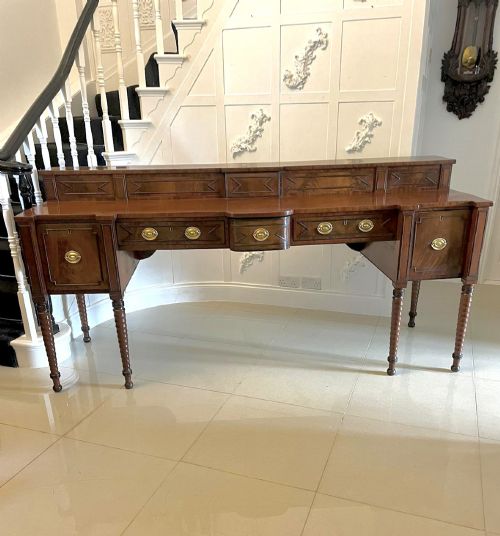
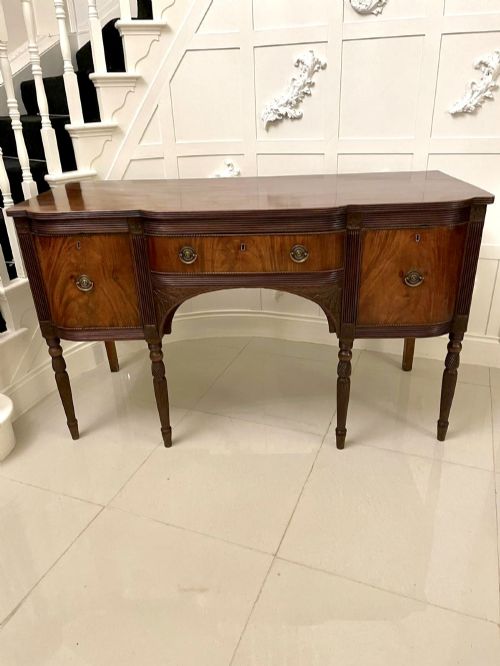


Reeded Leg Mahogany Sideboard
A reeded leg mahogany sideboard brings architectural structure and rich timber grain to a dining room.
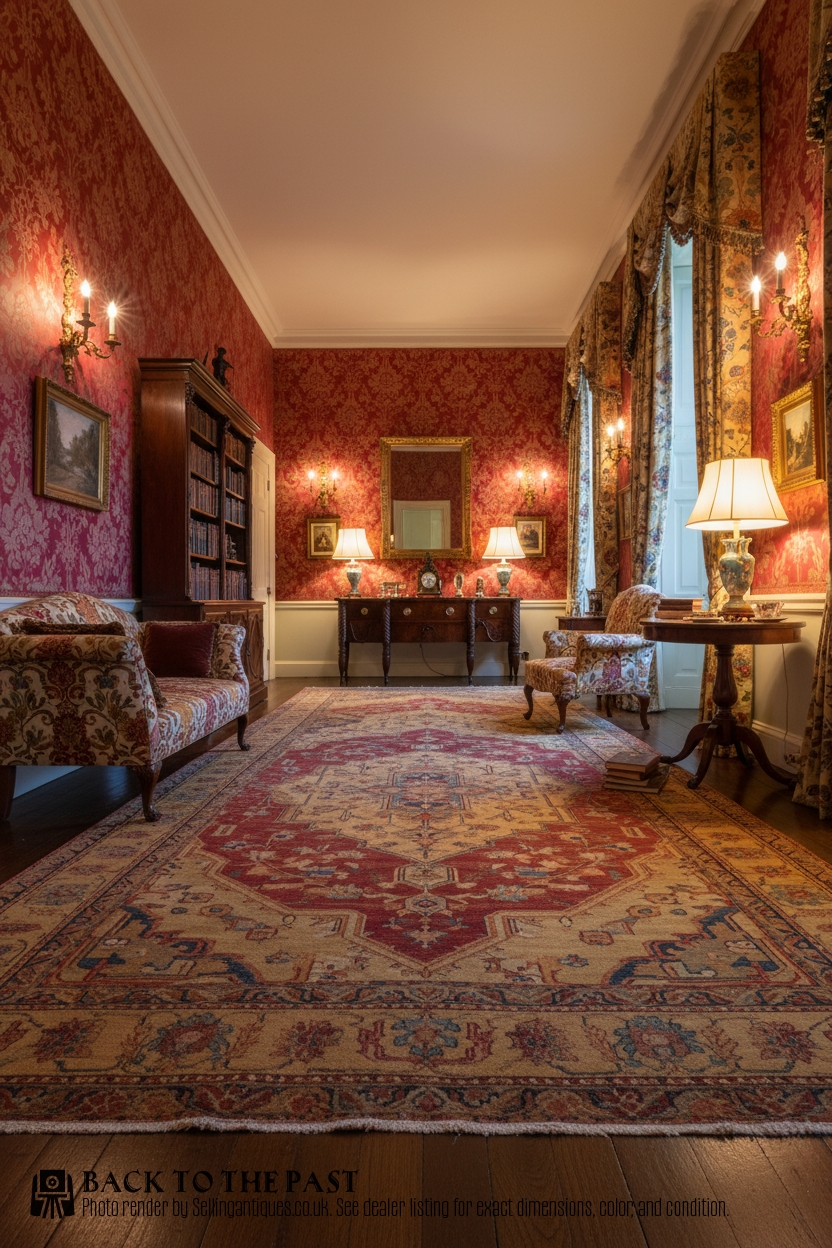
Reeded Leg Mahogany Sideboard
A reeded leg mahogany sideboard is a dining room server designed to hold silver, linen, and dining ware while anchoring the room with dense timber. The listings on this page span the George III, Regency, and Victorian periods, alongside later Sheraton Revival pieces.
You will encounter various formats, from bow front and serpentine shapes to breakfront designs and simpler serving tables. Most examples date from the Regency era and the late eighteenth century, showcasing the cabinetmaker's skill in handling figured veneers and linear inlays.
Proportions range from long serving tables with slender supports to substantial cupboards with multiple drawers. The timber varies from plain stock to deeply figured flame mahogany enriched with contrasting boxwood and ebony details.
How they were made
Cabinetmakers built these pieces using solid mahogany for structural frames and drawer linings, applying figured mahogany veneers to the main carcase surfaces. The timber was selected for its depth of grain, which was then hand-polished to a deep lustre.
Details like reeded legs were carved directly into the solid wood to create crisp parallel lines that catch the light. Workshops often incorporated contrasting stringing of ebony and boxwood to define drawer fronts and panel borders.
Brass fittings, including lion mask rings and oval drop handles, were cast and hand-chased before being fixed to the drawer fronts. Construction relied on traditional dovetail joints for the drawers and robust tenon frames for the main body.
Reeded Leg Mahogany Sideboard Retail Price Guide 2026
Typical asking prices for reeded leg mahogany sideboard among the pieces listed under this phrase on Sellingantiques today, from the lower quarter to the upper quarter. They describe what is for sale here now, not the wider market.
Current listings feature pieces from the Georgian, Regency, and Victorian periods, executed in mahogany with brass and ebony details.
What varies in quality
Quality in a sideboard lies in the choice of timber and the precision of the carving. Superior pieces utilise heavily figured flame mahogany across the primary surfaces, while simpler items rely on plainer stock.
The crispness of the reeding distinguishes workshops of higher repute from standard provincial production. Sharp, uniform channels carved into solid timber indicate careful hand work, whereas worn or shallow grooves suggest hurried execution.
The integration of secondary timbers and the neatness of internal drawer construction also mark the grade of the piece. Well-made items feature oak or mahogany drawer linings with fine hand-cut dovetails.
Gillows of Lancaster and London
The Reeded Leg Mahogany Sideboard Glossary
- Reeding
- A decorative series of parallel convex moulding strips carved directly into wood, commonly found on the legs of Regency furniture.
- Flame mahogany
- A veneer cut from timber where the branch meets the trunk, producing a distinctive flickering flame pattern.
- Serpentine
- A curved line that bends outward at the centre and inward at the sides, creating a flowing front profile on a cabinet.
- Breakfront
- A piece of furniture where the central section projects forward from the flanking cabinetwork.
- Stringing
- Thin lines of contrasting wood inlay used to outline drawers, tabletops, and panel borders.
Reeded Leg Mahogany Sideboard: Frequently Asked Questions
What is a reeded leg mahogany sideboard?
A reeded leg mahogany sideboard is a traditional dining room server featuring carved parallel grooves on its supports and constructed primarily from mahogany timber.
These pieces were produced during the eighteenth and nineteenth centuries to serve dining rooms as storage for tableware and serving surfaces for food.
How do I date a mahogany sideboard?
Dating relies on observing the overall style, timber selection, and construction methods. Pieces from the eighteenth century often display straight tapered legs or serpentine fronts, while Regency examples feature bolder architectural elements and reeded supports.
Hardware styles and secondary woods inside the drawers also provide clues to the period of manufacture, helping distinguish George III originals from later Revival copies.
Where were sideboards placed in a historic home?
Sideboards traditionally stood against the dining room wall during meals to hold dishes before service and store cutlery or linen in the drawers below.
In larger houses, they formed part of a matched suite with cellarets and serving tables, designed to facilitate formal entertaining.
How do I care for antique mahogany?
Antique mahogany benefits from regular dusting with a soft, dry cloth and occasional application of traditional beeswax to nourish the timber. Avoid placing the wood in direct sunlight or near heat sources to prevent the surface from drying out.
Keeping room humidity stable protects both the solid timber and the underlying veneer from movement over time.