
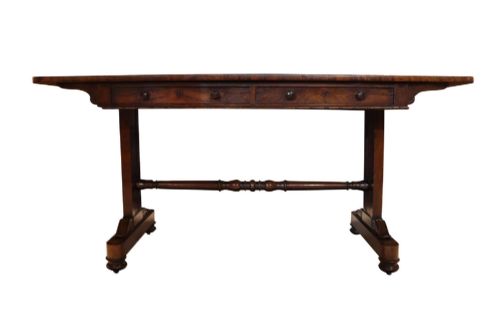
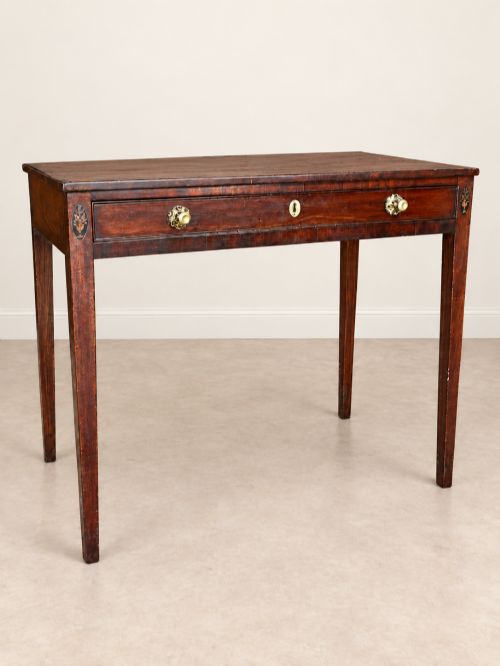
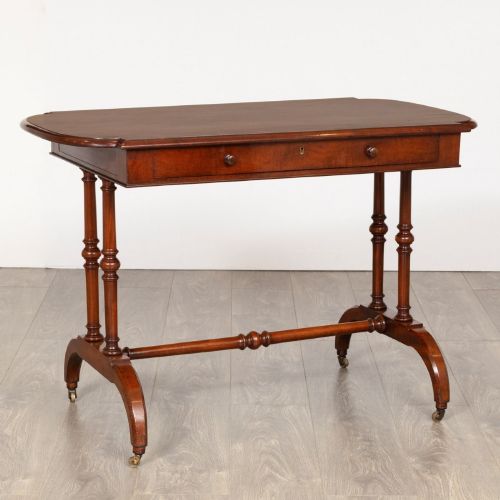
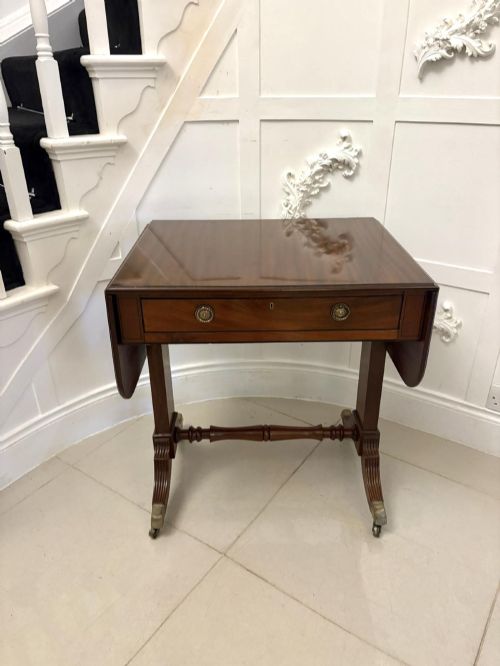

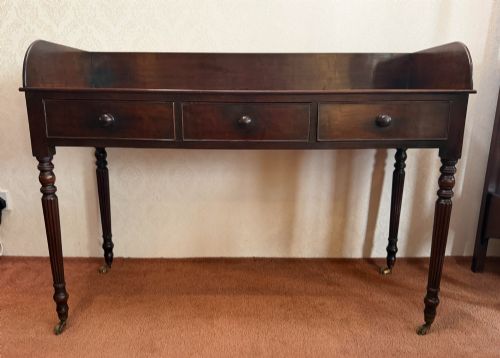
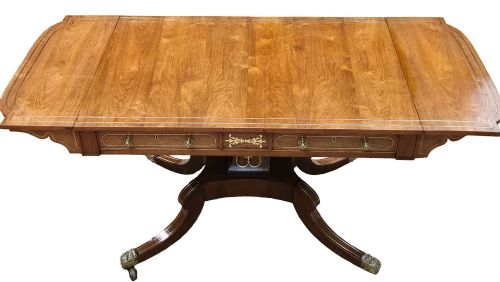
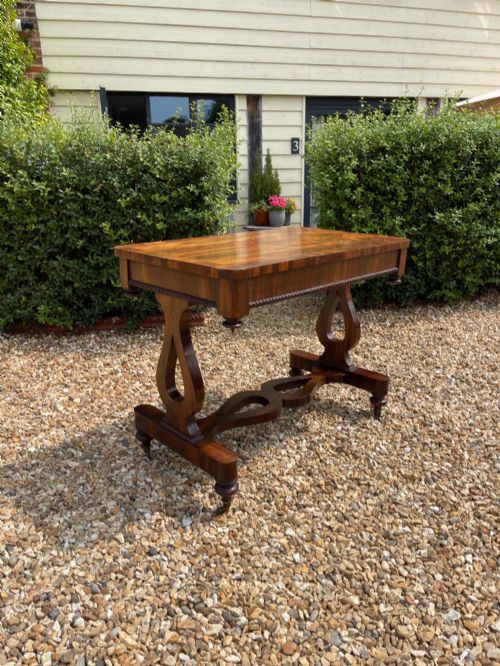
Regency Console Desk
These regency console desk pieces combine architectural form with practical writing surfaces, offering a refined centrepiece for a library or study.
Regency Console Desk
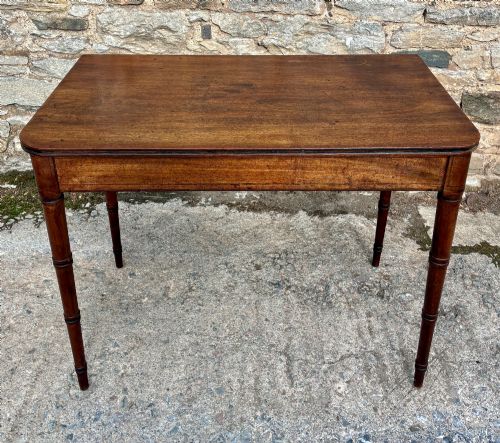
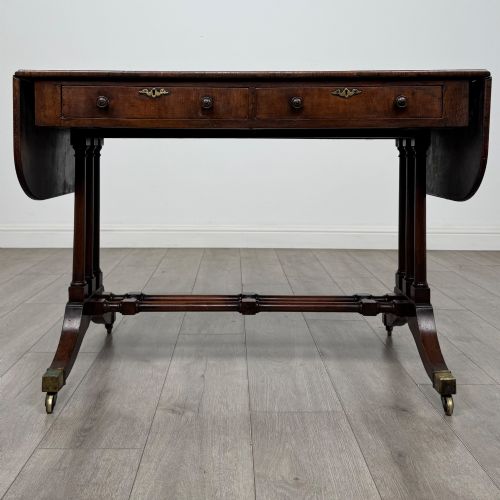
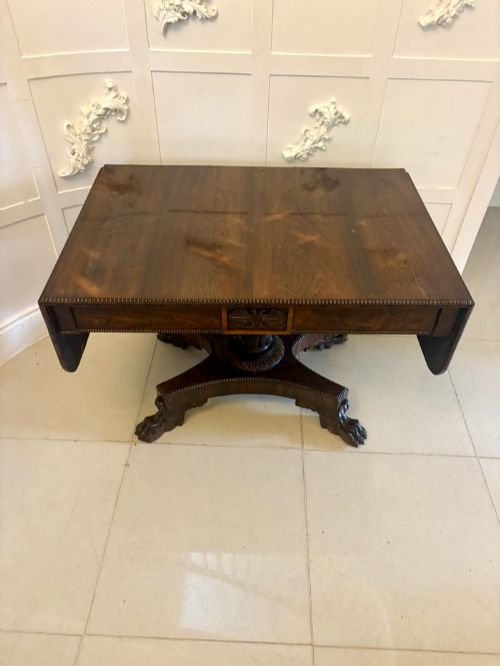
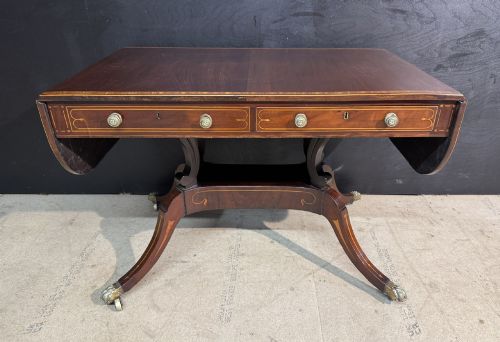
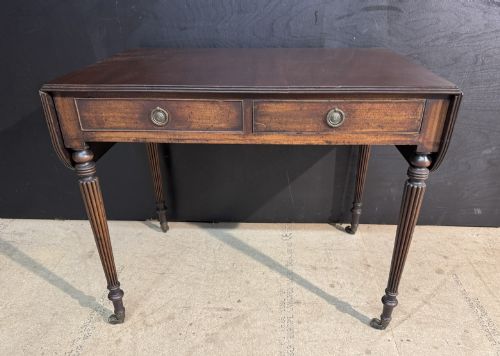
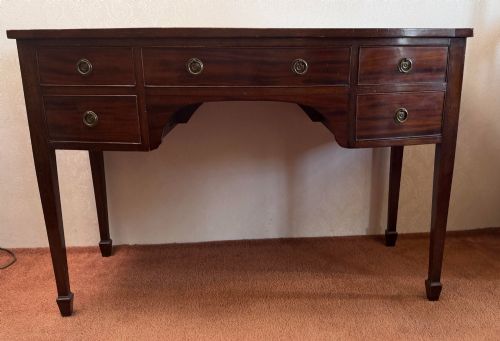
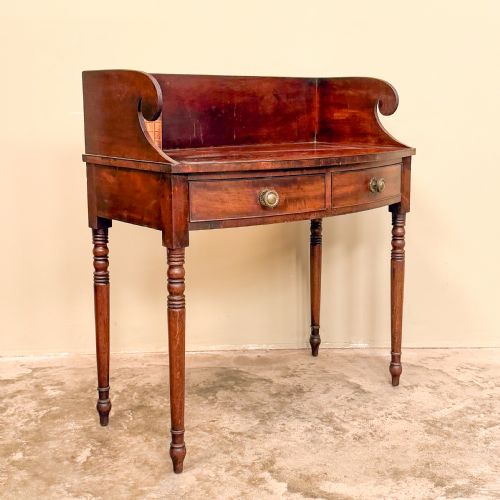
A regency console desk gathers diverse forms from the Georgian and Regency periods, spanning sofa tables, writing tables, and side tables that served multiple functions in domestic interiors. The pieces encountered most frequently on this page take the form of mahogany and rosewood sofa tables or side tables equipped with drawers.
Makers and workshops of the nineteenth century produced these desks in styles ranging from standard Regency and George IV to French Empire and William IV. Surviving examples reflect the design vocabulary of the early nineteenth century alongside later revivals from the Edwardian and Victorian eras.
The category encompasses freestanding items finished on all sides for placement in the middle of a room, as well as simpler wall-mounted console configurations. Woods such as oak, pine, and walnut appear alongside veneered surfaces in flame mahogany and pollard oak.
Materials and construction
Cabinetmakers built the structural carcases using durable timbers like oak and pine, applying choice veneers of mahogany, rosewood, and pollard oak to visible exterior surfaces. Solid mahogany and rosewood formed the primary medium for high-status library and writing tables.
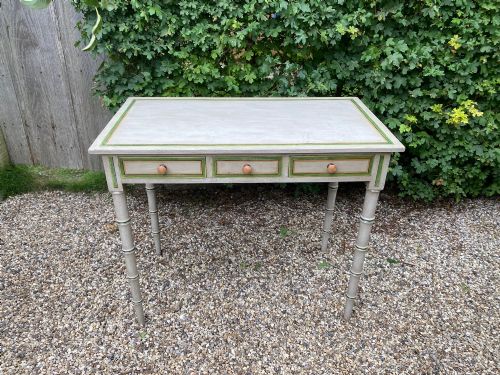
Decoration relied on contrasting wood inlays, brass mounts, and painted faux bamboo finishes rather than heavy carving. Leather inserts frequently lined the tops of writing tables to provide a durable surface for correspondence.
Joinery techniques focused on freestanding stability, utilising sturdy pedestals, turned legs, and drawer construction with multiple compartments for papers and writing implements.
Some desks mimic exotic flora entirely through paint, offering tropical luxury via humble pine.
Factors of quality
The grade of timber selection determines much of the visual distinction, with figured mahogany and rich rosewood grain commanding greater attention than plain pine or secondary woods. Grain matching across drawer fronts and tabletop surfaces separates standard workshop output from exceptional cabinet work.
The integration of secondary materials such as brass mounts, intricate inlay, and fitted leather writing surfaces dictates the refinement of a piece. Structural integrity in the freestanding pedestals and the smooth operation of multiple drawers further distinguish superior examples.
James Mein of Kelso·Jean-Joseph Chapuis·Gillows
The Regency Console Desk Glossary
- Sofa Table
- A rectangular table traditionally designed to stand in front of a sofa, featuring drop leaves on either side and usually two drawers.
- Freestanding
- Finished on all sides so the piece can stand independently in the centre of a room rather than against a wall.
- Flame Mahogany
- Mahogany veneer cut to reveal a distinctive, flamy grain pattern prized for its decorative movement.
- Faux Bamboo
- Wood turned and painted to imitate the appearance of natural bamboo, popular during the Regency period.
- Pollard Oak
- Timber taken from the top branches of pollarded trees, exhibiting dense, clustered knot formations and rich figuring.
Regency Console Desk: Frequently Asked Questions
What is a regency console desk used for?
These tables functioned primarily as writing desks, library tables, or side tables for domestic correspondence and reading.
Their freestanding design allowed placement in the middle of a room or against a wall, providing a practical surface with integrated drawer storage.
How do I tell a Regency piece from a later copy?
Examine the secondary woods inside the drawers, such as oak or pine, alongside the construction methods used in the joinery.
Period pieces from the early nineteenth century show hand-cut joints and timber ageing consistent with the era, distinguishing them from Edwardian or later revivals.
Are these desks finished on all sides?
Many sofa tables and library tables were built as freestanding pieces with finished backs for central room placement.
Others designed strictly as side or console tables were intended to sit against a wall, leaving the rear plain or unveneered.
What woods were used for these desks?
Cabinetmakers relied heavily on solid and veneered mahogany, rosewood, and pollard oak for the primary exterior surfaces.
Secondary structural timbers beneath the veneers typically included oak, pine, and occasionally walnut.