
Regency Bureau Desk
A regency bureau desk brings together fine cabinetmaking, concealed writing drawers, and rich timbers from the early nineteenth century.
Regency Bureau Desk
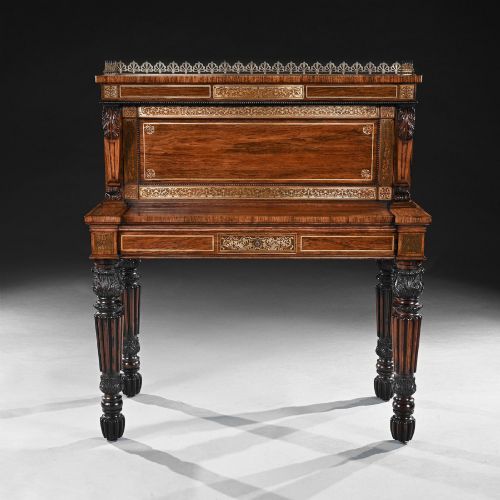
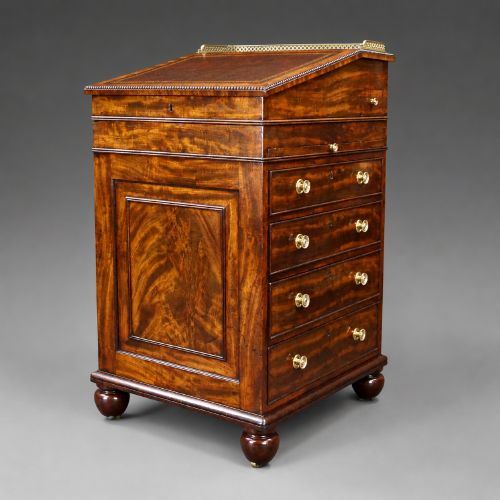
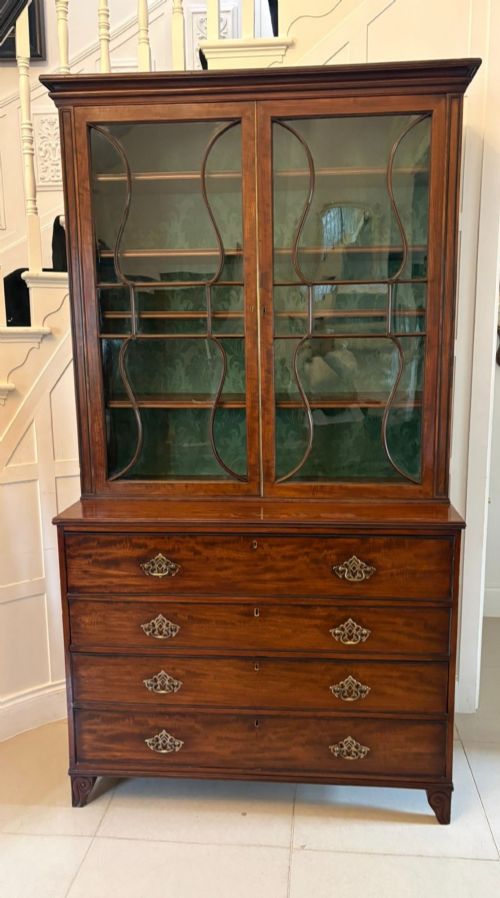
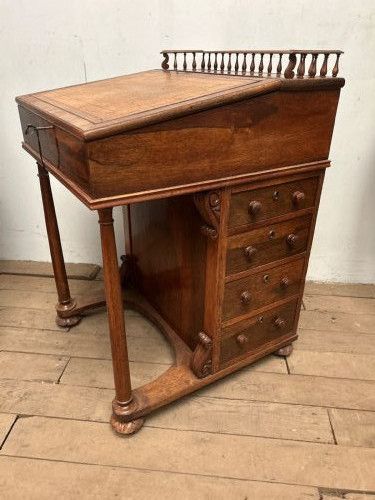
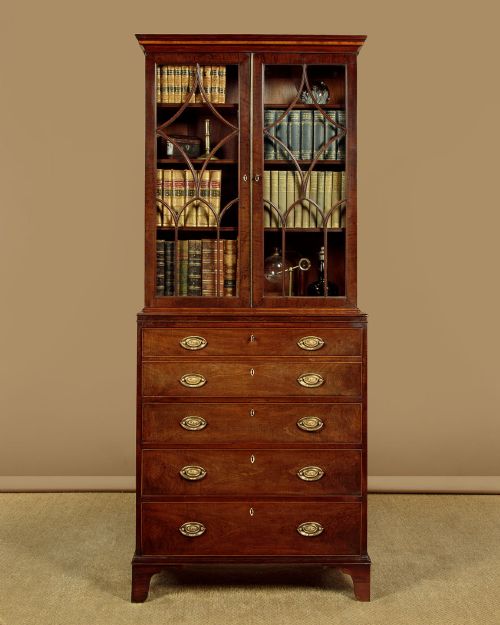
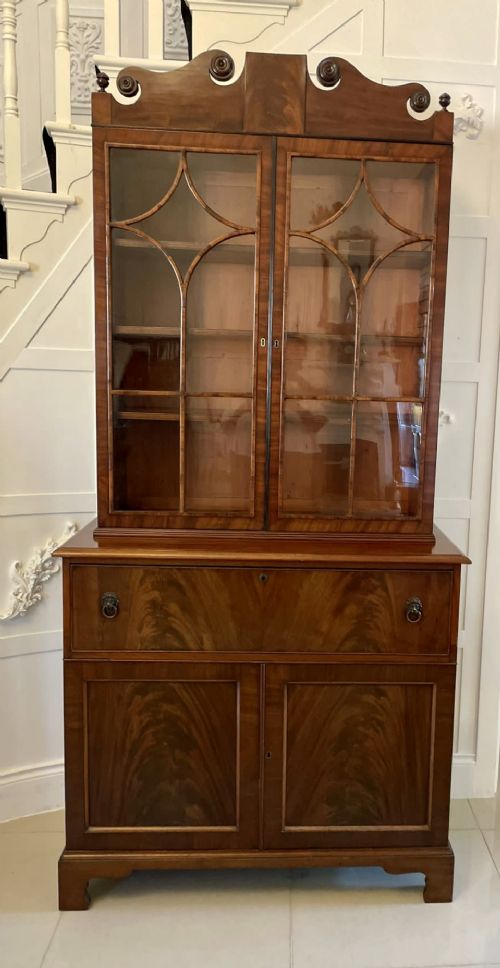
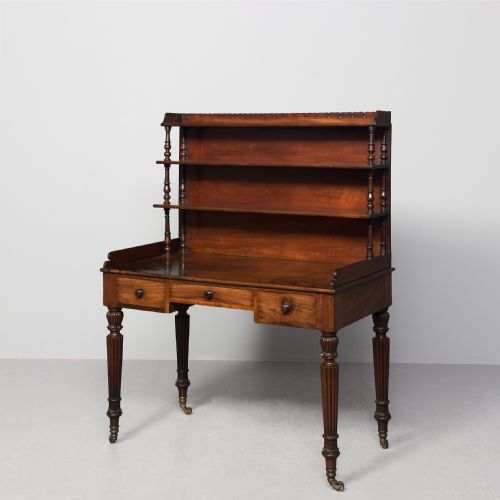
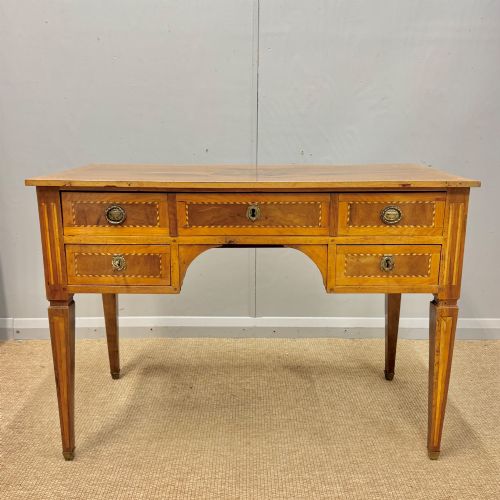
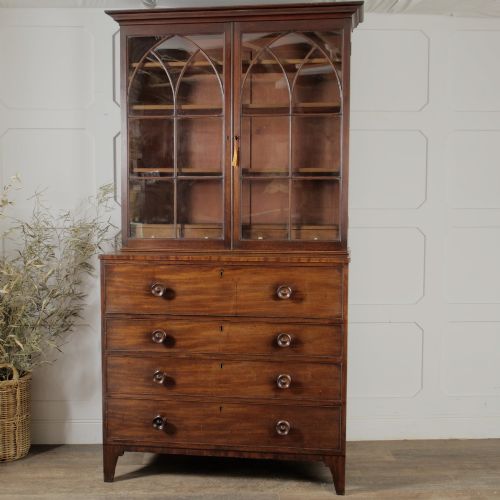
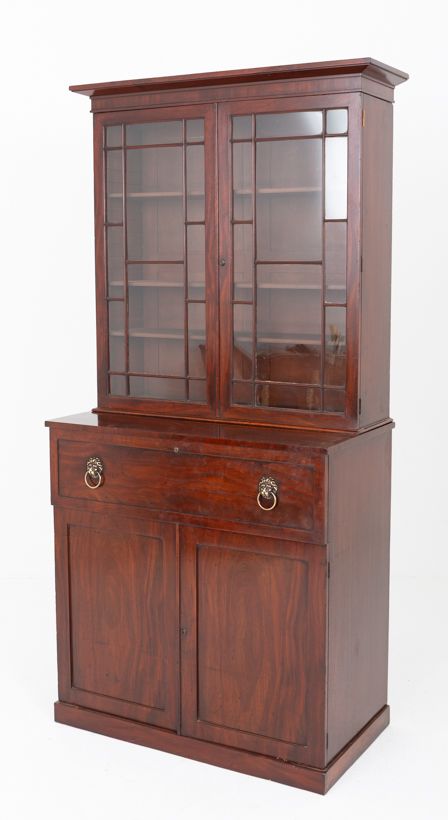
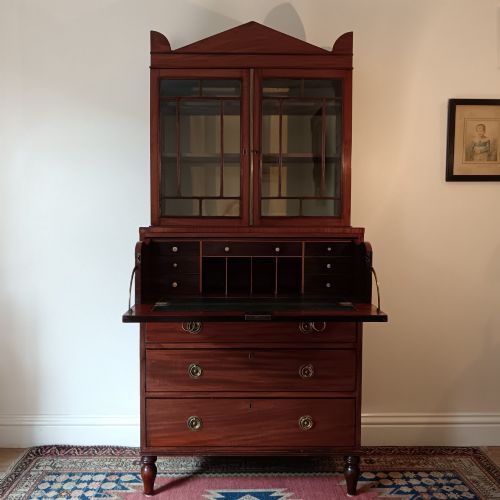
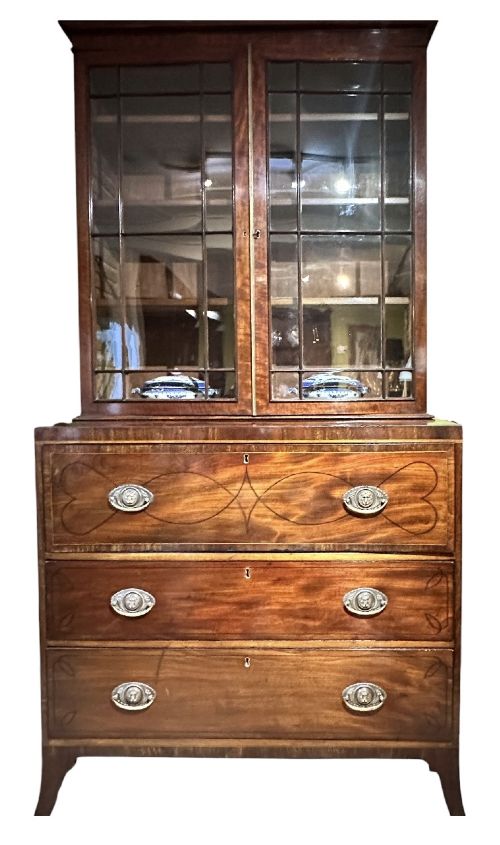
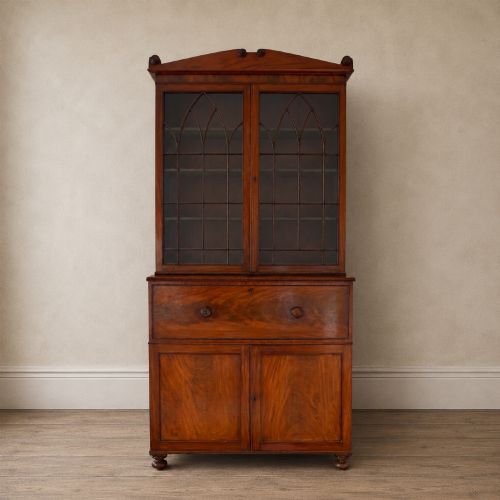
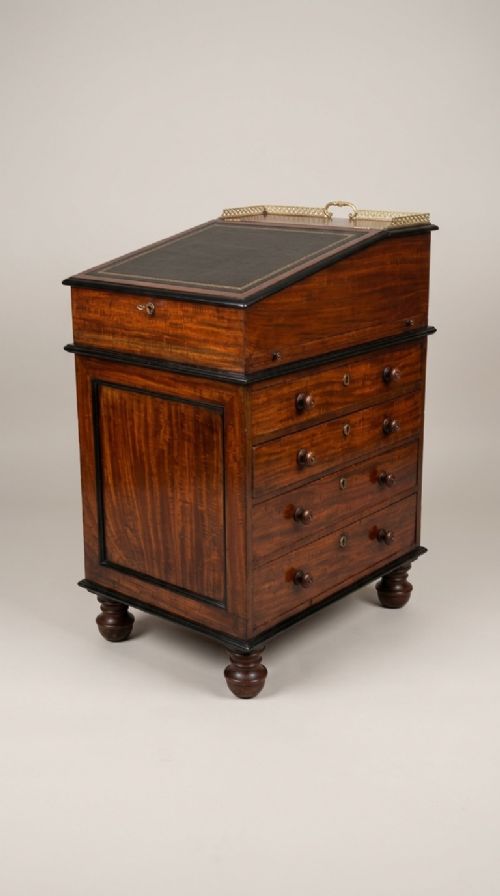
A regency bureau desk encompasses a variety of writing furniture, from tall secretaire bookcases with glazed upper doors to compact davenports and cylinder desks. The pieces span the Georgian, Regency, and William IV eras, capturing a period of inventive domestic design.
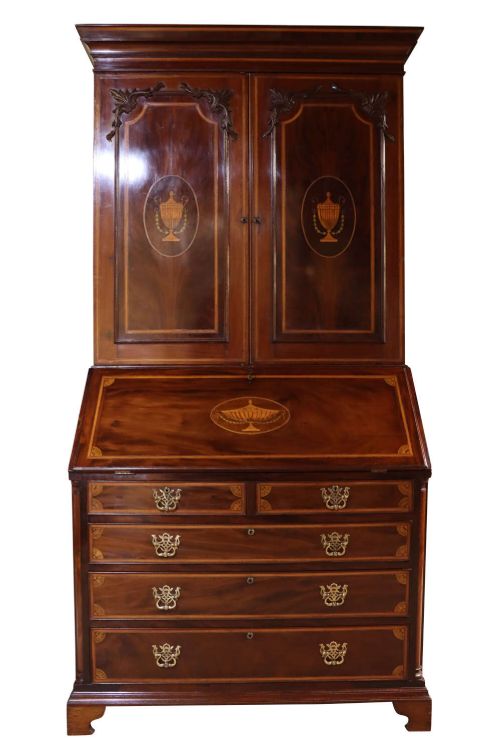
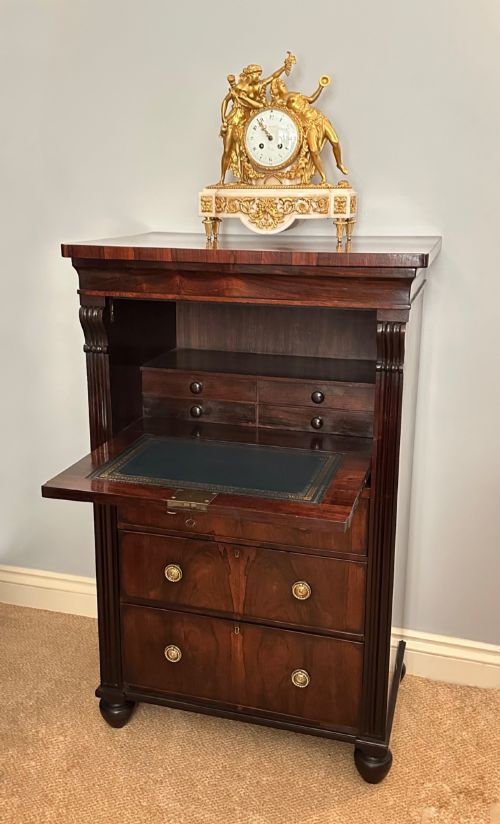
Secretaire bookcases and fitted chest variants appear most frequently on this page, offering drop-front writing surfaces that conceal pigeonholes and small drawers. These forms combine storage and writing utility, often executed in figured mahogany or rosewood.
Makers and workshops of the time utilised exotic veneers and precise brass or ebony inlay, creating both imposing library pieces and smaller ladies desks for the parlour.
Materials and Construction
Cabinetmakers relied heavily on solid and veneered mahogany, rosewood, and satinwood, often selecting figured timber with strong grain patterns for drawer fronts and fall flaps. Secondary timbers such as oak lined the internal drawers.
Decorative detailing involved brass inlay, fine stringing in ebony, and cast brass ring handles, while writing surfaces incorporated inset panels of leather or baize. Glazed cabinet doors utilised slender wooden astragals to form geometric window panes.
Listings feature mahogany, rosewood, walnut, and satinwood, paired with leather, baize, and brass details across nineteenth-century forms.
Evaluating the Craft
The distinction between standard workshop production and master cabinetmaking rests in the selection of timbers and the precision of the internal fittings. Superior examples display symmetrical flame mahogany veneers and intricate pigeonhole arrangements with secret compartments.
Hardware integration and secondary wood choice also signal grade, where hand-cut dovetails and original brass mounts indicate higher workshop standards.
Gillows Oxford Street Workshop·James Mein of Kelso·George Oakley·Gillows of Lancaster·John MaClean·Hobbs and Co
The Regency Bureau Desk Glossary
- Secretaire
- A desk or cabinet with a fall-front flap that opens to reveal a fitted writing interior. This mechanism allows a tall chest or bookcase to function as a writing place.
- Davenport
- A small compact desk featuring a sloped writing top and drawers accessed from the side. These pieces gained popularity during the Regency period for use in smaller rooms.
- Astragal
- A moulding profile used in cabinet doors to hold panes of glass in place. They form the wooden lattice work across the front of bookcase sections.
- Stringing
- A thin strip of contrasting wood inlaid into the surface of furniture to create geometric borders. Cabinetmakers used ebony or boxwood stringing on mahogany surfaces.
- Tambour
- A flexible shutter made of narrow strips of wood glued to canvas, allowing a desk top to slide open in a curved track. Cylinder desks often incorporate this mechanism.
Regency Bureau Desk: Frequently Asked Questions
How do I identify a genuine Regency desk?
Examine the secondary woods, such as oak drawer linings, and look for period construction methods like hand-cut dovetails and traditional hand-planed backboards.
Check for characteristic Regency design motifs, including brass inlay, lyre supports, and flame mahogany veneers without modern machine markings.
How should I care for leather writing surfaces?
Keep antique leather inserts away from direct sunlight and excessive heat to prevent the material from drying out and cracking.
Apply a microcrystalline wax or suitable leather balm sparingly with a soft cloth to nourish the hide without staining the surrounding wood.
Where were davenport desks placed?
Davenport desks were designed as compact writing tables for ladies in drawing rooms or boudoirs, positioned freely or against walls due to their finished backs.
Their small footprint allowed them to serve in domestic spaces where a full-sized bureau or partner desk would prove too large.