
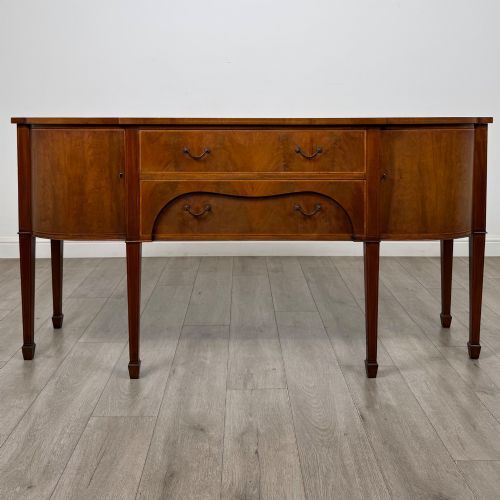
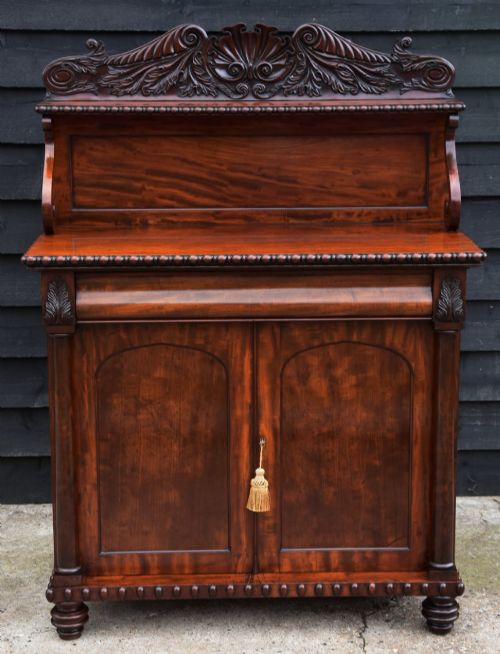
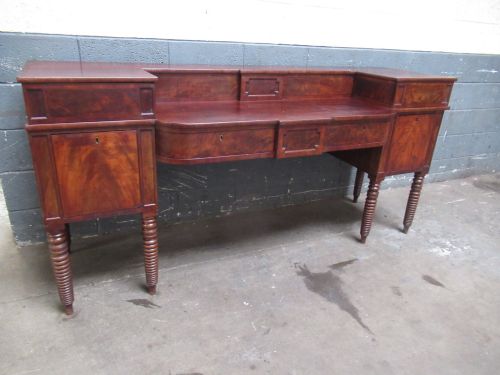
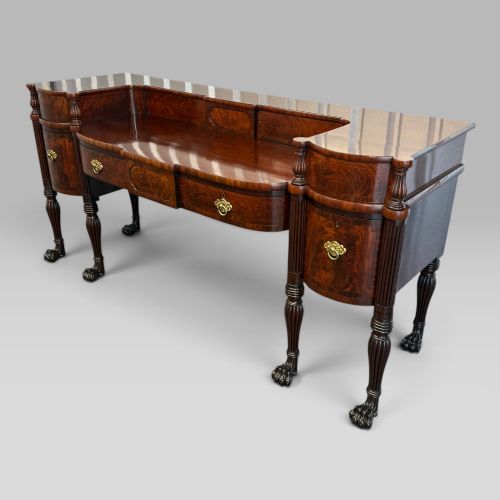
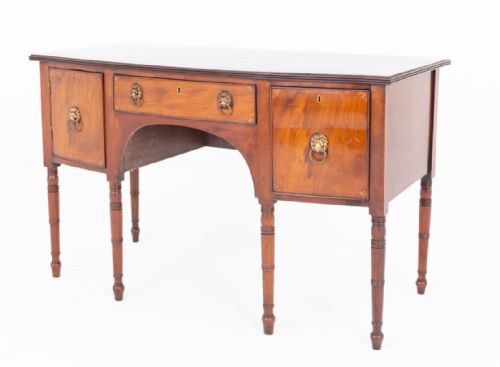
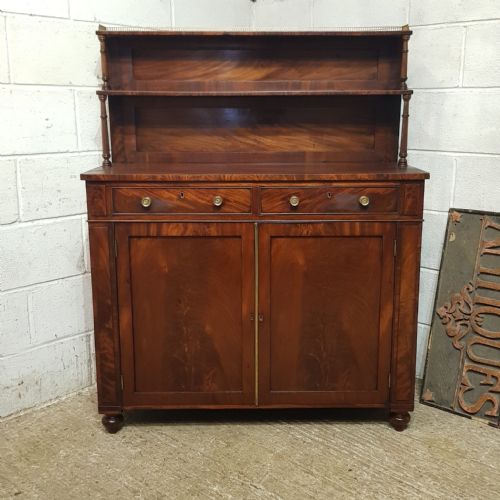
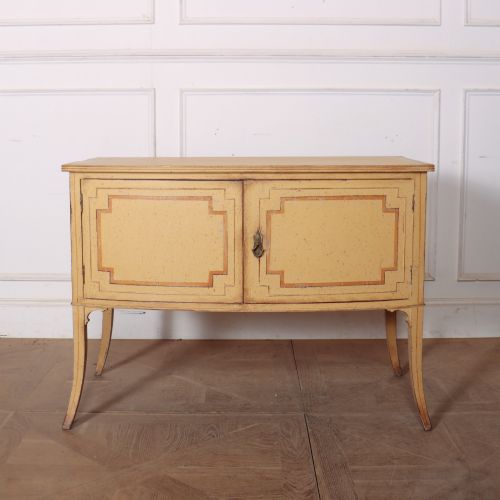
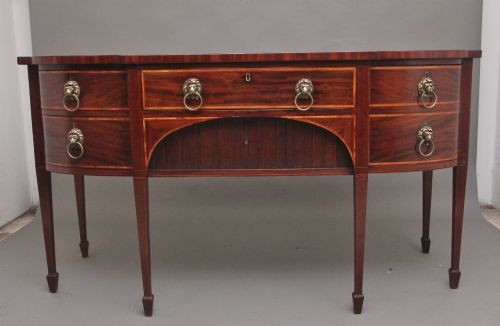
Regency Buffet Cabinet
A regency buffet cabinet brings architectural dignity and rich timber grain to a room, offering serious storage disguised as elegance.
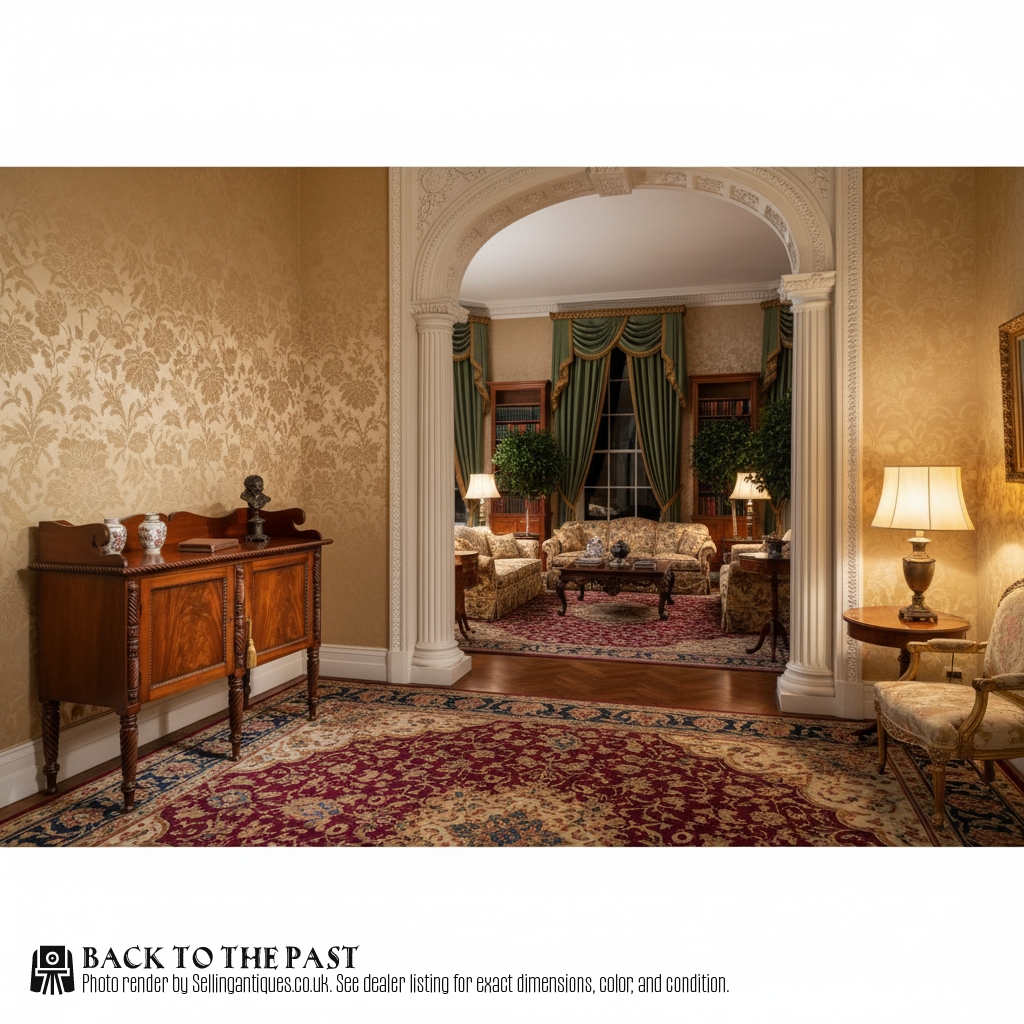
Regency Buffet Cabinet
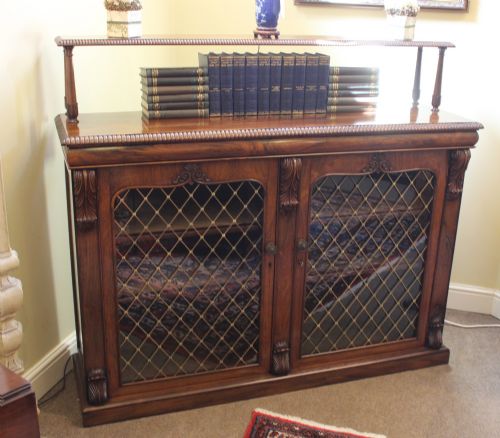
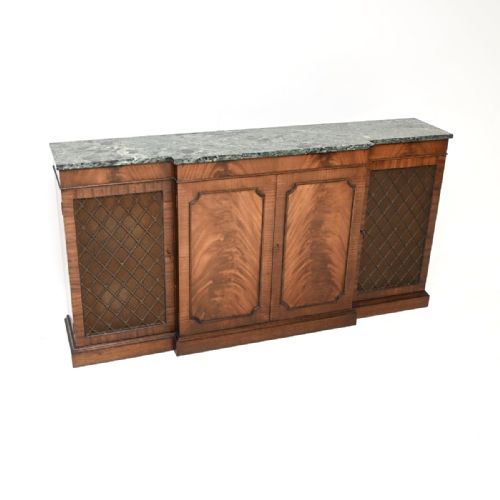
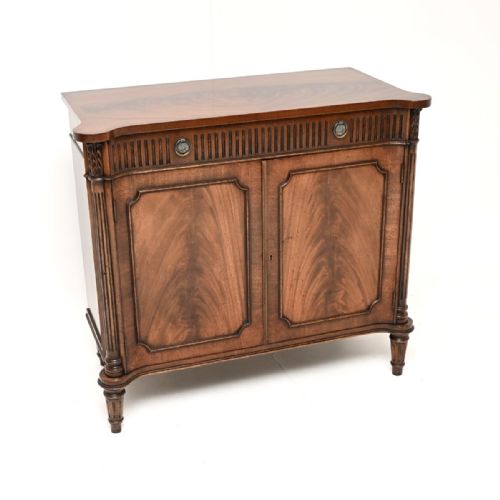
When you search for a regency buffet cabinet, you encounter pieces designed for formal dining rooms and halls, functioning as sideboards, chiffoniers, or side cabinets. The core of the selection spans the nineteenth century, drawing heavily on Regency, William IV, and Georgian traditions alongside later revivals.
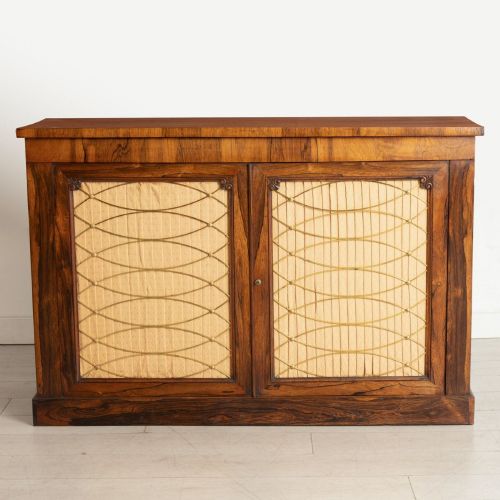
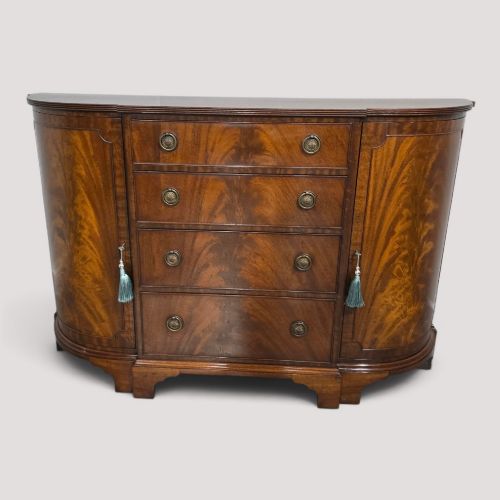
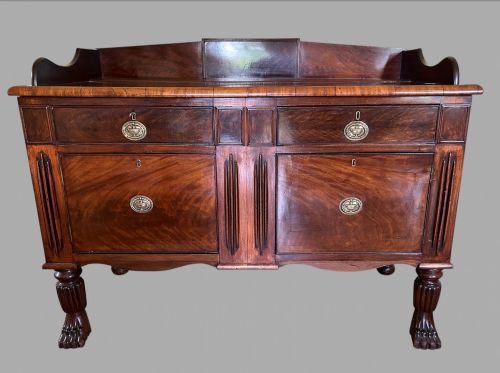
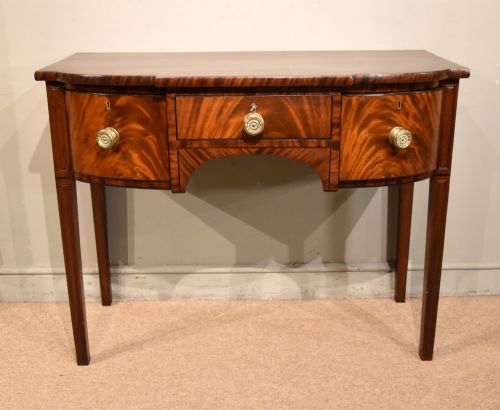
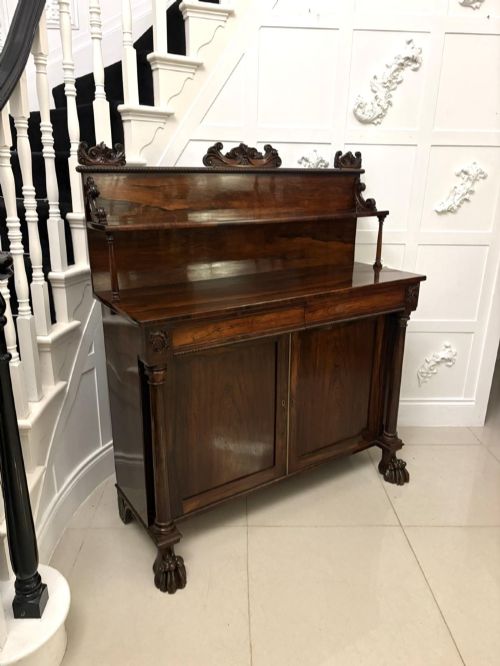
You are most likely to meet mahogany and rosewood forms, often displaying flame mahogany veneer, bow fronts, or breakfront configurations. Pieces range from grand Scottish and breakfront sideboards to compact chiffoniers and side cabinets fitted with doors or grill fronts.
Materials and construction
Cabinetmakers relied on solid wood foundations overlaid with figured veneers such as flame mahogany and rosewood to create striking visual depth on large surfaces. Brass inlay, fabric backing behind grill doors, and carved details like lion paw feet added decorative contrast.
Construction techniques prioritised sturdy timber carcasses designed to support heavy dining silver and porcelain while showcasing natural grain patterns through careful polishing.
Listings feature mahogany and rosewood timber, alongside marble tops and fabric-backed grill fronts across nineteenth-century and revival periods.
Assessing craftsmanship and proportion
Quality rests in the selection of timber veneers, where symmetrical grain matching across drawer fronts and doors separates standard utility furniture from finer commissions. The crispness of carved details, such as feet or mouldings, and the precision of brass inlay reflect the hand of a skilled maker.
Proportion and structural integrity dictate the standing of a piece within its period, with superior examples maintaining balanced lines and original hardware that complement the architectural weight of the timber.
Gillows
The Regency Buffet Cabinet Glossary
- Buffet
- A sideboard or cabinet used for serving food and storing dining ware. These pieces often feature cupboards and drawers arranged along a low, wide format.
- Chiffonier
- A low cabinet originating in the nineteenth century, typically equipped with shelves or enclosed storage below. They frequently incorporate fabric-backed grill doors.
- Flame mahogany
- A veneer cut from the fork of a mahogany tree to produce a flickering, flame-like pattern. Cabinetmakers prized this figure for principal display surfaces.
- Breakfront
- A cabinet or sideboard whose central section projects forward from the flanking wings. This architectural layout creates depth and shadow across the front elevation.
Regency Buffet Cabinet: Frequently Asked Questions
What is a regency buffet cabinet used for?
These pieces served primarily in dining rooms to store silverware, linen, and china while providing a surface to serve food during meals.
Today, they function well in dining spaces, hallways, or living rooms as statement storage units with generous surface areas.
How do I tell a regency piece from a revival?
Original pieces from the early nineteenth century exhibit construction methods, timber ageing, and hand-cut joinery consistent with the period of manufacture.
Revival pieces produced later often show standardised machine working and different secondary woods despite adopting nineteenth-century styles.
Where should I place a side cabinet?
A side cabinet suits dining rooms against a main wall, or spacious hallways where it can hold lamps and decorative objects.
Ensure adequate clearance for doors to open fully, particularly on bow front or breakfront configurations.
How do I care for mahogany and rosewood?
Keep timber surfaces away from direct sunlight and heat sources to prevent the wood veneers from drying out or splitting.
Apply traditional wax polish sparingly and buff with a soft cloth to maintain the natural sheen of the grain.