
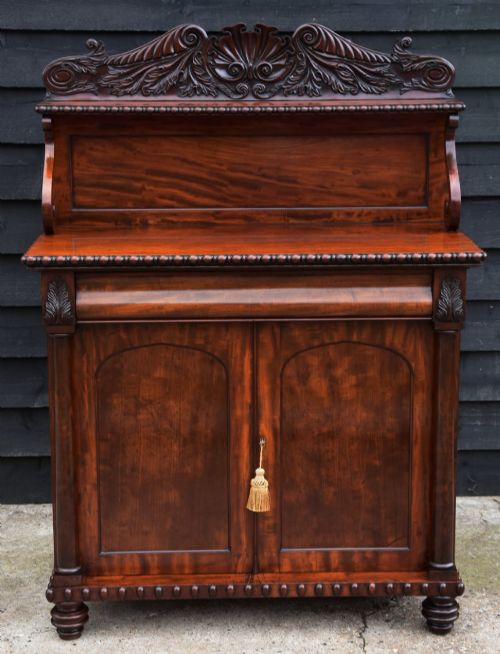
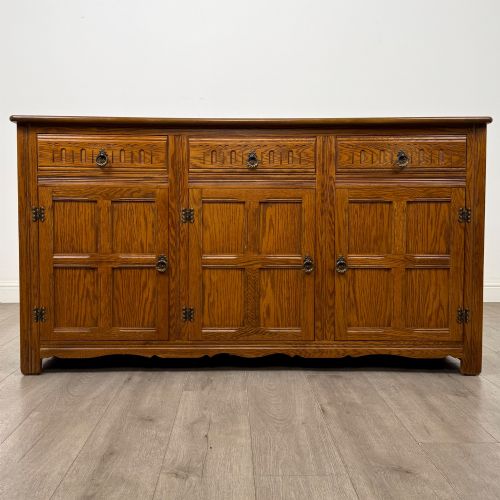
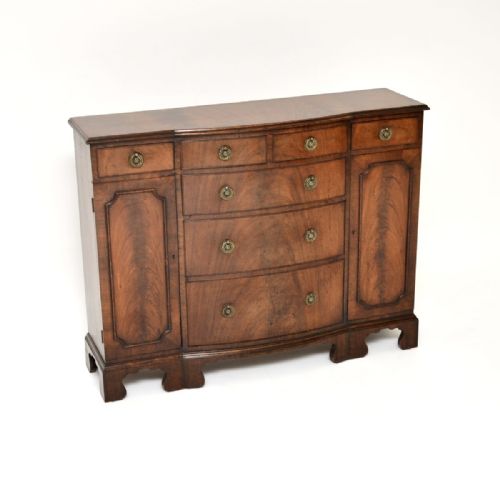
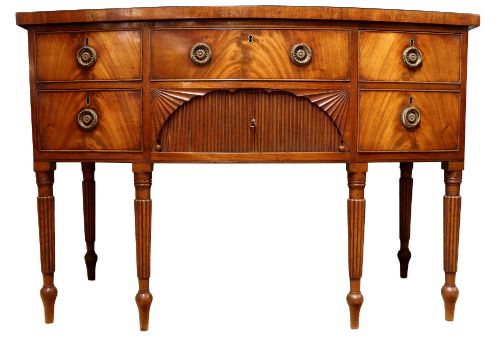
Vintage Wooden Buffet Sideboard
A vintage wooden buffet sideboard brings substantial timber storage and period character to a dining room.
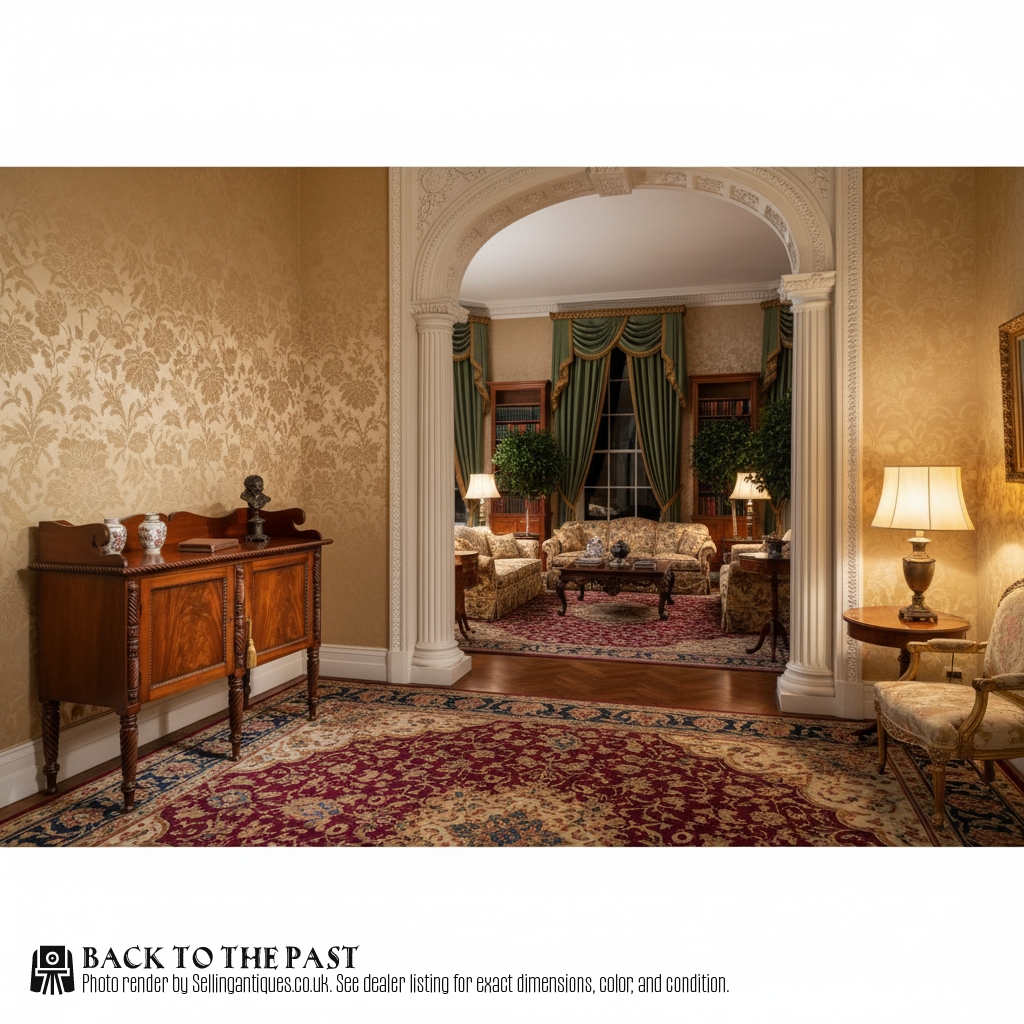
Vintage Wooden Buffet Sideboard
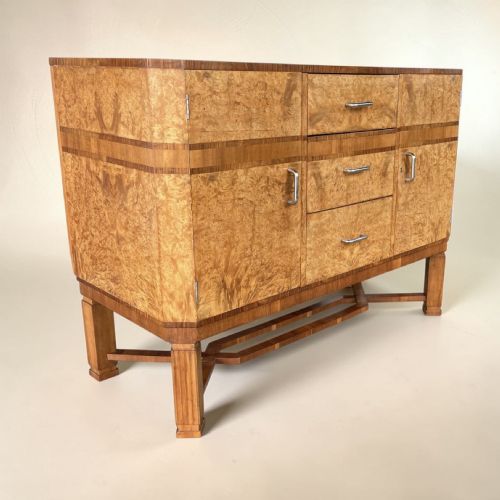
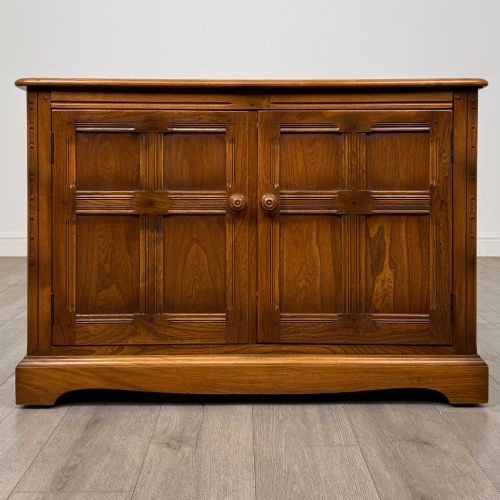
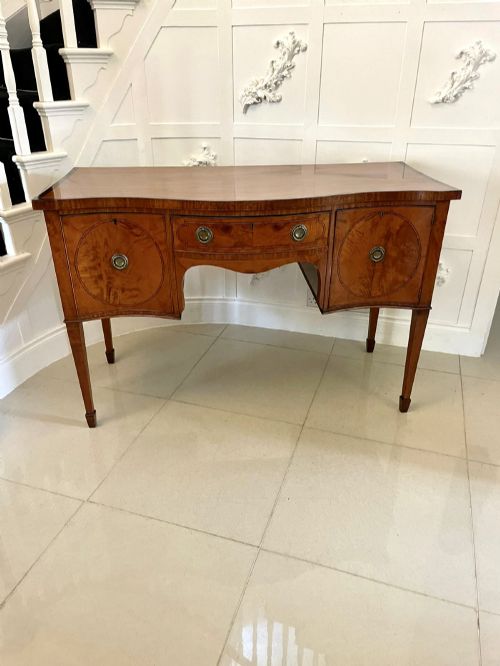
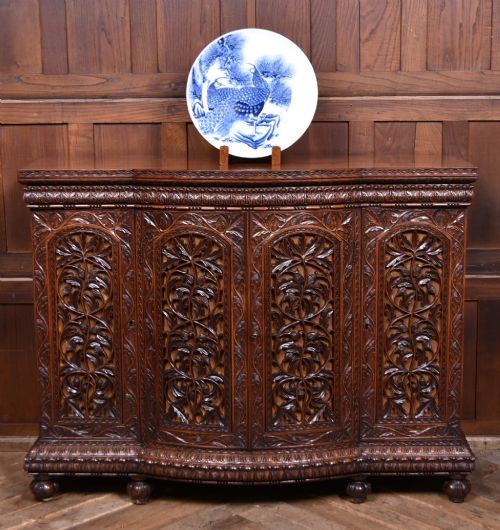
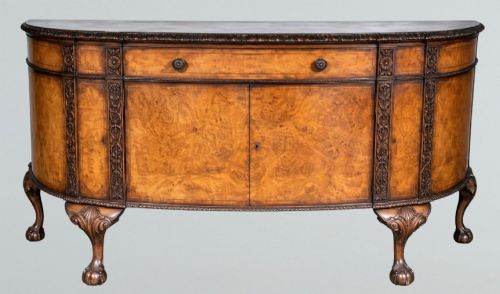
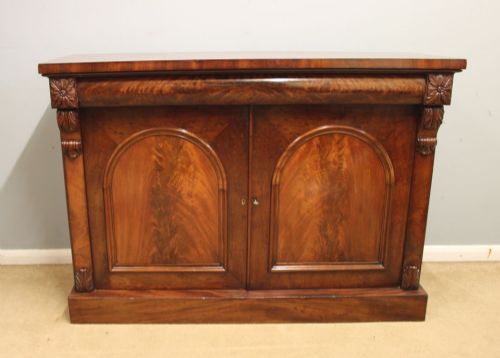
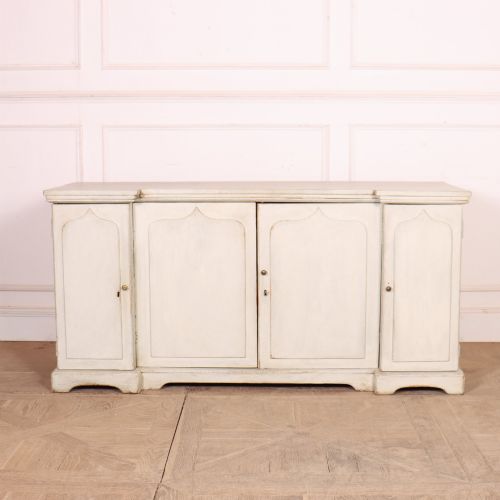
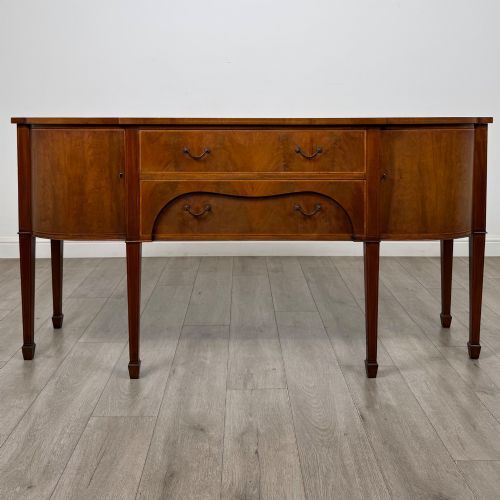
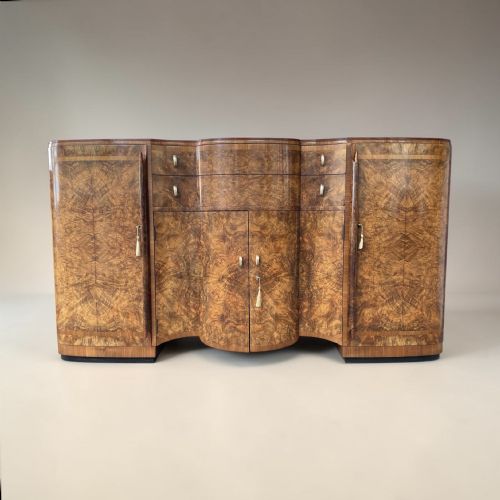
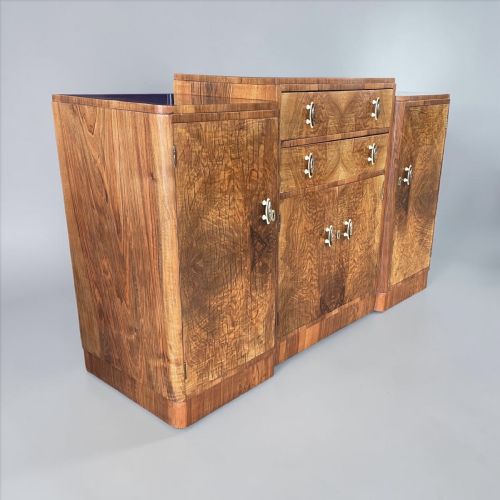
When you search for a vintage wooden buffet sideboard, you encounter formal dining room furniture spanning multiple centuries and stylistic revivals. The selection on this page ranges from Georgian and Regency formal pieces to Edwardian oak cupboards and Art Deco walnut cabinets.
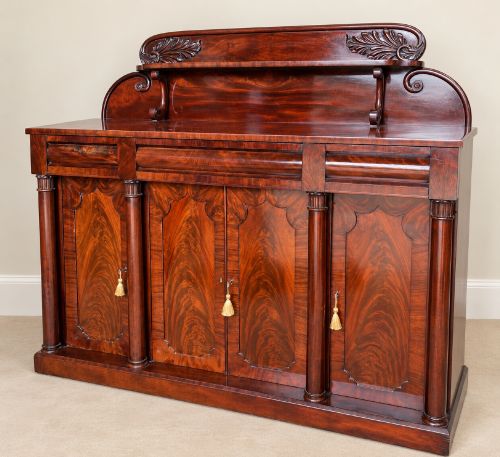
You are most likely to meet mahogany and oak examples from the Victorian and Edwardian eras, often featuring cupboards, drawers, and carved details. These items functioned historically for serving food and storing tableware in dining spaces.
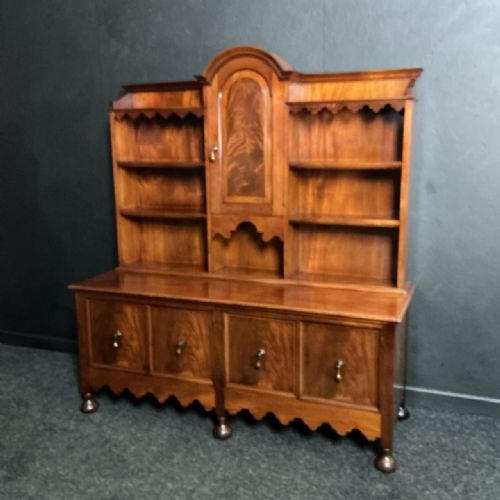
The forms extend beyond standard sideboards to include dresser bases, chiffoniers, and breakfront cabinets. Each period brings distinct proportions and timber selections to the dining room or hallway.
Materials and construction methods
Cabinet makers utilised dense hardwoods such as mahogany, oak, walnut, and padouk, frequently applying burr walnut or satinwood veneers to prominent surfaces. Timber selection dictated both the structural integrity and the decorative grain patterns visible across the front.
Joinery methods involved traditional dovetailed drawer construction and mortise and tenon frames, occasionally accented with brass hardware, glass panels, or marble tops. Carved elements, inlaid banding, and shaped serpentine fronts demanded skilled hand woodworking.
Periods represented span from George III and Regency designs through Victorian, Edwardian, and Art Deco eras.
Distinguishing quality in timber sideboards
The distinction between ordinary and superior pieces rests on the choice of timber and the precision of the cabinet work. Finely figured grain, well-matched veneers, and crisp hand carving elevate a piece far above standard utilitarian workshop production.
Original hardware, sound structural joinery, and well-balanced proportions define the upper tier of the range. Master makers incorporated thoughtful interior fittings, such as cutlery trays, behind heavy timber doors.
Maurice Adams·Edward Barnsley·Gomme·Whytock and Reid
The Vintage Wooden Buffet Sideboard Glossary
- Serpentine front
- A furniture front characterised by a gentle convex centre flanked by concave curves. This shaping required advanced woodworking skill.
- Breakfront
- A cabinet design where the central section projects forward from the flanking outer wings. It creates visual depth in large dining room furniture.
- Chiffonier
- A compact sideboard or low cupboard developed in the nineteenth century. It frequently incorporates a shelf or mirror back.
- Dresser base
- A low, heavy table structure fitted with multiple drawers and cupboards beneath. These served utilitarian food preparation and storage roles in historic kitchens.
- Pedestal sideboard
- A form featuring two distinct pedestal cupboards supporting a central console or drawer section. Regency makers favoured this grand architectural arrangement.
Vintage Wooden Buffet Sideboard: Frequently Asked Questions
How do I date a wooden sideboard?
Dating relies on observing the combination of timber species, construction joinery, and stylistic details. Georgian and Regency pieces show hand-cut dovetails and classical veneers, while Edwardian and Art Deco examples introduce golden oak and distinct geometric lines.
Examining secondary woods inside drawers and the style of brass hardware helps narrow the decade of manufacture. Period characteristics provide the firmest guide when maker marks are absent.
What is the difference between a sideboard and a buffet?
Sideboards and buffets both provide surface space and enclosed storage for dining rooms, though terminology varied by period. Buffets traditionally emphasised serving food, while sideboards often incorporated deeper cellaret drawers and cupboards.
In practice, historical makers and modern collectors frequently use the terms interchangeably for heavy timber serving furniture.
How do I care for antique wood furniture?
Maintaining vintage timber involves keeping pieces away from direct heat sources and fluctuating humidity to prevent wood splitting. Regular dusting with a soft cloth preserves the waxed or polished surface.
Avoid modern silicone sprays, relying instead on traditional beeswax to nourish dry hardwoods like mahogany and oak over the years.
Where should I place a sideboard in my home?
Sideboards suit dining rooms, large hallways, and living spaces where substantial surface area and concealed storage are useful. Their linear proportions anchor long walls effectively beneath artwork or mirrors.
Ensuring adequate clearance for cabinet doors and drawers to open fully is the main practical consideration in room planning.