
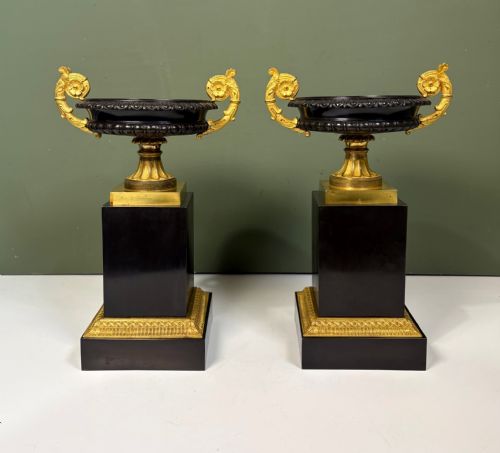


Regency Bronze Urns
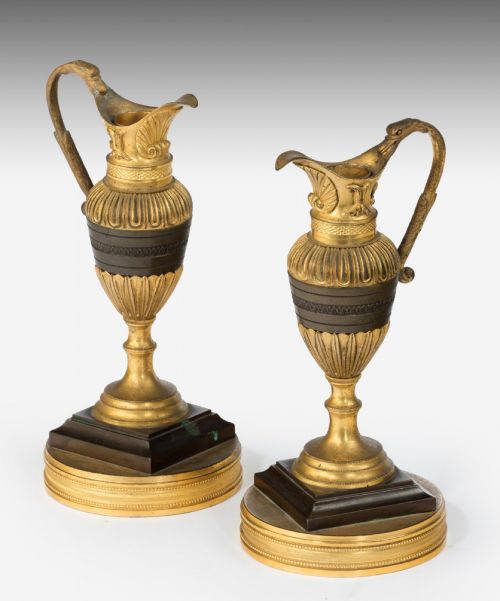
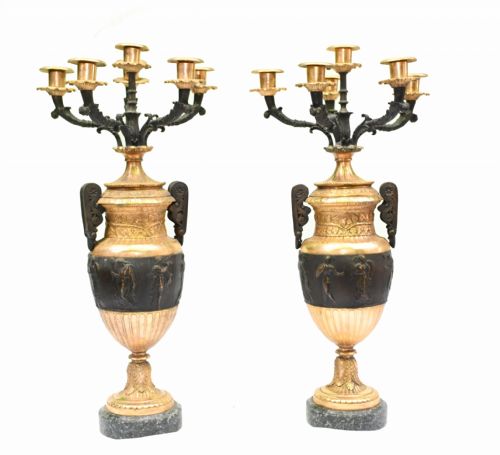
Regency bronze urns bring classical gravity into a room, combining patinated metal and ormolu mountings in forms drawn from antiquity.
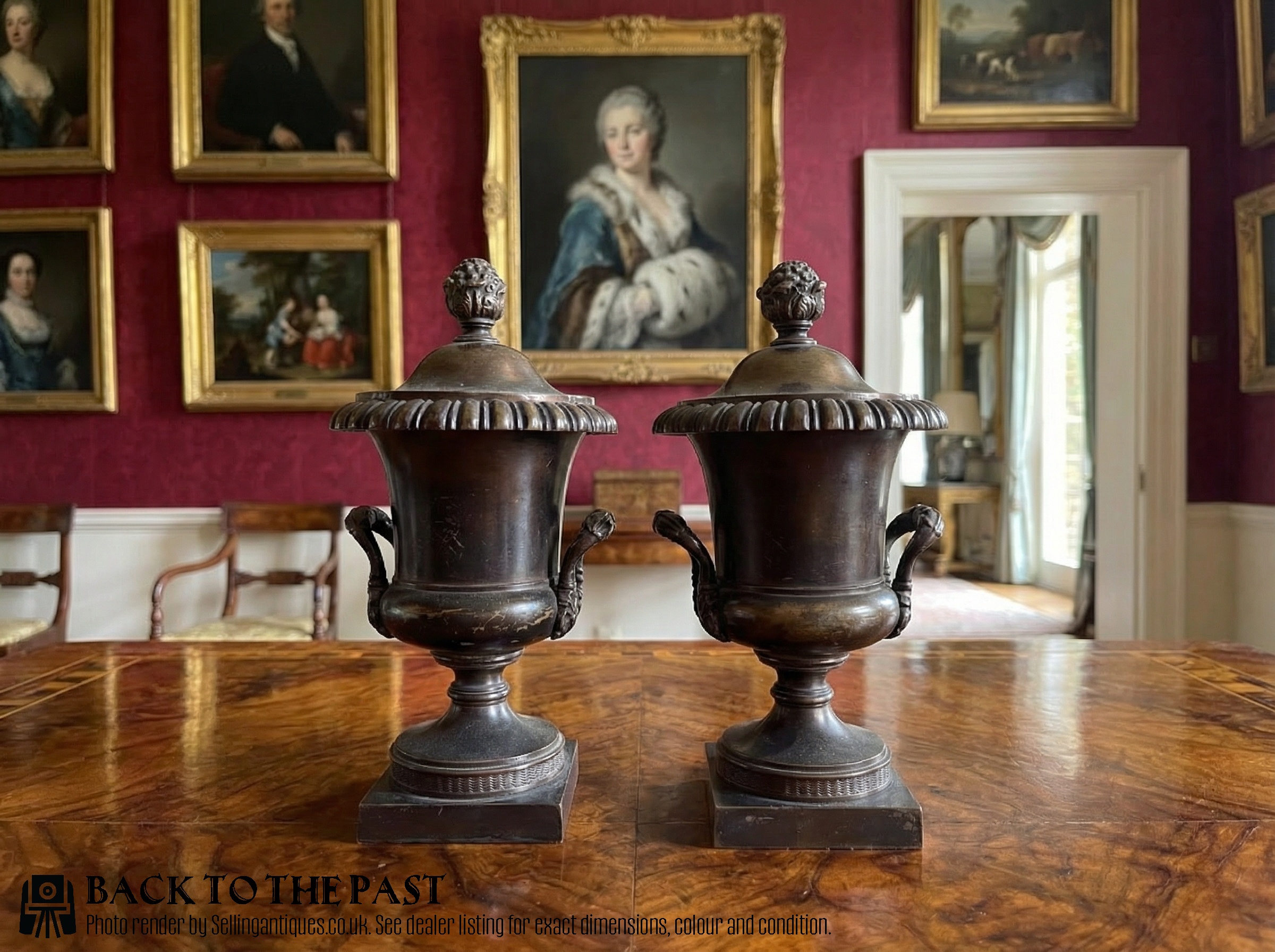
Regency Bronze Urns
When you search for regency bronze urns, you encounter classical vessel forms rooted in 19th-century neoclassical taste, spanning campana shapes, tazzas, and samovars. These pieces reflect the archaeological enthusiasm of the Regency period and subsequent revivals through the Victorian era.
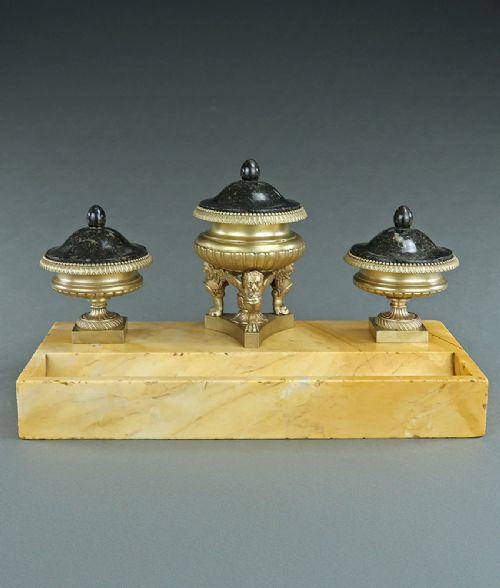
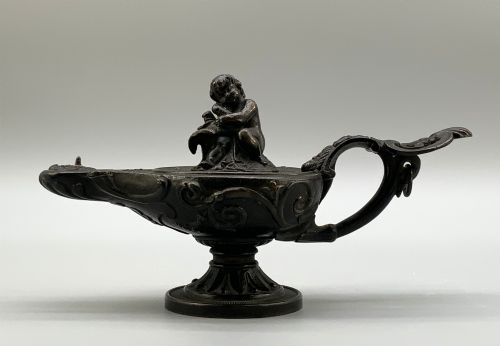
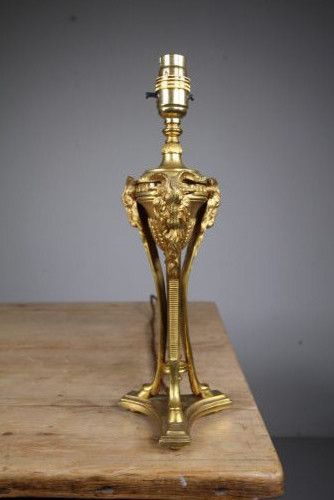
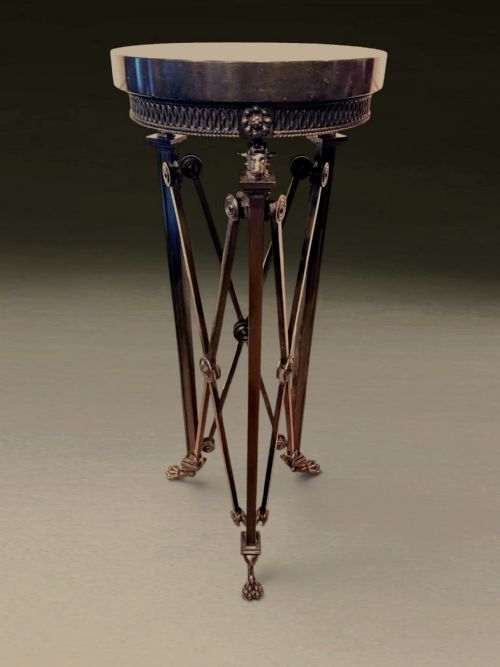
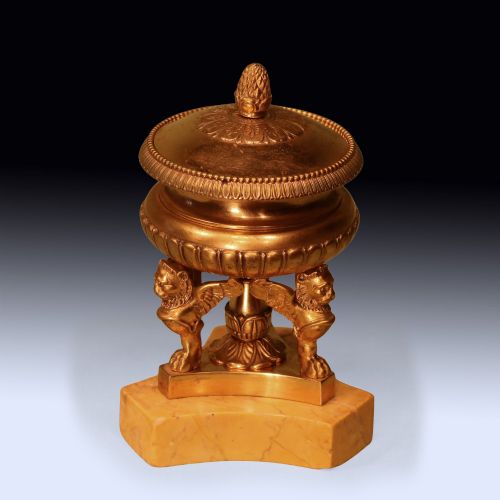
The objects take many functional and decorative shapes beyond simple vessels, appearing as table lamps, inkwells, cassolettes, and plant stands. Pieces often combine classical proportions with practical adaptations such as oil lamps or inkstands.
Origins encompass English and French workshops working in the neoclassical and French Empire styles. The selection ranges from severe patinated bronze models to highly decorated gilt bronze and ormolu compositions mounted on marble plinths.
How they were made
Makers utilised cast bronze, patinated bronze, and gilded elements known as ormolu, applying chemical patination to achieve deep brown or black surfaces. These metal components were combined with turned bases of Sienna marble, white marble, or alabaster to provide weight and contrast.
Decorative detail relied on crisp metal chasing and fire-gilding techniques applied to mountings such as rams' heads, acanthus leaves, and classical figures. Individual elements were then pinned or screwed together to form complex assemblies like cassolettes and compotes.
Listings feature pieces spanning the 19th century, including Regency, Victorian, and 1880 periods, constructed from bronze, ormolu, Sienna marble, and brass.
What varies in quality
Quality rests on the crispness of the metal chasing and the depth of the original mercury gilding or patination. Finer examples show sharp relief in classical motifs like acanthus and figures, whereas lesser pieces exhibit softened details from worn or secondary moulds.
The choice of subsidiary materials also defines the tier of the piece, with substantial Sienna marble or detailed ormolu mounts marking out workshop output above standard commercial production.
Pons De Paul
The Regency Bronze Urns Glossary
- Ormolu
- Gilded bronze produced by applying a mercury and gold amalgam to a bronze base and heating it. This technique creates a durable, deep golden surface characteristic of fine Regency metalwork.
- Campana
- A bell-shaped vessel form derived from classical pottery and stone vases. These urns feature a flared rim and a tapering body on a pedestal foot.
- Cassolette
- A decorative vessel with a reversible lid that functions either as a vase or a burner for perfumes. They frequently appear in pairs during the Regency period.
- Tazza
- A shallow cup or saucer mounted on a stem and foot, used in classical antiquity and revived in the 19th century as a decorative centrepiece.
- Encrier
- A portable inkstand or desk set designed to hold inkwells, sanders, and pen holders. These writing accessories often incorporate bronze and marble mounts.
Regency Bronze Urns: Frequently Asked Questions
How were these urns used?
Many of these pieces served purely as decorative ornaments reflecting classical antiquity, displayed on mantelpieces or pedestals to signal scholarly taste. Others were adapted for daily domestic utility as oil lamps, inkstands, and wine cisterns.
Over the course of the 19th century, standard decorative urns were frequently converted into table lamps with the advent of electrical wiring. This dual heritage means current examples bridge ornamental sculpture and functional lighting.
How do I tell Regency from later revivals?
Authentic Regency pieces date roughly from the late 18th century through the 1830s, showing strict adherence to Thomas Hope and French Empire design canons. They employ heavier cast bronze and genuine mercury ormolu with hand-chased surface details.
Later Victorian Neo-Classical Revival and 1880 examples often use brighter electroplated finishes and lighter metal gauges. Examining the construction pins, marble bases, and patination helps separate original Regency work from late 19th-century interpretations.
What is Grand Tour taste?
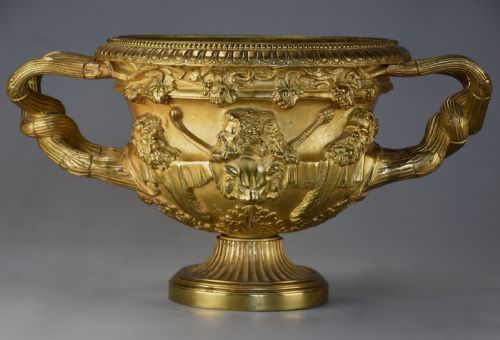
Grand Tour pieces were acquired by wealthy travellers visiting classical sites in Italy and Greece during the 19th century. These works often scale down famous antiquities like the Warwick Vase into cabinet bronzes and desk ornaments.
Such objects allowed collectors to bring home tangible records of classical architecture and sculpture. They represent a specific subset of neoclassical decorative art produced for educated travellers.
How do I care for bronze and ormolu?
Bronze and ormolu surfaces require minimal intervention to preserve their historic patination and fragile gold leaf. Dusting with a soft dry brush is sufficient to keep the metal clean without abrasive polishes.
Avoid chemical cleaners entirely, as they strip the original patination and the underlying ormolu gilding. Maintaining stable indoor humidity also protects the associated marble plinths from cracking.