


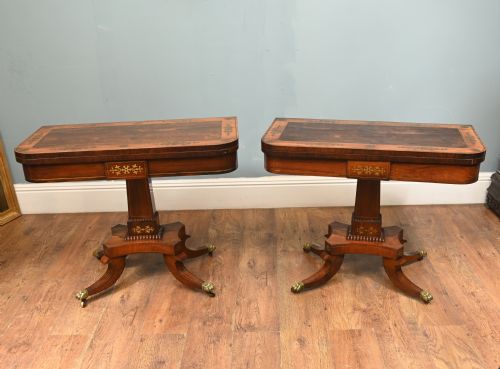

Regency Brass Inlaid Furniture
Regency brass inlaid furniture brings together dark exotic timbers and bright metal lines to anchor a formal interior.
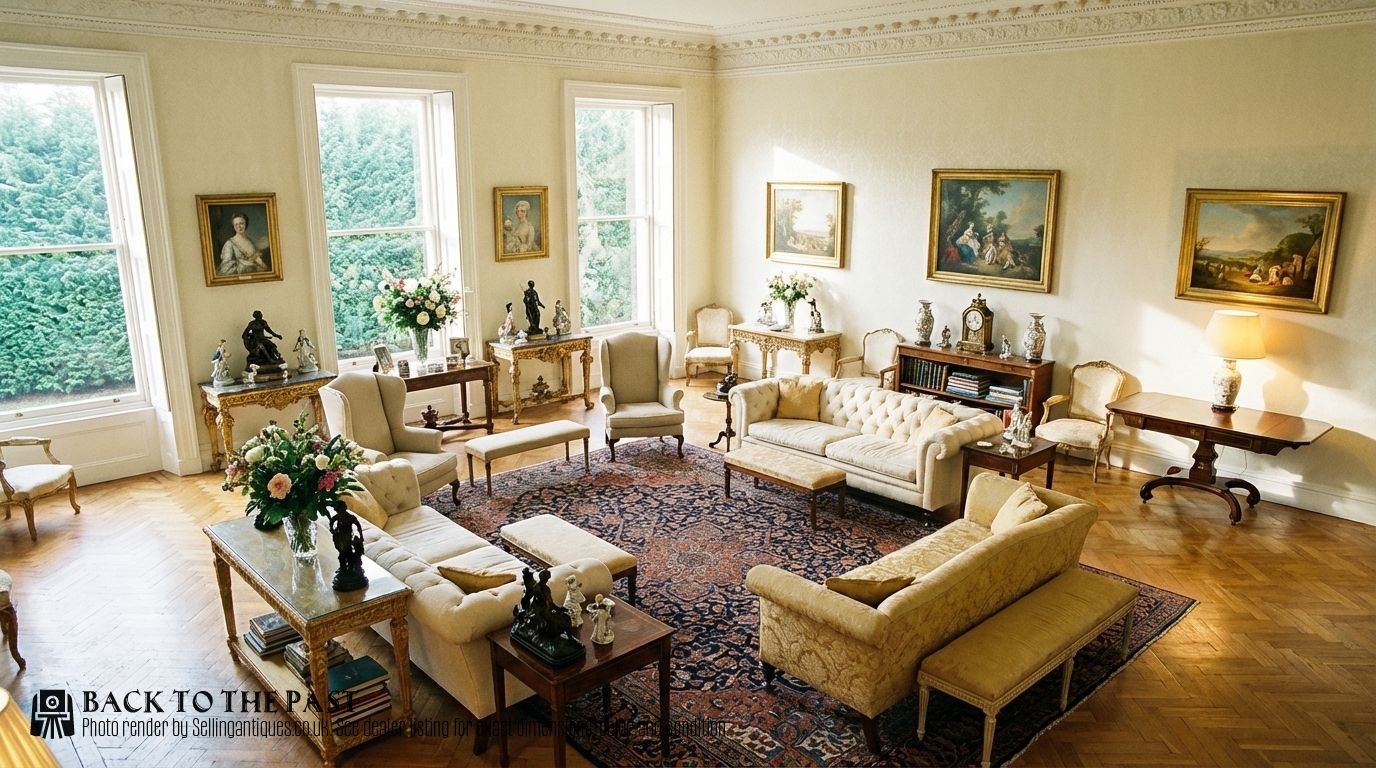
Regency Brass Inlaid Furniture
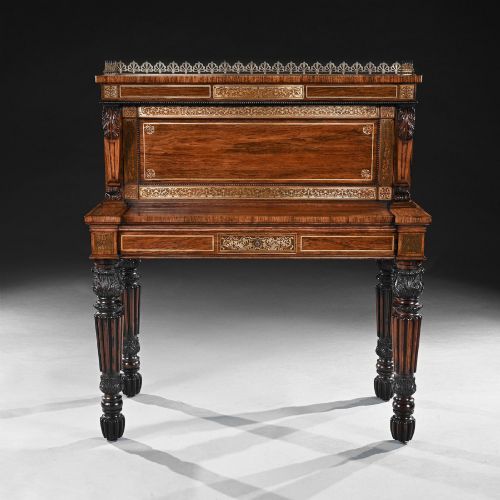
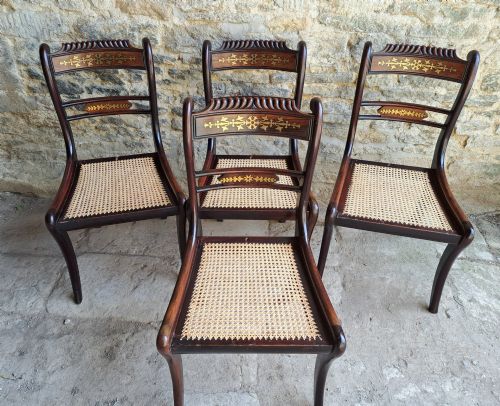
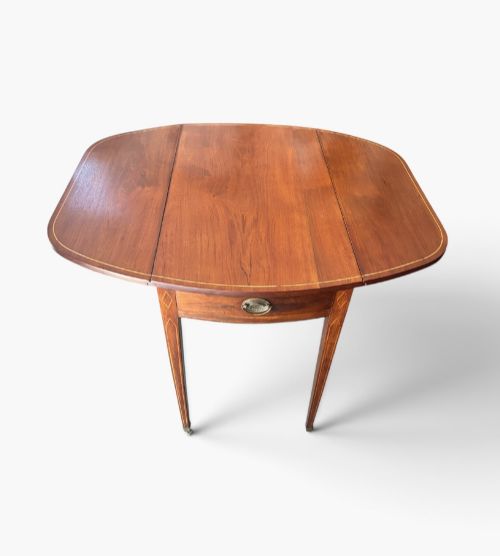
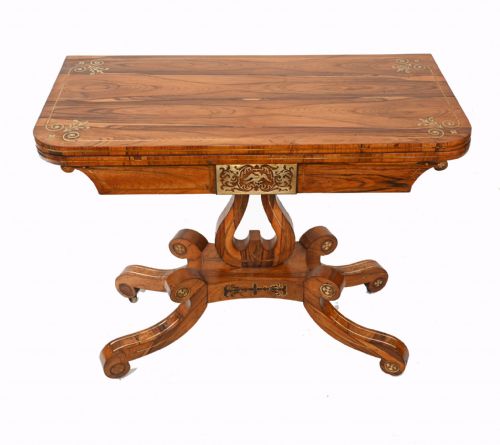
Regency brass inlaid furniture comprises tables, cabinets and seating produced during the early nineteenth century and later revival periods. Card tables, centre tables and side cabinets dominate the forms available here, mostly executed in figured rosewood or mahogany. These pieces rely on disciplined classical proportions paired with contrasting metallic decoration.
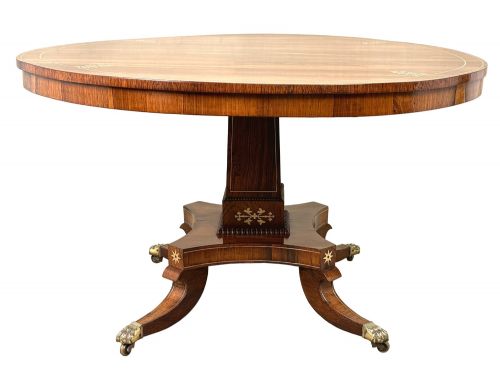
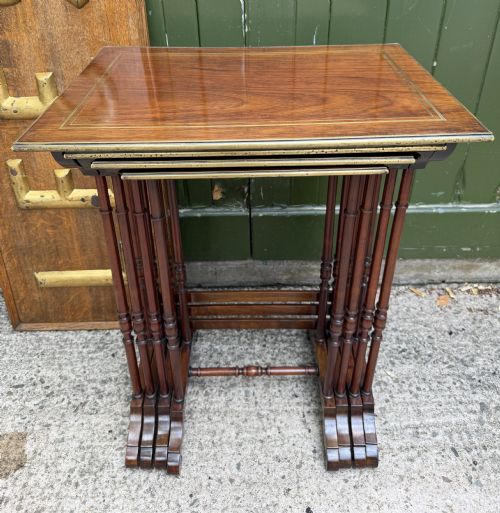
Makers of the period utilised brass strips and cut designs to trace borders, tabletops and panel centres. Rosewood provides the deep dark ground that makes the yellow metal catch the light in a room. Sets of dining chairs and occasional nesting tables appear alongside larger library and sofa tables.
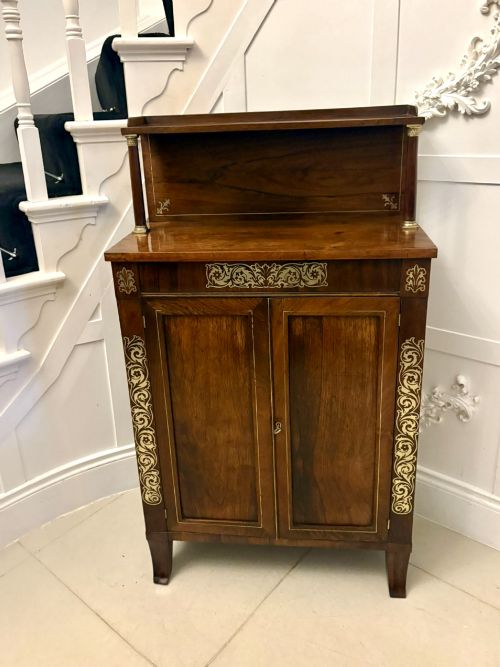
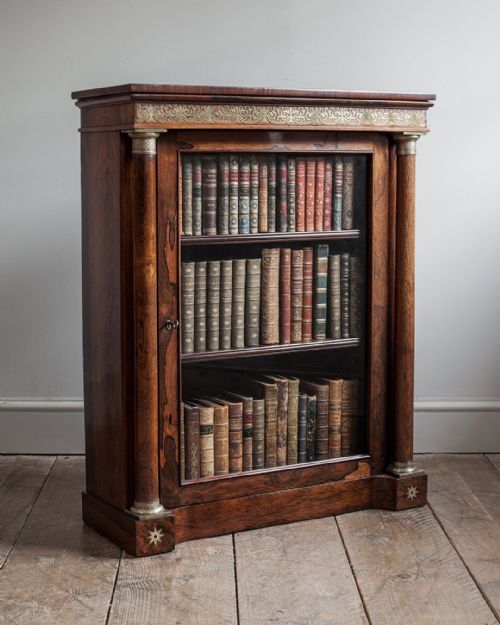
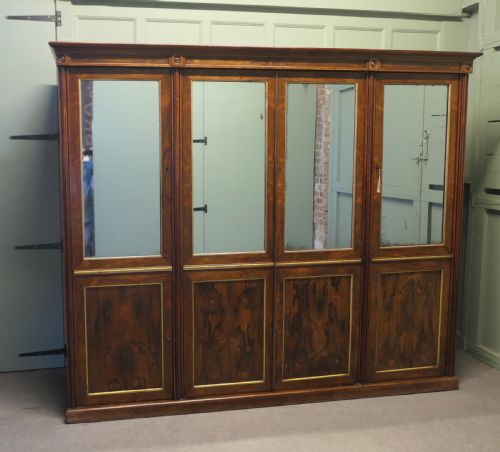
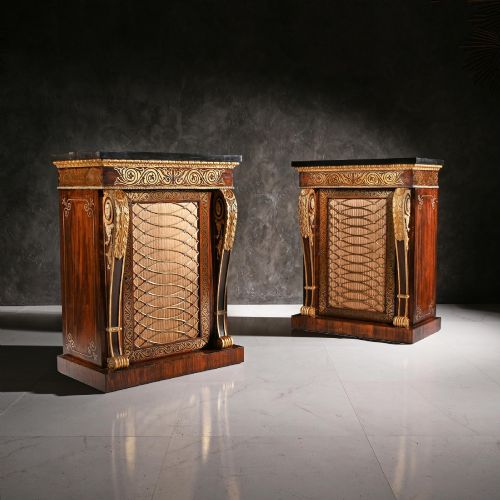
The selection ranges from George III precursors through the height of the Regency and William IV eras into Edwardian revivals. Cabinets and chiffoniers incorporate open shelving, glass doors and brass grilles alongside solid timber carcases. Each form demonstrates the Regency taste for combining architectural restraint with striking surface detail.
Materials and Construction
Craftsmen built these carcases using solid mahogany or applied rosewood veneers over secondary timbers. Selected veneers display rich grain patterns that frame the precise geometric or floral brass inlay. Boxwood lines frequently accompany the brass work to add a paler secondary contrast.
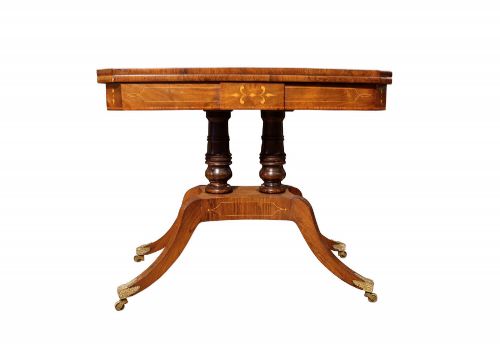
Workers channelled the timber surfaces by hand to recess fine brass stringing and cut sheet brass motifs. Metal elements were glued and pinned into position before being scraped and polished flush with the wood. Brass sabots and castors frequently finish the feet on heavier card tables and sofa tables.
Several folding card tables still wait with their baize interiors closed, hiding decades of quiet card games.
Markers of Quality
Quality rests upon the precision of the brass inlay work and the choice of timber veneers. Superior examples display tight, continuous metal lines without gaps, alongside highly figured rosewood stocks. Lesser pieces show wider joints in the brass and plainer secondary woods beneath the polish.
The sophistication of the furniture design dictates the upper tier of the range. Pieces associated with named workshops or specific cabinet-makers demonstrate more complex brass cutting and heavier architectural mounts. Construction methods inside drawers and carcases confirm the standard of the original workshop.
Gillows Oxford Street Workshop·George Bullock·Louis Constantin Le Gaigneur
The Regency Brass Inlaid Furniture Glossary
- Card Table
- A folding table designed for gaming, featuring a baize-lined interior surface when opened. These tables often possess swivel tops supported by a pedestal base or fold-out rear legs.
- Sofa Table
- A rectangular occasional table intended to stand in front of a sofa, equipped with drop leaves at either end. They typically incorporate two small drawers in the frieze.
- Chiffonier
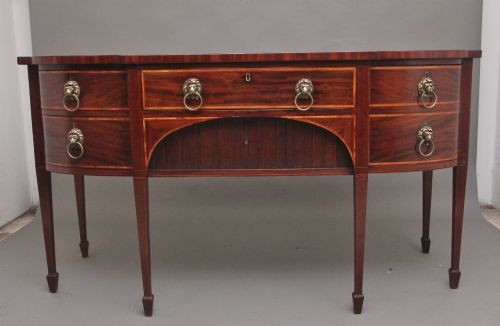
- A compact sideboard or low cabinet introduced in the Regency period, usually fitted with doors enclosing shelves. Many examples feature fabric panels or brass grilles behind glazed doors.
- Sabot
- A metal sleeve fitted over the foot of a table leg to protect the timber from wear. Brass sabots appear frequently on higher quality Regency tables.
- Stringing
- A thin inlay of contrasting wood or metal used to outline panels, drawer fronts and tabletops. Brass stringing defines much of the linear decoration across these surfaces.
Regency Brass Inlaid Furniture: Frequently Asked Questions
What is Regency brass inlaid furniture?
This category includes tables, cabinets and seating decorated with precise metal stringing and cut brass motifs. Rosewood and mahogany serve as the primary woods for these decorative surfaces.
Craftsmen produced these items during the early nineteenth century and later revival periods. The style combines classical architectural forms with high-contrast metallic details.
How were card tables used?
Card tables served households during evening social gatherings for games such as whist or quadrille. The hinged top folded flat against the wall when not in use.
Opening the top revealed a baize or felt playing surface. Hidden wells beneath the top held counters and cards during the evening.
How do I care for rosewood surfaces?
Rosewood requires stable indoor humidity and protection from direct sunlight to prevent timber movement. Dusting with a dry cloth keeps the polished finish clear.
Avoid silicone-based polishes which can build up on the antique polish. Traditional wax feeds the timber and maintains the soft lustre of the wood.
How do I identify Regency pieces?
Regency pieces show classical revival motifs, sabre legs, brass paw castors and distinct metallic inlay. Cabinet forms often draw inspiration from ancient Roman or Egyptian designs.
Earlier Georgian pieces lean toward lighter proportions while William IV furniture tends toward heavier, bolder architectural elements. Wood selection shifts from early mahogany toward figured rosewood across the period.