


Boulle Marquetry Furniture
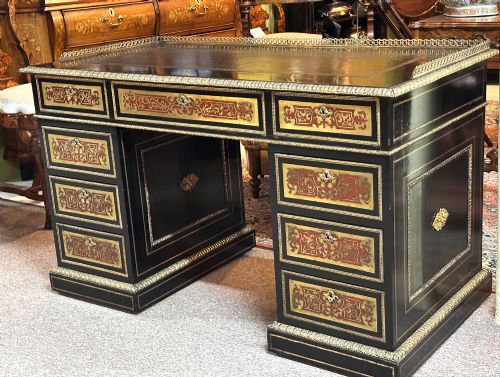
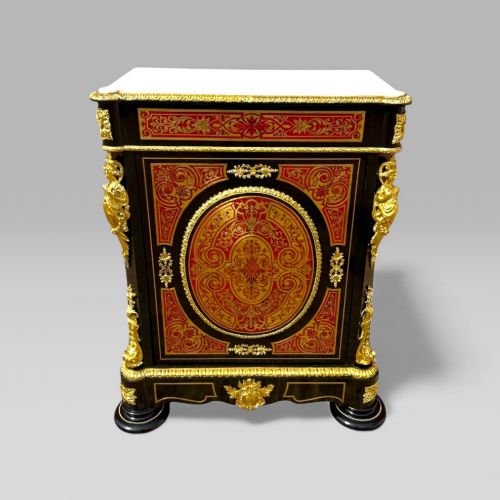
Boulle marquetry furniture combines intricate tortoiseshell and brass inlay on ebonised wood, bringing dramatic French display pieces into your interior.
Boulle Marquetry Furniture
Boulle marquetry furniture encompasses elaborate storage and display pieces, alongside tables and seating, rooted in nineteenth century revival periods. When you search for boulle marquetry furniture, you encounter sophisticated French and Victorian iterations designed for formal display.
The dominant forms on this page include side cabinets, pier cabinets, and display cabinets, alongside credenzas, desks, centre tables, and settees. These items reflect distinct stylistic influences ranging from Napoleon III and Louis XV to Islamic Revival.
Examples typically feature ebonised wood surfaces enriched with metal and shell inlay, often accompanied by marble tops or glass doors. These works serve as focal points in period rooms, offering substantial presence and intricate visual detail.
Materials and construction
The construction relies heavily on ebonised wood as a dark foundation that accentuates the metallic and organic inlay. Craftsmen combined brass and tortoiseshell to create contrasting patterns across doors, panels, and tabletops.
Mounts in ormolu provide structural highlights and decorative framing for the delicate marquetry panels. Glass, marble, and leather appear as functional additions on cabinets, tables, and desks.
Listings feature nineteenth century pieces spanning Napoleon III, Louis XV, and Louis XVI styles, executed in ebonised wood, brass, and tortoiseshell.
Distinctions in quality
Quality rests upon the precision of the brass and tortoiseshell cutting, where tighter joints and sharper lines distinguish finer workshops. The crispness of the ormolu mounts and the depth of the ebonised finish further elevate certain pieces above standard production.
Maker attribution plays a role, with documented makers like Maison Millet demonstrating superior mastery in execution and proportion. The integration of high-grade marble tops and well-figured secondary timbers signals a higher tier of manufacture.
Maison Millet
The Boulle Marquetry Furniture Glossary
- Boulle marquetry
- A decorative technique using contrasting sheets of brass and tortoiseshell cut together to form intricate interlocking patterns. This method was perfected in France and revived extensively during the nineteenth century.
- Ebonised wood
- Timber treated to resemble ebony, providing a deep black finish. This dark surface creates a high-contrast background for metallic and shell inlay.
- Ormolu
- Gilded bronze used for decorative mounts and accents on furniture. It adds metallic lustre and sculptural framing to cabinet edges and corners.
- Pier cabinet
- A narrow cabinet designed to stand against a wall between windows or architectural openings. These pieces frequently feature glass doors and elaborate marquetry.
- Credenza
- A sideboard or display cabinet raised on short legs or a plinth, often fitted with doors enclosing shelving. In nineteenth century revivals, they served both decorative and storage functions.
Boulle Marquetry Furniture: Frequently Asked Questions
What is boulle marquetry furniture?
Boulle marquetry furniture refers to decorative pieces adorned with intricate patterns cut from brass and tortoiseshell, typically set into a dark ebonised wooden background. These items date predominantly to the nineteenth century and reflect French revival styles.
Such furniture includes cabinets, desks, and tables created to showcase exceptional craftsmanship and lavish materials. They remain prominent decorative statements in traditional interiors.
How do I care for ebonised wood?
Ebonised wood requires gentle dusting with a soft, dry cloth to prevent scratching the dark finish. Avoid using harsh chemical polishes or placing the furniture in direct sunlight.
Maintaining stable room humidity protects both the wooden structure and the delicate shell inlay from warping or lifting. Proper placement preserves the original surface sheen.
How do I identify a Napoleon III piece?
Napoleon III furniture often exhibits exuberant revival styling, combining heavy ebonised carcasses with abundant brass and tortoiseshell inlay. These pieces frequently incorporate ormolu mounts and curved silhouettes inspired by earlier French court aesthetics.
Examining the interior construction and secondary timbers helps confirm the nineteenth century origin of these works. The integration of marble tops is also characteristic of the period.
Where should I place a pier cabinet?
A pier cabinet fits well against a flat wall space, such as between two windows or in a formal reception room. Its narrow footprint allows it to display decorative objects without dominating the room's floor area.
Pairing the cabinet with appropriate lighting highlights the reflective qualities of the brass inlay and glass panels. It serves as an ideal vessel for small collections.
What is the difference between brass and ormolu?
Brass is a solid alloy used flat within the marquetry panels to form the shimmering patterns of the design. Ormolu is gilded bronze cast into three-dimensional mounts that frame and accent the furniture structure.
Both materials work together to create the characteristic visual richness of nineteenth century revival pieces. Their contrasting textures define the overall aesthetic.