
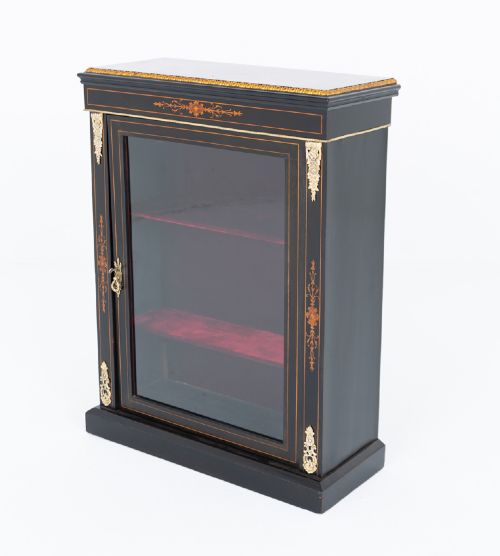
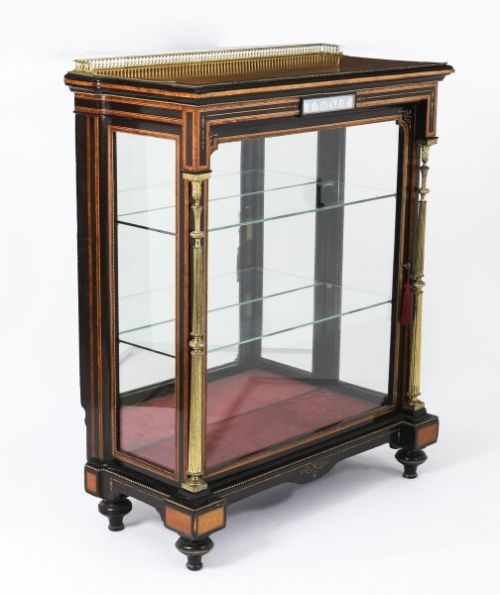


Ebonised Glazed Credenza
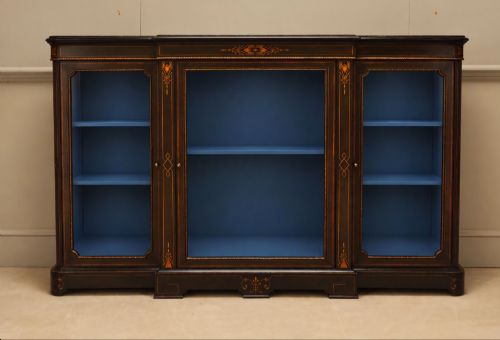
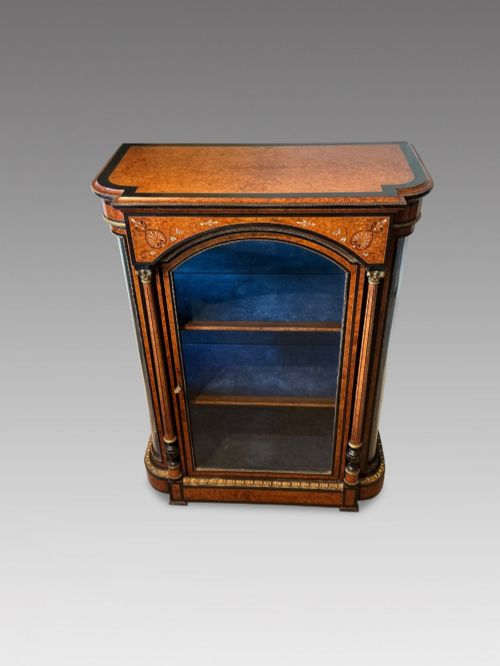
An ebonised glazed credenza brings dark polished timber and glass fronted display space into a room, offering a focal point for collectors of Victorian and nineteenth-century furniture.
Ebonised Glazed Credenza
An ebonised glazed credenza belongs primarily to the Victorian period and the nineteenth century, spanning decades such as 1850, 1860, 1870, and 1880. These low-profile pieces combine enclosed storage with glass-panelled doors designed for displaying precious objects.
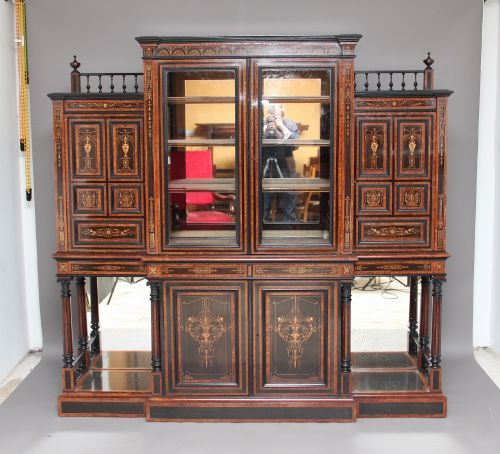
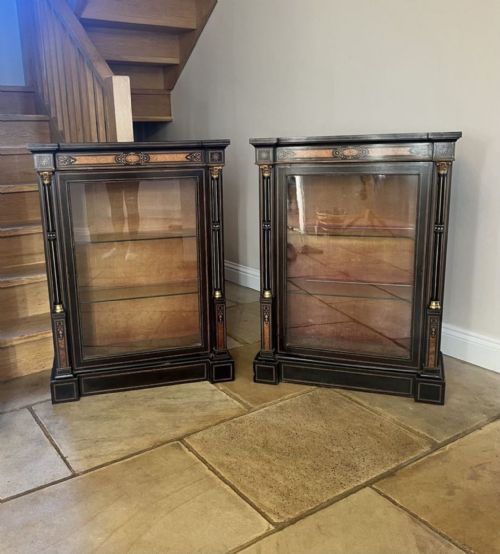
The form appears alongside related side cabinets, pier cabinets, and breakfront bookcases sharing similar dark finishes and glazing. Makers working in French revival, Boulle revival, and Aesthetic Movement styles shaped these pieces to anchor formal reception rooms.
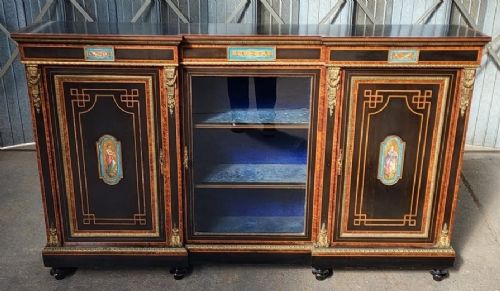
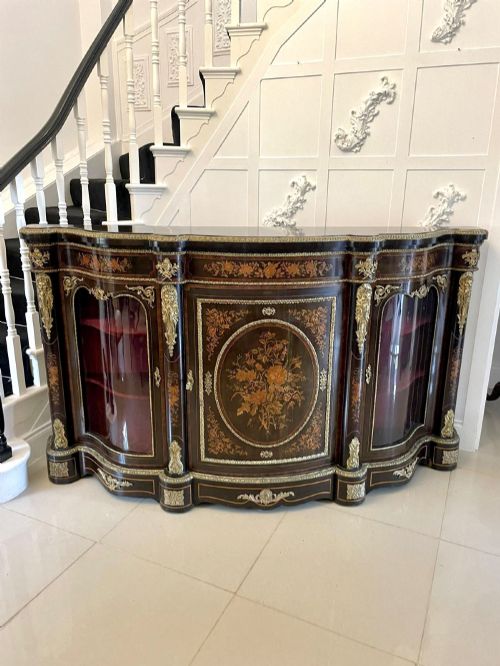
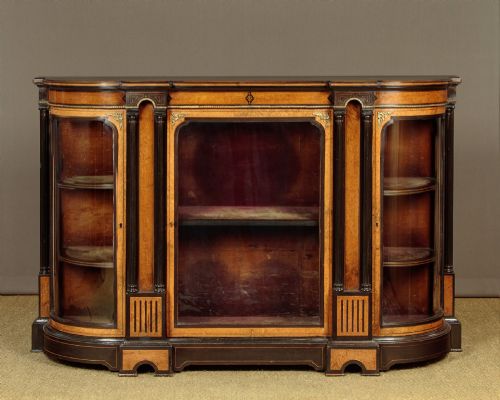
While many examples emerge from British Victorian workshops, French Napoleon III influences also populate the selection. Buyers encounter both single-door pier cabinets and expansive three-door credenzas featuring serpentine or breakfront outlines.
Materials and construction methods
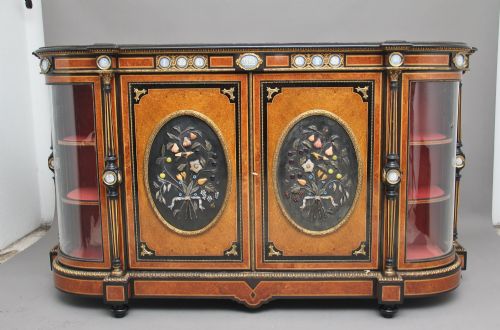
Makers built these cabinets using carcasing timbers such as walnut, which were then ebonised to imitate solid ebony. Surfaces frequently incorporate contrasting veneers like amboyna and burr walnut, alongside intricate floral marquetry and tortoiseshell inlay.
Decorative metalwork defines the construction, utilising cast ormolu mounts and brass detailing to edge panels and frame doors. Glazed sections rely on fitted glass panes secured within timber framing to protect the contents displayed inside.
Listings feature pieces spanning from 1850 to 1880, encompassing Victorian, Napoleon III, and Aesthetic Movement design traditions.
Distinctions in craftsmanship
The sophistication of the surface decoration sets examples apart, moving from plain ebonised timber to dense floral marquetry and elaborate Boullework. The precision of the brass inlay and the casting quality of the ormolu mounts signal the tier of the workshop.
Architectural complexity also divides the range, distinguishing simple single-door pier cabinets from large three-door breakfront bookcases with serpentine profiles. Superior pieces integrate contrasting secondary timbers such as amboyna with exact joinery.
Lamb of Manchester·Gillow
The Ebonised Glazed Credenza Glossary
- Ebonised
- Timber treated with stain, dye, or polish to achieve the appearance of solid ebony. This dark finish gained immense popularity during the Victorian era for formal cabinetwork.
- Ormolu
- Gilt bronze mounts applied to furniture for decorative effect. These cast metal details highlight corners, friezes, and door surrounds on nineteenth-century pieces.
- Marquetry
- Fitted patterns of wood veneers assembled to create pictorial or geometric designs on cabinet surfaces. Craftsmen used various contrasting timbers to achieve tonal depth.
- Boulle
- A form of marquetry utilising tortoiseshell and brass inlaid in counterchange patterns. Named after a French royal cabinetmaker, this technique defines Napoleon III pieces.
- Pier Cabinet
- A narrow display cabinet designed to stand against the wall space between windows. These upright pieces often feature glazed single doors and velvet-lined interiors.
Ebonised Glazed Credenza: Frequently Asked Questions
What is an ebonised glazed credenza?
An ebonised glazed credenza is a low nineteenth-century cabinet featuring dark finished wood and glass doors. It serves to store and display fine ceramics or glassware.
Such pieces date mainly from the Victorian era and incorporate decorative elements like marquetry or ormolu mounts.
Where were these cabinets placed originally?
Victorian households placed these credenzas and pier cabinets in principal reception rooms such as drawing rooms and dining parlours. They provided surface space for ornaments and sheltered delicate items behind glass.
Their low proportions ensured they did not obscure wall hangings or pier mirrors.
How do I identify a Boulle credenza?
Boulle credenzas display distinctive tortoiseshell and brass inlay arranged in intricate scrollwork patterns. This French-inspired technique is common in Napoleon III and Victorian revival pieces.
The metallic sheen and patterned surface distinguish them from standard marquetry cabinets.
What woods lie beneath the ebonised finish?
Makers typically used native or imported hardwoods such as walnut as a base before applying ebonised finishes. Interiors and secondary areas often reveal these underlying timbers.
Surfaces also incorporate contrasting veneers like burr walnut and amboyna.
How do I care for velvet-lined interiors?
Velvet linings require gentle dusting with a soft brush to prevent dust accumulation within the glazed compartments. Direct sunlight should be avoided to protect both the fabric and the polished ebonised wood.
Maintaining stable room humidity preserves the timber veneers and brass mounts.