

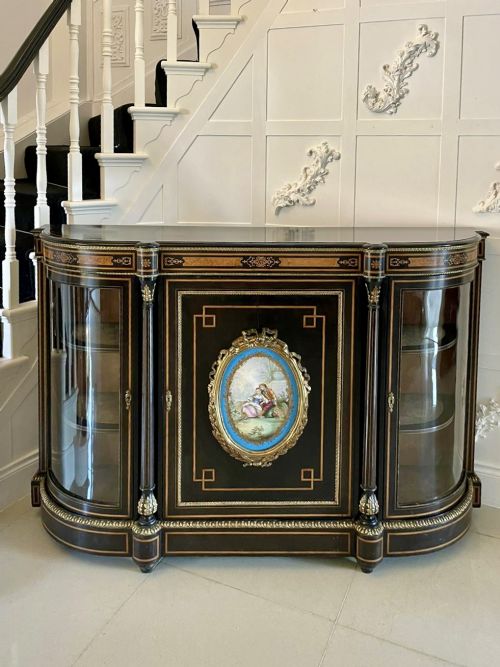
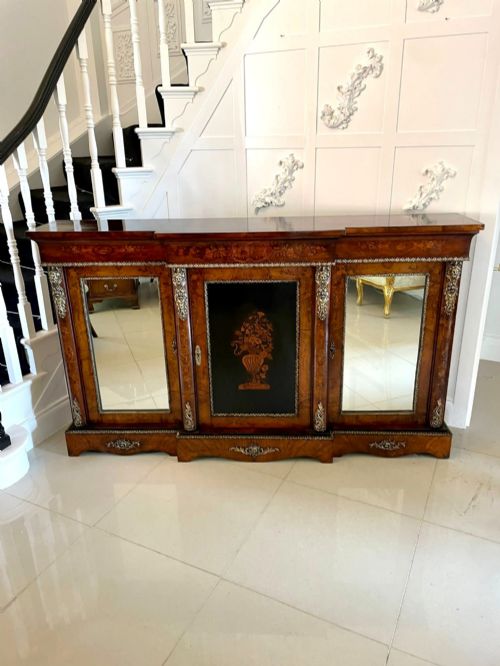
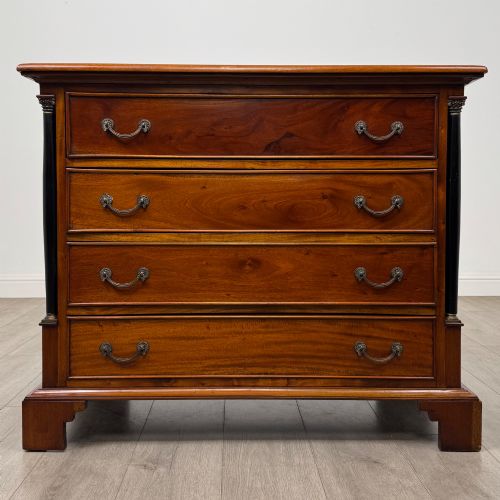
Antique Ebonised Cabinet
An antique ebonised cabinet brings the dark, dramatic polish of the nineteenth century into a room, offering both display and storage.
Antique Ebonised Cabinet
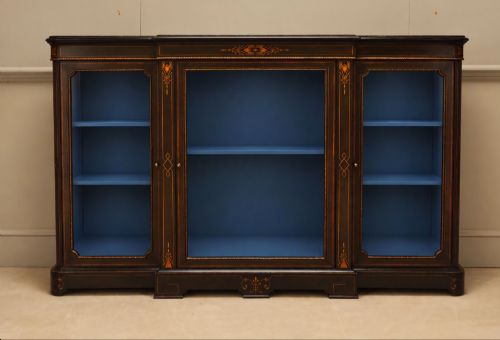
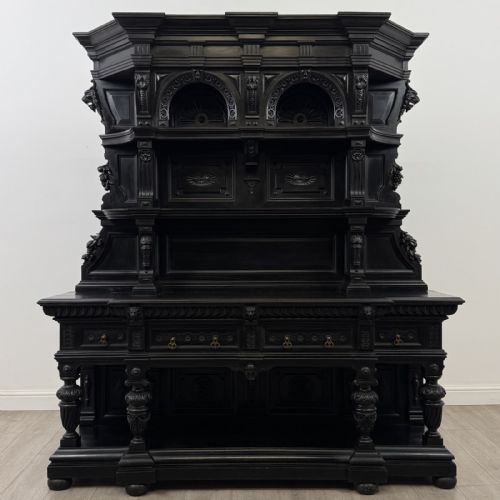
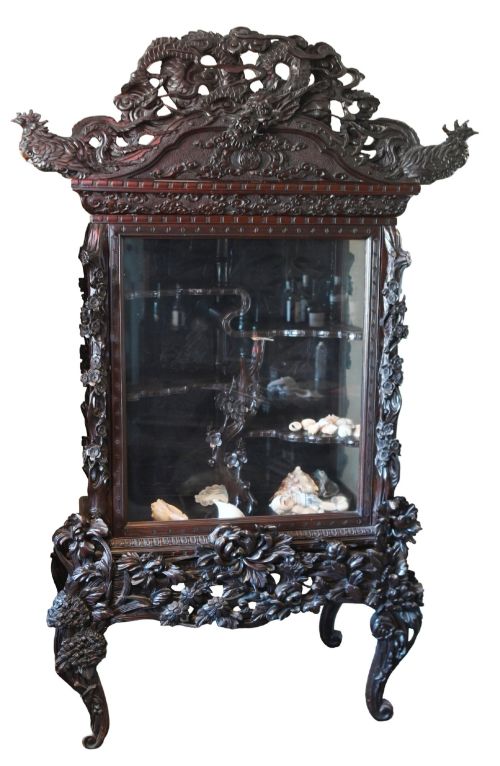
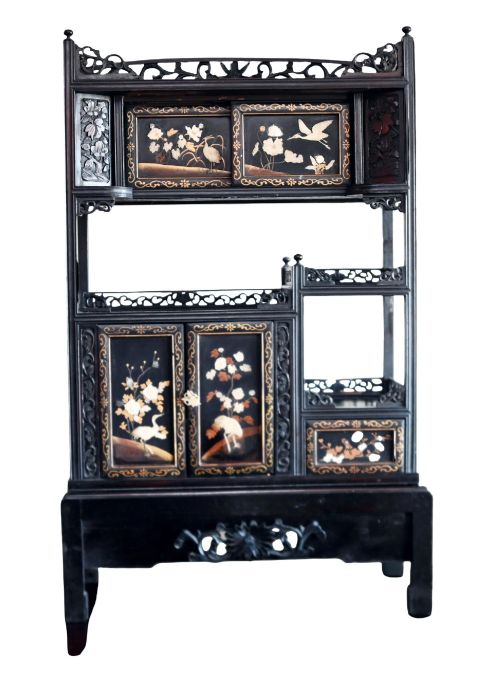
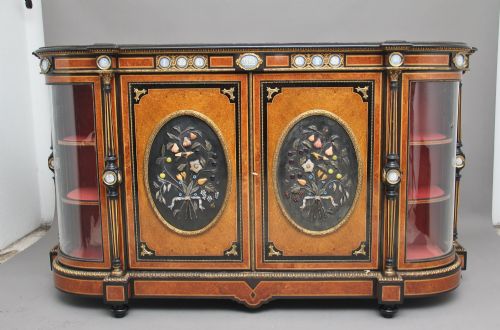
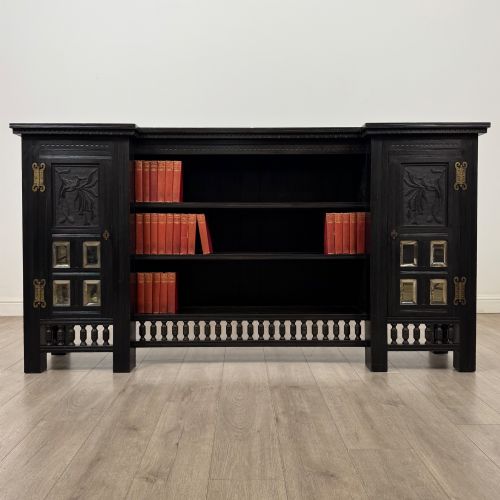
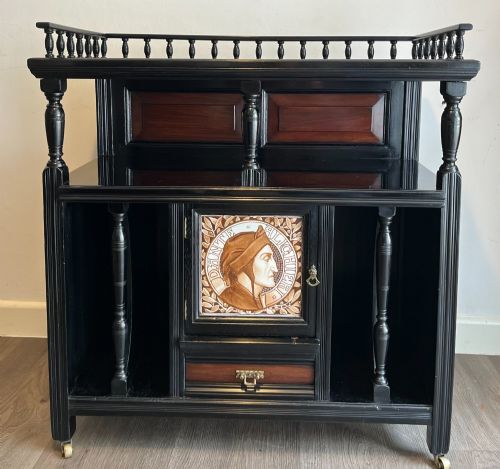
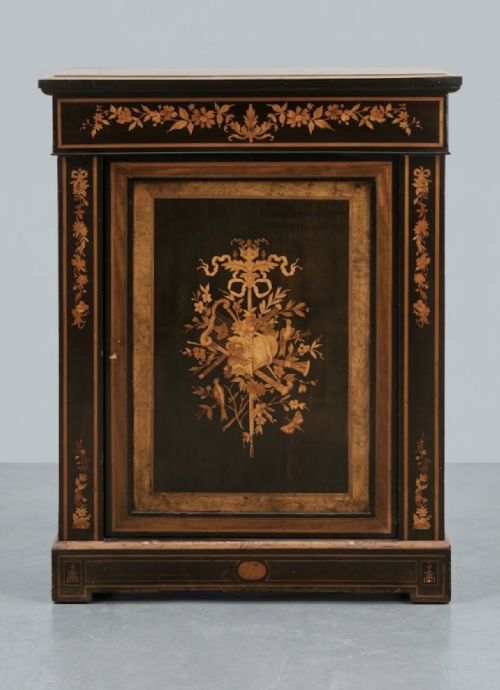
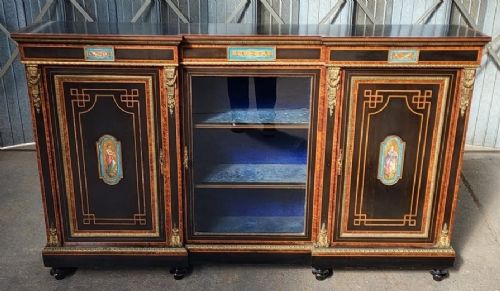
When you search for an antique ebonised cabinet, you encounter pieces primarily from the nineteenth century, including Victorian, Napoleon III, and Aesthetic Movement examples. These range from glazed pier cabinets and side cabinets to credenzas and bookcases, often designed to showcase collections or anchor a formal interior.
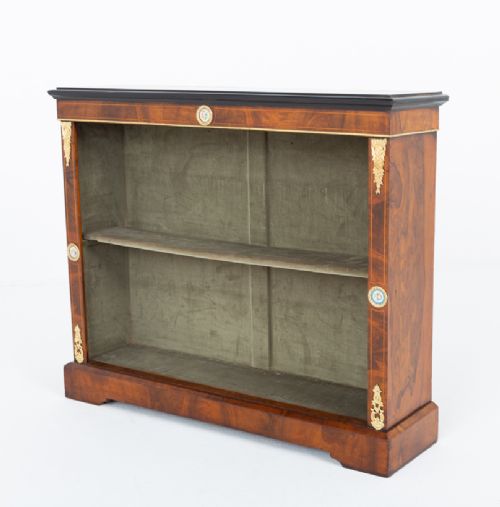
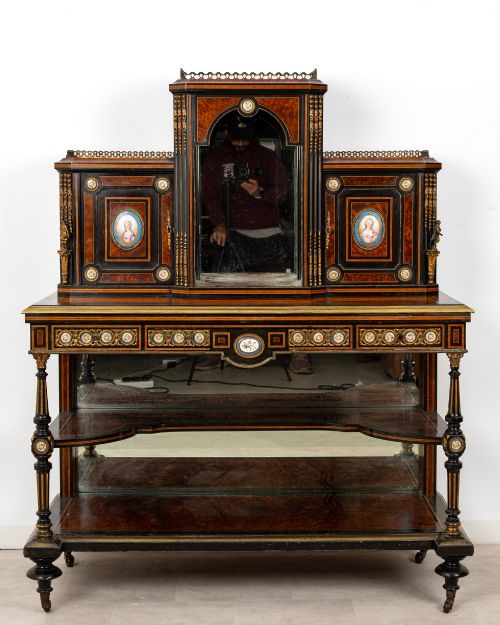
The form varies widely from low serpentine credenzas to upright wall bookcases and single-door pier cabinets. Many incorporate contrasting woods like amboyna or burr walnut alongside the dark finish, reflecting varied period aesthetics from Gothic Revival to French taste.
How they were made
The distinct dark surface is achieved through ebonising, a process of staining timber such as oak, mahogany, or fruitwood to resemble ebony. This dark ground serves as a foil for intricate brass inlay, tortoiseshell, and gilt bronze mounts.
Cabinet makers combined the ebonised finish with contrasting veneers like amboyna and burr walnut, alongside hand-cast ormolu mounts and porcelain plaques. Marquetry and delicate stringing in boxwood or pewter frequently articulate the doors and panels.
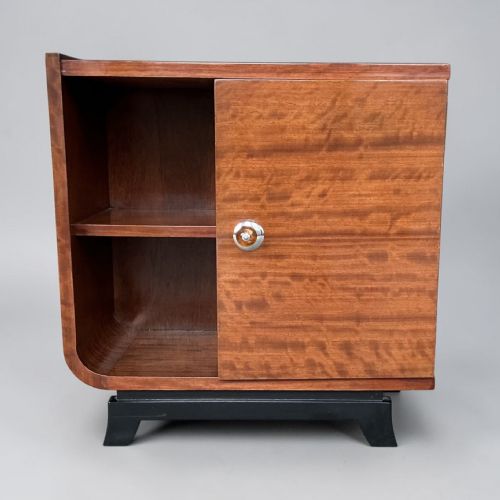
Listings feature ebonised cabinets spanning the seventeenth century through the Art Deco period, utilising glass, brass, tortoiseshell, and porcelain.
What varies in quality
The distinction between standard domestic furniture and the finest examples lies in the crispness of the gilt bronze mounts and the precision of the marquetry. Superior pieces exhibit hand-chased ormolu and seamless veneer work rather than simpler stamped brass or painted decoration.
Internal fitting and timber selection also mark the grade of a piece, with secondary woods and thoughtful grain matching separating exceptional cabinet work from ordinary production.
Gillows·George Edmund Street·Lamb of Manchester·August Ungethüm·Jeffries of Carmarthen·Heals
The Antique Ebonised Cabinet Glossary
- Ebonised
- Wood treated with stain or polish to imitate genuine ebony, popular in nineteenth-century revival styles. This technique allowed makers to achieve a dense black finish on more accessible timbers.
- Ormolu
- Gilded bronze mounts applied to furniture for decorative accent and edge protection. The metal is cast and then finished with mercury gilding or modern electroplating.
- Pier cabinet
- A narrow display cabinet designed to fit the wall space between windows. These pieces typically feature glass doors and velvet-lined interiors for displaying porcelain and curiosities.
- Credenza
- A low sideboard or cabinet originating in Italy and revived in Victorian drawing rooms. They frequently feature central cupboards flanked by curved glass display sections.
- Marquetry
- Inlaid patterns of wood veneer forming pictorial or geometric designs. Craftsmen cut contrasting timbers together to create tight, flush patterns across door fronts and tops.
Antique Ebonised Cabinet: Frequently Asked Questions
What is an ebonised finish?
An ebonised finish is a dark, opaque stain or polish applied to wood to imitate solid ebony. It became widely popular during the Victorian era for formal display furniture.
Makers utilised timbers like oak or fruitwood, treating the surface to achieve a deep black appearance that contrasted sharply with gilt bronze mounts and colourful inlay.
Where were pier cabinets placed?
Pier cabinets were specifically constructed to stand against the architectural pier, which is the narrow section of wall situated between two windows. Their shallow depth prevented them from obstructing the room.
Because they occupied well-lit spaces between windows, these cabinets were typically glazed to display decorative ceramics, glass, and small collections.
How do I care for ebonised wood?
Ebonised surfaces require gentle dusting with a soft, dry cloth to prevent the accumulation of abrasive particles. Avoid commercial polishes containing silicone, which can build up and dull the dark finish.
Keep the cabinet away from direct sunlight and fluctuating heat sources to protect the underlying timber and prevent shrinkage in delicate veneers and brass inlay.
What is boulle work?
Boulle work is an elaborate marquetry technique combining tortoiseshell and brass inlay, named after the French cabinetmaker André-Charles Boulle. It creates a rich, reflective surface pattern.
This technique appeared frequently on Napoleon III and nineteenth-century French furniture, often mounted with gilt bronze frames and set against an ebonised background.