

Victorian Ebonised Side Cabinet
A victorian ebonised side cabinet brings dark, polished elegance and disciplined design to a room.
Victorian Ebonised Side Cabinet
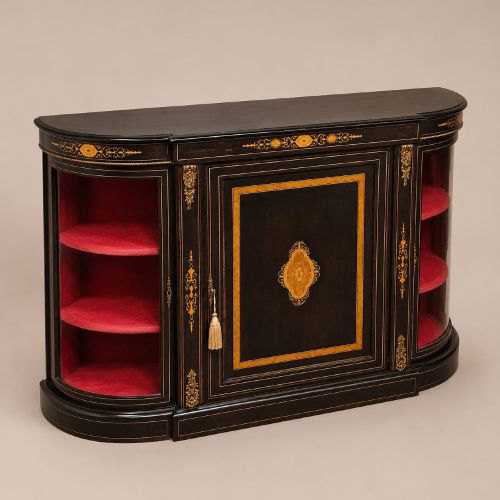
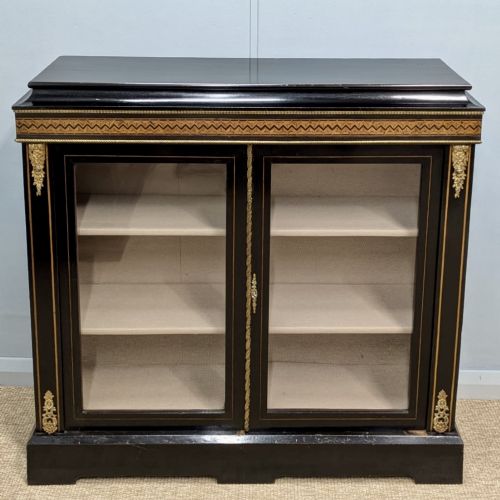
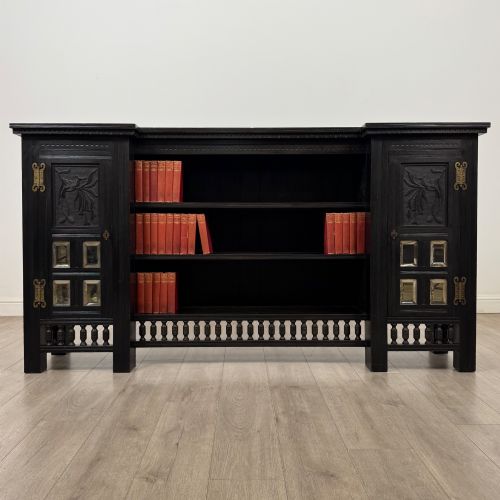
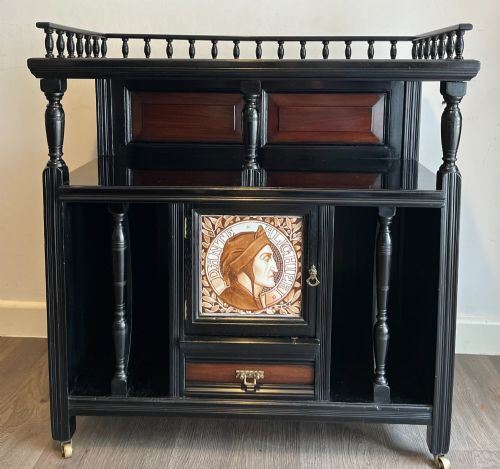
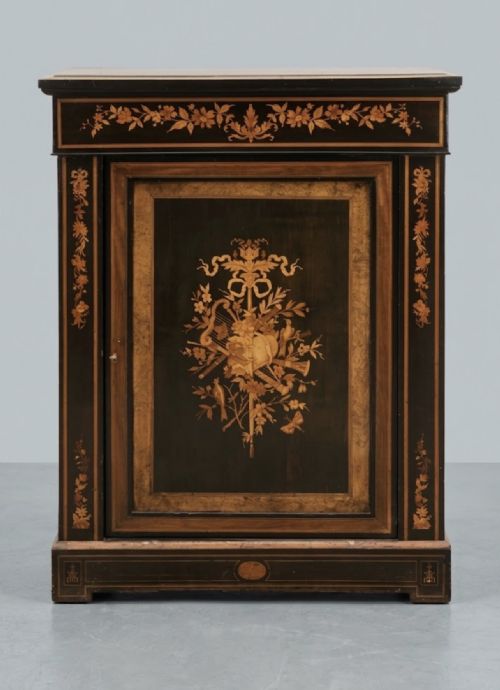
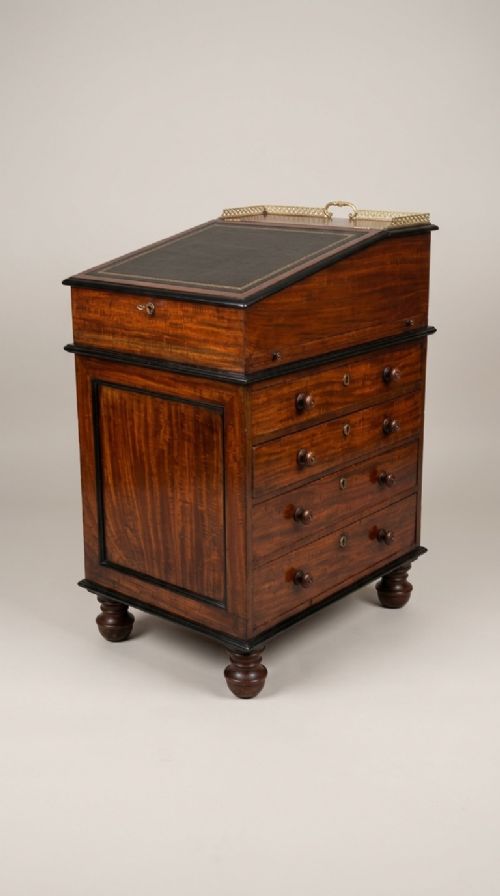
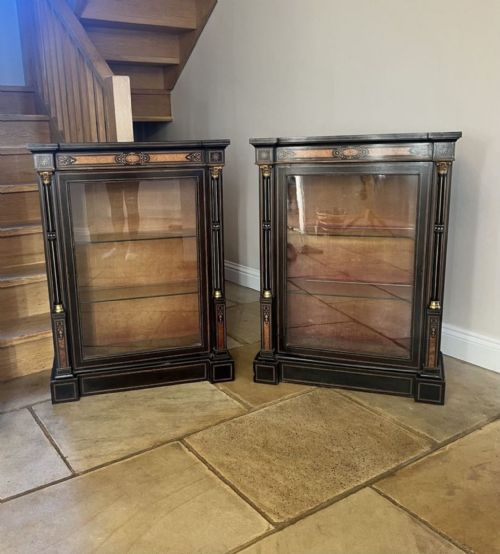
A victorian ebonised side cabinet combines dark, heavy timber finishes with refined display surfaces suited for formal reception rooms. These pieces emerge chiefly from the nineteenth century, spanning Victorian, Napoleon III, and Aesthetic Movement designs.
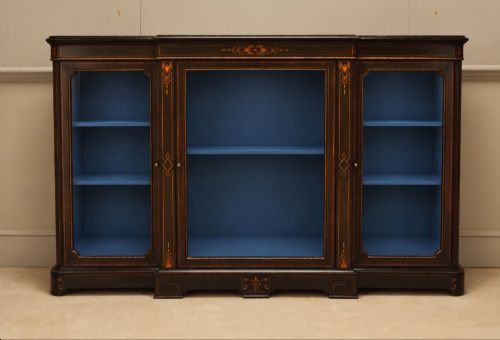
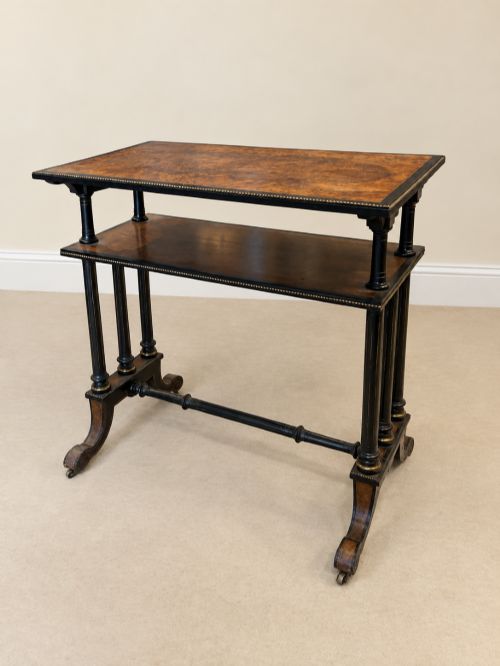
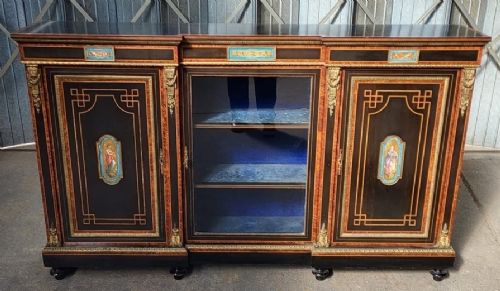
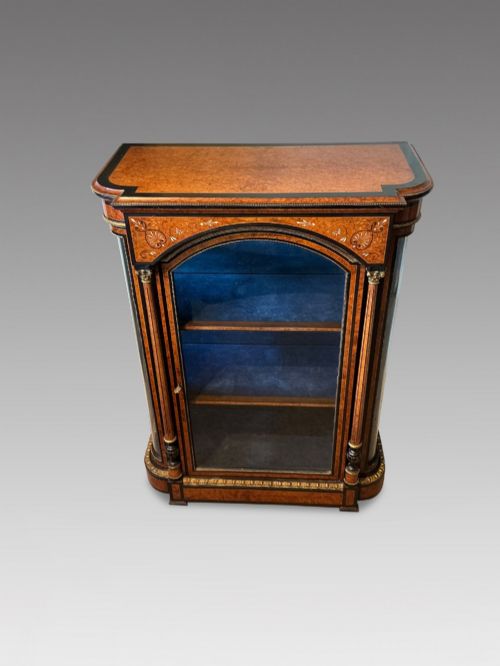
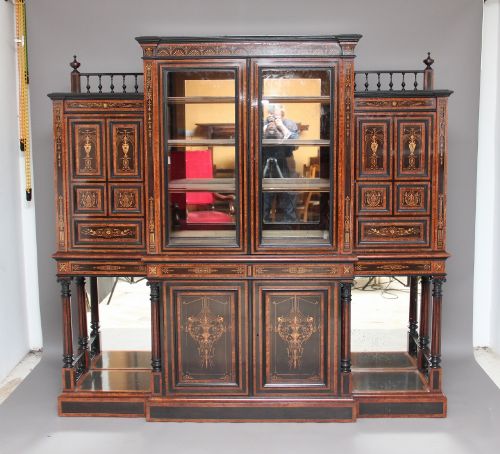
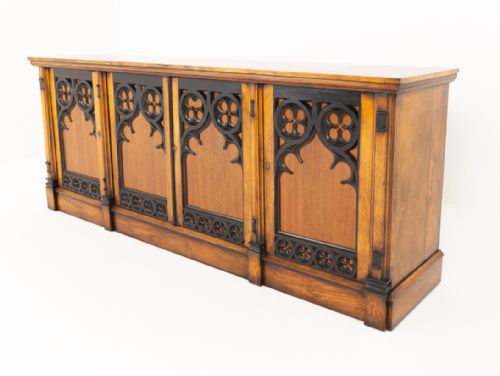
Forms on this page range from compact pier cabinets and open bookcases to grand three-door credenzas and glazed display cabinets. Buyers encounter both single standing units and matching pairs intended for symmetrical room layouts.
Originating in domestic interiors of the eighteen-fifties through to the eighteen-nineties, these cabinets serve to store prized possessions behind glass or present decorative items upon marble and timber surfaces.
How They Were Made
Cabinet makers utilised foundational timbers such as mahogany, walnut, and oak, applying a dense black ebonising finish to mimic expensive ebony wood. Surfaces often incorporate intricate marquetry, amboyna, burr walnut, and tortoiseshell veneers.
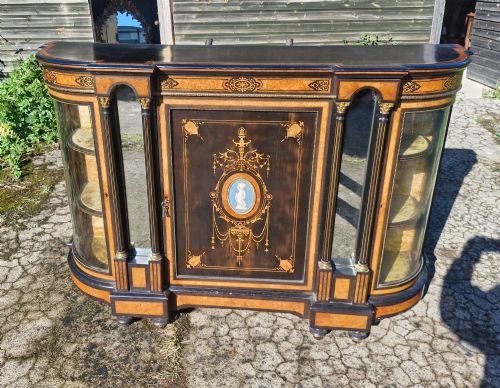
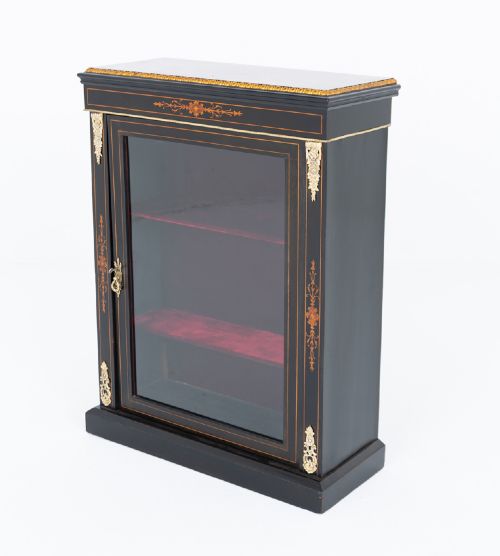
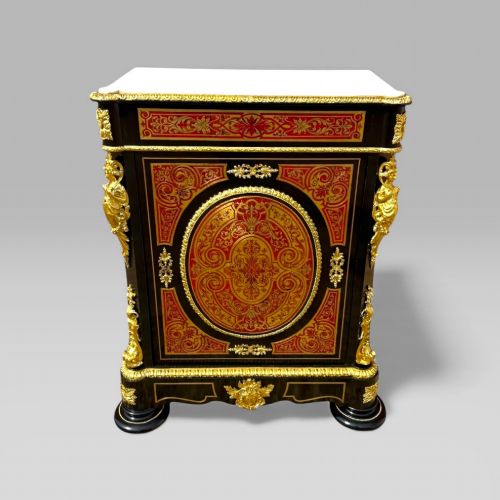
Metalwork played a structural and decorative role, with brass, ormolu, and gilt bronze mounts framing doors and corners. Porcelain plaques, Sevrès inserts, and Pietra Dura stonework were frequently integrated into the cabinetry.
Glass doors allowed for enclosed display, whilst marble tops added durable elegance to credenzas and pier cabinets. Gilt highlights and hand-painted details frequently completed the surface ornamentation.
Victorian Ebonised Side Cabinet Retail Price Guide 2026
Typical asking prices for victorian ebonised side cabinet among the pieces listed under this phrase on Sellingantiques today, from the lower quarter to the upper quarter. They describe what is for sale here now, not the wider market.
Some nineteenth-century makers concealed shallow velvet-lined drawers just beneath the top surface for storing delicate fans and calling cards.
What Varies in Quality
The sophistication of the timber preparation and the depth of the ebonised finish set superior examples apart from standard production. Higher quality items display meticulous hand-finishing on polished surfaces rather than uniform industrial coatings.
The integration of decorative mediums dictates the level of craftsmanship, distinguishing simple timber boxes from masterworks adorned with genuine tortoiseshell, intricate brass boullework, or hand-painted porcelain.
The precision of marquetry inlay and the weight of cast ormolu mounts indicate workshop pedigree. Maker attribution, through documented signatures or distinctive construction methods, elevates certain cabinets above unmarked contemporaries.
Gillows·Lamb of Manchester
The Victorian Ebonised Side Cabinet Glossary
- Ebonised wood
- Timber treated with stain, paint, or polish to imitate genuine ebony. This finish became popular in nineteenth-century furniture to create a dramatic, dark surface.
- Ormolu
- Gilt bronze mounts applied to furniture for decorative effect. The technique involves treating metal with a mercury and gold amalgam.
- Boulle work
- Marquetry technique utilising brass and tortoiseshell inlaid in intricate patterns. It derives its name from French cabinet maker Andre-Charles Boulle.
- Credenza
- A grand low cabinet or sideboard designed for display and storage. Nineteenth-century versions frequently feature glass doors and elaborate gilt mounts.
- Pier cabinet
- A narrow display cabinet built to stand against the wall space between windows. These pieces often feature a single glazed door and mirror backs.
- Marquetry
- Decorative patterns formed by fitting together thin veneers of wood, metal, or shell. Craftsmen apply these veneers to the primary carcass of the cabinet.
Victorian Ebonised Side Cabinet: Frequently Asked Questions
What is a victorian ebonised side cabinet?
A victorian ebonised side cabinet is a nineteenth-century storage and display furniture piece finished in a dark, polished black coating. These cabinets often incorporate contrasting veneers, gilt mounts, and glass doors.
Craftsmen built them to serve formal reception rooms, providing a surface for decorative objects and enclosed space for valued possessions.
How do I style a side cabinet at home?
These dark cabinets anchor a room visually, pairing well with pale walls and neutral backgrounds to highlight the reflective ebonised finish. Placing lamps or ceramics on the top surface creates a balanced focal point.
Glass-fronted versions suit the display of glassware, books, or collections, keeping items visible while protecting them from dust.
What is the difference between a credenza and a pier cabinet?
A credenza is typically a broad, low cabinet featuring three doors, well-suited for long walls and formal dining or drawing rooms. They frequently include extensive porcelain or marquetry decoration.
A pier cabinet is a narrow, upright piece designed specifically for the wall space between windows. They usually contain a single door and often feature marble tops.
How do I identify an Aesthetic Movement cabinet?
Aesthetic Movement cabinets from the nineteenth century favour simpler structural lines combined with Japanese-influenced motifs and gilt highlights. They often utilise ebonised mahogany alongside painted panels or brass hardware.
Unlike heavily ornate Victorian pieces, these designs prioritise artistic harmony and subtle surface pattern over dense carving.