

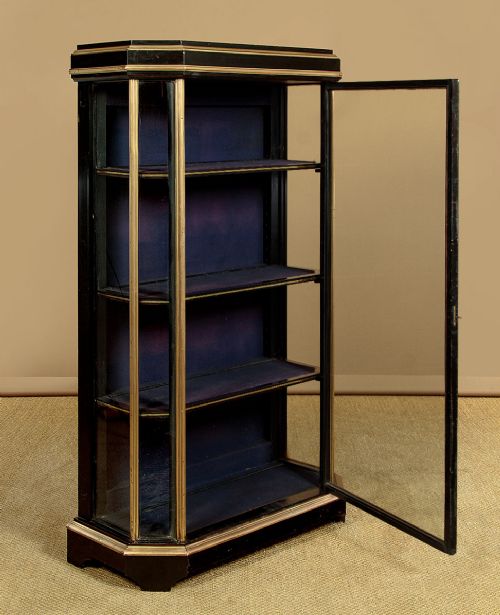
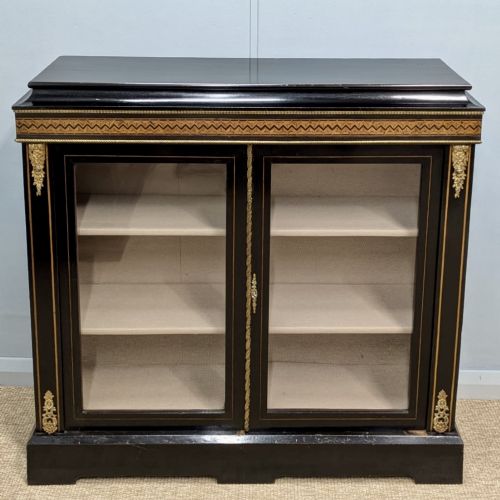
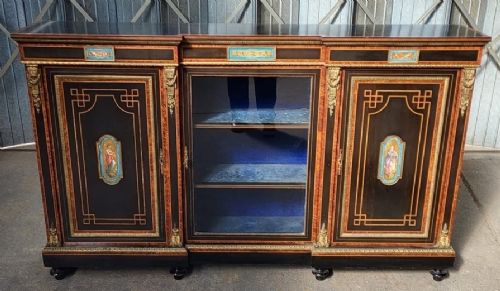
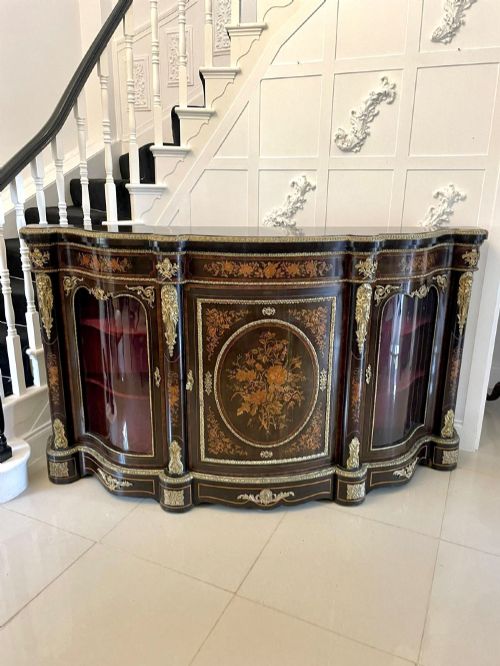




Ebonised Brass Mounted Cabinet
An ebonised brass mounted cabinet brings dark timber and polished metal together, offering a striking display piece for the home.
Ebonised Brass Mounted Cabinet
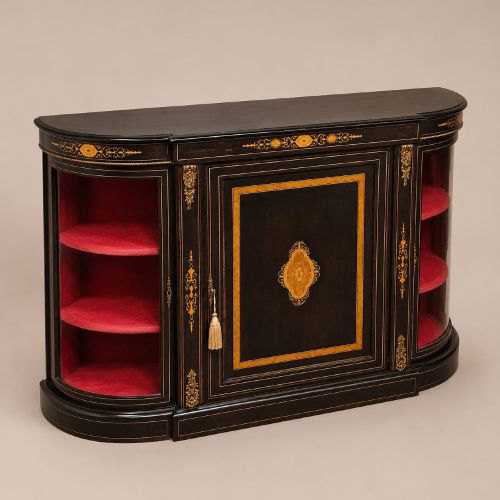
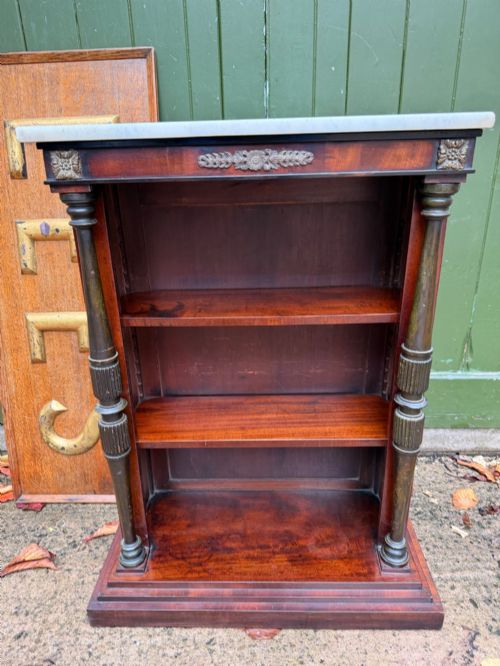
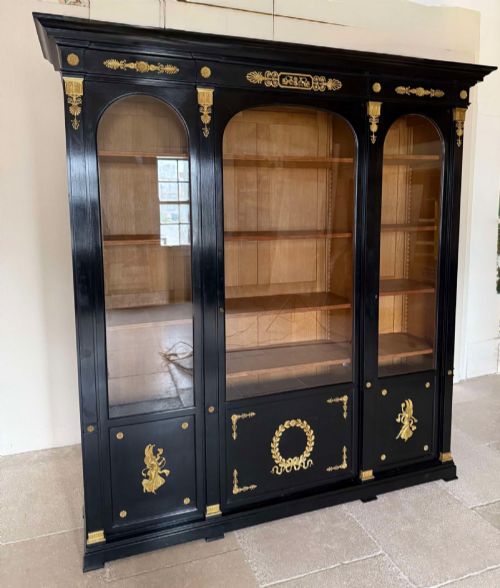
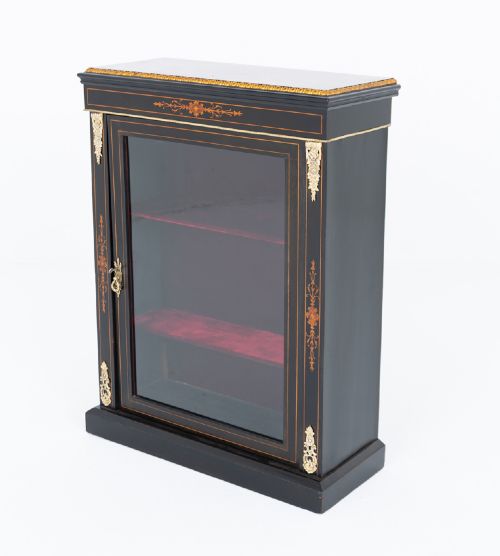
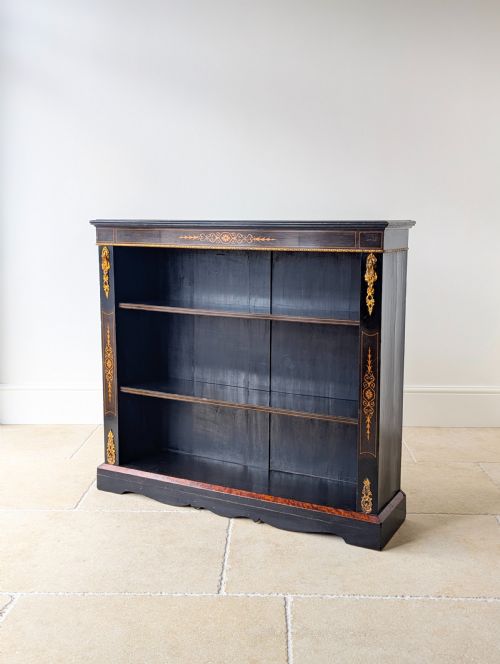
An ebonised brass mounted cabinet appears in various Victorian and nineteenth-century forms, including pier cabinets, credenzas, breakfront bookcases, and display pieces. These items originated across British and French workshops, encompassing styles from the Aesthetic Movement to Napoleon III and French Empire designs.
The pieces on this page lean heavily towards nineteenth-century production, frequently taking the form of glazed pier cabinets and serpentine credenzas designed for formal rooms. Buyers encounter everything from single compact cabinets to substantial three-door side cabinets and matching pairs.
Materials and Techniques
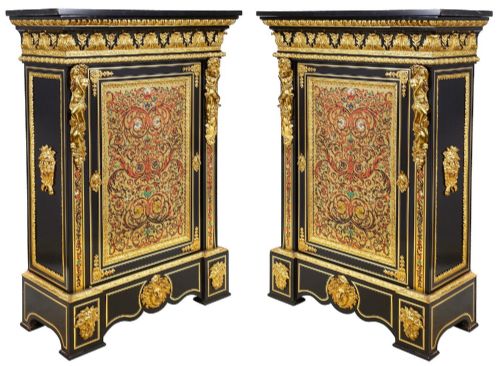
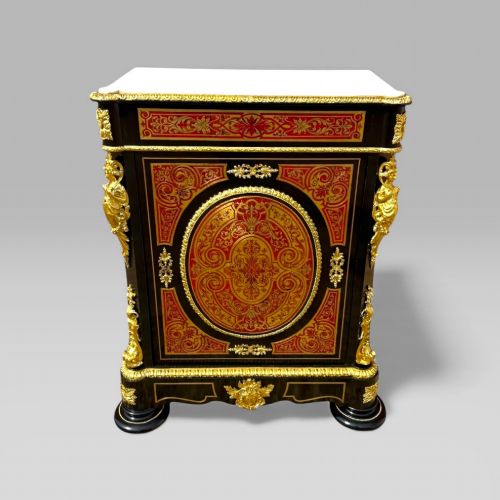
Maker's workshops built these pieces using timber finished with an ebonised coating to imitate costly ebony, complemented by cast ormolu and brass mounts. Artisans incorporated intricate boulle work utilising tortoiseshell alongside brass inlay, adding significant visual texture to the surfaces.
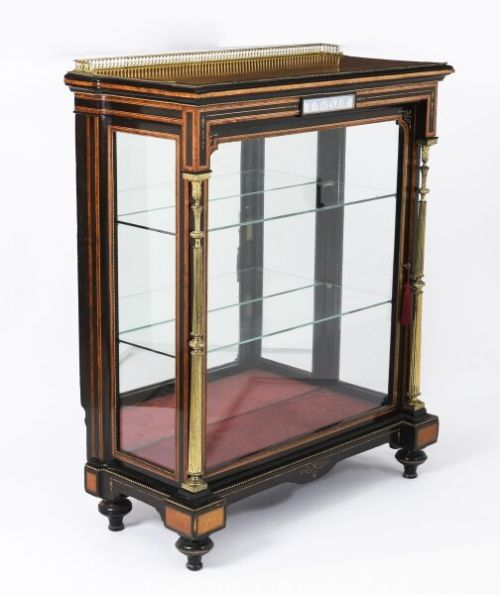
Selected examples integrate porcelain plaques, marble tops, and detailed floral marquetry alongside amboyna veneers. Glazed doors and velvet linings appear frequently in display forms to protect and showcase contents.
Ebonised Brass Mounted Cabinet Retail Price Guide 2026
Typical asking prices for ebonised brass mounted cabinet among the pieces listed under this phrase on Sellingantiques today, from the lower quarter to the upper quarter. They describe what is for sale here now, not the wider market.
One remarkably specific nineteenth-century survivor listed here is a night porter's lined key cupboard.
Craftsmanship and Detailing
The standard of an ebonised brass mounted cabinet rests on the precision of its brass inlay and the casting quality of its ormolu mounts. Finer pieces display crisp botanical marquetry, robust structural timber, and well-fitted marble tops rather than superficial decoration.
Workshop output ranges from plain functional storage to elaborate display furniture adorned with Sevres plaques and intricate tortoiseshell work. The complexity of the boulle marquetry and the architectural proportion of the breakfront or serpentine shape dictate the standing of the piece.
Henry Ogden and Son
The Ebonised Brass Mounted Cabinet Glossary
- Ebonised wood
- Timber stained or painted black to resemble genuine ebony. This finish was widely utilised in Victorian and Napoleon III furniture.
- Ormolu
- Gilded bronze mounts applied to furniture edges and panels. It provides a bright metallic contrast against dark ebonised surfaces.
- Boulle
- An elaborate marquetry technique using tortoiseshell and brass inlay. It takes its name from a French royal cabinet maker.
- Pier cabinet
- A narrow cabinet designed to stand against the wall space between windows. These pieces often feature glass doors for display.
- Credenza
- A large sideboard or cabinet form used for storage and display. Nineteenth-century versions frequently showcase serpentine fronts and multiple doors.
Ebonised Brass Mounted Cabinet: Frequently Asked Questions
What is an ebonised brass mounted cabinet?
These pieces are nineteenth-century display and storage furniture constructed from dark ebonised timber and decorated with metallic mounts. They include pier cabinets, bookcases, and credenzas designed for formal interiors.
Craftsmen often combined the black finish with brass inlay, tortoiseshell, or ormolu to create high contrast decorative surfaces intended to catch the eye.
How were these cabinets used originally?
Victorian and French households used these items to store and display prized possessions, books, and fine ceramics behind glass doors. Credenzas and side cabinets functioned as focal points in formal dining rooms and drawing rooms.
Smaller pier cabinets stood between windows, holding ornaments or porcelain plaques on their shelves while protecting fragile items from dust.
How do I style an ebonised cabinet at home?
The dark timber finish and metallic mounts allow these pieces to anchor a room as a strong visual statement. They pair well with both traditional period settings and minimalist contemporary spaces.
Use the internal glass shelves and velvet linings to display collections of glassware or ceramics, letting the brass details reflect natural room light.
How can I tell Victorian from Napoleon III styles?
Victorian pieces often lean towards straightforward architectural forms, such as open bookcases and simpler pier cabinets with subtle inlay. They reflect British domestic tastes of the period.
Napoleon III and French pieces tend to feature more exuberant boulle work, tortoiseshell, and heavy ormolu mounts on serpentine or breakfront bodies, showing clear French design influence.