
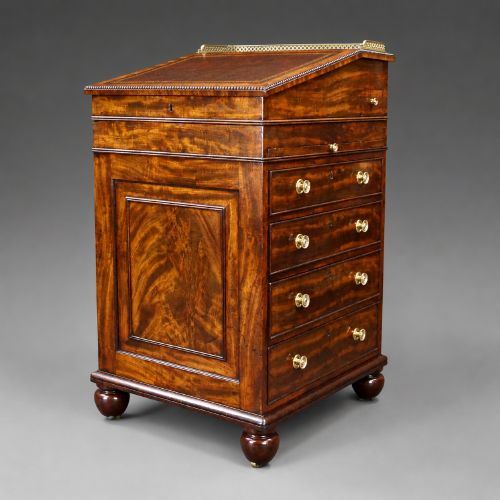
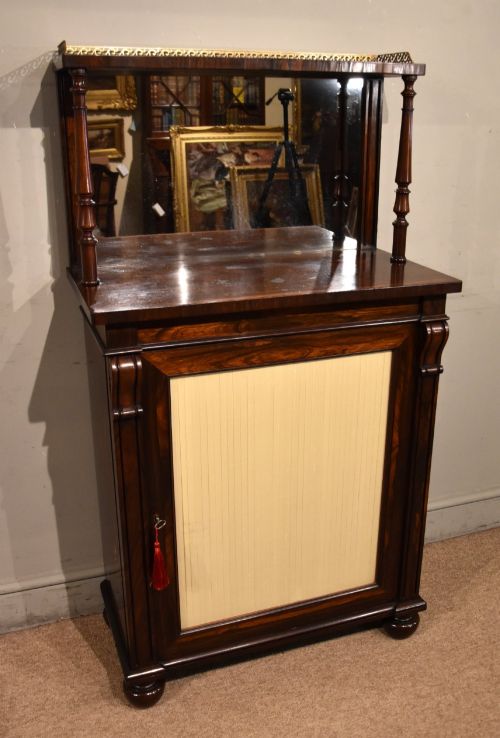
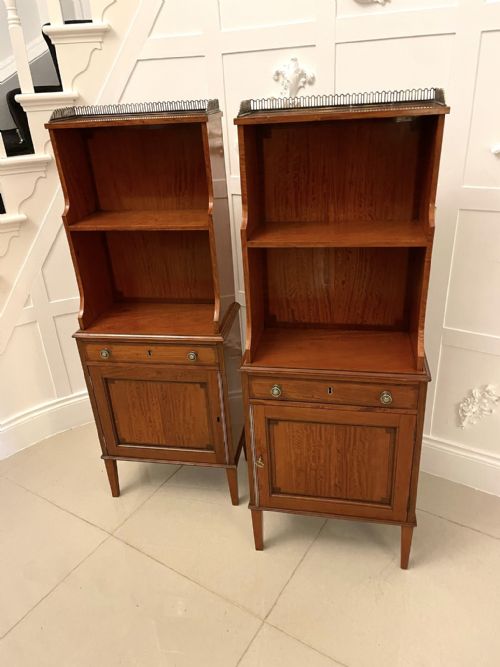
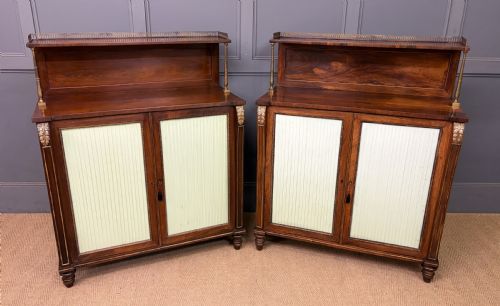
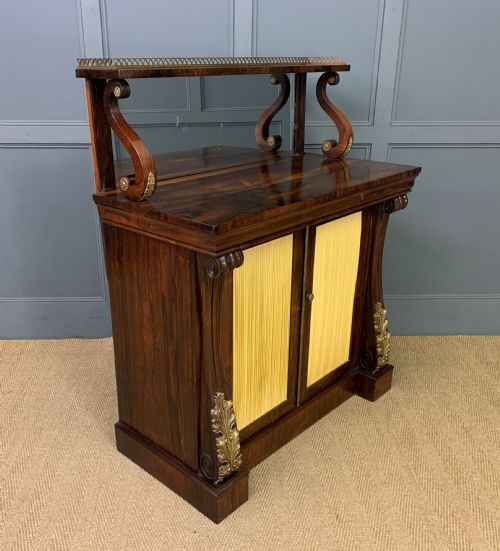


Regency Brass Gallery Cabinet
A regency brass gallery cabinet brings refined metals and rich timbers together for display and storage.
Regency Brass Gallery Cabinet
A regency brass gallery cabinet belongs to a distinct family of case furniture spanning side cabinets, chiffoniers, and open bookcases. These pieces typically display the clean lines and classical proportions associated with the Regency, George IV, and William IV periods, alongside later 19th-century interpretations.
The defining feature across these forms is the integration of fine cabinetry with decorative metalwork. Makers combined functional storage with surface display, creating compact side pieces and larger breakfront cabinets that suit modern rooms just as well as period interiors.
Materials and construction methods
Cabinetmakers built the structural carcases using dense timbers such as mahogany, rosewood, satinwood, and walnut, frequently selecting figured veneers for visual depth. Details like boxwood inlay, leather writing surfaces, and parcel gilt accents completed the decorative scheme.
Metalwork formed an essential part of the construction, utilising brass for structural galleries, mounts, and inlay work. Skilled artisans fitted these elements securely into the timber frames to protect the upper surfaces and complement the dark wood tones.
The furniture spans multiple eras including Regency, Georgian, Victorian, and later revival dates up to the 1930s.
Judging the standard of execution
Quality rests upon the selection of timber veneers and the precision of the cabinetmaker's joinery. Superior pieces display continuous grain patterns across drawer fronts and doors, tight corner joints, and well-balanced proportions that hold the eye.
The refinement of the decorative metalwork marks the distinction between standard production and exceptional work. Crisp casting on brass galleries, clean execution of inlay, and smoothly operating drawers indicate the maker's dedication to craft.
Gillows·John McClean
The Regency Brass Gallery Cabinet Glossary
- Gallery
- A low decorative railing, usually cast in brass, fitted around the top edge of a cabinet or sideboard to keep items from sliding off.
- Chiffonier
- A compact sideboard or low cabinet developed during the early 19th century, frequently featuring a shelf back or enclosed lower cupboards.
- Davenport
- A small, pedestal-style writing desk with a sloping top, containing internal drawers and compartments.
- Breakfront
- A large cabinet or sideboard whose central section projects forward from the flanking outer cupboards.
- Parcel gilt
- The practice of applying thin gold leaf selectively to specific carved details or mouldings on a wooden surface.
Regency Brass Gallery Cabinet: Frequently Asked Questions
What is a brass gallery used for?
The brass gallery acts as a decorative open railing around the upper surface of a cabinet. It prevents displayed items from falling while adding a sharp metallic contrast to the timber.
Historically, this feature protected small porcelain objects or books placed on top of sideboards and cabinets during daily use.
Where should I place a chiffonier?
A chiffonier fits naturally in a living room, dining room, or hallway as a low storage and display surface. Its compact footprint allows it to sit against walls where a larger sideboard would overwhelm the space.
The upper shelves provide a natural spot for displaying small decorative objects while the enclosed lower cupboards hide away clutter.
How do I care for rosewood and mahogany?
Keep wooden furniture away from direct sunlight and heat sources to prevent the timber veneers from drying out and splitting. Regular dusting with a soft, dry cloth preserves the polished finish without the need for heavy chemical polishes.
Applying a traditional beeswax occasionally helps nourish the grain and maintains the natural lustre of the wood over time.
How do I identify Regency period furniture?
Regency pieces typically feature classical architectural proportions, clean surface lines, and restrained classical ornament. Look for contrasting timber veneers, fine brass inlay work, and distinctive gallery rails.
While the primary period ran through the early 19th century, revival pieces from later decades often replicated these exact forms and material combinations.