
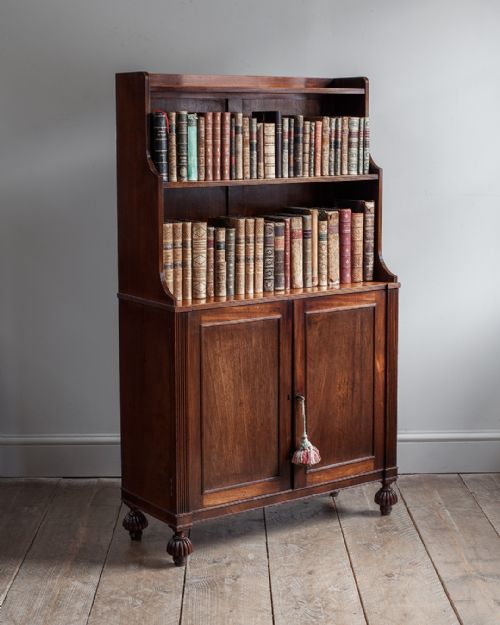
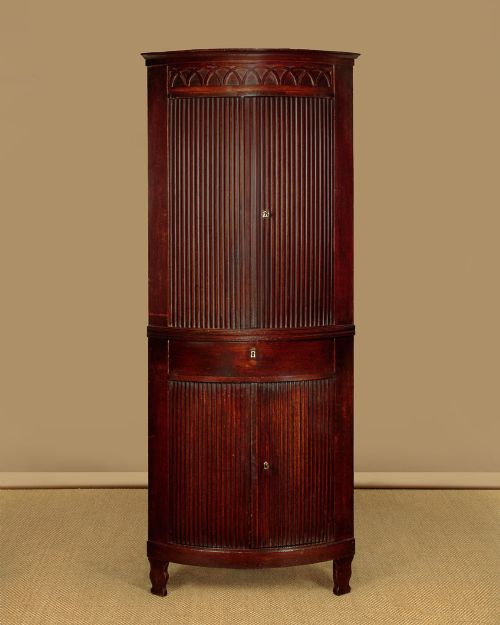
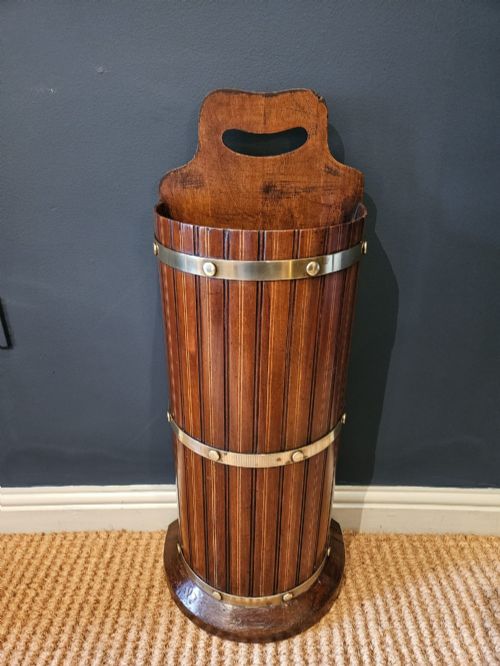
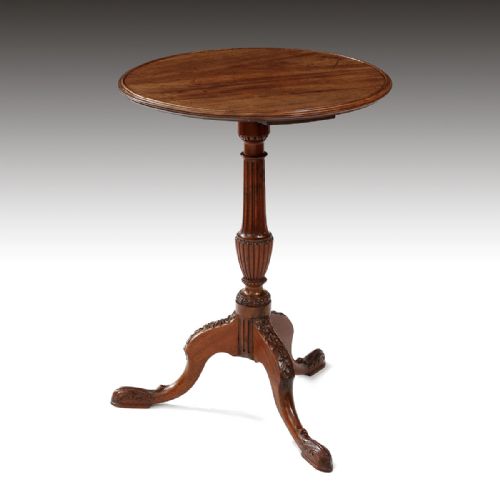
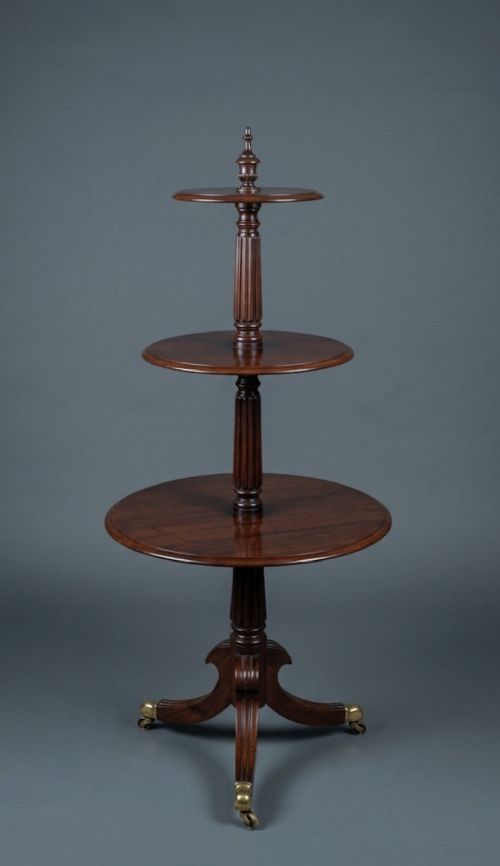


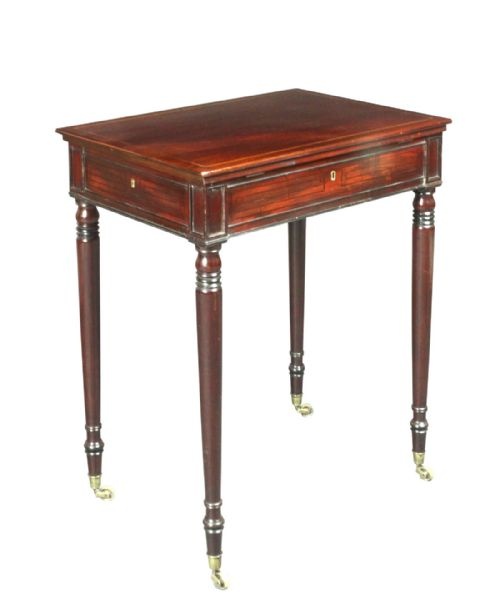

Reeded Mahogany Stand
A reeded mahogany stand brings architectural grace and rich timber warmth to a room, offering a sturdy perch for plants, lamps or displays.
Reeded Mahogany Stand
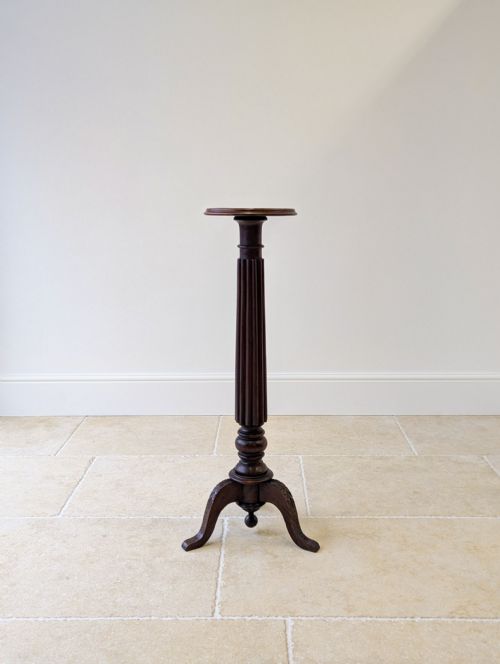
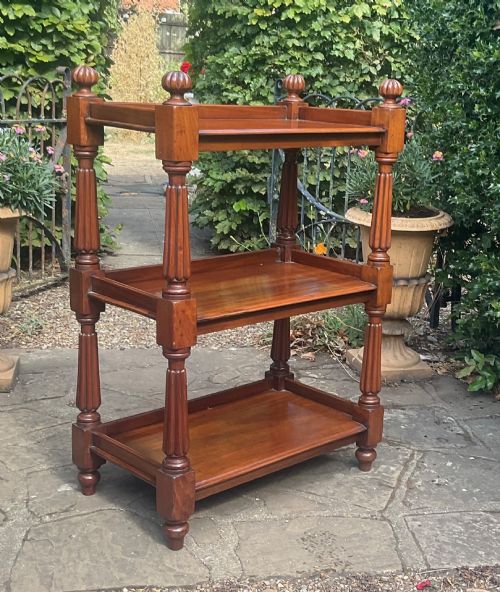
A reeded mahogany stand encompasses tall torchere columns, occasional tables and tiered dumb waiters that showcase the dense grain of mahogany combined with carved vertical reed mouldings.
The pieces span the Georgian, Regency, William IV and Victorian periods, with tall torchere stands emerging in the archive alongside tables and small display furniture.
Buyers seeking a reeded mahogany stand will encounter slender column forms designed to elevate items cleanly within a traditional interior space.
Materials and Construction
Cabinetmakers worked with solid and veneered mahogany, turning shafts on lathes to shape the parallel convex ridges known as reeds.
Secondary structural elements incorporate brass fittings, glass surfaces and marble tops, particularly on tables dating from the Regency era.
Certain dumb waiter trays fold away entirely, revealing a clever space-saving hinge mechanism designed for eighteenth-century dining rooms.
Distinctions in Quality
The distinction between standard workshop production and top tier pieces rests on the crispness of the hand-carved reeding and the choice of richly figured timber.
Superior examples demonstrate meticulous joinery in weight-bearing columns and tripod bases, ensuring stability without clumsy reinforcement.
Gillows
The Reeded Mahogany Stand Glossary
- Reeded
- A decorative moulding consisting of parallel convex ridges resembling tied reeds or inverted fluting. This detail catches the light along column shafts and table legs.
- Torchere
- A tall, slender stand or pedestal designed specifically to support a lamp, vase or candleholder. They feature prominently among tall display pieces.
- Dumb waiter
- A tiered stand with revolving or fixed circular trays used for serving food or holding books. These multi-level pieces offer practical vertical storage.
- Tilt top
- A table mechanism allowing the surface to pivot to a vertical position when not in use. This clever hinge design saved floor space in historic homes.
Reeded Mahogany Stand: Frequently Asked Questions
What is a reeded mahogany stand used for?
These pieces function primarily as elevated platforms for display, holding decorative objects, lamps or small arrangements.
In period rooms, tall stands placed torches or candles in dark corners, while tiered versions served meals or held books.
How do I date a mahogany stand?
Dating relies on observing the prevailing style of the feet, column turning and joinery methods relative to known eras.
Regency and Georgian pieces display sharper hand-tool marks and classical proportions, whereas later Victorian examples often incorporate heavier turnings.
Are these stands stable on carpets?
Tripod bases and slender columns require careful placement to ensure absolute balance on uneven historic flooring.
Most stands possess sufficient weighted mass in the base, though tall torchere designs benefit from positioning away from heavy traffic.
How should I clean mahogany furniture?
Maintenance requires dusting with a soft, dry cloth and applying natural beeswax periodically to nourish the dry timber.
Avoid chemical sprays and moisture, which can degrade the historic polish and lift old veneers over time.