



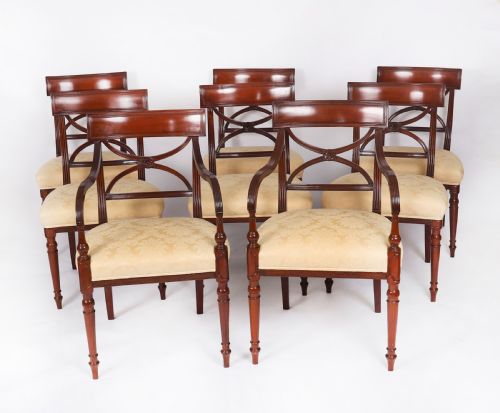
Reeded Mahogany Chairs
Reeded mahogany chairs are classic seating options crafted primarily during the Regency and Georgian periods that bring understated linear elegance to traditional interiors.
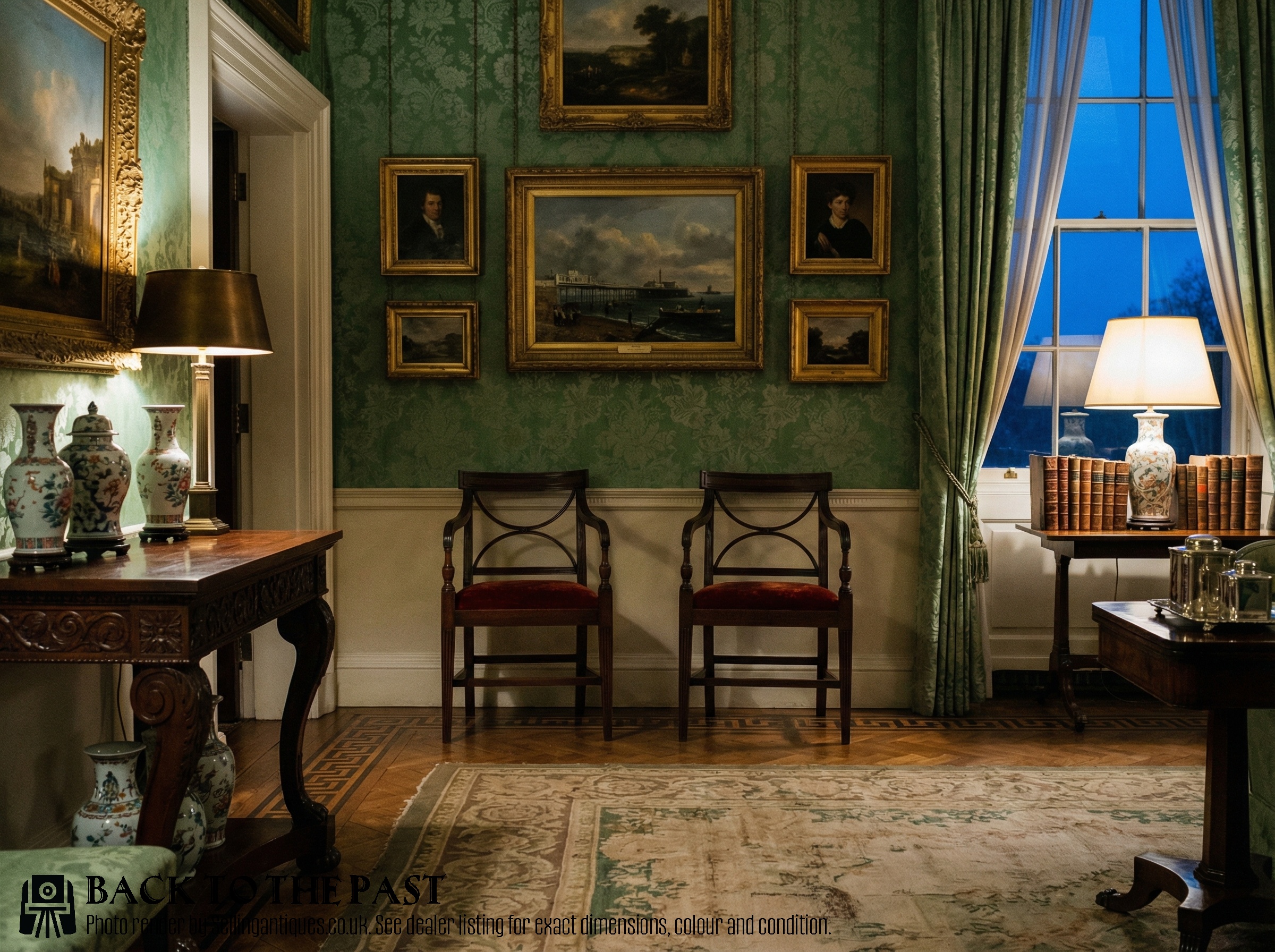
Reeded Mahogany Chairs
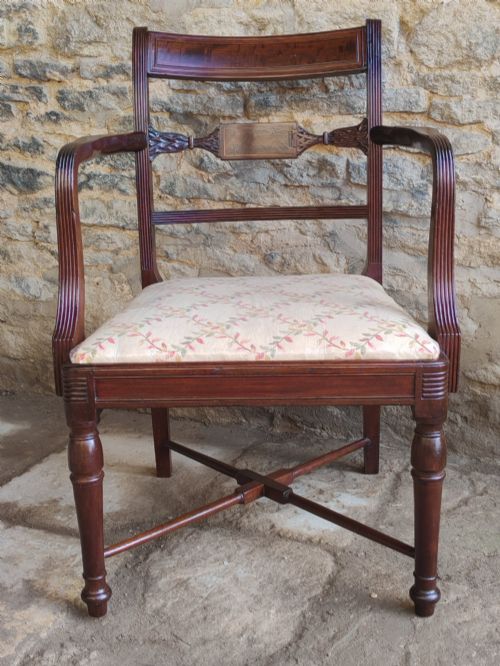
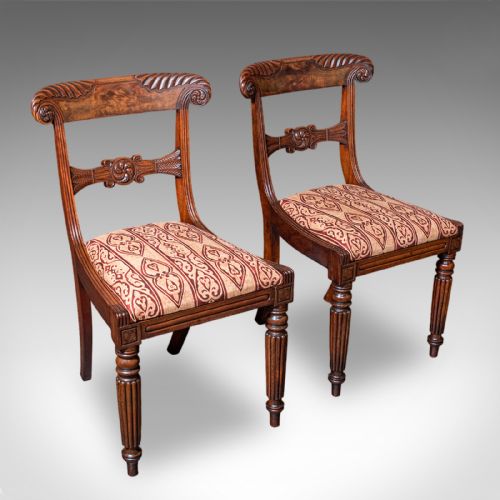
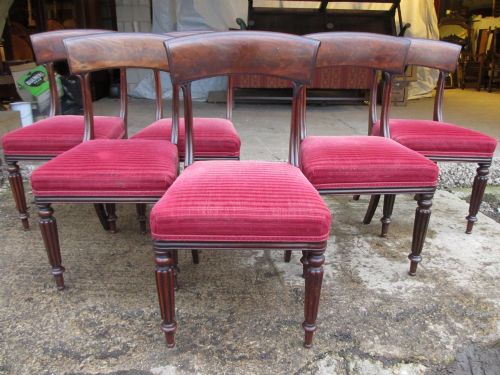
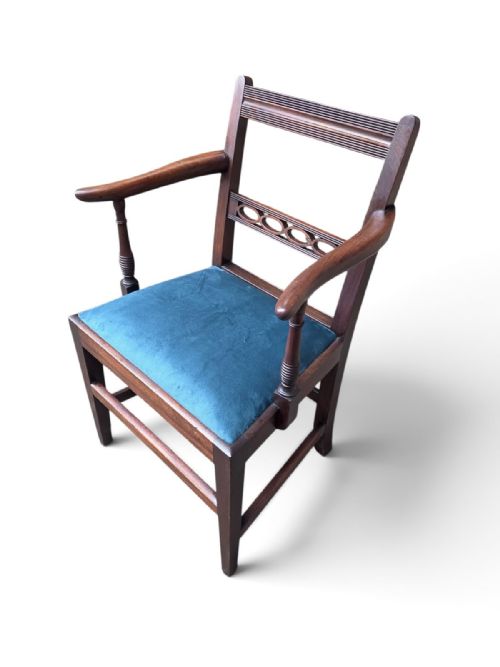
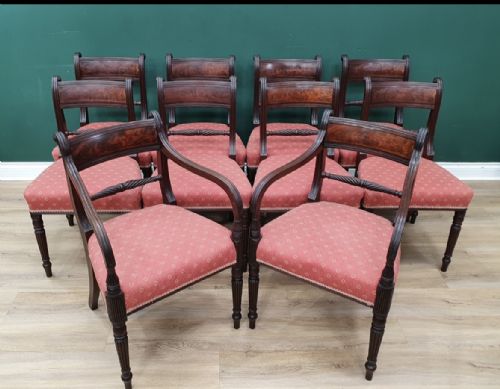
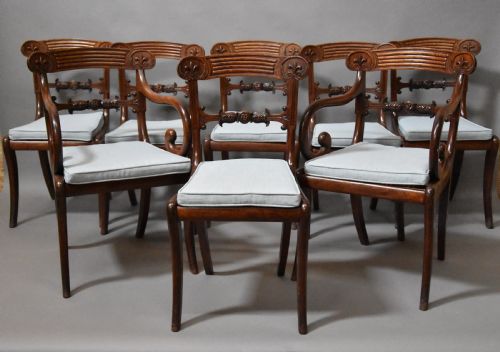
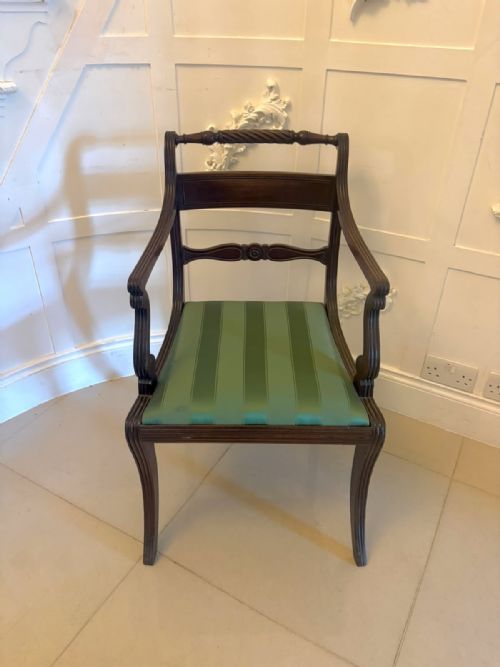
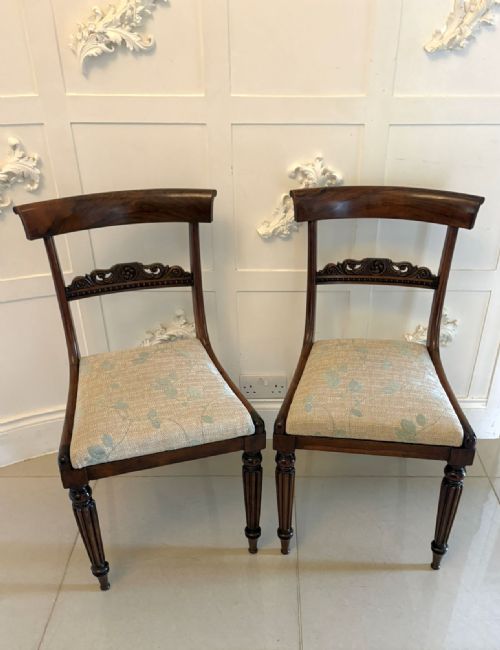
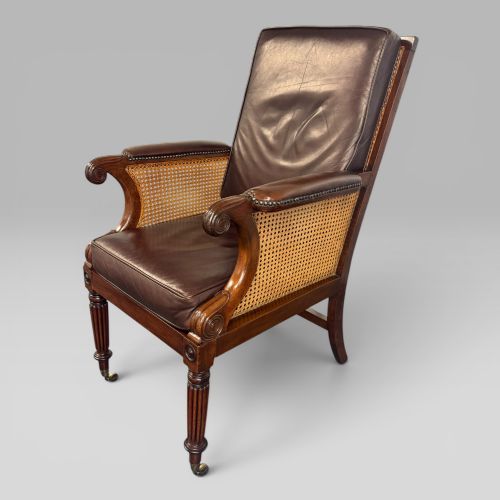
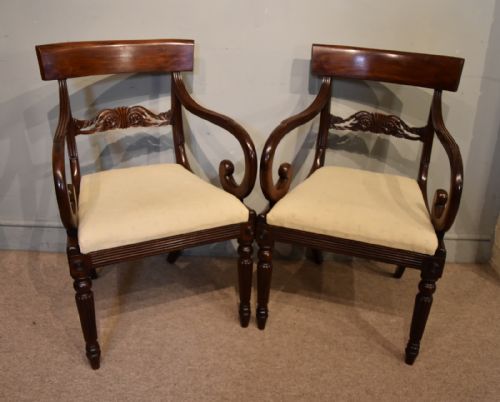
Reeded mahogany chairs encompass a variety of seating forms, most commonly appearing as matching dining sets, single armchairs, and library bergères. Buyers searching for reeded mahogany chairs will frequently encounter examples from the Regency, Georgian, and William IV periods, alongside later Victorian interpretations.
The selection ranges from pairs of hall chairs and individual desk chairs to large dining sets consisting of six, eight, or ten pieces. These items serve functional seating roles while displaying the characteristic parallel rounded mouldings carved directly into the timber frame.
Origins trace principally to English workshops of the late eighteenth and early nineteenth centuries, though later revival pieces also emerge. Dining chairs and open armchairs dominate the available forms, reflecting the historical demand for coordinated seating in formal rooms.
How they were made
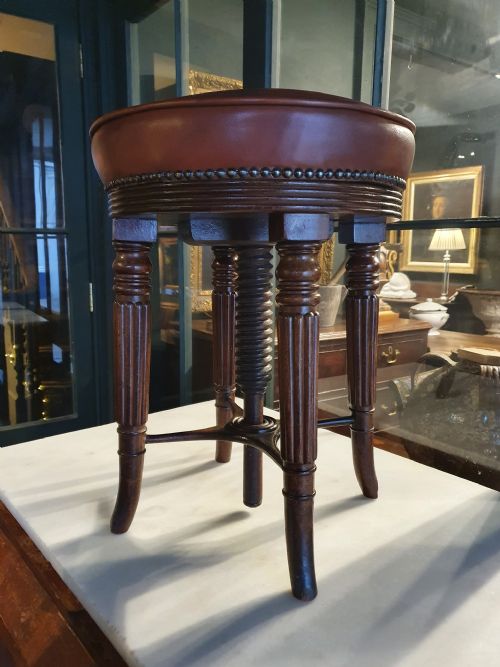
Makers utilised solid mahogany as the primary structural timber, valued for its stability, rich colour, and capacity to hold crisp linear carving. The defining reeded detail was executed by hand using specialised scraping and moulding planes to cut parallel grooves into legs, rails, or frames.
Upholstery methods varied according to the specific chair type, incorporating drop-in pads, overstuffed horsehair foundations, and caned panels. Materials such as leather, velvet, brass studs, and various woven fabrics were applied to seats and backrests depending on the intended domestic function.
Joinery relied on traditional mortise and tenon construction, frequently reinforced with corner blocks on dining and library seats. Structural elements such as saber legs or turned forelegs were shaped from the solid wood before receiving their final surface finish.
Reeded Mahogany Chairs Retail Price Guide 2026
Typical asking prices for reeded mahogany chairs among the pieces listed under this phrase on Sellingantiques today, from the lower quarter to the upper quarter. They describe what is for sale here now, not the wider market.
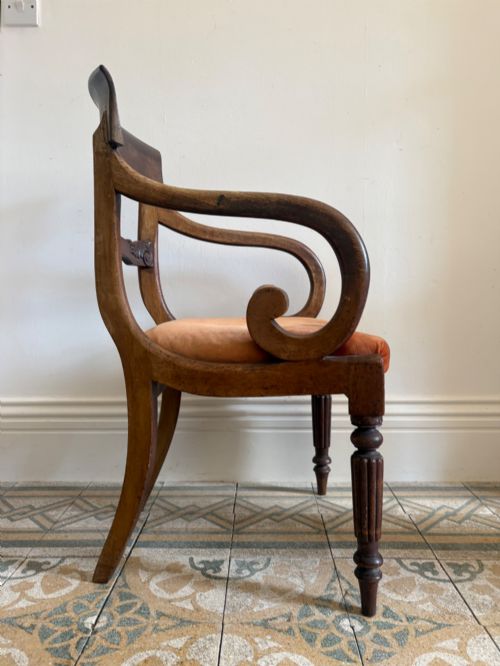
Several armchairs retain evidence of nineteenth-century reading habits, featuring wide wooden elbow rests designed to support heavy leather-bound volumes.
What varies in quality
The standard of the carving defines the upper tier of these pieces, separating workshop output executed with sharp, uniform reeding from later or more perfunctory production. Crisp parallel lines that maintain their depth and spacing along the full length of a leg indicate superior bench work.
Proportion and architectural harmony distinguish exceptional examples from ordinary ones, particularly in matched dining sets where uniform scaling across multiple pieces requires strict discipline. The integrity of the original timber framing and the retention of period upholstery specifications further elevate certain items above standard utilitarian equivalents.
Gillows
The Reeded Mahogany Chairs Glossary
- Reeded
- A decorative moulding consisting of parallel convex rounded strips projecting from the surface. It provides a classical linear texture to chair legs and frames.
- Bergère
- An enclosed upholstered armchair with wooden framing and a solid or caned back and sides. This French-derived form became popular in English libraries during the Regency period.
- Carver
- An armchair designed to match a set of single dining chairs, traditionally placed at the head of a table. These often feature open arms curved for comfort.
- Sabre leg
- A concave sweeping leg that tapers toward the foot, resembling the curve of a cavalry sword. It appears frequently on Regency seating.
- Bar back
- A chair back featuring a horizontal cross rail, sometimes curved or carved, connecting the stiles. This design is prevalent in dining chairs of the early nineteenth century.
Reeded Mahogany Chairs: Frequently Asked Questions
How do I date a reeded mahogany chair?
Dating relies on stylistic markers, construction methods, and timber characteristics. Regency and Georgian examples generally display hand-cut reeding and native mahogany stock.
Later Victorian or twentieth-century revival pieces often reveal machine tooling, standardised joinery, or differing secondary woods beneath the frame.
Were these chairs originally used for dining?
Many surviving examples were commissioned specifically as suites for formal dining rooms. Sets frequently combined six or eight single chairs with matching armchairs for the table ends.
Other forms, such as library bergères or hall chairs, served entirely different domestic functions in reception spaces and morning rooms.
Can I mix single chairs with carvers?
Mixing single chairs and carvers follows historical precedent in traditional dining arrangements. Dining sets from the period regularly paired several side chairs with two matching armchairs.
When combining separate purchases, consistency in leg style, timber tone, and overall height maintains a cohesive appearance around the table.
What is the difference between caned and upholstered seats?
Caned seats utilise woven rattan panels stretched across an internal frame, offering a lighter visual weight often seen on library chairs and lighter Regency forms. Upholstered seats employ layered padding covered in leather, velvet, or fabric for formal dining and desk use.
Both methods reflect period specifications depending on the room the seating was intended to occupy.