
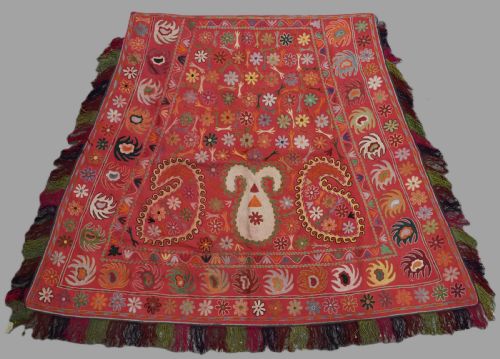

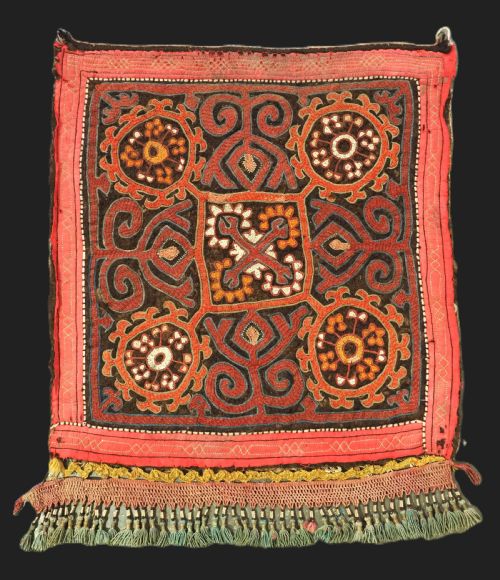
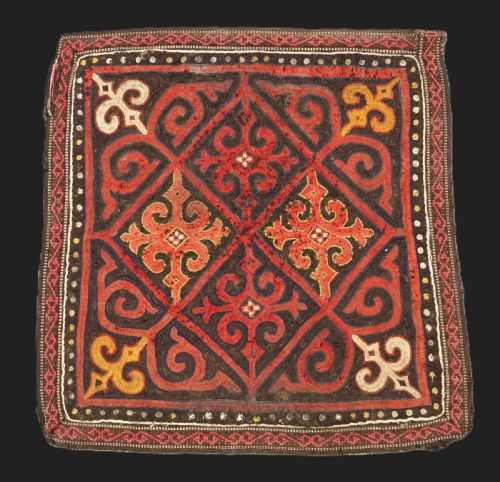


Red Wool Tribal Embroidery
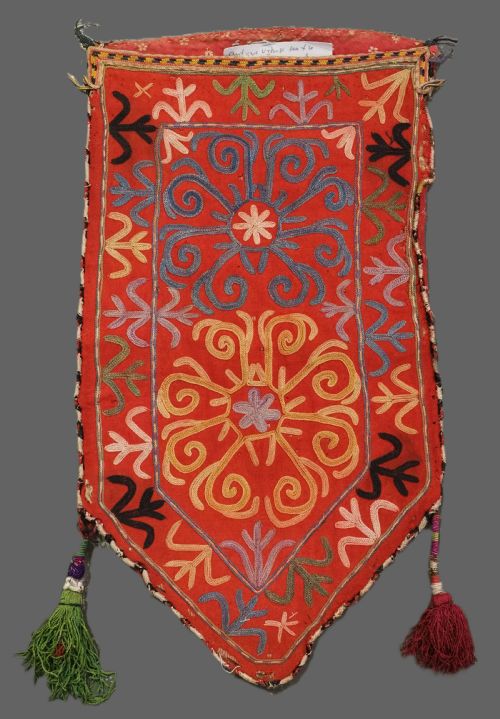
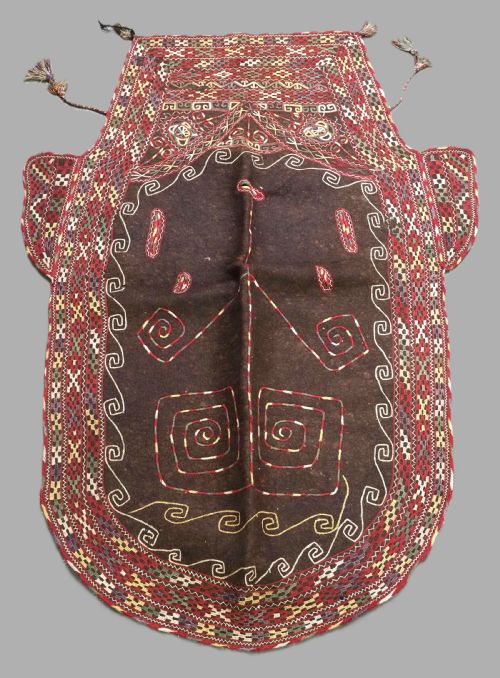
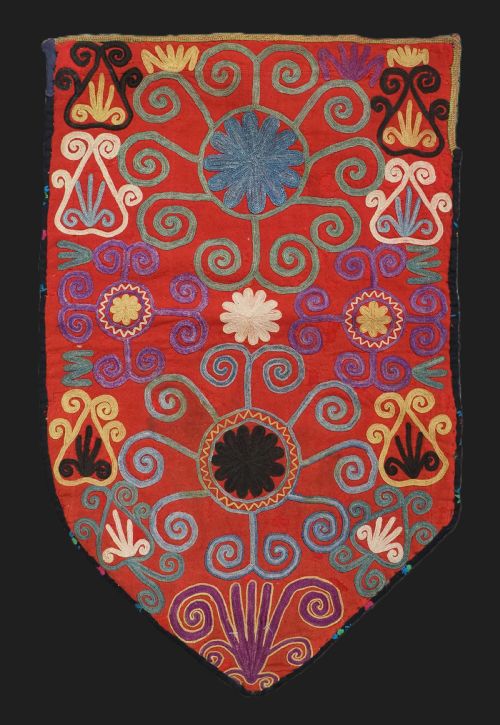
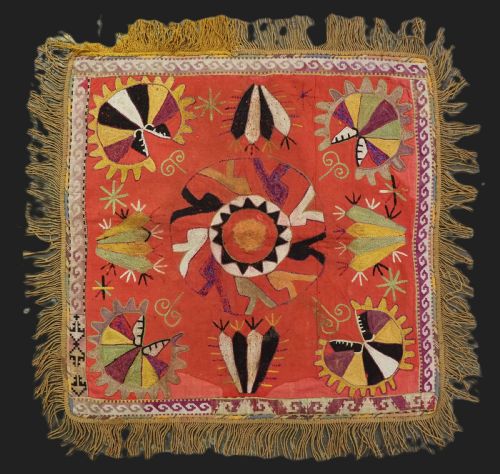
These red wool tribal embroidery pieces are vibrant Central Asian and Indian wall hangings, saddle covers and dowry items, bringing rich texture and heritage into modern spaces.
Red Wool Tribal Embroidery
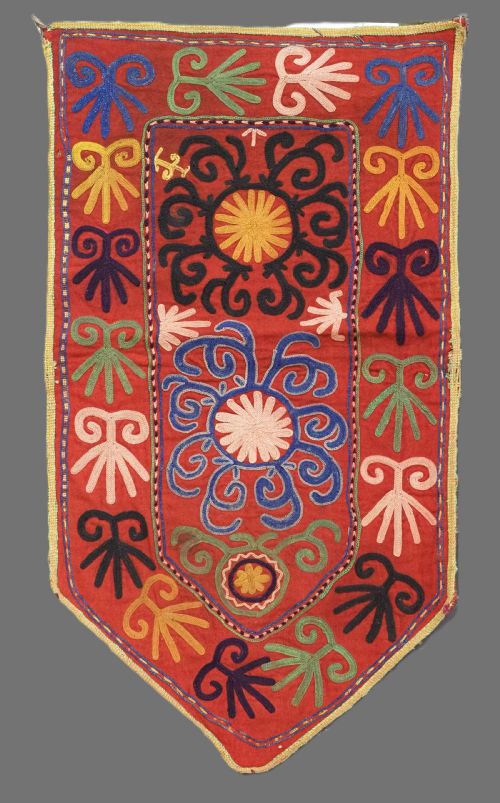
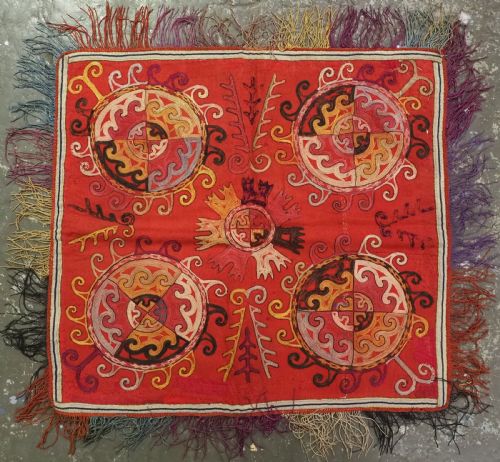
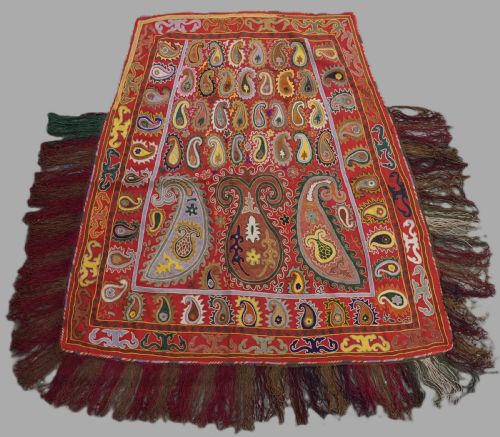
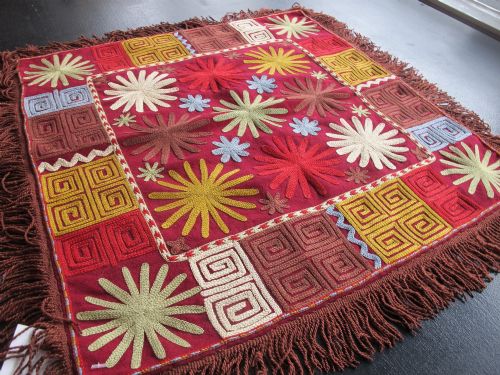
When you search for red wool tribal embroidery, you encounter textiles originating from nomadic and tribal cultures across Central Asia and India. The material evidence centres on wool grounds, frequently red, embellished with detailed needlework.
The most common forms on this page include wall hangings, dowry embroideries known as ilgich, and ceremonial horse covers or saddle rugs. These objects span periods from the late nineteenth century through to the early twentieth century.
Uzbek Lakai tribe pieces feature prominently among the listings, alongside Yomut and Ersari Turkmen examples, as well as Kyrgyz felt panels and Banjara textiles. Each form served a distinct domestic or ceremonial purpose within nomadic life.
How they were made
Makers utilised wool as the primary ground material, often employing felted wool for panels and horse blankets. Silk thread and cotton thread provide the contrasting embroidery work that creates the characteristic patterns.
Additional materials such as horsehair appear in tassels and applied fringes on specific items like felt ok bash panels. Artisans stitched complex designs directly onto the red wool ground, sometimes combining flat embroidery with appliqué techniques.
Materials recorded across the inventory include wool, cotton, silk, felt, horsehair, and dedicated silk and cotton threads.
What varies in quality
The distinction between standard examples and superior pieces rests on the precision of the needlework and the vitality of the design composition. Denser thread coverage and finer silk highlights elevate the visual impact of the embroidery.
Condition and completeness also influence the standing of an object, particularly regarding the survival of original fringes, horsehair tassels and double-faced panels. The integration of colour and the complexity of the tribal motifs determine the overall character.
The Red Wool Tribal Embroidery Glossary
- Ilgich
- A type of Central Asian embroidery created as dowry work for wall hanging. These pieces often display dynamic geometric or figurative motifs.
- Uut kap
- A storage bag or hanging panel traditionally used inside a yurt. They frequently feature rich embroidery on a red wool ground.
- Suzani
- An embroidered textile panel originating from Central Asia. Makers stitched silk threads onto wool or cotton foundations.
- Torba
- A small hanging bag produced by Turkmen and other tribal groups. They incorporate intricate face designs with contrasting thread highlights.
- Ok bash
- A decorative felt housing or cover designed for tent poles. These items often include applied fringes and horsehair tassels.
Red Wool Tribal Embroidery: Frequently Asked Questions
What is an ilgich used for?
An ilgich served as dowry embroidery created for wall hanging within nomadic households.
These pieces displayed the needlework skill of the maker and added colour to the interior of a yurt.
Where do these embroidered textiles originate?
These textiles originate from Central Asia and India, created by tribal groups such as the Lakai Uzbeks, Kyrgyz, and Turkmen.
Nomadic communities produced them for domestic use, ceremonial events, and dowry collections.
How do you display a horse cover?
Ceremonial horse covers and saddle rugs function well as wall hangings in contemporary interiors.
Mounting them on a suitable fabric backing or using a discreet display system protects the wool ground and textile structure.
What materials make up these embroideries?
The primary structure consists of wool, felt, or felted wool, frequently dyed in shades of red.
Surface decoration relies on silk thread, cotton thread, and occasional additions of horsehair tassels and applied fringe.