


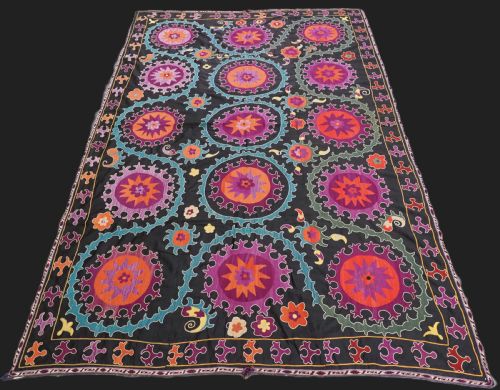

Antique Silk Chain Stitch
Antique silk chain stitch pieces are hand-worked Central Asian and Persian textiles offering brilliant colour and dense pictorial detail for interior walls.
Antique Silk Chain Stitch
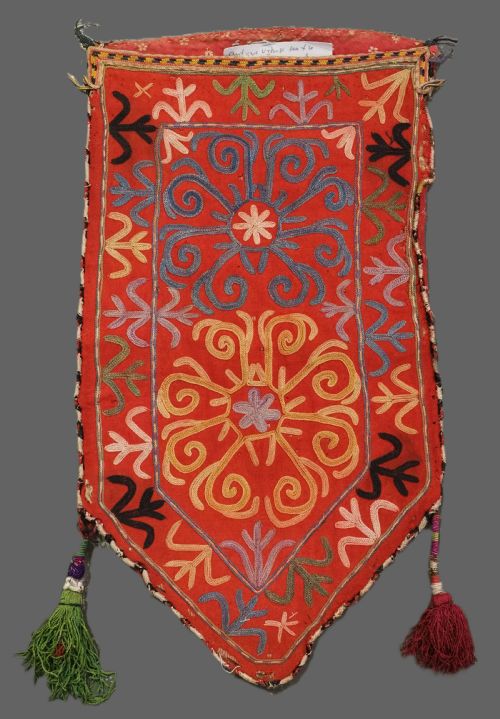
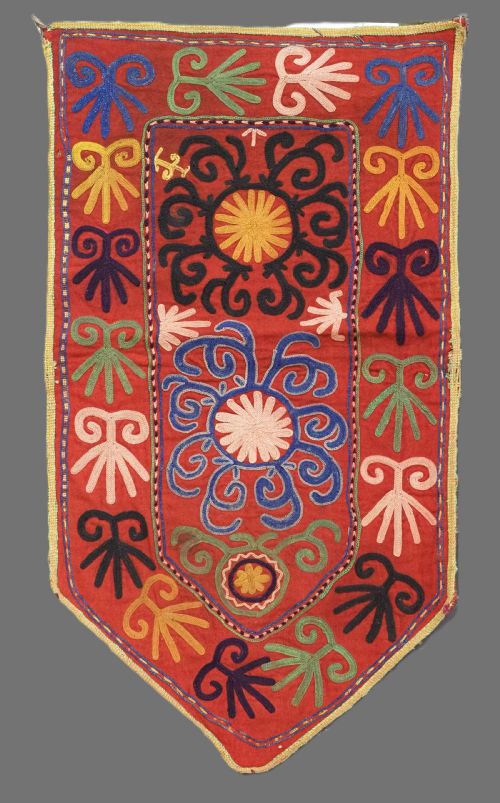
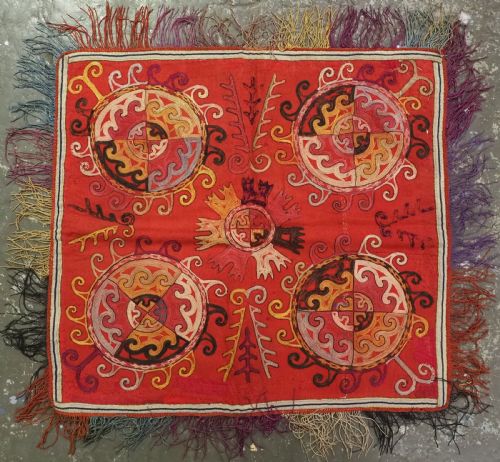
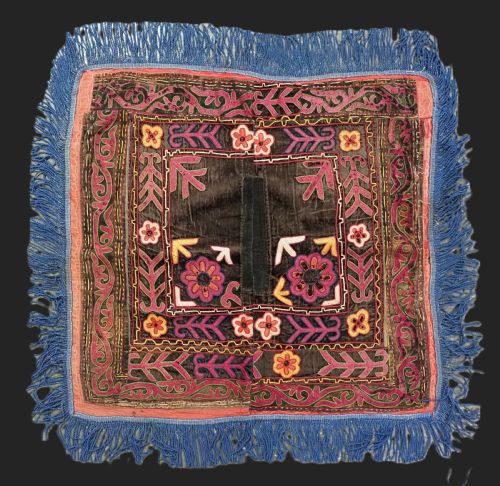
When you search for antique silk chain stitch, you encounter rich decorative textiles created across Central Asia and Persia. These pieces include Uzbek Lakai tribe uut kap ilgich wall hangings, dowry embroideries, Persian Rasht panels, and Suzani textiles.
The most common versions met on this page are Central Asian tribal ilgich wall hangings and Persian embroideries. They reflect traditional domestic crafts and nomadic artistry from the late nineteenth and early twentieth centuries.
How they were made
Makers embroidered fine silk threads onto ground fabrics such as cotton, wool felt, and velvet using continuous loop stitches. This technique created textured surface patterns and bold outlines across the textiles.
Many compositions combine silk embroidery with wool felt appliqué work, building multi-layered designs with floral medallions or tribal motifs.
Materials documented in these textiles include silk, cotton, wool, wool felt, and velvet.
What varies in quality
The standard of an antique silk chain stitch piece depends upon the tightness of the loop work and the complexity of the design. Dense, even stitching maintains structural integrity and keeps the pictorial motifs crisp.
Colour retention and the preservation of the ground fabrics also set individual examples apart. Intact wool felt grounds and vibrant silk threads distinguish finer panels from worn or faded specimens.
The Antique Silk Chain Stitch Glossary
- Ilgich
- A Central Asian embroidered wall hanging. These pieces often functioned as dowry items and display vibrant tribal patterns.
- Suzani
- A large embroidered textile from Central Asia. They typically feature bold floral designs worked on cotton or linen grounds.
- Rasht embroidery
- A traditional Persian textile technique originating in Gilan province. These panels employ silk chain stitch on wool felt grounds, frequently incorporating applique.
- Uut kap
- A Central Asian bag or hanging associated with nomadic tent storage. They share the intricate needlework techniques seen on wall panels.
- Applique
- A sewing technique where pieces of fabric are stitched onto a larger ground material. In these textiles, felt shapes are overlaid and bordered with chain stitch.
Antique Silk Chain Stitch: Frequently Asked Questions
How were these textiles used?
Nomadic and regional makers produced these embroidered panels primarily as interior wall hangings, dowry furnishings, and decorative tent furnishings. They added colour and status to domestic living spaces.
Over time, these textiles transitioned into decorative art objects appreciated for their intricate needlework and cultural history.
How do I hang a textile?
Mounting antique textiles safely requires distributing the weight evenly across the entire upper edge. Conservation-grade Velcro or a padded sleeve stitched to the reverse prevents strain on the fragile silk and felt grounds.
Avoid displaying these pieces in direct sunlight, as silk threads and dyed felt grounds fade rapidly under UV exposure.
How do I date these pieces?
Dating relies on stylistic analysis, material examination, and structural characteristics typical of late nineteenth and early twentieth-century workshops. Natural dye palettes and hand-spun ground fabrics generally point to earlier origins.
Comparing motif arrangements with documented tribal patterns helps narrow the period of production between the 1880s and the 1930s.
How should I clean them?
Antique embroideries require professional textile conservation rather than standard washing. Water and traditional detergents can destabilise old dyes and weaken aged silk and cotton threads.
Surface dust should be removed only by gentle suction through a mesh screen using a low-power conservation vacuum.