





Nomadic Tribal Storage Bag
When you search for a nomadic tribal storage bag, you are looking at functional woven pouches and tent-bands made by pastoral weavers across Central Asia and Persia.
Nomadic Tribal Storage Bag
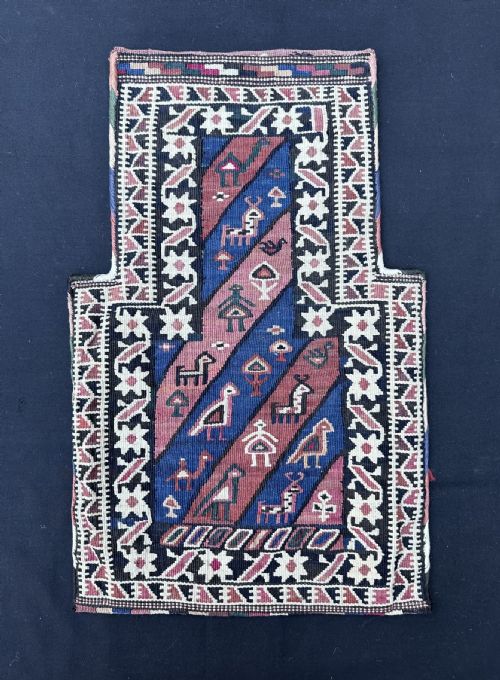
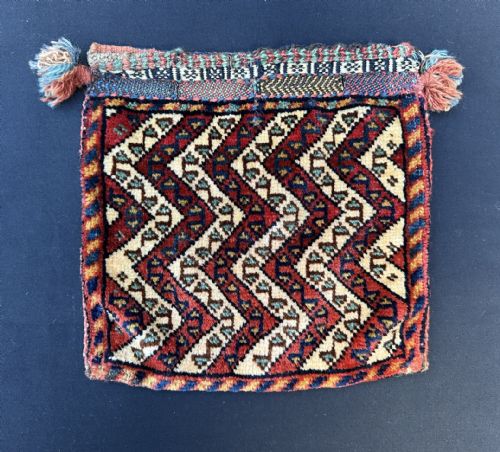
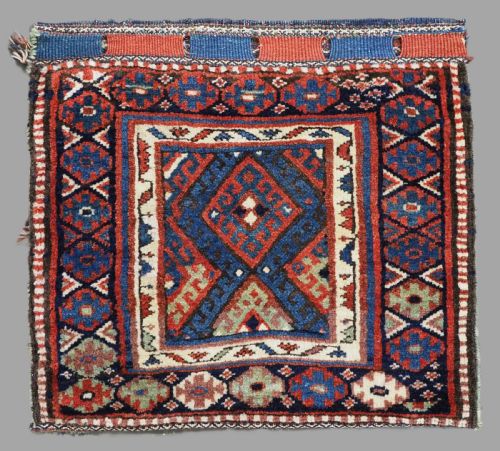
A nomadic tribal storage bag encompasses utility items such as large tent bags, salt bags, spindle bags, and smaller utilitarian pouches woven for daily camp life. These textiles originated among pastoral groups including the Turkmen, Baluch, Qashqa'i, Bakhtiari, and Uzbek tribes during the nineteenth and early twentieth centuries.
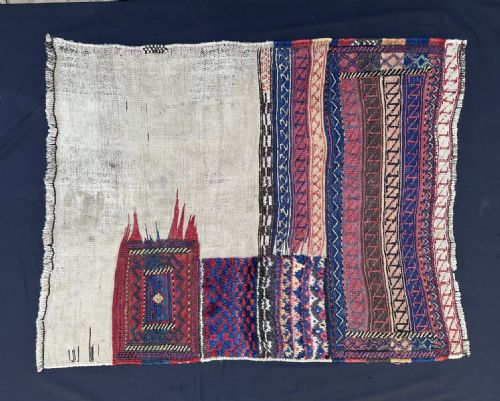
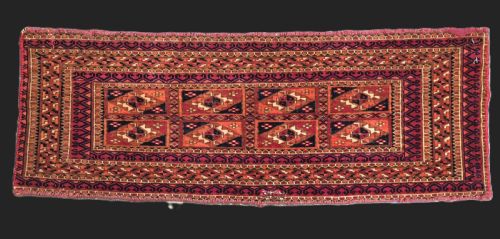
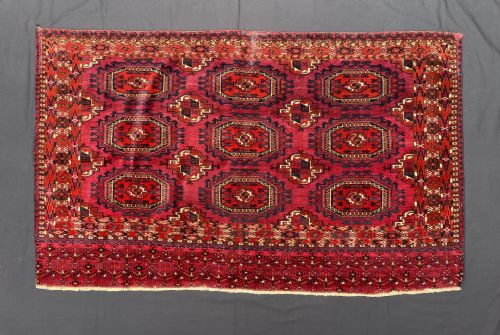
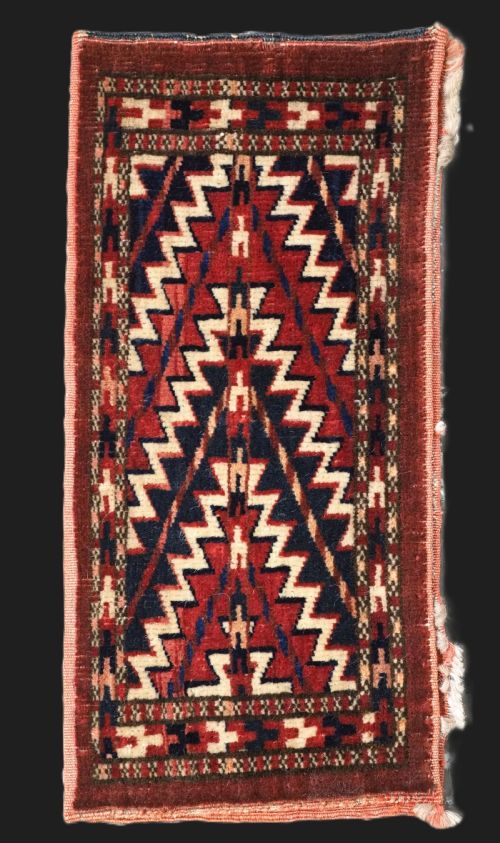
Buyers on this page most frequently encounter Turkmen torba and chuval bag faces, alongside complete pieces retaining their original flatweave backs. These textiles served practical roles inside yurt tents and permanent dwellings, holding household provisions, bedding, or personal possessions.
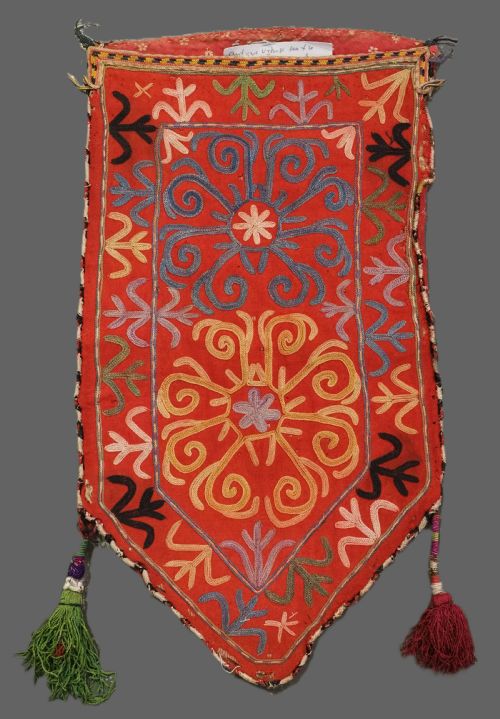
Regional variations span from the deep red field colours of Tekke and Yomut weaving to the detailed embroidery of Lakai Uzbek pieces and the geometric banded designs of Persian tribal groups. Each form reflects the specific domestic needs and tribal traditions of the weavers who produced them.
Materials and construction methods
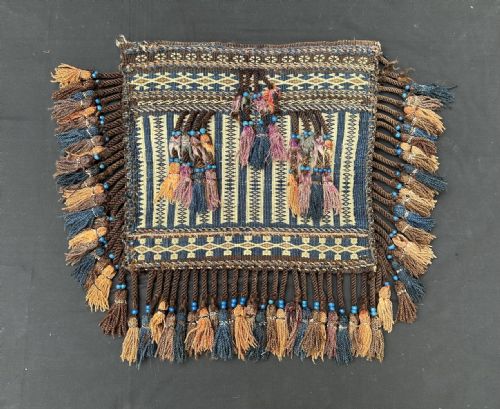
Weavers constructed these storage pieces primarily using hand-spun wool for the main structural pile and flatweave foundations, often incorporating goat hair for durability along the edges. Natural dyes provide the underlying palette, supplemented in specific regional examples by silk highlights and glass bead embellishments.
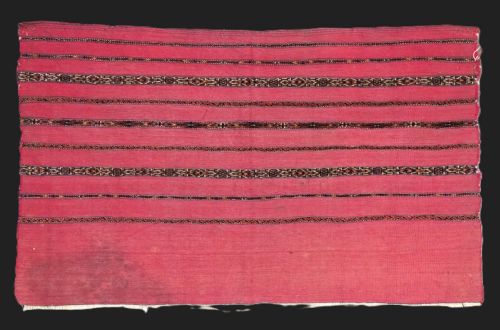
Construction techniques combine dense knotting on wool warp threads with flatweave plain weave backs and banded weft work designs. Many survivors retain their original hanging loops, side attachments, and complete back panels constructed to withstand the rigours of nomadic transport.
Some tent pole bags feature narrow tubular forms designed specifically to wrap around wooden yurt supports during seasonal moves.
Factors influencing textile quality
Quality in these woven pieces rests upon the density of the knotting, the fineness of the spin in the wool, and the crispness of the tribal design geometry. Pieces executed with exceptional precision in the primary motifs show the hand of experienced weavers working within established cultural canons.
The survival of original components such as plain weave backs, hanging loops, and complete side panels elevates the integrity of a textile. Furthermore, the vibrancy and saturation of natural dye palettes, occasionally enhanced by skilled use of silk highlights, distinguish superior examples from standard utility work.
The Nomadic Tribal Storage Bag Glossary
- Torba
- A small horizontal storage bag traditionally used inside nomadic tents for personal belongings. These pieces were frequently hung against the lattice walls of a yurt.
- Chuval
- A large tent storage bag used by Turkmen tribes for bedding and bulk household goods. They often feature multiple guls arranged in strict rows across the face.
- Gul
- A primary medallion or repeating octagonal motif used in Turkmen tribal weaving. Each design traditionally identifies the specific clan or tribal grouping of the maker.
- Mafrash
- A rectangular storage bag or panel forming part of a pair used for transporting household items on pack animals. They typically display banded flatweave or pile designs.
- Flatweave
- A textile structure produced without pile by interweaving warp and weft threads directly. This technique forms the sturdy backs and side panels of many storage containers.
Nomadic Tribal Storage Bag: Frequently Asked Questions
What were tribal storage bags used for?
Nomadic families utilised these woven containers inside tents and portable dwellings to organise grain, salt, bedding, and personal gear. Their robust construction protected contents during seasonal migrations across harsh terrain.
Many designs also held specific ceremonial significance or formed part of a bride's dowry, representing the wealth and weaving skill of the household.
How do I display a bag face at home?
Bag faces and complete storage pieces mount readily onto neutral backing fabrics for wall display using non-damaging textile sleeves or clips. Their structured proportions suit vertical spaces in both traditional and modern interiors.
Pieces with intact plain weave backs can also lie flat on low surfaces or benches, though heavy foot traffic should be avoided to protect the aged wool fibres.
How can I tell different tribal designs apart?
Tribal attribution relies on structural elements, knotting density, and characteristic medallion patterns known as guls. Turkmen weaving often employs deep red grounds and octagonal motifs, while Persian and Caucasian groups favour distinct geometric layouts and varied palette combinations.
Examining the weave structure on the reverse side frequently reveals technical signatures unique to specific regional workshops and confederacies.
Are original backs important for these bags?
The presence of an original flatweave back enhances the historical completeness and structural integrity of a storage piece. Surviving backs demonstrate how the container functioned as a closed pouch rather than a decorative fragment.
While many pieces survive solely as decorative bag faces due to centuries of heavy wear, complete examples offer a fuller record of nomadic material culture.