

Red Silk Embroidered Textile
When you handle a red silk embroidered textile, you hold centuries of nomadic and courtly needlework crafted across Central Asia and the wider Ottoman world.
Red Silk Embroidered Textile
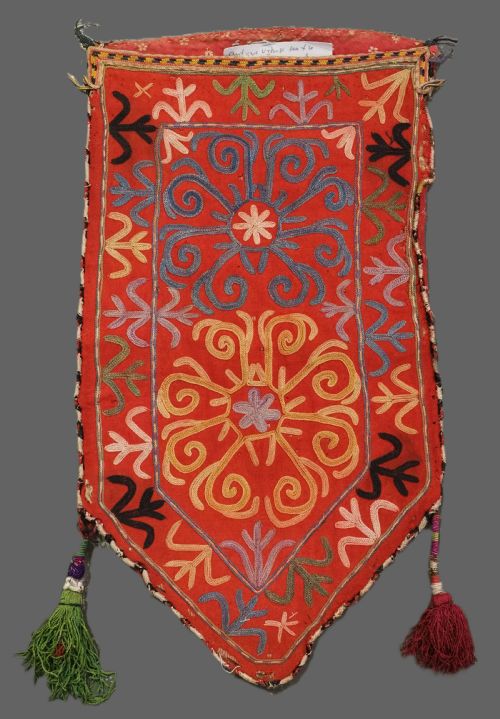
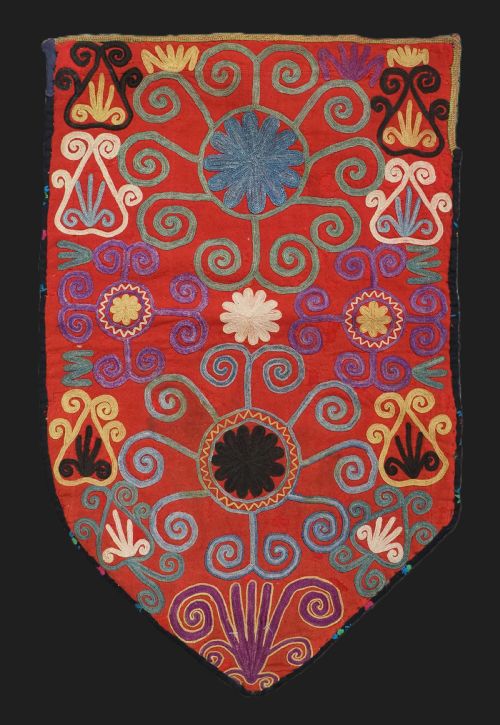
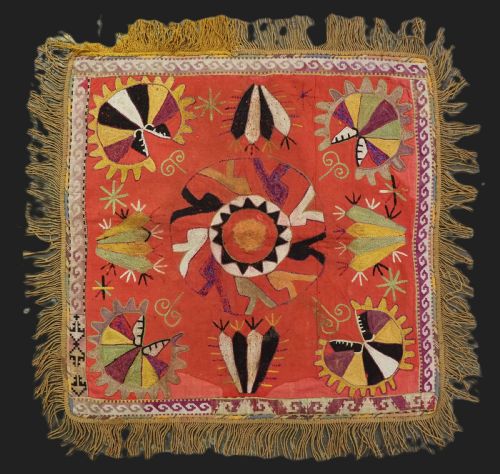
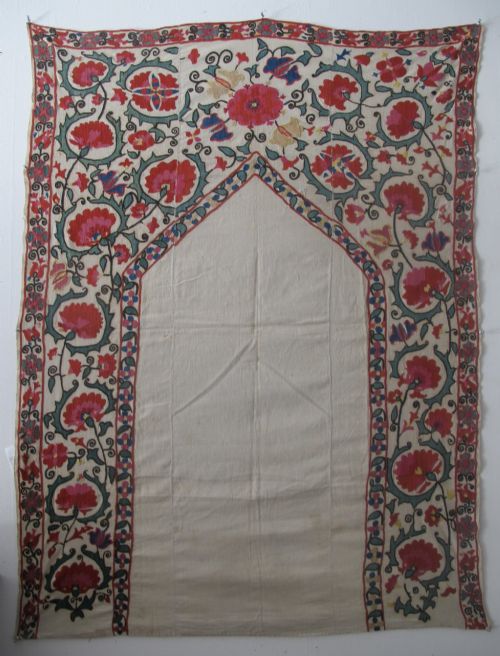
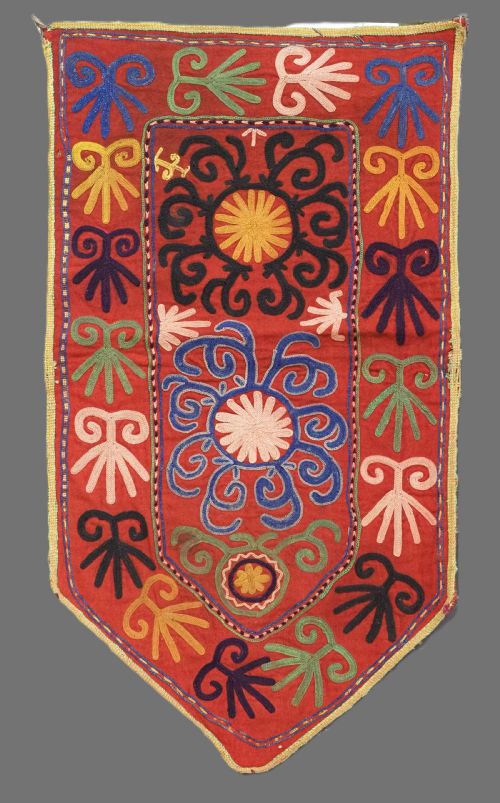
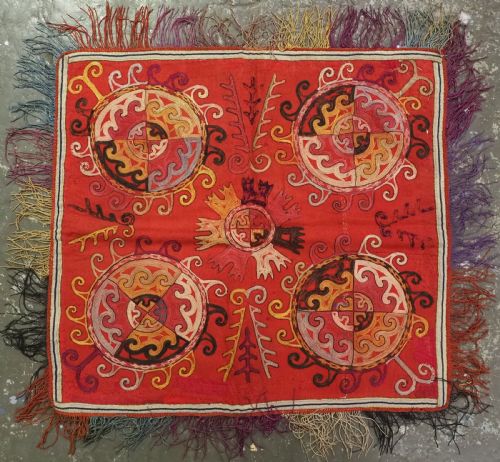
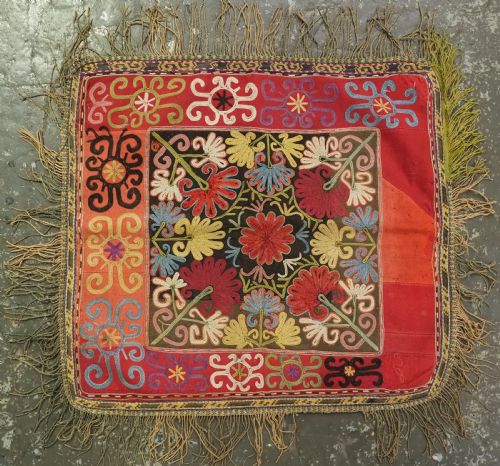
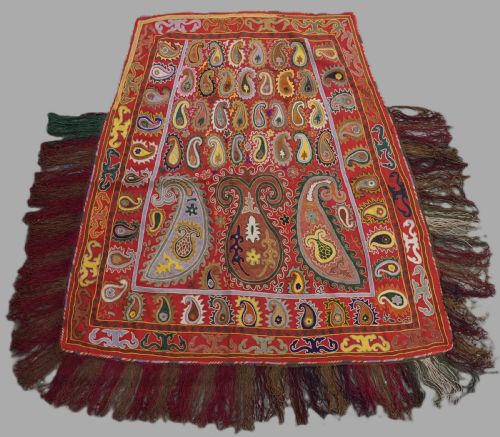
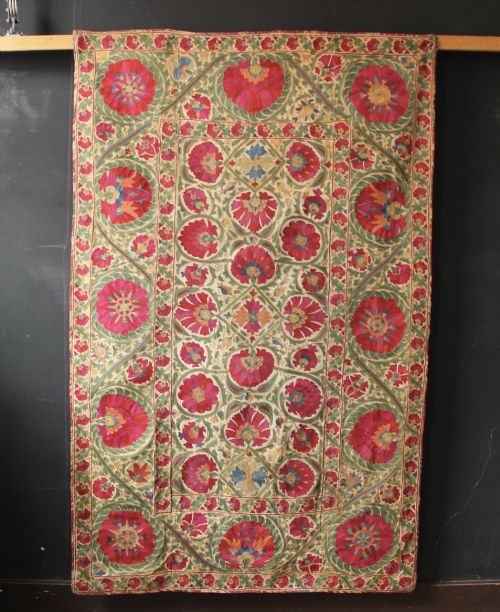
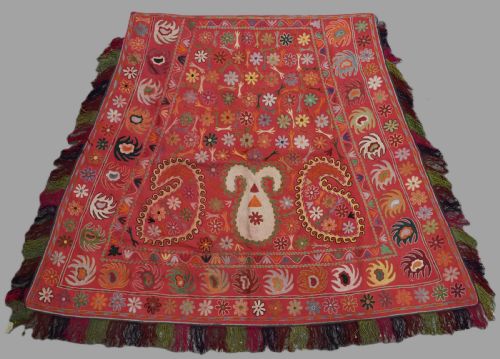
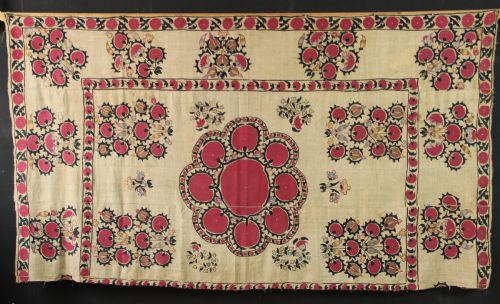
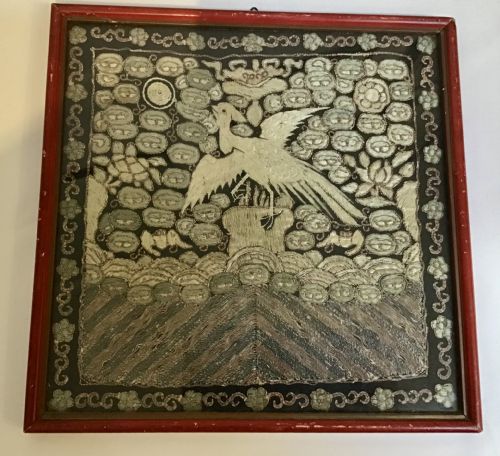
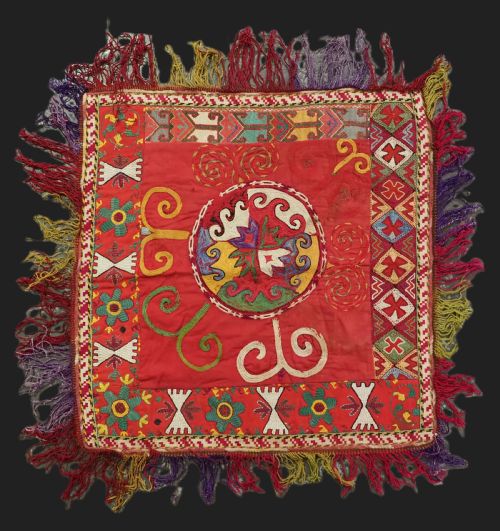
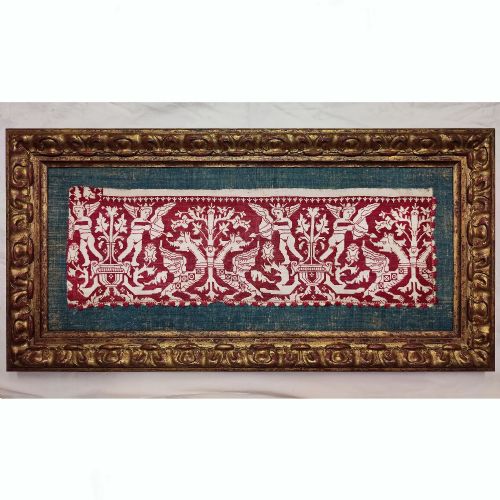
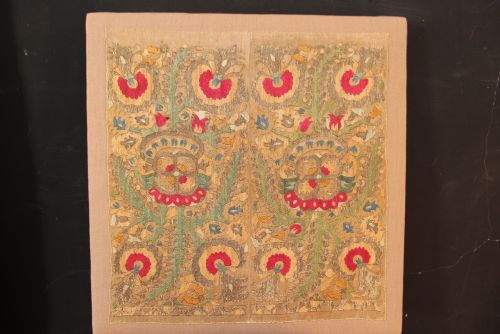
A red silk embroidered textile encompasses diverse forms ranging from Central Asian Suzanis and Lakai tribal dowry hangings to Persian Rasht panels and ceremonial garments. Buyers searching this phrase typically encounter Suzanis and tribal embroideries intended for domestic walls, dowries, or ceremonial use.
The selections span from the middle of the nineteenth century through the early decades of the twentieth century, originating primarily from workshops and nomadic groups in Uzbekistan, Persia, and neighbouring regions. These pieces include wall hangings, saddle covers, horse trappings, and traditional coats worked on grounds of red wool, cotton, or felt.
Common regional variants include Bokhara and Nurata Suzanis alongside Lakai tribal ilgiches and Persian Rasht embroidered panels. Each form reflects distinct cultural traditions of needlework, utilising local motifs and foundational textiles characteristic of their specific geographic origins.
Materials and construction methods
Makers utilised fine silk threads for embroidery, working intricate floral, geometric, or figurative patterns onto supportive grounds of woven cotton, wool, or thick wool felt. Metallic thread and silver brocade work occasionally supplement the silk embroidery on courtly and ceremonial items.
Stitch techniques vary by region and tribal group, employing tambour work, chain stitch, and various surface embroidery methods executed by hand. Foundation fabrics range from hand-woven adras silk-cotton mixes to dense red velvet and wool grounds.
Some nineteenth-century horse covers bear witness to nomadic animals dressed more splendidly than modern royalty.
Assessing quality in needlework
Quality rests upon the fineness of the stitch execution, the complexity of the design layout, and the vibrancy and condition of the natural silk threads. Superior examples display dense, precise needlework and balanced compositions that indicate skilled regional hands.
The integrity of the foundation fabric and the preservation of the original borders or panels strongly influence the overall standard. Pieces retaining their structural coherence and original ground materials represent the higher tier of surviving textile art.
The Red Silk Embroidered Textile Glossary
- Suzani
- A traditional embroidered tribal textile from Uzbekistan and surrounding Central Asian regions, typically worked in silk on a cotton or linen ground. These large panels were traditionally made as part of a bride's dowry.
- Ilgich
- A specific type of Central Asian embroidery, frequently associated with the Lakai tribe, used as a dowry hanging or household furnishing. They are celebrated for their bold, dynamic tribal geometries.
- Rasht embroidery
- A distinct style of Persian needlework originating from the city of Rasht, characterised by intricate inlay and applique work using fine silk thread on wool felt grounds. The designs often feature delicate floral medallions.
- Chyrpy
- A ladies ceremonial coat worn by Turkmen women, heavily embroidered in silk across a dark or coloured ground. These garments functioned as significant status items during traditional ceremonies.
Red Silk Embroidered Textile: Frequently Asked Questions
What are Suzanis used for?
Suzanis were traditionally created as part of a bride's dowry and functioned primarily as wall hangings, decorative covers, or soft furnishings within the home.
Today, collectors mount these textiles on walls to display their intricate botanical designs and rich embroidered surfaces.
How do I care for antique textiles?
Antique textiles require careful handling away from direct sunlight to prevent the fading of natural silk threads and dyed grounds. Professional framing with UV-filtering glass helps protect delicate wall hangings from dust and atmospheric damage.
Avoid folding older wool or cotton grounds repeatedly, as stress along crease lines can weaken the historic fabric.
How can I tell regional styles apart?
Regional styles reveal themselves through distinct motifs, colour palettes, and foundation fabrics associated with specific weaving communities. For instance, Persian Rasht work typically employs silk applique on heavy wool felt, whereas Uzbek Suzanis generally feature silk embroidery on cotton or adras grounds.
Tribal pieces like those from the Lakai feature smaller, highly geometric and zoomorphic forms compared to the grand floral sprays of urban workshops.
What is a Lakai ilgich?
A Lakai ilgich is a nomadic embroidery piece created by the Lakai tribe of Uzbekistan as part of traditional dowry customs. These items served as wall hangings or storage bag faces.
They are distinguished by dynamic, energetic abstract designs executed in bright silk threads.