


Central Asian Needlework
Central asian needlework brings bold colour and intricate stitchwork into modern interiors through historic textiles created across the region.
Central Asian Needlework
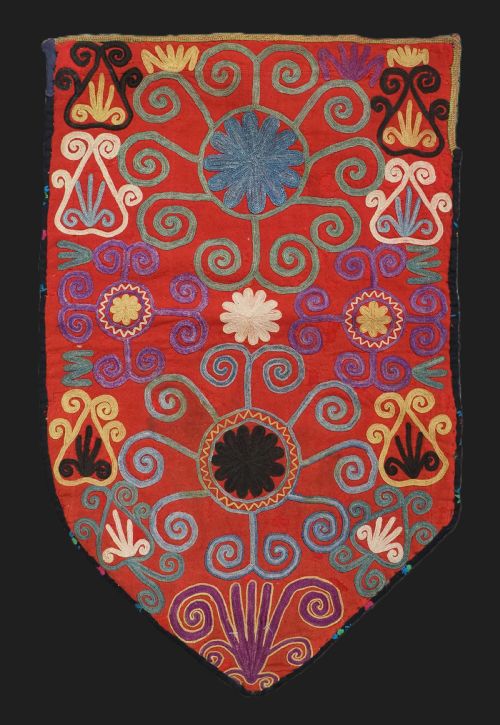
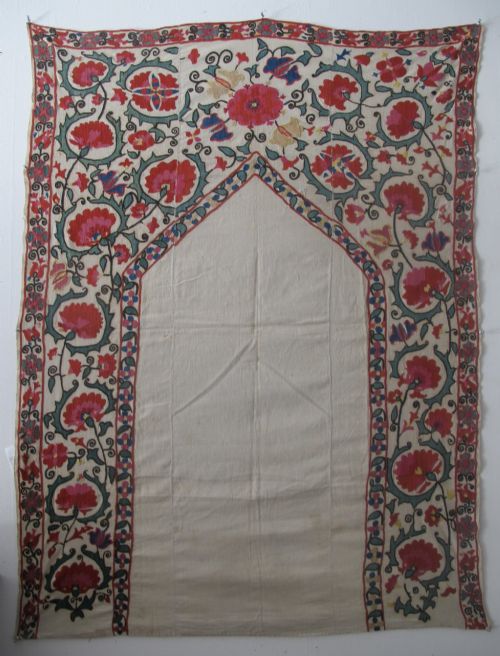
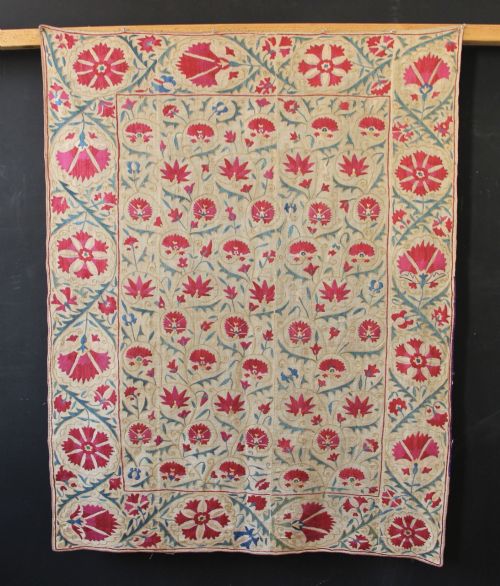
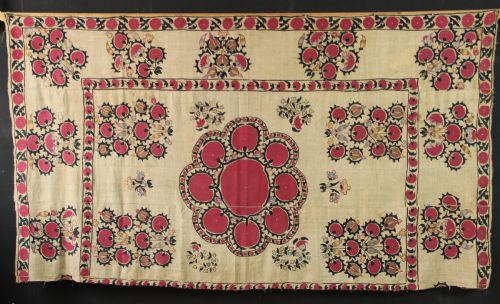
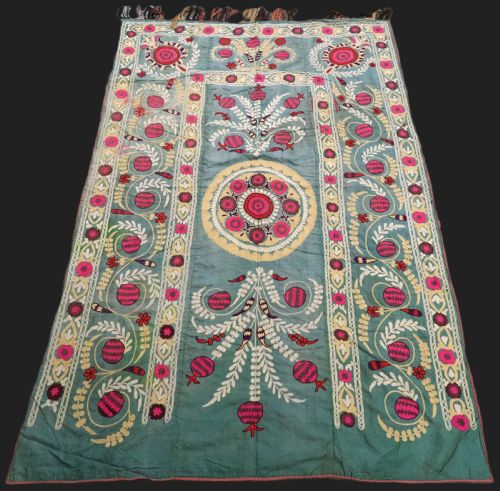
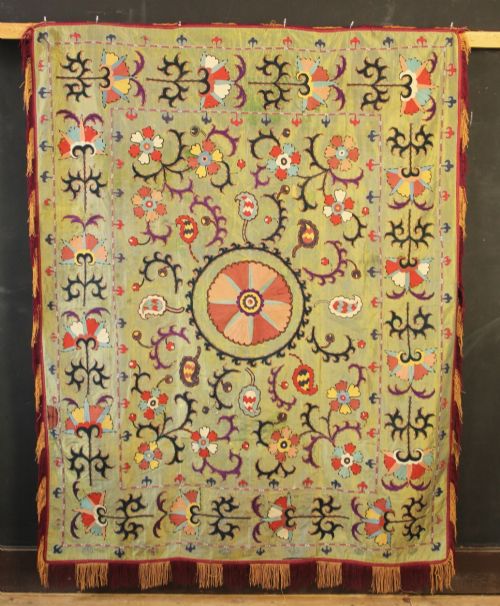
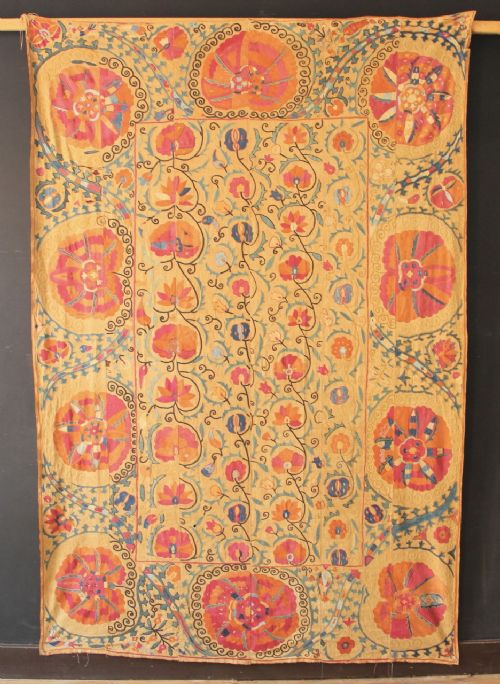
When buyers search for central asian needlework, they encounter historic embroidered textiles originating from regions including Uzbekistan and areas associated with groups such as the Lakai tribe. These objects take forms like wall hangings, bed covers, and ceremonial saddle covers, often referred to as suzanis.
The pieces appearing most frequently on this page date from the nineteenth and early twentieth centuries, spanning periods from roughly eighteen hundred through nineteen thirty. They showcase traditional regional designs, ranging from large medallion variants and architectural patterns to fully embroidered palak compositions and floral motifs on red grounds.
How central asian needlework was made
Makers constructed these textiles primarily using cotton, linen, or wool felt as a foundation ground, onto which they applied detailed embroidery. Silk thread and standard silk provide the vibrant surface decoration that defines the visual character of the pieces.
Needlework techniques executed by hand create dense pictorial elements and geometric patterns. Artisans utilised regional styles associated with specific towns and tribal traditions, employing silk embroidery across foundations like red felt and woven cotton.
The listings span periods from eighteen hundred to nineteen thirty, featuring materials like cotton, silk, and wool felt.
What varies in quality in central asian needlework
The visual impact of central asian needlework depends largely on the density of the silk thread embroidery and the complexity of the design layout. Fully embroidered compositions, such as Tashkent palak suzanis, demand significantly more labour than pieces with open ground areas.
Execution of traditional motifs, line precision, and colour harmony distinguish finer examples from standard decorative pieces. The coherence of regional styling and the preservation of the original silk embroidery ground determine the overall standing of an item.
The Central Asian Needlework Glossary
- Suzani
- An embroidered textile from Central Asia, traditionally worked in silk on a cotton or linen ground. These large panels were often made by brides as part of their dowry.
- Nim Suzani
- A smaller or half-sized version of a traditional suzani. These compact embroidered covers are practical for wall hanging.
- Palak
- A fully embroidered suzani design type characteristically featuring a central star surrounded by dense floral or celestial motifs. The embroidery covers almost the entire foundation ground.
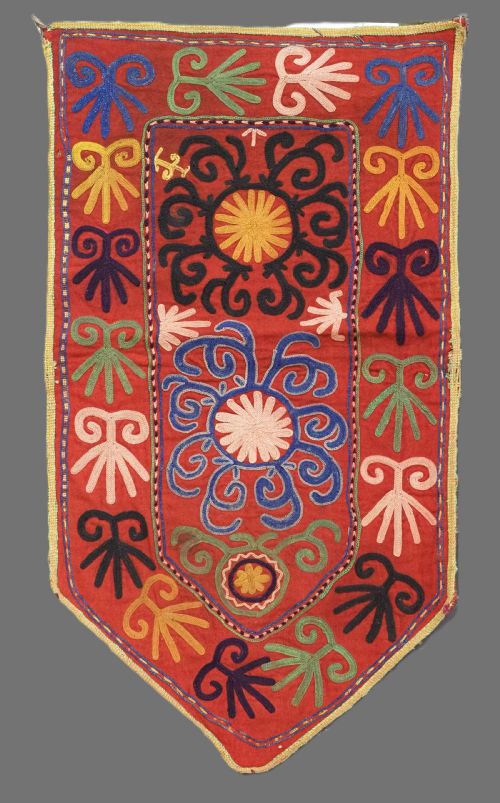
- Uut Kap Ilgich
- A specialised hanging or bag face associated with Lakai tribal needlework. These items exhibit distinct geometric and figurative motifs created with silk thread.
- Prayer format
- A textile design incorporating an architectural mihrab arch shape. This layout references Islamic prayer rugs translated into needlework.
Central Asian Needlework: Frequently Asked Questions
How were these embroideries used historically?
Central Asian families used these needlework pieces to decorate the interior walls of nomadic tents and permanent homes. They functioned as ceremonial covers during weddings and important domestic events.
Bed covers, wall hangings, and horse or saddle covers served both practical insulating purposes and symbolic roles. Each textile reflected the cultural identity and status of the maker's community.
How do you hang a textile safely?
Mounting historic needlework requires distributing the weight evenly across the entire textile rather than suspending it from a few points. Professional conservators often use a non-damaging velcro system attached to a fabric sleeve stitched to the back.
Direct sunlight and high humidity can damage delicate silk threads and cotton grounds. Displaying pieces away from direct windows preserves the historic colours.
How can you tell regional styles apart?
Regional variations in central asian needlework depend on the specific town or tribal group where the piece was made. Tashkent palak embroideries feature dense star motifs, while Shahrisabz works display distinctive floral arrangements.
Lakai tribal pieces often utilise bold geometric patterns and specific colour palettes on smaller formats like uut kap ilgich. Examining the scale of the motifs and the ground fabric helps identify the origin.