


Traditional Uzbek Textile
A traditional uzbek textile brings vibrant Central Asian needlework, ikat weaves, and tribal rugs into modern interiors.
Traditional Uzbek Textile
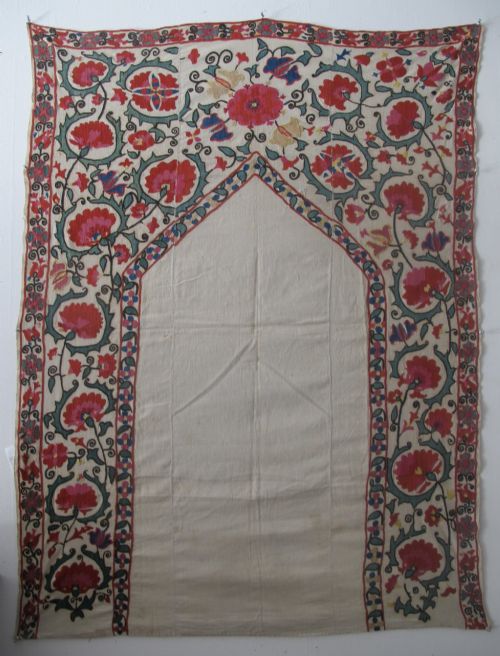
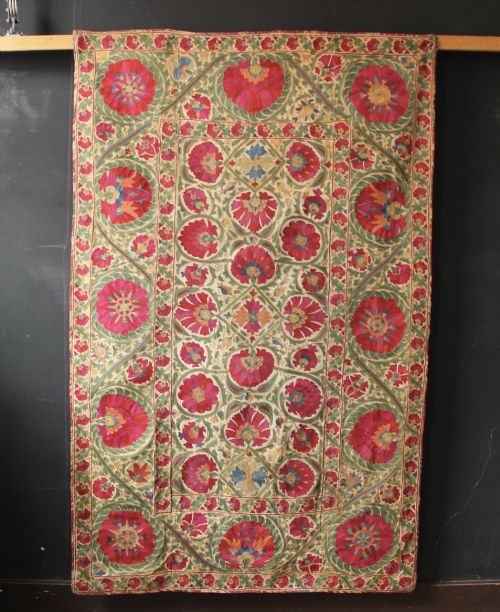
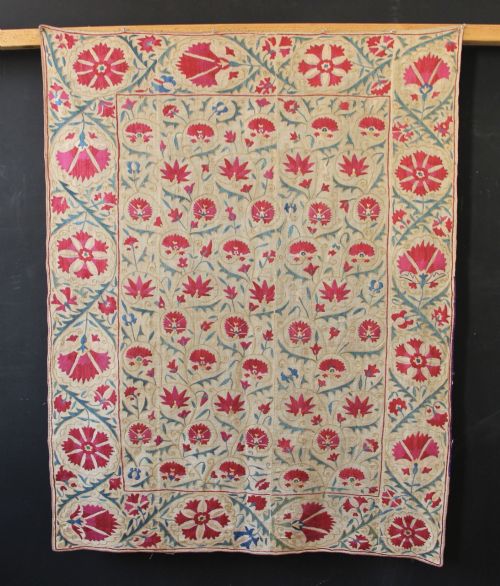
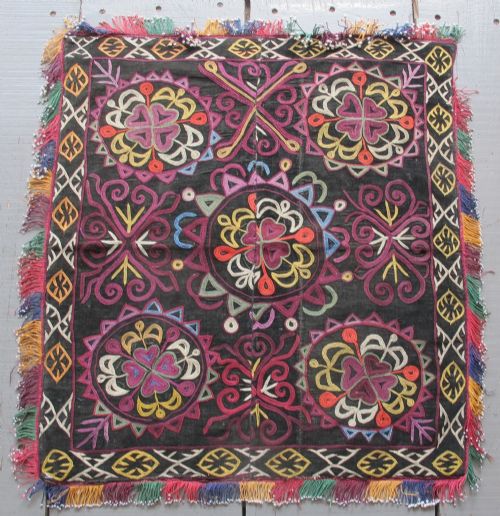
A traditional uzbek textile encompasses large embroidered wall hangings, woven kilim rugs, ikat fabric panels, and padded coats originating from regions such as Bukhara, Samarkand, and Tashkent. Buyers searching for a traditional uzbek textile most frequently encounter decorative suzanis and geometric flatweaves dating from the nineteenth and early twentieth centuries.
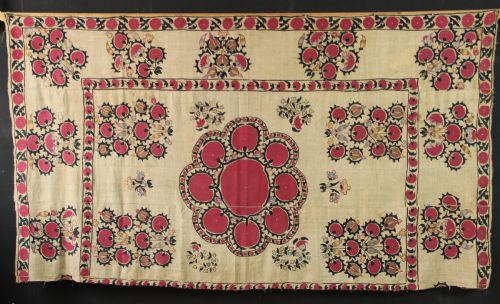
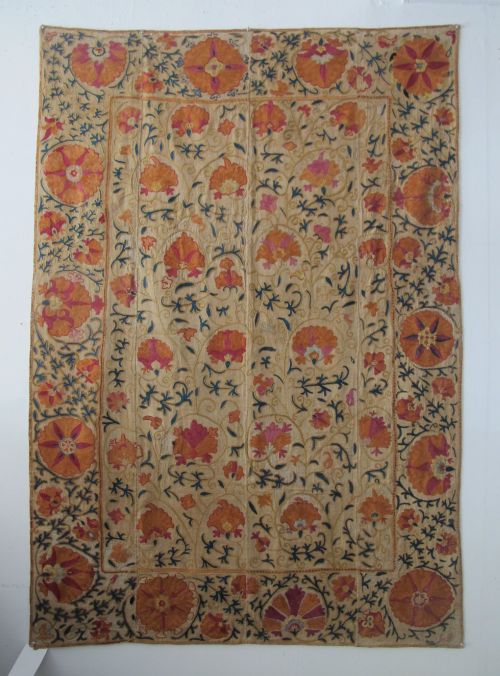
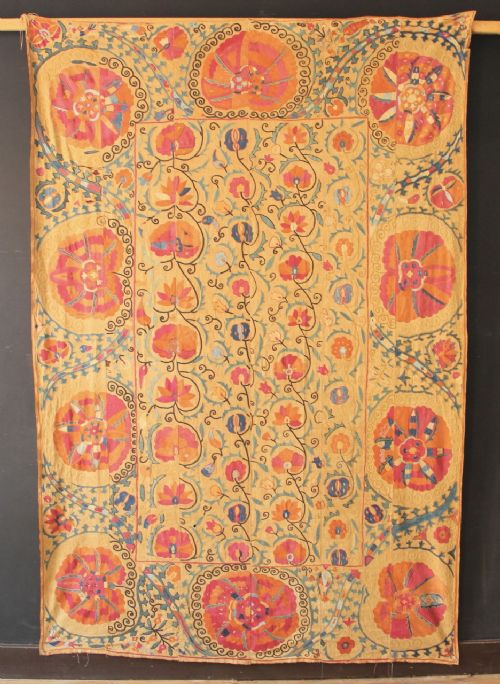
Suzanis dominate the available forms, ranging from full-work panels covering the ground cloth to nim suzanis of smaller proportions and specialised prayer formats. Other common examples include tailored garments like chapan and khalat coats alongside multi-strip flatwoven kilims.
The material foundations reflect diverse regional workshops and nomadic traditions, incorporating cotton, silk, wool, and felt grounds. Pieces often bear distinct regional attributions including Ura Tube, Nurata, Shakrisabz, and Lakai tribal origins.
Materials and Technique
Needlework pieces rely on fine silk thread worked onto woven grounds of cotton, linen, silk, or wool, sometimes augmented by silver metal thread brocade work or glass beads. Artisans executed dense embroidery stitches on distinct ground cloths coloured in red, yellow, black, or natural tones.
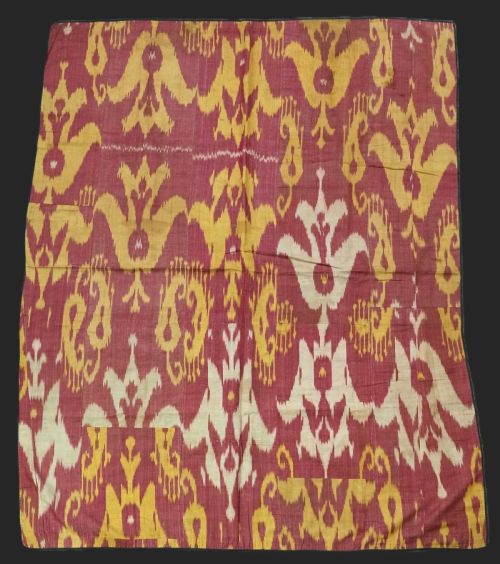
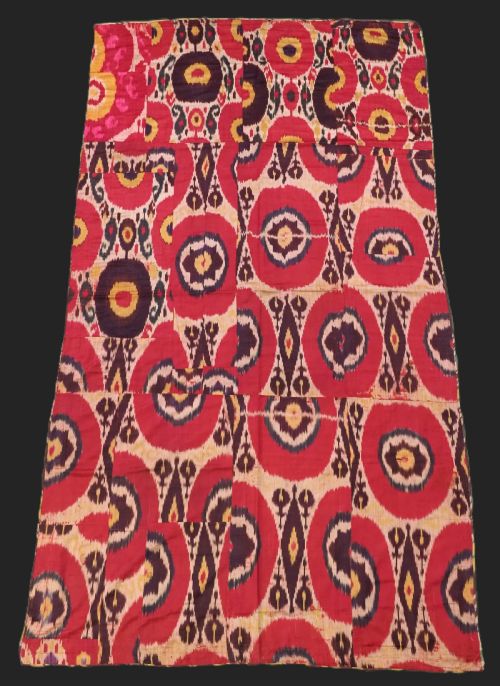
Ikat panels and coats utilise a resist-dyeing technique on warp threads before weaving, creating characteristic blurred patterns on semi-silk adras or pure silk fabrics. Heavier functional pieces like winter coats incorporate quilted and padded construction for warmth.
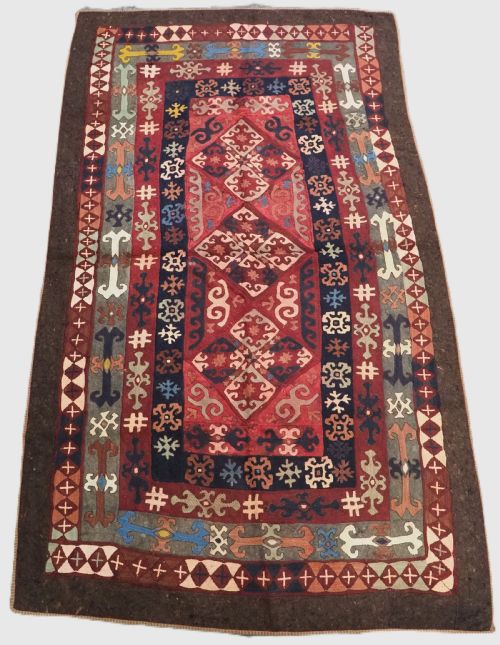
Flatwoven kilims are constructed by joining multiple narrow vertical strips together, ranging from nine to thirteen stitched widths depending on the regional workshop or nomadic tradition.
The inventory records diverse forms including wall hangings, multi-strip kilim rugs, and tailored silk ikat coats.
Craftsmanship and Execution
The density of the embroidery separates standard panels from masterworks, with full-work suzanis displaying meticulous needle control across the entire ground cloth. Finer examples maintain crisp line definition in floral and architectural motifs.
The handling of natural dye palettes and the vibrancy of the silk thread determine visual impact, particularly in ikat fabrics where precise resist alignment prevents muddy colour bleeding. Structural integrity in multi-strip kilims and lined garments relies on balanced tension and secure seam joining.
The Traditional Uzbek Textile Glossary
- Suzani
- An embroidered hanging originating from Central Asia, traditionally worked in silk on a cotton or linen ground by brides for their dowry. These textiles display large floral, medallion, or architectural layouts.
- Ikat
- A dyeing and weaving technique where yarn bundles are tightly bound and dyed prior to weaving to form intricate patterns. The resulting fabric exhibits characteristically hazy pattern edges.
- Khalat
- A long, loose-fitting gentleman's coat worn across Central Asia, often fashioned from rich silk ikat fabrics. These garments can be unlined or padded for winter use.
- Adras
- A traditional hybrid fabric woven with a silk warp and a cotton welt. It provides a stable yet lustrous ground for patterned garments and panels.
- Nim Suzani
- A smaller half-scale version of the standard suzani wall hanging. These compact pieces were often utilised for specific domestic spaces or furniture covers.
- Kilim
- A flatwoven textile produced by tightly interweaving warp and weft strands without a pile. Central Asian examples frequently comprise multiple narrow strips stitched together.
Traditional Uzbek Textile: Frequently Asked Questions
What is a suzani?
A suzani is a large, hand-embroidered textile traditionally created in Central Asia as part of a bride's wedding dowry. These pieces feature bold floral, architectural, or medallion layouts worked in silk thread.
Historically used as wall hangings, bed covers, or decorative domestic elements, they bring rich colour and texture to modern interior spaces.
How were traditional coats worn?
Garments such as the chapan and khalat served as outer robes worn by men across regions like Bukhara and Samarkand. Some versions were quilted and padded for winter use.
Today, these statement coats are frequently collected as wearable art or displayed flat as textile panels.
How do I distinguish regional suzani styles?
Regional differences appear in the background colours, embroidery density, and specific motif arrangements. For instance, Tashkent panels often feature full-work embroidery, while Nurata or Ura Tube pieces display distinct medallion placement and floral styling.
Nomadic groups like the Lakai utilised different design vocabularies compared to urban workshops in Bukhara.
How do I hang a textile safely?
Large embroideries and kilims require even weight distribution to prevent strain on the historical fabric. Professional mounting using a stitched cotton sleeve or Velcro backing system protects the fibres from direct tension.
Display spaces should remain away from direct sunlight to preserve natural silk dyes.