
Antique Silk Suzani
An antique silk suzani brings vibrant Central Asian needlework into a room, offering rich textiles that span wall hangings, covers, and dowry pieces.
Antique Silk Suzani
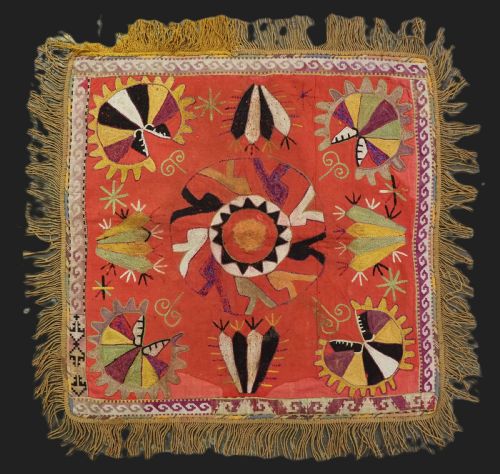
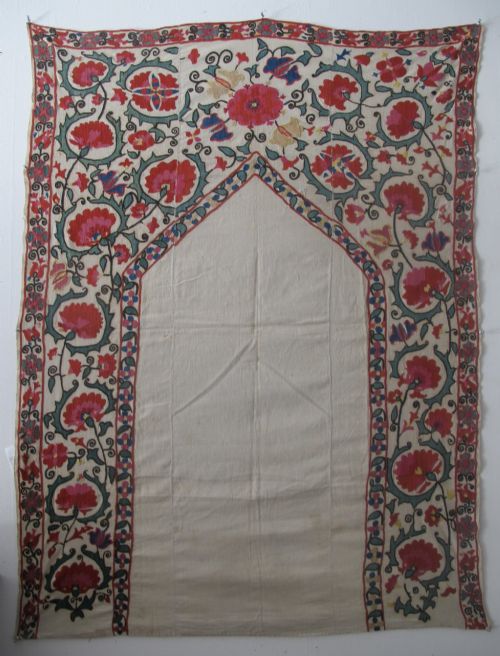
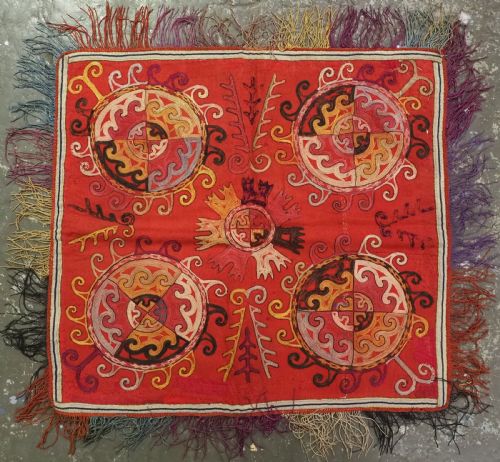
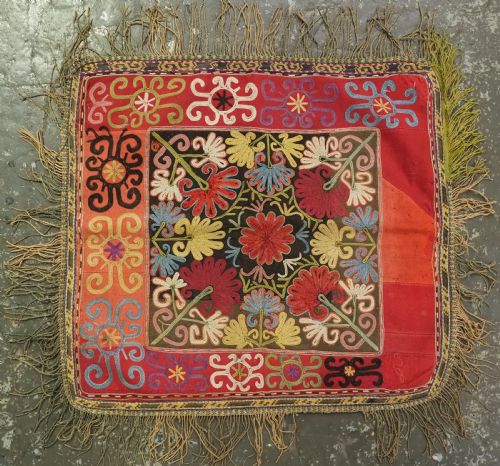
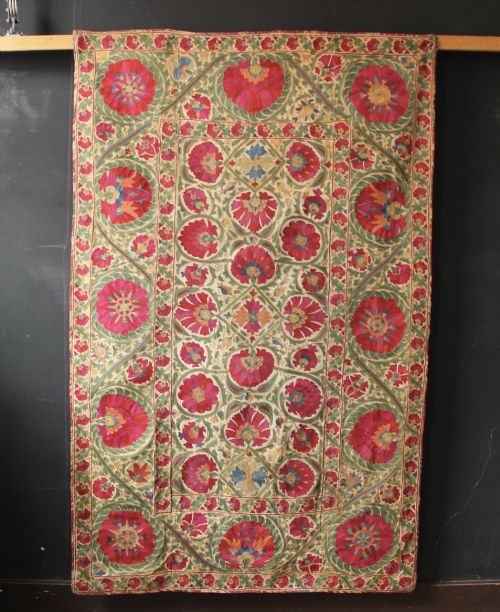
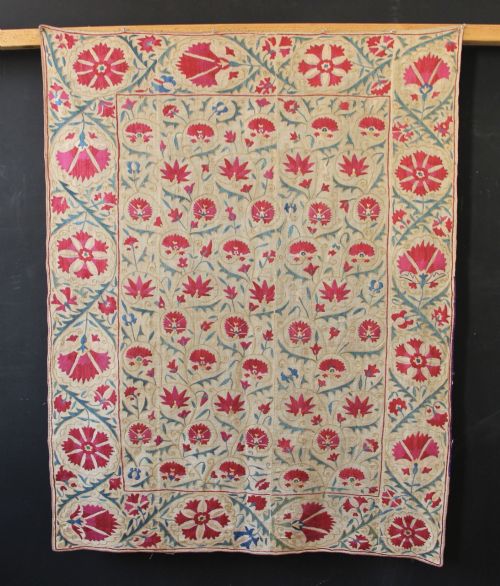
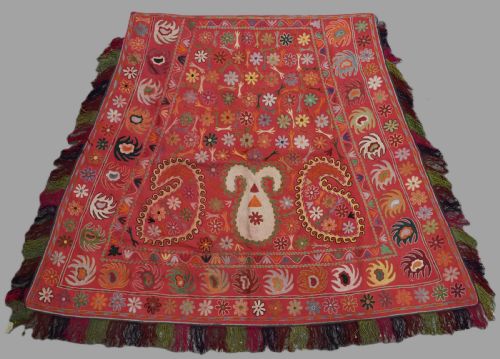
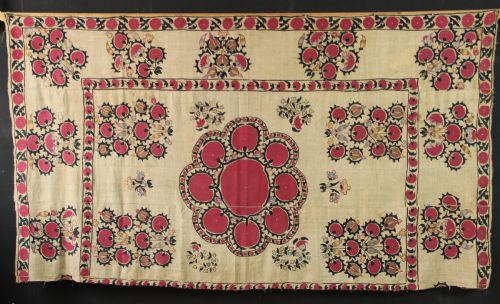
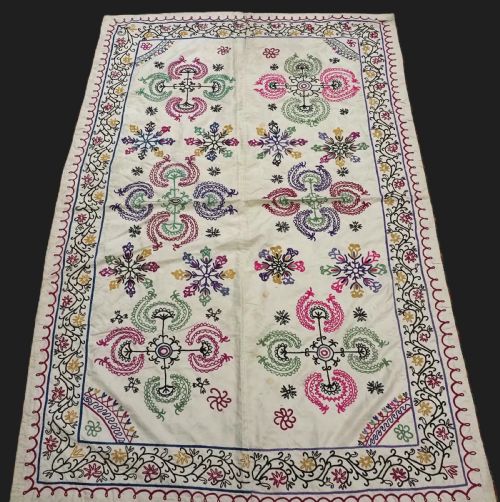
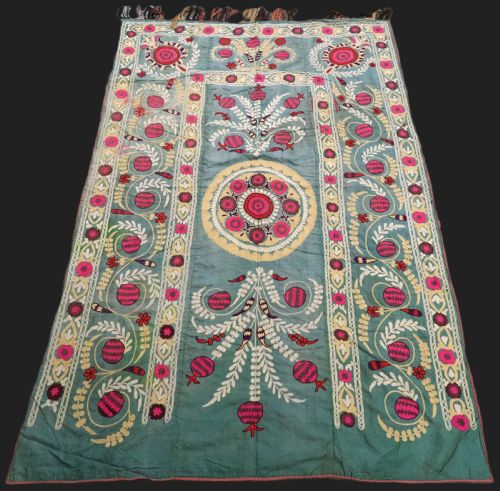
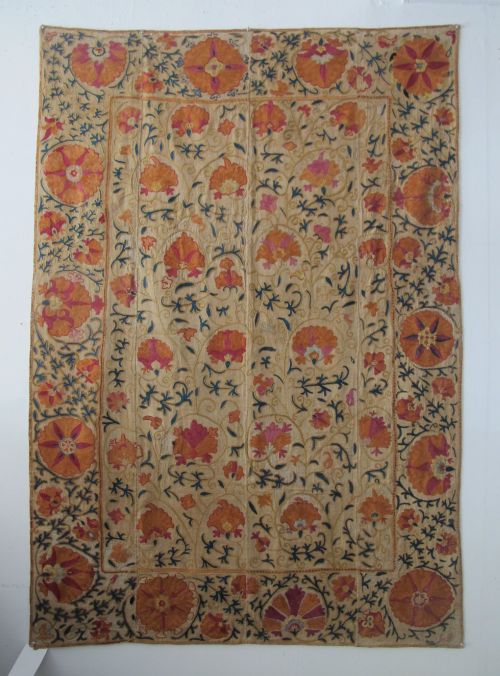
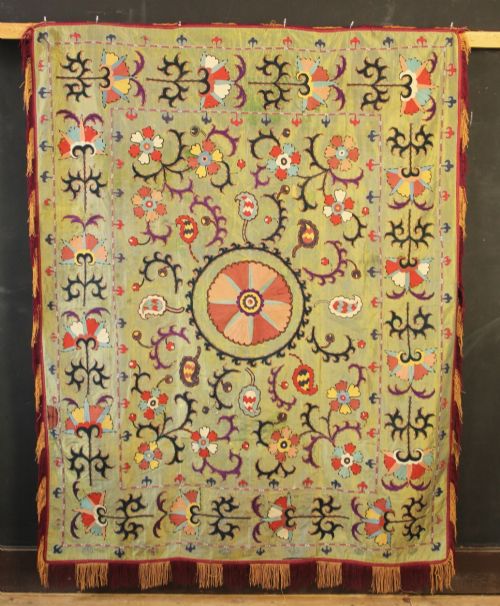
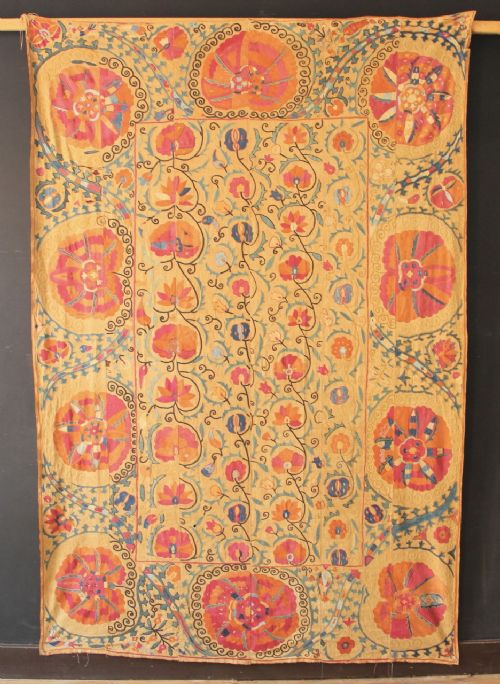
An antique silk suzani is a piece of traditional Central Asian embroidery, originating primarily from Uzbekistan and associated with regions such as Bokhara, Nurata, and Shakrisabz. These textiles were often created as dowry items, bed covers, or wall hangings by makers belonging to groups like the Uzbek, Tajik, and Lakai tribes.
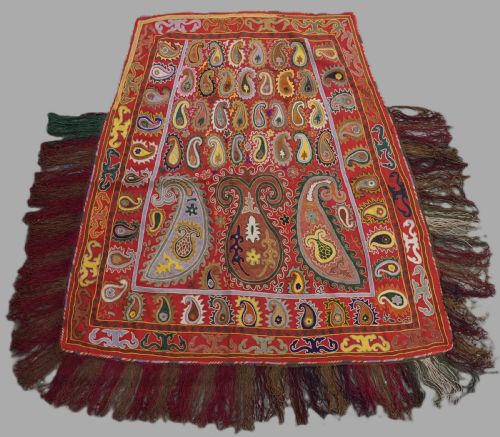
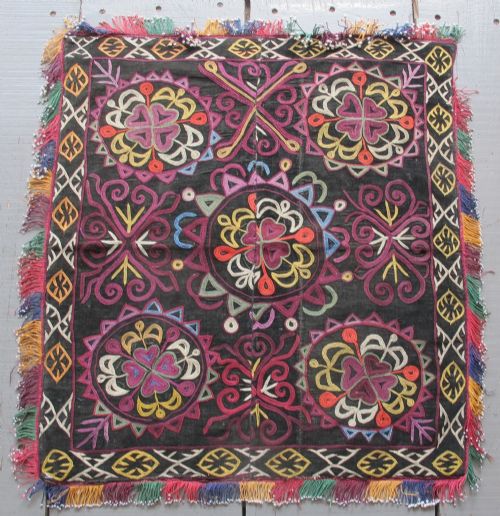
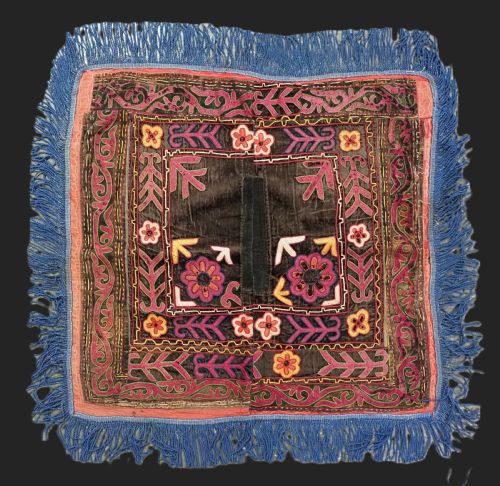
The format ranges from full-scale wall hangings and large bed covers down to smaller nim suzanis, mirror covers, and horse or saddle covers. Pieces frequently display architectural motifs, large floral medallions, or prayer formats worked across structured compositions.
Surviving examples span the nineteenth and early twentieth centuries, reflecting regional styles from urban centres and tribal groups alike. Buyers encountering these pieces today will find works produced on various woven foundations using distinct local designs.
How they were made
Makers stitched intricate patterns using silk thread onto woven grounds made from cotton, linen, wool, or mixed adras fabric. Some specialised pieces incorporated velvet or featured embellishments such as glass beads.
Embroidery techniques included fine needlework and tambour work to build dense, colourful surfaces. The foundation cloths provided a stable base for heavy ornamentation, often dyed in striking shades of red, yellow, green, or black.
Listings feature pieces created from silk, cotton, wool, and linen grounds, dated across the nineteenth and early twentieth centuries.
What varies in quality
The finesse of the needlework separates ordinary examples from finer specimens, with tighter stitches and complex pictorial depth marking out superior pieces. The choice of ground fabric and the harmony of the colour palette also influence the overall character of the textile.
Regional execution plays a role, as works from established urban workshops or skilled tribal groups display greater precision in design layout and motif execution. The integrity of the original silk embroidery relative to its foundation cloth determines the preservation standard of each item.
The Antique Silk Suzani Glossary
- Suzani
- An embroidered textile from Central Asia, traditionally made as part of a bride's dowry. The word derives from the Persian term for needle.
- Nim Suzani
- A smaller or half-scale version of a standard suzani wall hanging or cover. These pieces offer compact dimensions while retaining full decorative detail.
- Ilgich
- A specific type of dowry embroidery or hanging associated with the Lakai tribe. They are recognised by dynamic tribal motifs and spirited compositions.
- Ru-i-jo
- A traditional Central Asian bed cover suzani designed to be draped over bedding when not in use. These textiles feature large-scale layouts suited for wide surfaces.
- Adras
- A traditional Woven fabric made from a mixture of silk and cotton yarns. It serves as a textured ground for needlework in specific regional examples.
Antique Silk Suzani: Frequently Asked Questions
What is a suzani used for?
Traditional suzanis served multiple domestic functions within Central Asian households, acting as ceremonial bed covers, wall hangings, and essential parts of a bride's dowry.
Today, collectors primarily use them as decorative wall hangings or statement textiles to bring texture and historic colour into modern interiors.
Where were suzanis made?
These embroideries were produced across Central Asia, with major centres located in Uzbekistan including Bokhara, Nurata, and Shakrisabz.
Different tribes and regions, such as the Lakai and Tajik communities, developed distinct styles, materials, and colour combinations that identify their origin.
How do I date a suzani?
Dating relies on examining the materials, dye types, regional styles, and the consistency of the silk embroidery work against known historical examples from the nineteenth and early twentieth centuries.
Tribal pieces and urban workshop items often display specific design evolutions that help narrow down their period of production.
How do I care for an antique suzani?
Antique textiles require gentle handling, protection from direct sunlight to prevent silk and dye fading, and mounting methods that distribute weight evenly if hung on a wall.
Professional textile conservation advice should be sought before attempting any cleaning or stabilization of older foundation fabrics.