


Vintage Lakai Textile Art
These vibrant vintage lakai textile art pieces bring bold Central Asian tribal needlework into modern interiors.
Vintage Lakai Textile Art
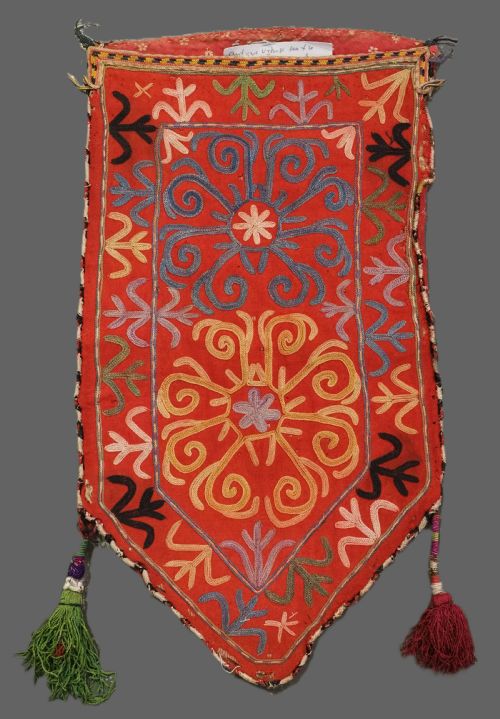
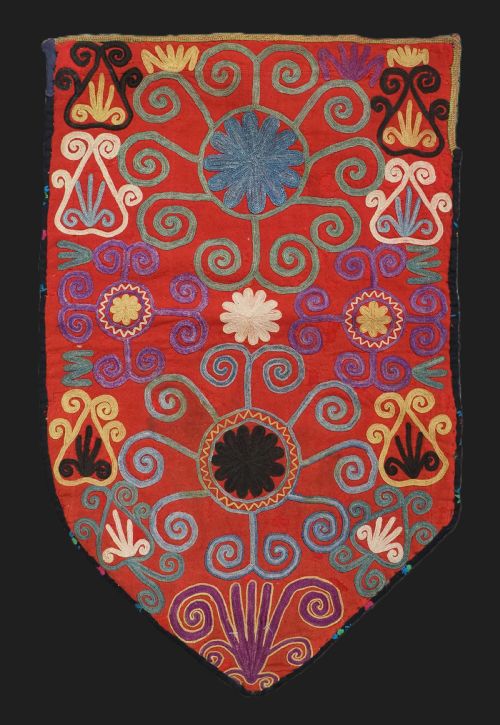
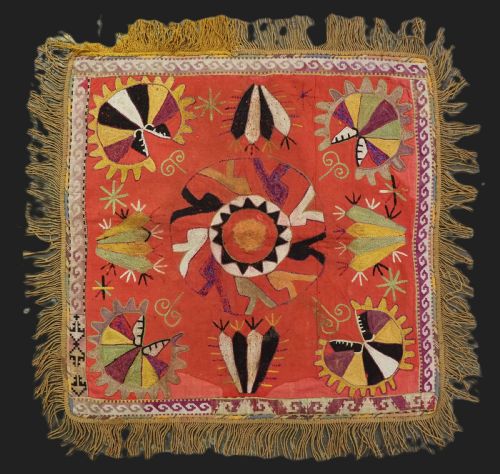
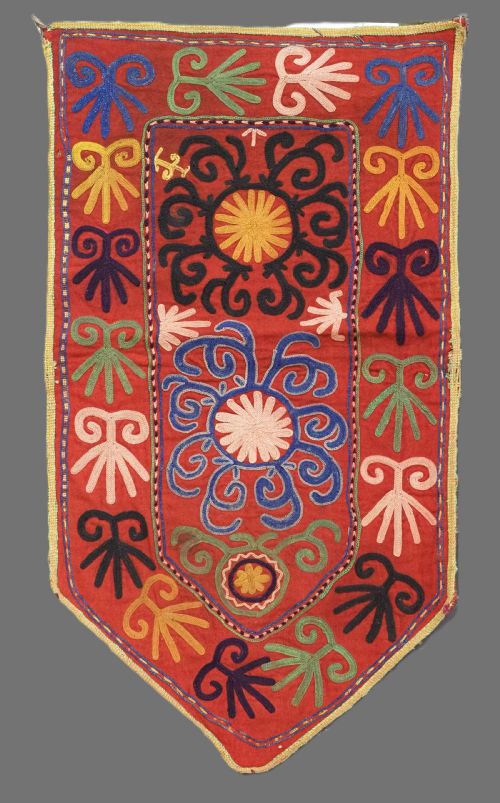
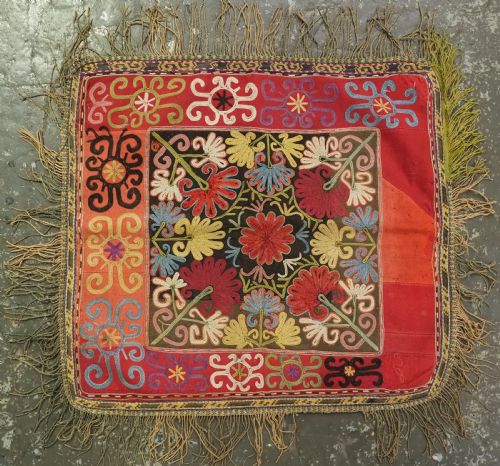
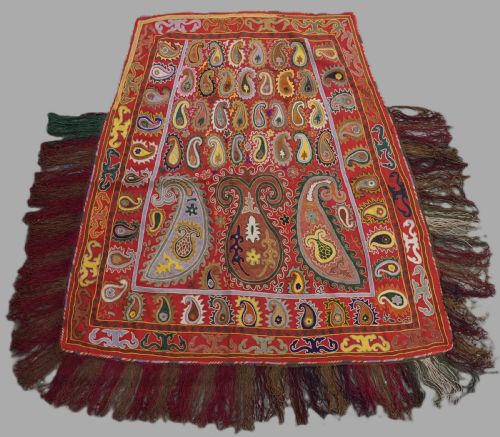
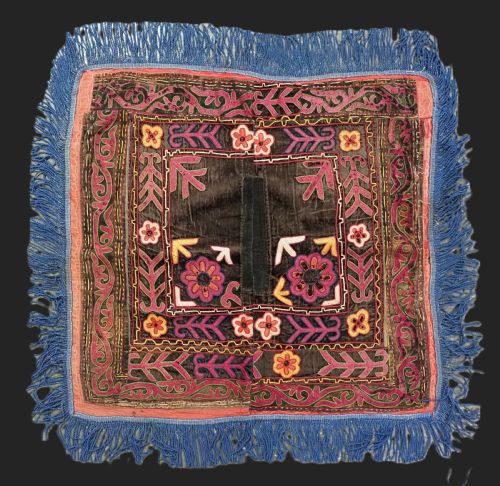
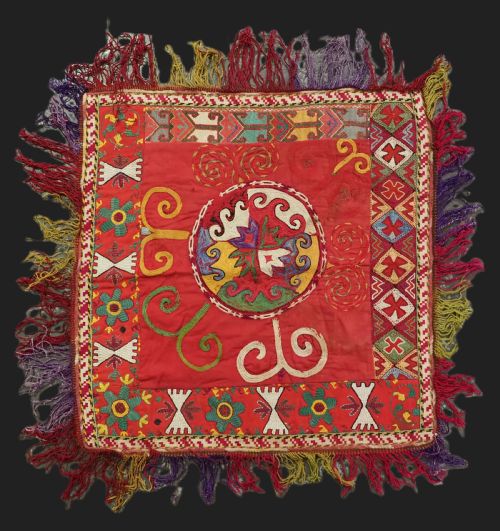
Vintage lakai textile art comprises nomadic embroideries originating from Uzbek tribes in Central Asia. These nomadic works include wall hangings, dowry embroideries, horse and saddle covers, and bed decorations.
Buyers encountering these pieces will primarily discover utilitarian tribal items repurposed as striking wall art. The selection spans periods from the late nineteenth century through to the early decades of the twentieth century.
Originating from regions such as Shakrisabz and broader Uzbekistan, these textiles reflect distinct tribal traditions. Each object carries the heritage of Central Asian craftsmanship through spirited geometric and figurative motifs.
How they were made
Artisans stitched these textiles using combinations of silk thread on cotton and wool grounds, frequently incorporating velvet panels and wool fringe. The needlework relies on dense surface embroidery that builds rich textures across the fabric.
Needleworkers applied complex silk embroidery techniques to create raised, tactile surfaces. Ground fabrics range from sturdy cotton foundations to soft wools and plush velvet accents.
The listings span the late nineteenth century through to the early twentieth century, featuring cotton, silk, wool, and velvet materials.
What varies in quality
Quality rests in the density of the silk thread embroidery and the complexity of the tribal motifs. Tighter, more intricate needlework separates superior pieces from simpler utilitarian examples.
The vibrancy and preservation of the original dyes dictate the visual impact of each textile. Superior specimens display well-maintained silk threads and robust structural integrity across the backing materials.
The Vintage Lakai Textile Art Glossary
- Ilgich
- A Central Asian wall hanging or embroidery often produced as part of a dowry. These pieces frequently display dynamic tribal geometry.
- Uut Kap
- A specialised storage bag or hanging produced by nomadic tribes for domestic use within a yurt. They exhibit dense embroidery meant to ward off evil spirits.
- Suzani
- An embroidered tribal textile originating from Central Asia, stitched with silk or cotton threads on a fabric ground. Nim suzani variants represent smaller half-size formats.
- Torba
- A small utilitarian bag utilised by nomadic groups for domestic storage or horse tack. They feature characteristic tribal ornamentation.
- Saye Gosha
- A decorative hanging traditionally placed near a bed within Central Asian domestic spaces. These textiles incorporate fine embroidery work.
Vintage Lakai Textile Art: Frequently Asked Questions
How were these textiles used?
Nomadic communities utilised these embroidered works for domestic decoration, dowry displays, and ceremonial horse tack. Items like uut kapa served as functional storage bags inside traditional dwellings.
Over time, many of these utilitarian objects transitioned into decorative wall hangings valued for their bold aesthetic.
How do I hang these textiles?
Mounting these embroideries requires a method that distributes weight evenly across the fabric backing. Professional framing behind conservation glass or custom fabric-wrapped mounting bars works best.
Avoid direct nails or pins that pierce the delicate silk embroidery and original cotton or wool ground.
How do I date these pieces?
Dating relies on examining the types of silk threads, natural or early synthetic dyes, and the wear on the backing fabrics. Pieces from the late nineteenth and early twentieth centuries show distinct traditional tribal colour palettes.
Comparing motif structures with known examples from regions like Shakrisabz helps narrow down the period of creation.