



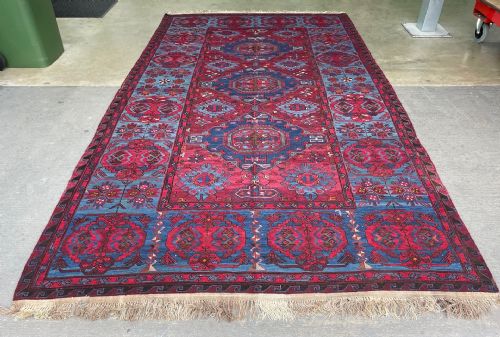

Red Wool Soumak Rug
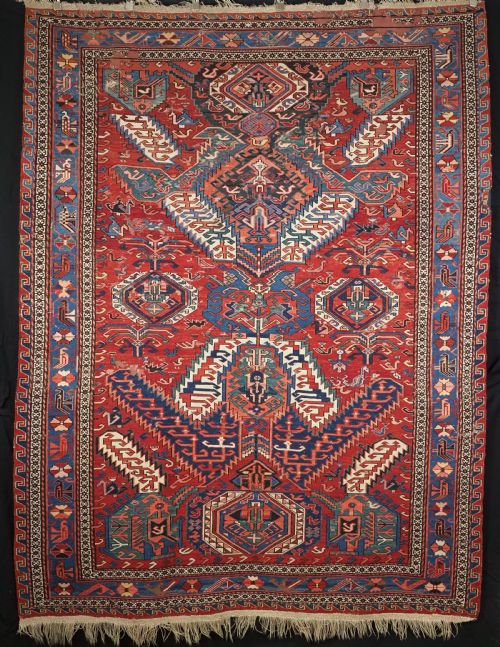
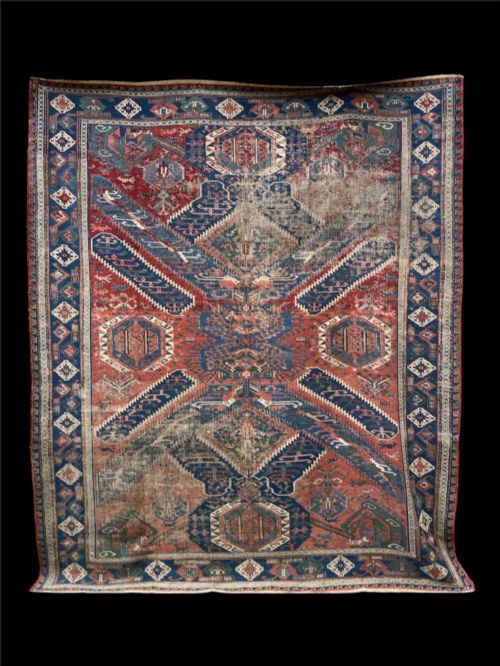
A red wool soumak rug brings dense tribal character and flat-woven precision into a room through geometric medallions and nomadic symbols.
Red Wool Soumak Rug
When you examine a red wool soumak rug, you encounter flat-woven tribal textiles originating primarily from the Caucasus, Persia, and regions associated with nomadic groups such as the Shahsevan and Yomut Turkmen.
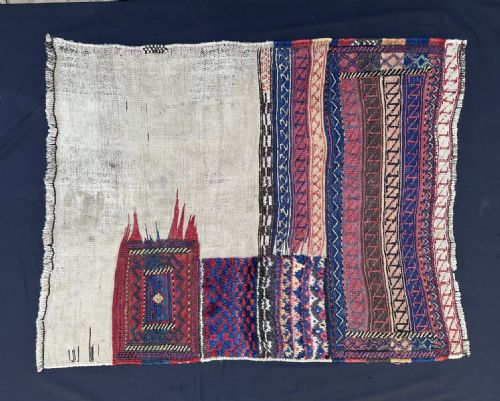
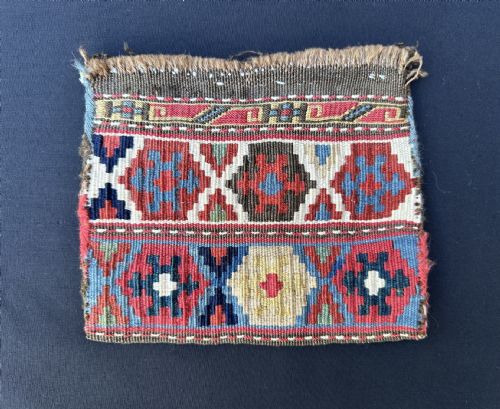
The selection here encompasses full carpets alongside smaller utilitarian forms like storage bags, panels, and saddlebags produced from the mid nineteenth century into the early twentieth century.
Buyers seek these pieces for their intricate structures, which often display traditional motifs including dragons, birds, and triple medallions set against rich red fields.
Materials and weaving methods
The makers relied primarily on hand-spun wool and cotton foundations, incorporating natural and vegetable dyes to achieve deep red colourways and contrasting borders.
The soumak technique involves a warp-wrapping flat-weave construction where weft threads wrap around the warps in a continuous motion, producing a durable face with unclipped floating threads on the reverse.
Geographic origins represented here include the Caucasus, Azerbaijan, Daghestan, and various regions of Persia.
Assessing quality in flat-weaves
Quality rests upon the tightness of the wrap and the precision of the geometric design, where finer execution yields sharper definition in motifs like dragons and medallions.
The complexity of the palette, the preservation of original kilim ends, and the clarity of natural and vegetable dyes distinguish exemplary tribal pieces from simpler utility work.
The Red Wool Soumak Rug Glossary
- Soumak
- A flat-weave textile technique where supplementary weft threads wrap horizontally around vertical warps. This method creates a textured surface resembling embroidery while adding structural weight.
- Khorjin
- A traditional tribal saddlebag woven as a paired set for transport on animals. Surviving examples often appear as single bag faces or separated panels.
- Mafrash
- A large rectangular storage bag used by nomads for bedding and household goods. These containers were constructed from four side panels and a base.
- Palas
- A term applied to flat-woven rugs and kilims produced by Turkmen and other nomadic groups. They serve utilitarian and decorative functions.
- Tacheh
- A specific type of nomadic storage container or grain bag associated with Lori-Bakhtiari weavers. These items demonstrate regional weaving traditions.
Red Wool Soumak Rug: Frequently Asked Questions
How were these rugs used originally?
Nomadic tribes utilised these flat-woven textiles as floor coverings, storage containers, saddlebags, and bedding sacks during daily transit and inside tribal tents.
Over time, many complete storage bags were divided into individual panels and bag faces, which collectors now preserve as decorative wall hangings and small floor rugs.
How do I care for a flat-woven textile?
Protect the fabric by placing a quality rug underlay beneath it to prevent slipping and reduce friction against hard floors.
Vacuum gently without a rotating brush bar and consult a specialist in antique textiles for professional cleaning when necessary.
What indicates nineteenth-century production?
Earlier pieces typically display the variable tones of natural and vegetable dyes combined with hand-spun wool that shows subtle irregularities in texture.
Structural details such as extended flat-weave kilim ends and specific tribal motifs like dragons provide clues to the approximate period.
Why do some pieces have open backs?
The soumak technique leaves unclipped floating weft threads trailing across the reverse side where the yarn travels between wraps.
This construction method makes the textile thicker and sturdier than a standard plain-weave kilim while keeping the front design crisp and defined.