


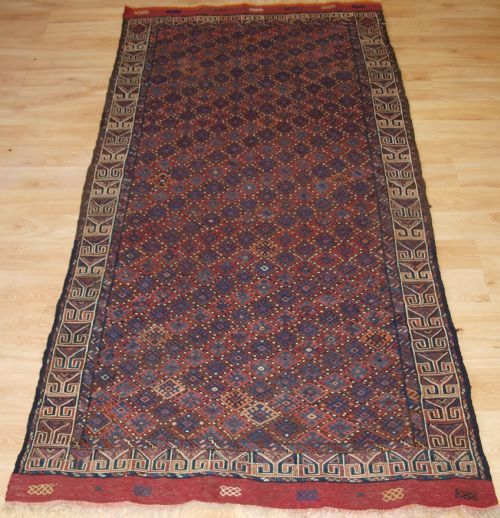

Traditional Caucasian Kilim
Traditional caucasian kilim pieces are flat-woven rugs carrying centuries of nomadic artistry, offering warmth and graphic geometry to any interior floor.
Traditional Caucasian Kilim
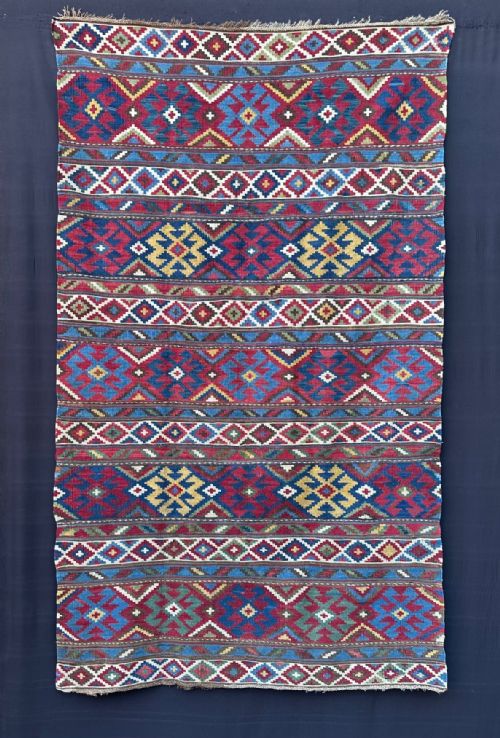
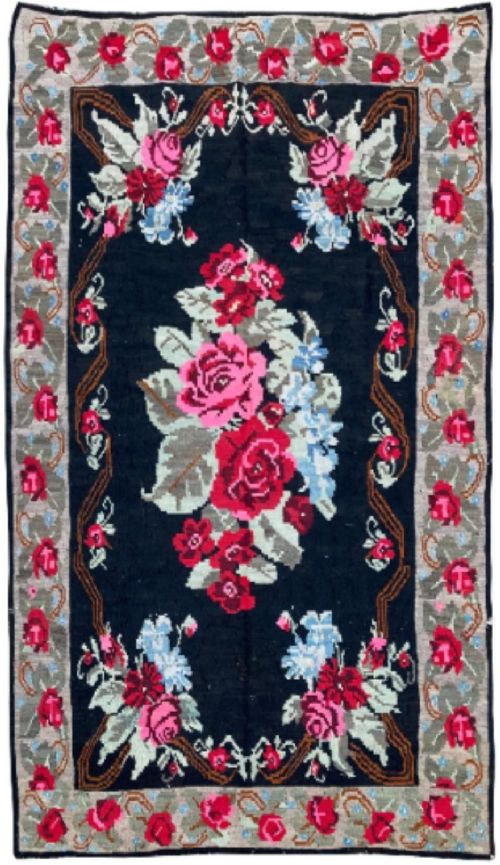
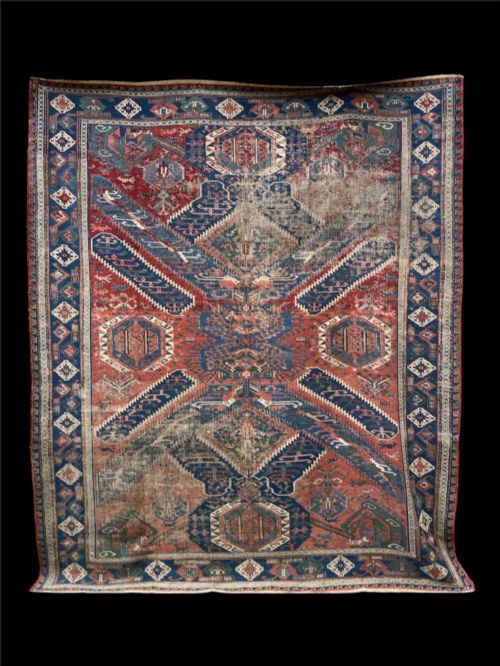
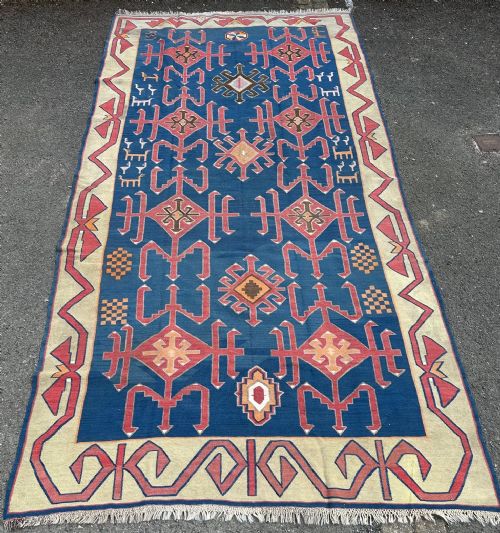
Traditional caucasian kilim examples present flat-woven textiles originating from mountainous regions, spanning regional styles from Shirvan to Daghestan and Karabagh. A buyer exploring this category encounters vintage runners, saddle bags and large area carpets dating from the late nineteenth century into the mid twentieth century. These textiles display tribal motifs and geometric patterns rather than floral court designs, reflecting the nomadic heritage of their weavers.
The prevalent versions met on this page include Shirvan banded kilims and Karabagh rugs featuring large medallion or shield designs. Pieces attributed to specific tribal groups such as the Shahsevan and Avar appear alongside regional weaves from Kuba and the eastern Caucasus. Formats range from narrow long runners to substantial carpets, constructed through slit-taphe and flat-weave techniques without a pile.
Materials and construction methods
Weavers constructed these flat-weave textiles primarily using wool for the warp and weft foundations, often incorporating cotton for structural strength. Artisans employed natural dyes to colour the wool, yielding soft, weathered hues that develop distinct patinas over decades of light and use.
The technique relies on interlocking weft threads to create sharp geometric colour transitions, producing a reversible fabric without a raised pile. This tight flat-weave structure allowed nomadic communities to produce durable floor coverings and transportable utility bags that withstood heavy daily wear.
Listings span nineteen-century dates from eighteen-seventy to nineteen-forty, utilising wool, cotton and natural dyes.
Judging quality in woven textiles
Quality rests upon the tightness of the weave and the precision of the geometric layout, where finer knotting or denser flat-weaving indicates greater artisan skill. Tighter structures maintain crisp lines in medallions and banding, whereas looser weaving blurs the intended symmetry.
The nuance of the natural dye palette distinguishes superior examples, as subtle shifts in tone and depth elevate a textile visually. Well-preserved wool integrity and intact original selvedges contribute substantially to the structural merit of an antique rug.
The Traditional Caucasian Kilim Glossary
- Kilim
- A flat-woven textile or rug lacking a pile, produced by tightly interweaving warp and weft strands. These pieces function primarily as floor coverings or hanging panels.
- Sumak
- A brocade-style flat-weave technique where extra weft threads wrap around the warp yarns to create a textured, ribbed surface on the face. This method offers heavier durability than standard flat-weaves.
- Warp
- The stationary vertical threads stretched across a loom that form the structural foundation of the textile. Weft yarns weave horizontally through these parallel strings.
- Selvedge
- The finished bound edge running parallel to the length of the rug that prevents the weave from unravelling. Original selvedges indicate a textile retains its authentic proportions.
- Medallion
- A central symmetrical ornamental motif dominating the field of a rug. These geometric focal points often incorporate stepped polygons or tribal symbols.
Traditional Caucasian Kilim: Frequently Asked Questions
What is a kilim rug?
A kilim is a flat-woven textile created without a pile by interlocking coloured weft threads over a structural warp foundation. Artisans throughout the Caucasus produced these pieces as durable floor coverings and practical household containers.
Unlike knotted pile carpets, kilims remain thin and lightweight, making them versatile for modern interior placement. Their lack of pile highlights the graphic geometry of the underlying weaving technique.
How do I care for an antique rug?
Antique textiles require gentle treatment, beginning with regular vacuuming using low suction without a rotating brush head. Professional cleaning specific to vintage wool ensures natural fibres avoid harsh chemical damage.
Positioning rugs away from direct sunlight preserves the natural dyes used by nineteenth-century weavers. Utilising a breathable underlay prevents slipping and reduces friction against hard flooring.
How are regional styles told apart?
Regional attribution relies on examining specific palette choices, border arrangements and geometric motif structures typical of particular valleys. Shirvan pieces frequently display banded designs, while Karabagh variants often incorporate distinct medallions.
Working knowledge of tribal weaving traditions helps link specific patterns to groups such as the Shahsevan or Avar. Subtle variations in wool preparation and dye saturation further clarify geographic origins.
Were these textiles used as floor coverings?
Nomadic and village communities utilised these woven pieces for multiple domestic functions, including ground coverings, bedding rolls and animal transport bags. Saddle bags served practical roles during seasonal migrations before entering the collector market.
Larger formats functioned as floor rugs inside traditional dwellings, providing insulation against cold ground surfaces. Their robust flat-weave construction accommodated the physical demands of daily nomadic life.