
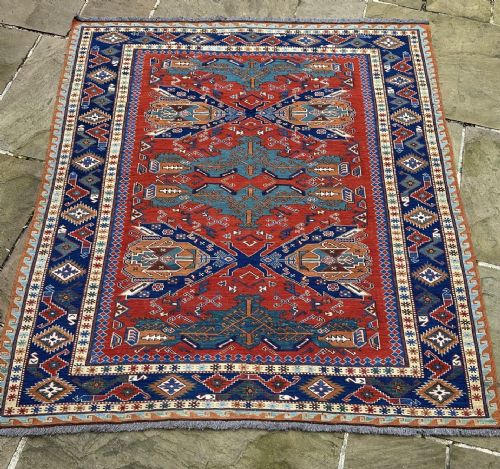
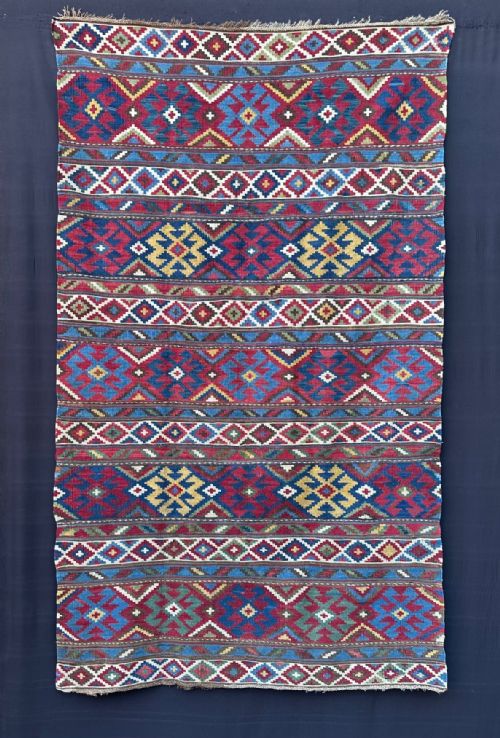
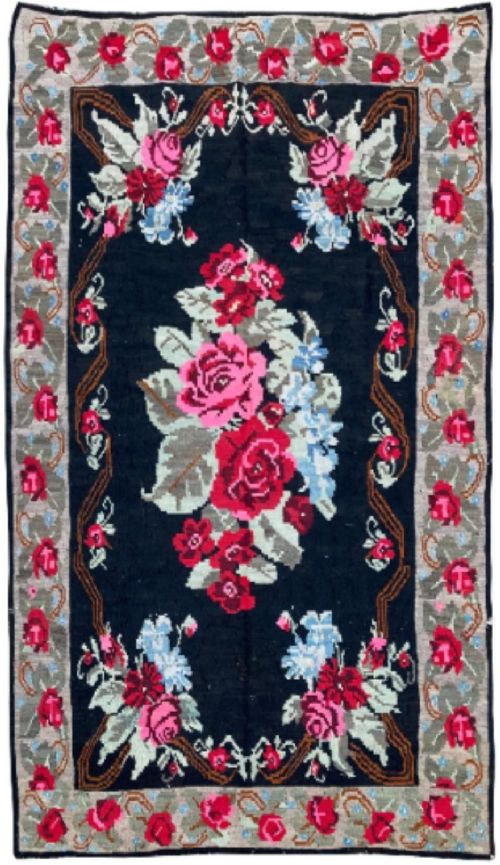
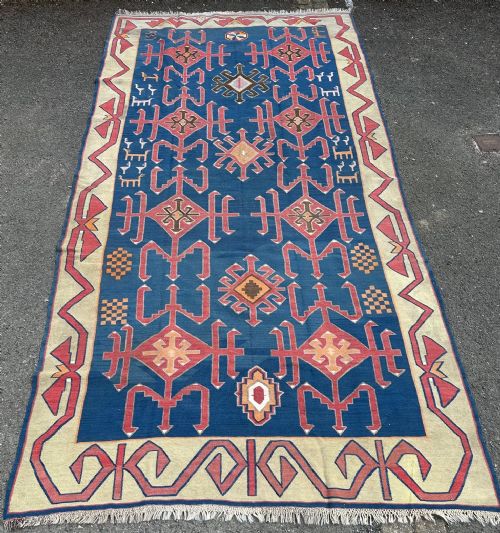


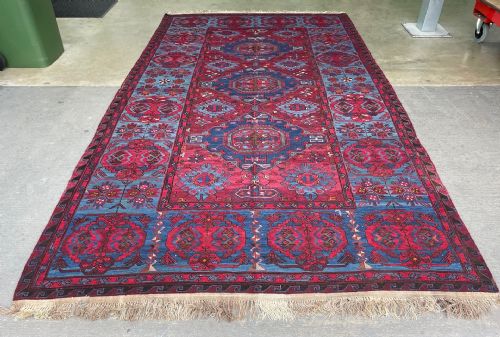


Eastern Caucasian Carpet
An eastern caucasian carpet brings geometric vigour and rich natural dyes directly to your floor, offering authentic tribal character.
Eastern Caucasian Carpet
When you search for an eastern caucasian carpet, you encounter woven textiles originating from regions such as Shirvan, Daghestan, Karabagh, and Gendje. These items span from the late nineteenth century into the mid-twentieth century, capturing traditional regional patterns.
You are most likely to meet flat-woven kilims alongside pile rugs bearing distinct Caucasian tribal motifs. Each piece reflects the specific geography and cultural heritage of the eastern Caucasus.
How they were made
The construction of these textiles relies primarily on wool for the pile and flat-weave structures, supported by cotton foundations in specific examples. Weavers utilised hand-weaving techniques, producing both pile carpets and flat-woven structures like soumaks and kilims.
Colour derives from natural dyes applied to hand-spun wool, yielding durable and varied hues across different regional workshops. The interplay of these dyestuffs creates the characteristic palette found in eastern caucasian carpet examples.
Listings feature wool, cotton, and natural dyes applied across rugs, kilims, and soumak carpets spanning several decades.
What varies in quality
Quality in these textiles rests upon the precision of the geometric drawing and the richness of the natural dyes. Finer examples display crisp articulation of tribal motifs and harmonious colour balance across the field.
The handling of the weave, whether flat-woven kilim or structured soumak, dictates the integrity of the piece. Superior execution of traditional designs elevates a utilitarian floor covering into a collectible textile.
The Eastern Caucasian Carpet Glossary
- Kilim
- A flat-woven carpet or rug produced without a pile. These pieces rely on the interlocking of warp and weft threads to form geometric patterns.
- Soumak
- A flat-weave technique involving wrapping weft threads over warps to create a textured, durable surface. This method produces heavier carpets with distinct structural ridges.
- Prayer-rug
- A small rug featuring a mihrab or arch design indicating the direction of prayer. These pieces served devotional functions in domestic settings.
- Natural Dyes
- Colourants derived from plants, insects, and minerals rather than synthetic compounds. They produce organic tones that age gracefully over decades.
Eastern Caucasian Carpet: Frequently Asked Questions
What is an eastern caucasian carpet?
An eastern caucasian carpet is a hand-woven textile originating from regions such as Daghestan, Shirvan, and Karabagh. These pieces are characterised by geometric tribal designs and natural dye palettes.
They function primarily as floor coverings, bringing historical texture and regional patterns into domestic interiors.
How do I care for my rug?
Protect your textile by avoiding direct sunlight and using a quality underlay to prevent sliding. Vacuum gently without a rotating brush roll.
Consult a specialist in antique textiles for professional cleaning rather than attempting wet washing at home.
Are these pieces flat-woven or piled?
The selection includes both flat-woven examples like kilims and soumaks, alongside traditional pile rugs and runners. Each structure offers a different tactile experience underfoot.
Flat-weaves lack a raised pile, whereas rugs and carpets utilise knotted wool for a softer surface.
How do I identify regional styles?
Regional styles depend on specific combinations of motifs, border arrangements, and colour palettes associated with areas like Gendje or Kuba. Examining the structure helps determine the origin.
Comparing structural details and characteristic designs aids in separating different Caucasian traditions.