


Red Wool Chuval Bag
A red wool chuval bag is a Central Asian nomadic storage piece woven by Turkmen tribes, prized for intricate tribal guls and rich natural dyes.
Red Wool Chuval Bag
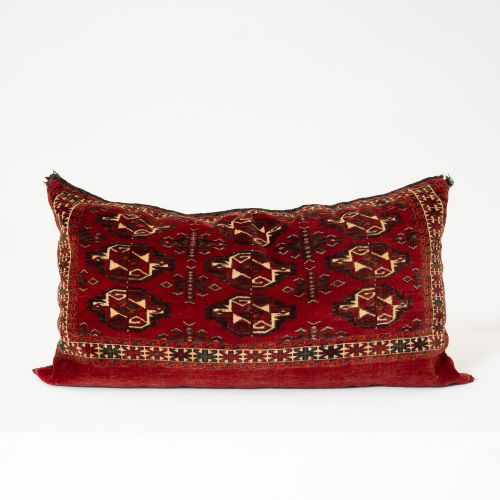
A red wool chuval bag represents traditional Central Asian tribal weaving, specifically originating from Turkmen groups such as the Tekke, Yomut, Ersari, Saryk, and Salor tribes. These items functioned historically as large storage sacks used inside tents or during nomadic migrations across the steppes of Turkmenistan.
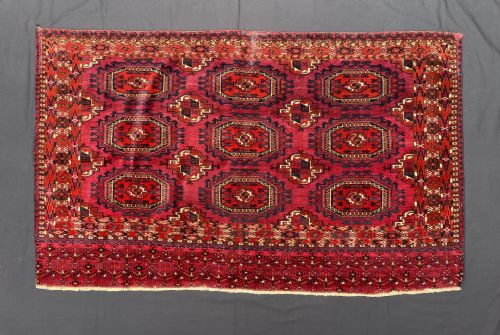
Buyers browsing this selection will predominantly encounter antique chuval faces or complete bags featuring characteristic medallion motifs known as guls. Examples range from eighteenth-century fragments to early twentieth-century pieces, often attributed to specific regions including the Akhal Oasis or the Beshir and Middle Amu Darya regions.
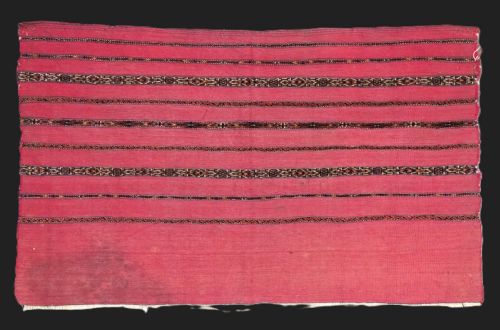
Many survivors exist merely as decorative bag faces, though some retain their plain weave backs, hanging loops, or wool and cotton construction. Designs vary from traditional banded layouts and tree patterns to complex arrangements containing multiple turreted or Salor guls.
Materials and construction
The construction of these textiles relies heavily on hand-spun wool and cotton foundations, occasionally accented with silk details. Weavers utilised natural dyes to achieve deep crimson and red tones, complemented by contrasting highlights in white and secondary hues.
Weaving techniques vary from standard tribal structures to exceptionally fine weaves found on specific Tekke and Kizil chuval faces. Artisans knotted the pile densely onto wool or cotton warps, often finishing the pieces with flatwoven plain backs or specialised elem designs at the lower borders.
Listings feature pieces spanning from the 18th century through the early 20th century, utilising wool, cotton, silk, and natural dyes.
Evaluating quality and execution
Quality in these Central Asian bags rests upon the density and precision of the weave, alongside the complexity of the gul arrangements. Pieces displaying very fine knots and scarce design variations, such as specific aina or turreted guls, represent higher execution levels.
The survival of original elements significantly impacts the piece, with complete examples retaining backs, hanging loops, or matching pairs holding more structural integrity. Furthermore, the vibrancy and saturation of the natural dyes contribute heavily to the visual depth of the textile.
The Red Wool Chuval Bag Glossary
- Chuval
- A large tent storage bag produced by Turkmen and other Central Asian nomadic tribes. These sacks held household possessions and bedding.
- Gul
- A medallion motif repeated across Turkmen carpets and textile faces. Each tribal group utilised distinct gul patterns to signal identity and lineage.
- Torba
- A smaller storage bag variant used by nomadic tribes for domestic items. These often share similar design elements and weaving structures with larger chuvals.
- Kizil
- A term designating red-ground Turkmen weaving, particularly associated with specific Tekke and Kizil Ayak tribal groups.
Red Wool Chuval Bag: Frequently Asked Questions
What is a chuval bag used for?
Nomadic families used these large sacks to store bedding, clothing, and household goods inside traditional tents. They hung from the walls or served as functional containers during seasonal migrations.
Today, collectors typically display them as wall hangings or decorative textiles rather than utilising them for active storage.
How do I identify a Tekke chuval?
Tekke pieces generally feature precise knotting and specific medallion designs, most notably the characteristic octagonal Tekke or secondary Salor guls. Their palette often centres on deep madder reds.
Examining the structural weave and the specific arrangement of the guls helps distinguish Tekke work from Yomut or Ersari production.
Are these bags complete or fragments?
Many surviving examples on the market consist solely of the decorative face, which was historically cut away from the plain weave back when the item wore out. However, some pieces still retain their original plain weave wool backs and hanging loops.
Complete examples with backs or paired sets are less common and represent more intact survivals of nineteenth-century nomadic culture.
How should I care for an antique textile?
Protect antique wool and cotton textiles from direct sunlight to prevent natural dye fading. Gentle vacuuming through a mesh screen helps remove dust without damaging the pile.
Professional textile conservators should handle any necessary cleaning or mounting to preserve the fragile hand-spun fibres.