
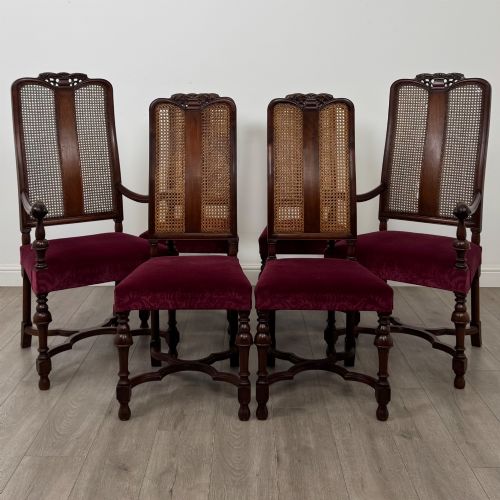
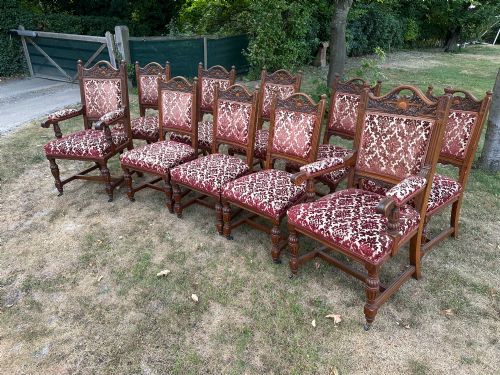
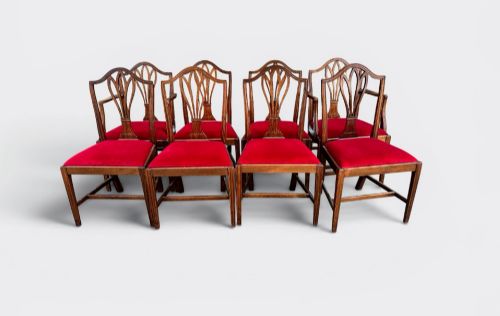
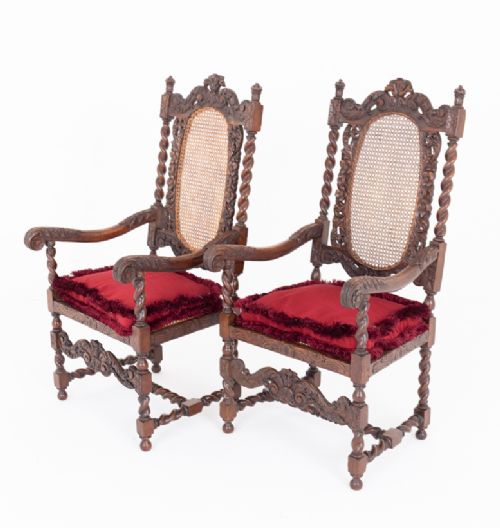
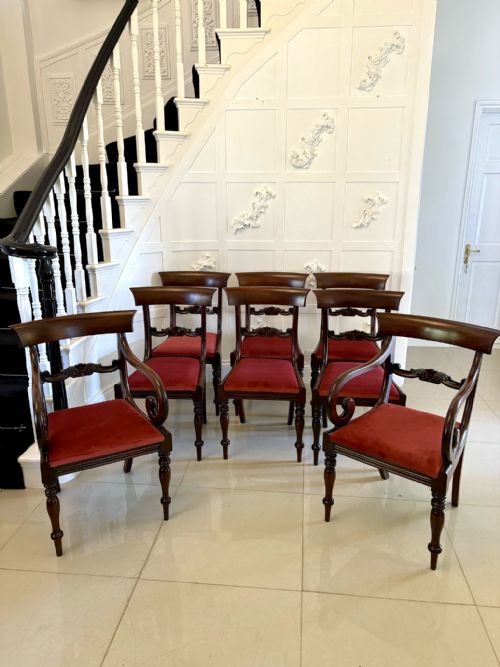


Red Velvet Carver Chair
A red velvet carver chair brings rich texture and formal seating presence into a room, offering the structural arms and upholstered comfort that collectors prize.
Red Velvet Carver Chair
A red velvet carver chair sits at the intersection of formal dining seating and occasional comfort, designed with supportive armrests for the head of a table or a desk. When searching for a red velvet carver chair, buyers encounter pieces spanning the Georgian, Victorian, and Edwardian periods, alongside later revival styles.
The evidence shows these armchairs and desk chairs appearing in diverse structural forms, from Chippendale style and Hepplewhite to Regency bar backs and robust oak and walnut framing. Most examples integrate plush red velvet upholstery with traditional timber frames made of mahogany, oak, or walnut.
Materials and construction methods
Makers constructed these chairs primarily using dense hardwoods such as mahogany, oak, and walnut, frequently shaping the timber through carving and turning. Brass accents and cane or rattan elements appear alongside the primary wood structures to provide textural contrast.
Upholstery techniques applied red velvet over traditional stuffing materials, secured to the wooden frames with careful detailing. Woodworkers employed styles ranging from Regency curves and Gothic revival lines to classical Hepplewhite and Chippendale proportions.
Period representations span from the seventeenth-century laburnum armchairs up through Edwardian and later twentieth-century revivals.
Distinctions in craftsmanship
Quality rests in the crispness of the timber carving and the structural integrity of the frame joints, where hand-shaped details outshine mass-produced uniformity. The selection of the primary wood and the depth of the timber grain also dictate the standing of a piece.
The execution of the upholstery work, including the quality of the red velvet fabric and the precision of its placement, separates standard workshop output from finer examples. Chairs that retain balanced proportions and uncompromised structural frames command greater interest.
The Red Velvet Carver Chair Glossary
- Carver chair
- An armchair, traditionally placed at the head of a dining table or used at a desk, featuring structural armrests. These chairs match or complement surrounding side chairs.
- Chippendale style
- A furniture design tradition originating in the eighteenth century, characterised by elaborate carving, interlaced ribbon backs, and cabriole legs ending in ball and claw feet.
- Regency
- A British design period spanning the early nineteenth century, known for drawing inspiration from classical Greek, Roman, and Egyptian motifs alongside clean architectural lines.
- Barley twist
- A type of turned woodwork resembling a spiralling rope or barley sugar twist, frequently found on seventeenth-century and revival oak furniture frames.
- Hepplewhite
- A light, elegant eighteenth-century style associated with shield-back chairs, tapered legs, and delicate neoclassical inlay or carving.
Red Velvet Carver Chair: Frequently Asked Questions
Where should I place an armchair?
An armchair fits well at a executive desk, in a morning room, or paired as part of a seating arrangement in a larger study. Their structural arms make them less suited for standard side-by-side dining unless positioned at the table ends.
They also function effectively as standalone accent pieces in hallways or bedrooms where extra seating and texture are required.
How do I identify a Georgian chair?
Georgian chairs generally exhibit dense hardwoods like mahogany or walnut, featuring classic proportions and hand-carved details such as ribbon backs or ball and claw feet. The joinery employs traditional techniques visible beneath the frame.
Comparing the stretcher placement and back splat design against known eighteenth-century forms helps confirm the period origin.
What distinguishes Edwardian seating?
Edwardian furniture often reinterprets earlier eighteenth-century aesthetics, utilising mahogany or oak with lighter proportions and refined decorative carving. These pieces reflect a revivalist interest in classical styles adapted for twentieth-century homes.
Construction methods from this era blend machine precision with skilled hand-finishing, visible in the smoothness of the timber frames.