




Jacobean Style Open Armchair
A jacobean style open armchair brings heavy timber and carved presence into a room, offering sturdy seating rooted in seventeenth-century tradition.
Jacobean Style Open Armchair
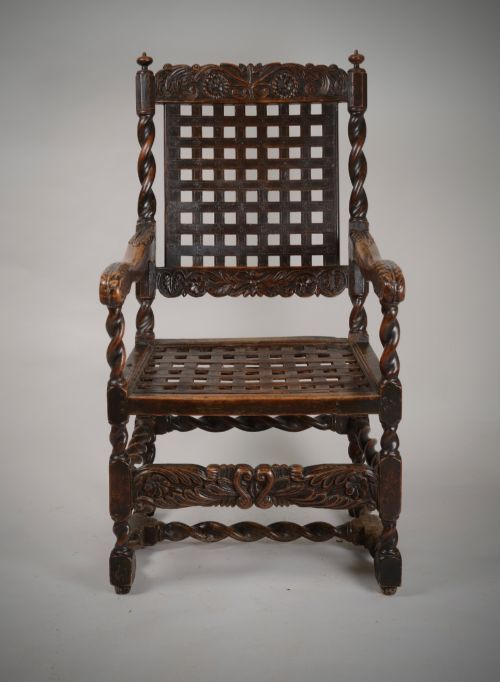
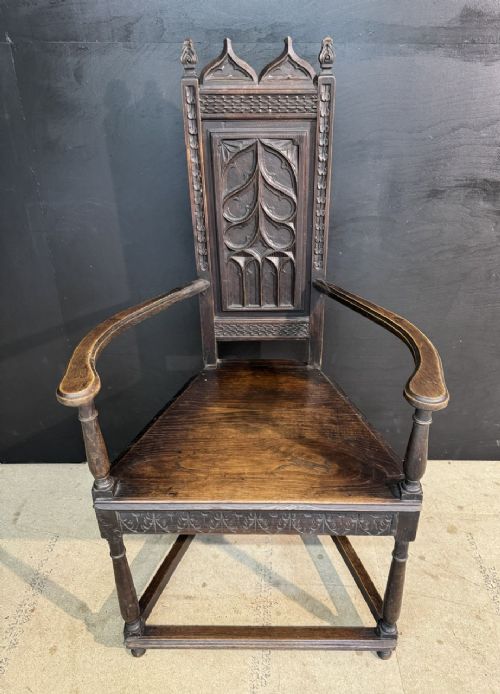
A jacobean style open armchair embodies the solid seating forms of the seventeenth century, appearing across periods from the seventeenth century itself through the nineteenth century and into nineteen-twenty revivals. Buyers seeking this phrase encounter wainscot forms, elbow chairs, and carver armchairs designed with open arms.
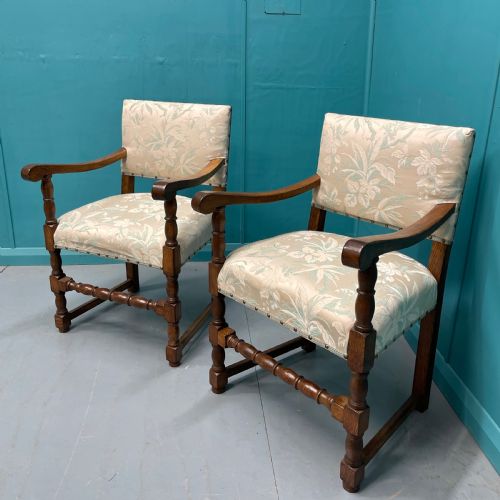
The materials recorded in these listings show a strong preference for oak and walnut, frequently upholstered or fitted with leather, hessian, fabric, velvet, metal studs, and brass. Pieces range from seventeenth-century originals to nineteenth-century interpretations, Edwardian examples, and nineteen-twenty revivals carrying Carolean and Gothic influences.
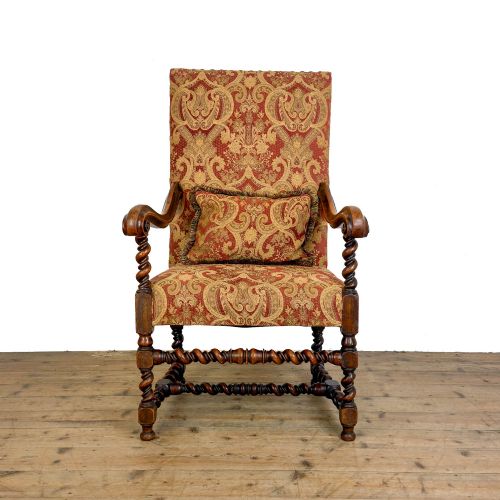
Forms vary from small-scale childs wainscot armchairs to pairs of English oak armchairs featuring barley twist supports. The presence of carved decoration defines the style, connecting robust timber construction with historical revival aesthetics.
How they were made
Construction relies heavily on solid oak and walnut, shaped into sturdy frames with mortise and tenon joints. Woodcarving forms the primary decorative technique, seen on wainscot panels and chair backs.
Upholstery methods incorporate leather, velvet, fabric, and hessian, secured using metal studs and brass hardware. Turned elements such as barley twist members appear in later revivals to add vertical interest to the timber frames.
Among the heavy timber and high-backed forms sits a tiny childs wainscot armchair, proving that even seventeenth-century dignity came in miniature.
What varies in quality
The depth and crispness of the timber carving set individual pieces apart, distinguishing fluid hand-cut detail from softer or more mechanical execution. Timber selection also dictates overall presence, with choice grains of oak and walnut providing greater visual weight.
Proportion and scale influence the character of each chair, from small-scale examples to substantial wainscot forms. The integration of period materials like brass studs and leather upholstery completes the integrity of the design.
The Jacobean Style Open Armchair Glossary
- Wainscot chair
- A solid wooden armchair with a paneled back, originating in the sixteenth and seventeenth centuries. These pieces typically feature heavy timber construction and carved details.
- Barley twist
- A turning technique resembling a twisted rope, popular in seventeenth-century furniture and later revived in nineteen-twenty pieces. It adds texture to vertical legs and stretchers.
- Carver armchair
- A sturdy wooden chair with arms, traditionally placed at the head of a dining table or used as a desk chair. The form allows comfortable seating with structural armrests.
- Elbow chair
- An alternative term for an armchair, referencing the supportive rests for the arms. These chairs appear in both walnut and oak across various revival periods.
- Carolean revival
- A nineteenth-century style drawing inspiration from the reign of Charles the second, characterised by rich carving and scrolled woodwork. It echoes the ornate aesthetics of the late seventeenth century.
Jacobean Style Open Armchair: Frequently Asked Questions
How were these armchairs used historically?
Historically, wainscot and elbow chairs served as prominent seating in domestic interiors, often reserved for the head of a household or important guests.
Their solid wooden frames and supportive arms provided status and comfort in halls and parlours before upholstered seating became widespread.
How do I tell seventeenth-century pieces from revivals?
Seventeenth-century pieces display authentic age in the timber surface, tool marks, and construction methods appropriate to early workshops.
Revivals from the nineteenth century or nineteen-twenty adopt the older style while utilising manufacturing techniques and wood patination specific to their own era.
What materials are common in these chairs?
Oak and walnut form the primary structural materials for these armchairs, providing the heavy framework necessary for intricate carving.
Upholstery elements include leather, velvet, hessian, and fabric, frequently secured with brass nails or metal studs.
How do I live with a heavy oak armchair?
A heavy oak armchair anchors a room visually, working well as a standalone accent piece in a study, hallway, or living space.
Pairing the timber frame with softer textiles or placing it against neutral walls allows the carved details and grain to stand out.