
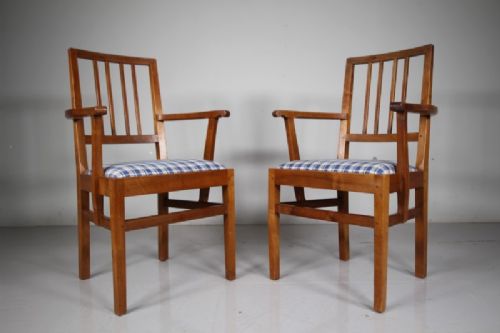




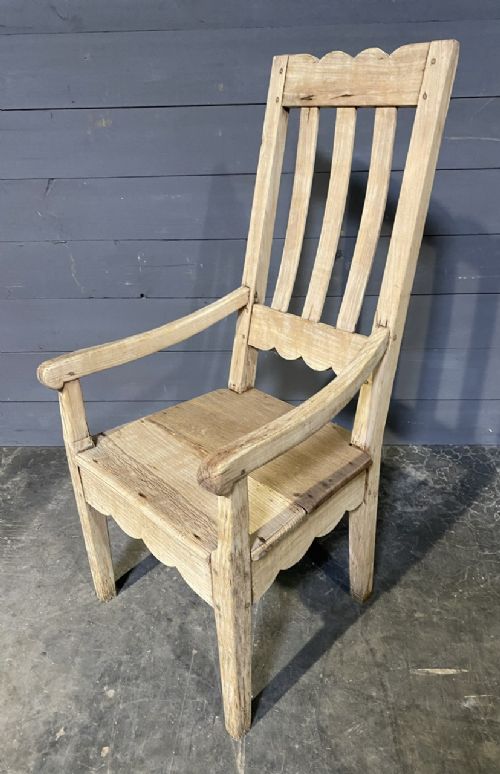

Slat Back Oak Armchair
A slat back oak armchair is a sturdy timber seat defined by horizontal or vertical wooden slats, prized for honest construction and enduring daily service.
Slat Back Oak Armchair
A slat back oak armchair represents a robust seating tradition found across multiple centuries, utilising solid timber frames and supportive backrest rails. When searching for a slat back oak armchair, buyers encounter various forms ranging from vernacular country pieces to refined Arts and Crafts creations.
The evidence shows these chairs appearing in domestic and working spaces as desk chairs, fireside seats, and dining carvers. Origins stretch from the seventeenth century through the Victorian era and into the nineteen-thirties, reflecting continuous evolution in British furniture design.
Regional variations emerge within the archive, including Welsh proportions and Scottish crofter chairs alongside standard English vernacular types. Buyers frequently meet pieces featuring rush, fabric, or wooden seats paired with distinctive slat configurations.
Construction and materials
Cabinet makers and vernacular joiners relied primarily on oak for the main frames, often combining secondary timbers such as elm, beech, and ash for seats and stretchers. Turning lathes shaped spindles and legs, while hand-saws and chisels formed the characteristic flat or curved back slats.
Joinery techniques prioritised rigidity, employing mortise and tenon joints secured with wooden pins rather than modern adhesives. Seat construction varied significantly, incorporating solid wood panels, woven rush, or drop-in frames covered in fabric, leather, or velvet.
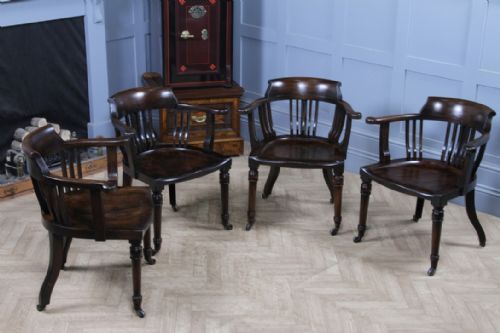
Smoker's bow armchairs offered nineteenth-century gentlemen comfortable low-slung seating designed specifically for relaxed contemplation.
Factors of quality and distinction
The division between standard vernacular seating and superior examples rests upon timber selection, proportion, and the integrity of the joinery. Heavier scantlings and thoughtful balancing of armrests against upright supports elevate certain pieces above utilitarian workshop output.
Maker attribution and regional distinctiveness add considerable weight, particularly when workshops or specific counties are clearly identifiable through stamps or documented construction traits. Surface patination, achieved through decades of handling and wax polishing, separates untouched period survivors from overly restored alternatives.
Edward Barnsley
The Slat Back Oak Armchair Glossary
- Carver armchair
- A dining chair or occasional seat featuring arms, traditionally placed at the head of a table.
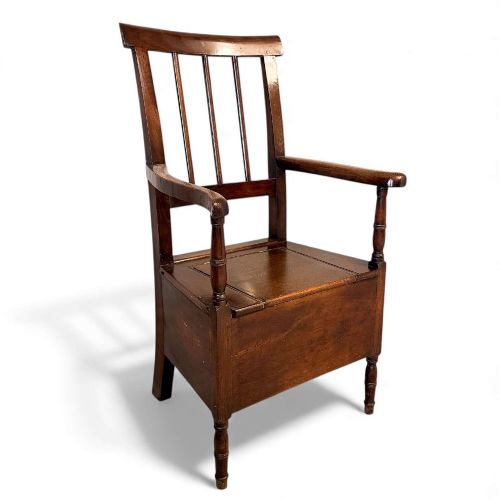
- Commode chair
- An enclosed seat designed originally to house a chamber pot beneath a removable panel or squab cushion.
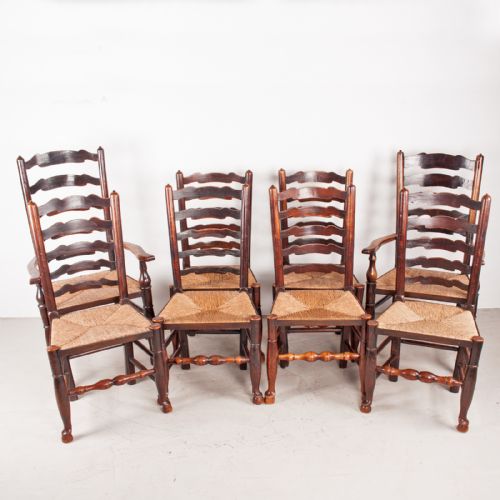
- Rush seat
- A traditional seating surface woven from dried marsh reeds, providing a resilient and textured platform.
- Stretcher
- A horizontal wooden brace connecting the legs of a chair to provide structural rigidity.
- Splath
- A flat vertical wooden slat forming the central element of a chair backrest.
Slat Back Oak Armchair: Frequently Asked Questions
What defines a slat back oak armchair?
These seats feature solid timber frames where the backrest incorporates one or more horizontal or vertical wooden slats. They serve as versatile seating options developed across centuries of vernacular and formal furniture design.
Such chairs appear in various guises, including office swivel models, fireside carvers, and dining room elbow chairs, all united by their reliance on durable oak.
How do I date an antique oak armchair?
Dating relies on observing construction marks, timber characteristics, and the prevailing style of the period, such as Edwardian Arts and Crafts or seventeenth-century vernacular. Tool marks left by hand saws and the nature of the joinery provide primary clues.
Changes in hardware, upholstery methods, and wear patterns around the feet and stretchers further help narrow the era of manufacture.
Where were these chairs used historically?
Slat back chairs fulfilled multiple domestic and commercial functions, appearing around dining tables, beside hearths, and beside partners' desks. Sturdy construction made them suitable for daily heavy use in kitchens and offices.
Regional workshops produced specific variants for domestic farmhouses, country cottages, and professional chambers across Britain.
How should I care for an antique oak chair?
Maintenance involves keeping the timber away from direct heat sources and sudden humidity shifts to prevent wood splitting or joint loosening. Regular application of traditional beeswax helps nourish the surface and preserve the historic finish.
Avoiding harsh chemical cleaners ensures the natural patination built up over generations remains intact and protected.