




Brown Leather Carver Chair
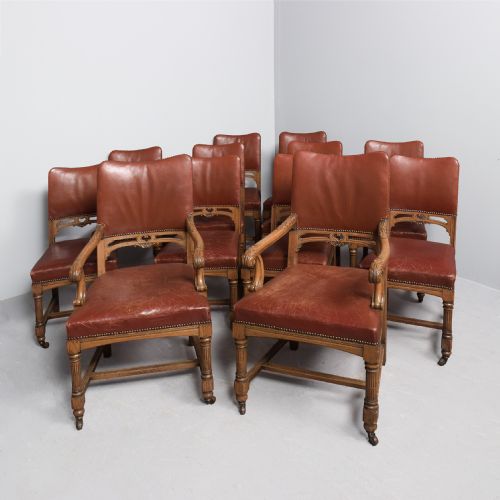
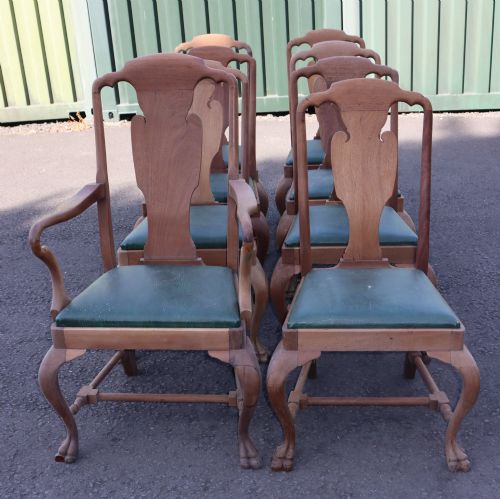
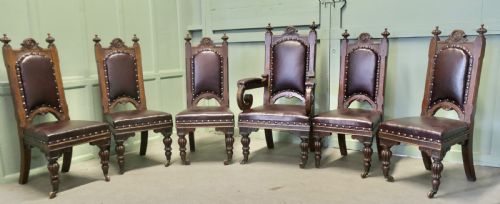
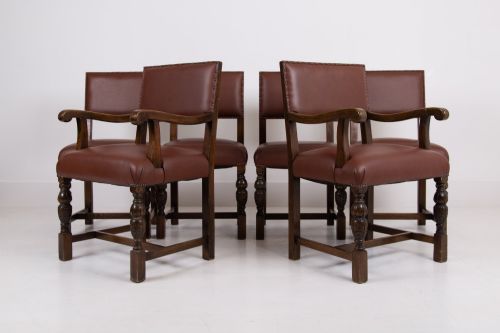
A brown leather carver chair provides sturdy support with open armrests, combining resilient upholstery with solid timber framing.
Brown Leather Carver Chair
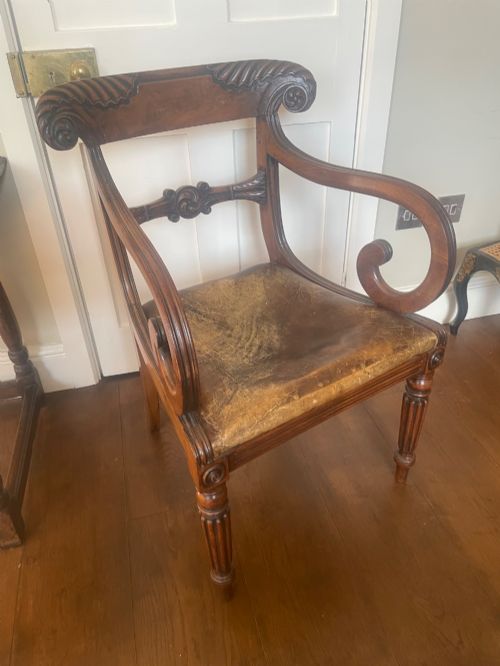
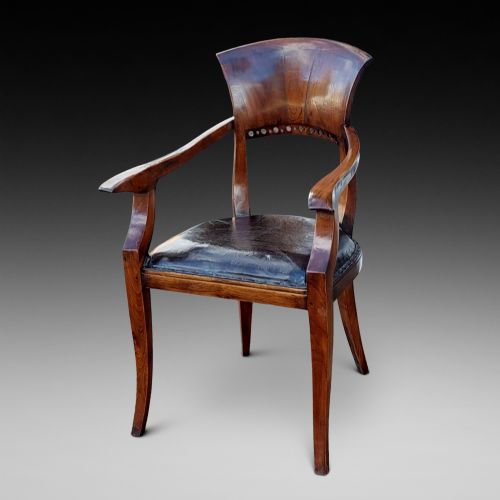
A brown leather carver chair stands as a staple seating form, featuring integrated armrests designed to accommodate a person seated at a desk or the head of a dining table. You encounter these pieces across Victorian, Edwardian, and early twentieth-century periods, constructed in robust timber frameworks.
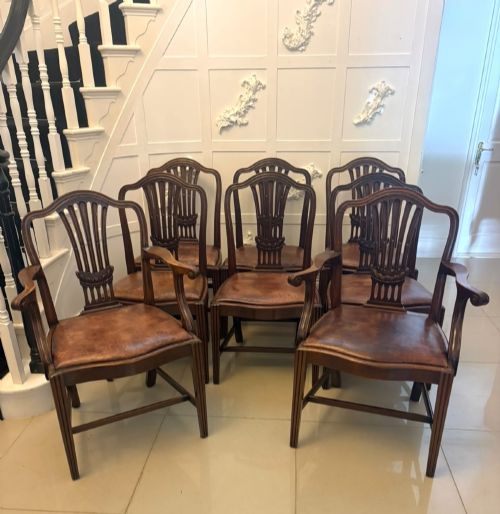
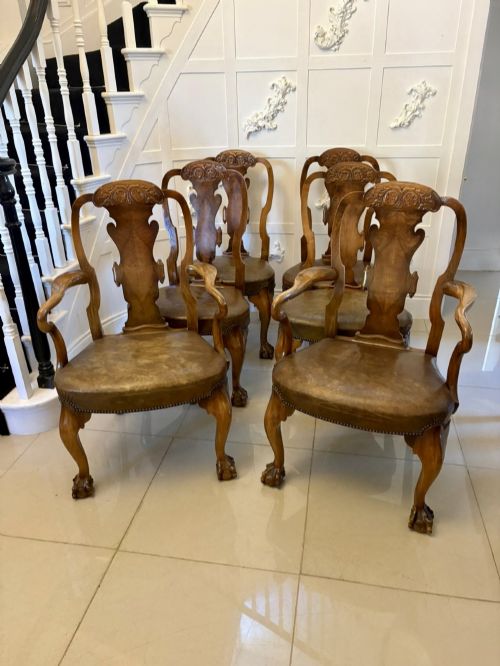
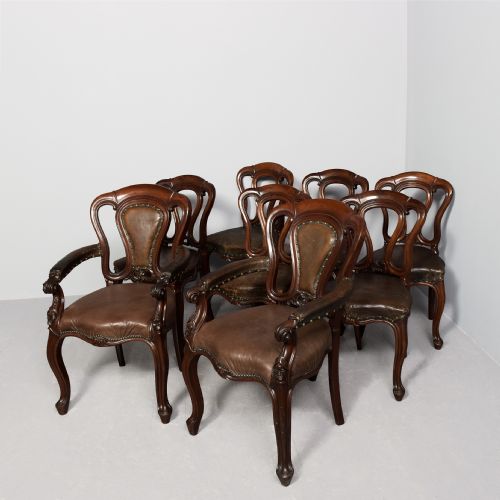
The selections on this page span diverse stylistic revivals, including Chippendale, Gothic, and Jacobean influences. These armchairs and elbow chairs utilise durable hides set into frames of mahogany, oak, and walnut, reflecting the domestic requirements of their original eras.
Materials and construction
Cabinet makers utilised dense hardwoods such as mahogany, oak, and walnut to build the load-bearing frames and legs of each brown leather carver chair. Selected pieces incorporate secondary timbers like ash or satinwood inlay to enrich the visual depth of the woodwork.
Upholsterers secured tanned and hand-dyed leather directly to the wooden seats or backrests using brass fixings or tension methods. Joinery techniques relied on mortise and tenon joints to ensure the structural longevity of the armrests and uprights.
Brown Leather Carver Chair Retail Price Guide 2026
Typical asking prices for brown leather carver chair among the pieces listed under this phrase on Sellingantiques today, from the lower quarter to the upper quarter. They describe what is for sale here now, not the wider market.
Several armchairs incorporate hand-dyed leather designed to weather gracefully through decades of enthusiastic dining and reading.
Variations in standard and execution
The refinement of the carved details on the arms, splats, and crest rails distinguishes standard utility seating from master-built examples. Artisans who invested time in hand-shaping scroll-arms and precise cabriole or tapered legs produced pieces with superior proportional harmony.
The grade of the leather and the integrity of the timber frame dictate the overall resilience of the chair. Heavier gauge hides and well-seasoned hardwoods maintain their structural tension and surface texture far longer than softer substitute materials.
Lamb Of Manchester·William Walker & Sons·Shoolbred
The Brown Leather Carver Chair Glossary
- Carver chair
- An armchair designed with open sides, traditionally placed at the head of a dining table or utilised as a desk chair. This form allows ample space for clothing whilst providing arm support.
- Elbow chair
- An alternative designation for an armchair, featuring low armrests suited for placement at a writing table or dining setting. These pieces follow the primary timber styles of their respective eras.
- Shield back
- A chair backrest shaped like a heraldic shield, popularised during the Georgian period and revisited in later revival pieces. This design frequently incorporates carved splats and leather upholstery inserts.
- Barback
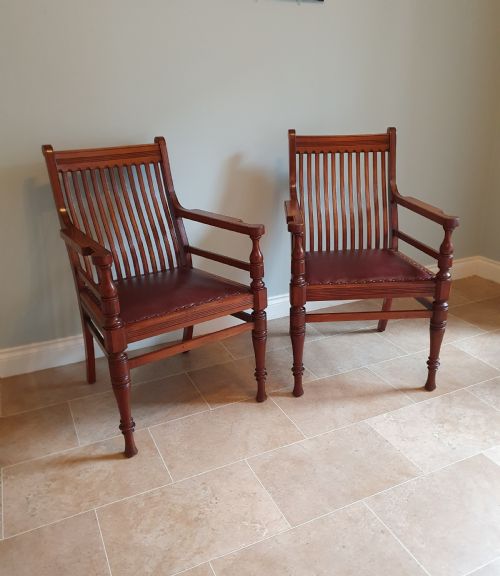
- A chair back featuring horizontal wooden slats resembling rungs, common in nineteenth-century seating designs. This construction provides robust lumbar support.
- Cockpen chair
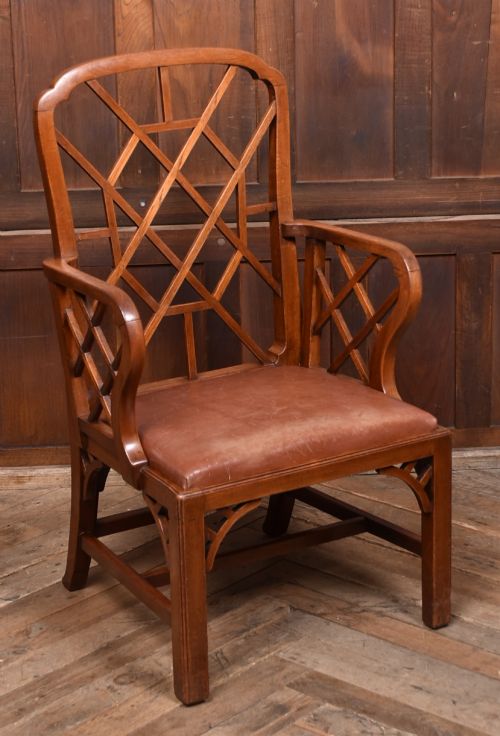
- A specific lattice-work chair design inspired by Chinese Chippendale aesthetics, featuring an open geometric grid pattern. These items are typically constructed from mahogany.
Brown Leather Carver Chair: Frequently Asked Questions
What is a carver chair?
A carver chair is an armchair built with open sides, traditionally used at the head of a dining table or at a partner's desk. The design provides low armrests that accommodate the wearer without obstructing movement.
These pieces typically match standard dining chairs of the same period, allowing them to function as paired end-seats while offering added comfort.
How do I date a brown leather chair?
Dating relies upon examining the timber species, joinery methods, and stylistic revivals present in the frame. Victorian and Edwardian examples show distinct tool marks and construction traits characteristic of nineteenth and early twentieth-century workshops.
Reviewing the specific hardware, such as brass tacks or hand-stitched seams, helps narrow the production era alongside any maker stamps found beneath the seat rails.
Where should I place an elbow chair?
An elbow chair suits spaces requiring a supportive seat with a compact footprint, such as a hallway, bedroom corner, or study desk. The open arms prevent the furniture from overwhelming smaller rooms.
Pairing these chairs with compatible side seating creates a balanced arrangement in dining rooms or drawing rooms.
How do I care for antique leather?
Maintain antique leather by keeping it away from direct heat sources and sunlight, which can dry out the natural hide. Regular dusting with a dry cloth prevents particle accumulation in the grain.
Apply a suitable leather conditioner sparingly to preserve flexibility, testing any treatment on an unexposed area first.