




Scottish Carved Armchair
These scottish carved armchair pieces are heavy vernacular seating options that bring genuine historical character into a room.
Scottish Carved Armchair
A scottish carved armchair combines robust regional forms with traditional joinery, spanning centuries of domestic and institutional use. You will most frequently encounter sturdy oak and mahogany examples originating from distinct periods such as the seventeenth and eighteenth centuries.
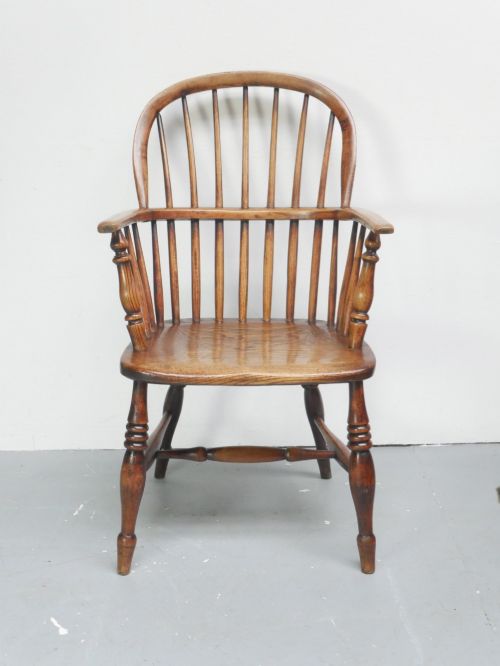
The selection ranges from early wainscot and masters chairs to later vernacular windsors, Cockpen chairs, and Orkney variants. Each piece reflects the functional requirements and stylistic shifts characteristic of Scottish furniture making over time.
How they were made
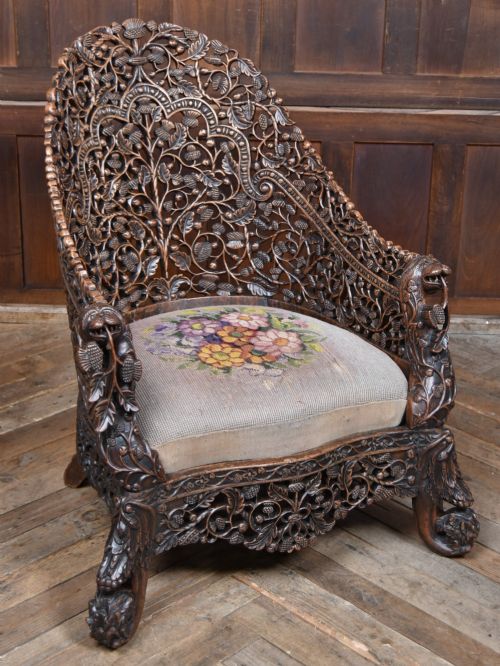
Construction relies heavily on native timbers such as oak and mahogany, shaped and joined using traditional techniques suited to heavy framing. Carved details often incorporate regional motifs like thistles, while upholstery ranges from simple fabric to woven straw and rush.
Makers integrated structural elements like brass fittings and turned spindles where necessary to reinforce the timber frames. The reliance on solid woods ensured these chairs endured generations of daily service.
What varies in quality
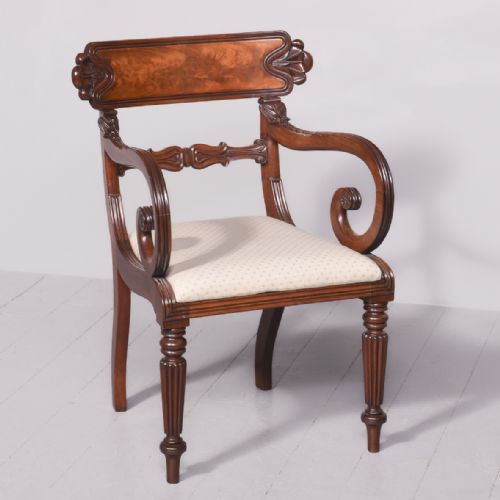
Quality rests on the integrity of the timber, the depth and crispness of the carving, and the survival of original structural components. Earlier seventeenth-century pieces display heavier joinery and distinct vernacular character compared to later revival or George III interpretations.
The presence of specialised materials, such as woven straw in Orkney chairs or intricate thistle carvings, distinguishes standard seating from exceptional regional examples. Patina and untouched surfaces further elevate the standing of older oak and mahogany forms.
Whytock & Reid·Wheelers of Arncroach
The Scottish Carved Armchair Glossary
- Wainscot chair
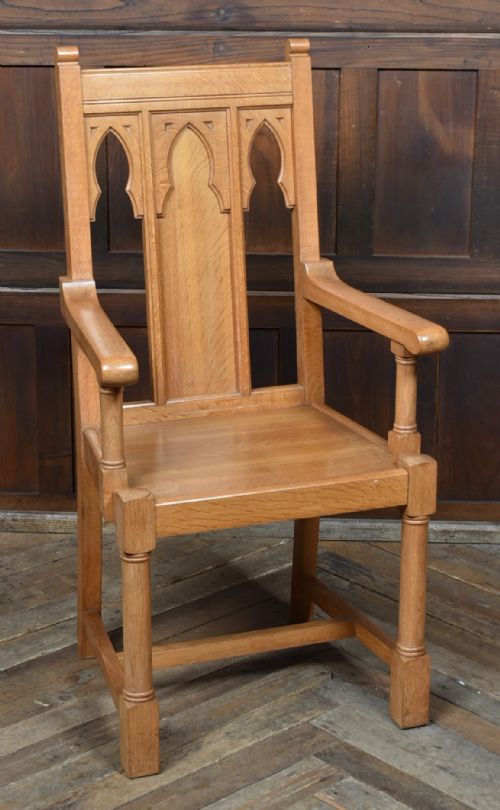
- A heavy wooden armchair dating from the seventeenth century or earlier, constructed with panelled backboards and solid timber arms. These pieces represent some of the earliest domestic seating forms.
- Cockpen chair
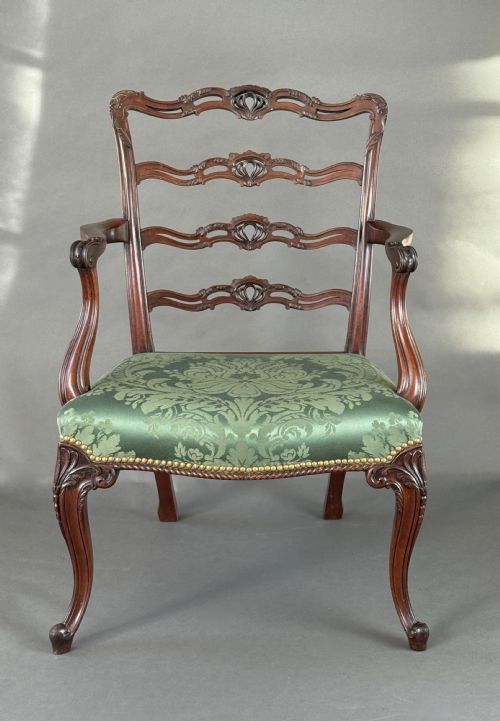
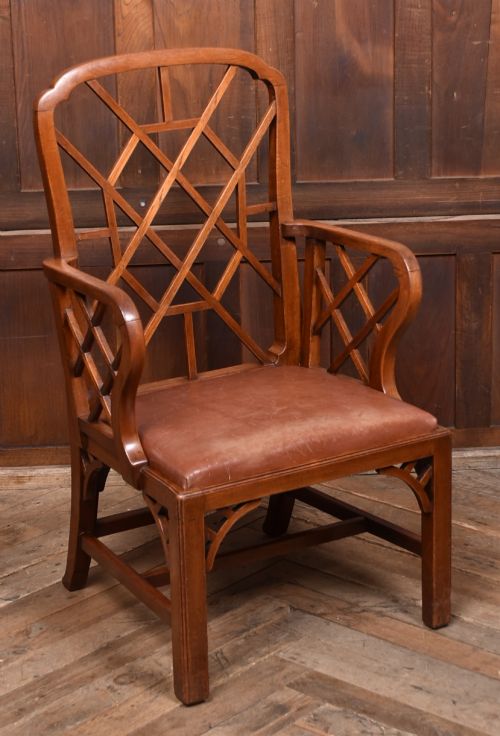
- A lattice-backed chair style popular in the eighteenth century, featuring Chinese Chippendale geometric fretwork. They often appear in mahogany.
- Orkney chair
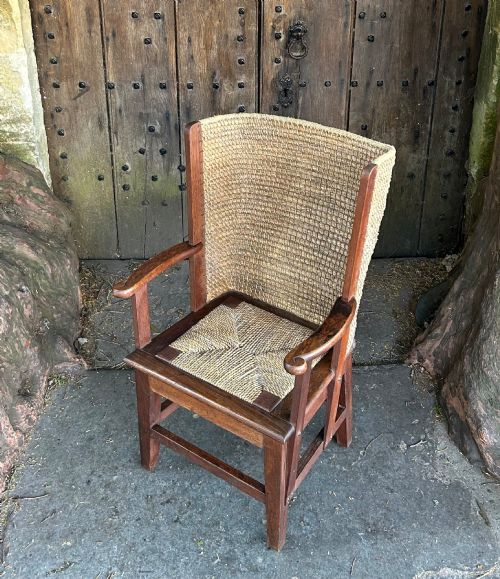
- A traditional regional armchair characterised by a high, rounded back woven from oat straw over a wooden frame. They were designed to protect occupants from draughts.
- Vernacular furniture
- Items made by local craftsmen using traditional regional methods and materials rather than following high London fashions. These pieces emphasise utility and local character.
Scottish Carved Armchair: Frequently Asked Questions
What is a scottish carved armchair?
A scottish carved armchair is a sturdy wooden seat reflecting regional design traditions, ranging from seventeenth-century wainscot forms to later mahogany revival styles.
These chairs served various domestic, institutional, and vernacular functions over the centuries, utilising native timbers like oak.
How were Orkney chairs made?
Orkney chairs were constructed with wooden frames and featured high, rounded backs tightly woven from oat straw.
This traditional method provided effective shelter against cold draughts in domestic interiors.
How do I date a wainscot chair?
Dating relies on examining the joinery methods, timber species, and the style of any carved panel work present on the frame.
Seventeenth-century examples typically display heavy oak construction and simpler, robust panel assembly compared to later Georgian interpretations.
Where did Cockpen chairs originate?
Cockpen chairs gained popularity through eighteenth-century British cabinet makers adopting Chinese Chippendale geometric lattice designs for regional use.
They are easily identified by their distinctive open square fretwork backs.