


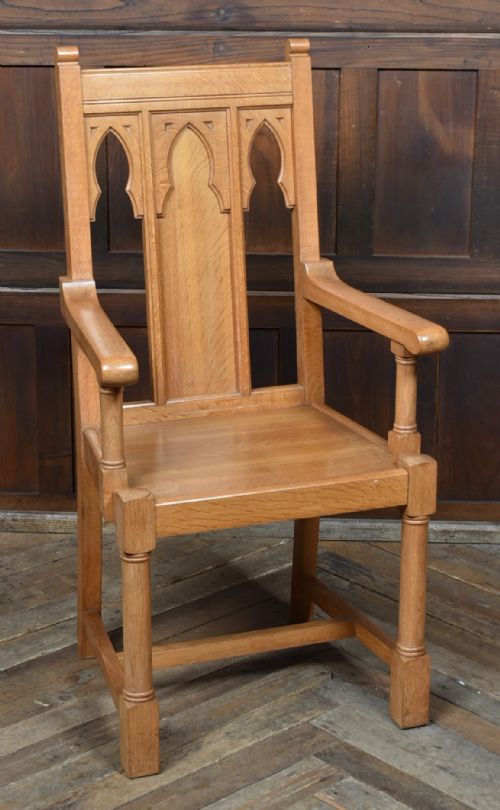

Victorian Carved Throne Chairs
Victorian carved throne chairs bring towering backs, heavy timber, and deep historical revival styles directly into a room.
Victorian Carved Throne Chairs
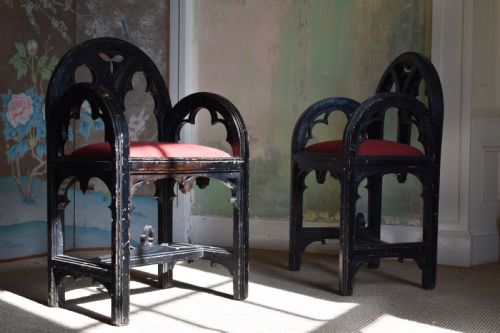
When searching for victorian carved throne chairs, collectors encounter heavy timber seating built to command attention in a hall, library, or parlour. These forms borrow heavily from earlier centuries, appearing in revival styles that mimic Gothic, Jacobean, and Renaissance aesthetics.
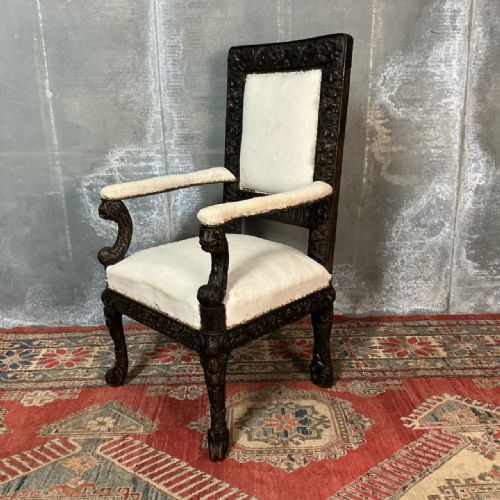
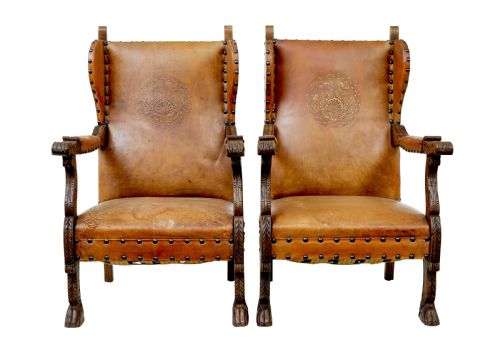
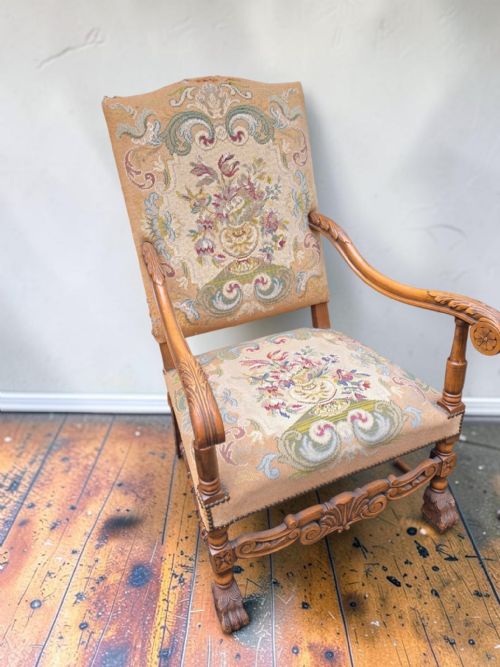
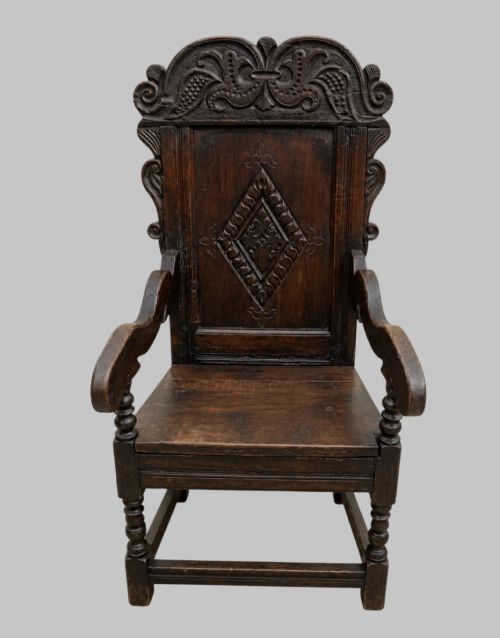
The version most commonly met on this page is the oak armchair featuring deep relief carving, tall backs, and solid armrests. Examples range from ecclesiastical chapel seats and ceremonial pieces to domestic armchairs outfitted with leather, tapestry, or velvet upholstery.
How they were made
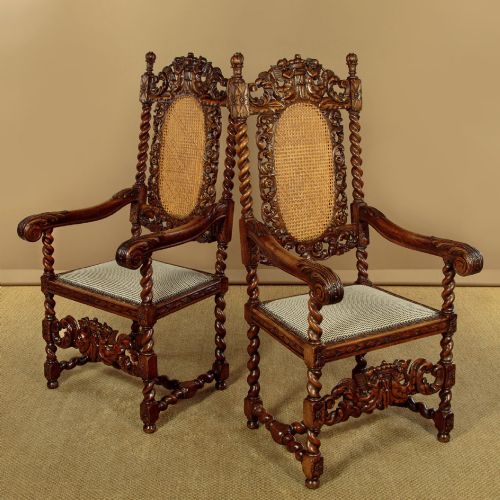
Makers relied primarily on solid oak and walnut, though pitch pine, teak, and mahogany also appear across regional and international workshops. Joinery involved traditional pegged mortise and tenon construction to support the heavy vertical loads of tall wooden backs.
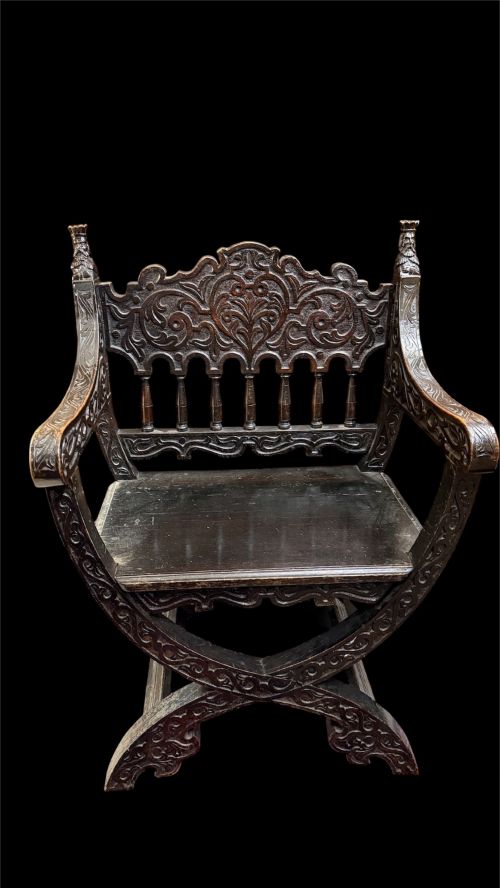
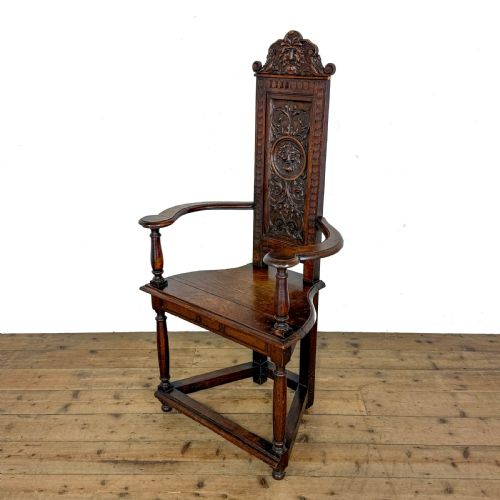
Carving was executed by hand using gouges and chisels to create complex relief work, ranging from geometric strapwork and Green Man motifs to heraldic armorials. Upholstered variants integrated embossed leather, wool tapestry, or buttoned fabrics fixed with brass tacks.
Materials span native oak and walnut alongside exotic teak, pitch pine, brass, mother-of-pearl, and assorted textiles.
What varies in quality
Timber selection and structural massing also define the hierarchy, with dense, highly figured oak or walnut providing longevity and stability. Original upholstery materials and intact secondary elements hold greater historical weight than later replacements.
A.W.N. Pugin
The Victorian Carved Throne Chairs Glossary
- Wainscot chair
- A solid wooden armchair with a paneled back, popular in the seventeenth century and heavily reinterpreted during the Victorian period.
- Glastonbury chair
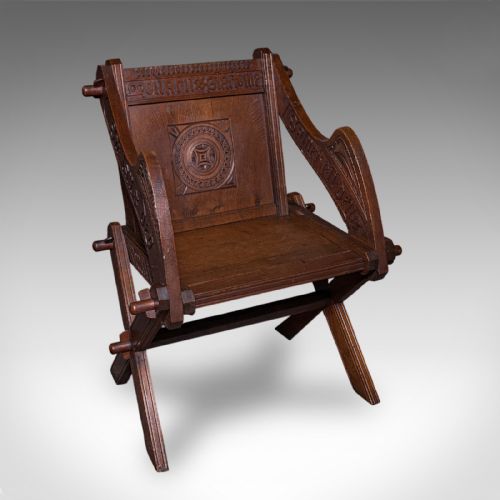
- A distinctive folding armchair design with X-framed legs and a sloped back, often inscribed with ecclesiastical text.
- Green Man
- A sculptural architectural ornament depicting a human face disgorged from foliage, frequently carved into nineteenth-century oak furniture.
- Fauteuil
- An open-armed upholstered armchair of French origin, adapted in walnut during the late nineteenth century in revival styles.
- Gothic Revival
- An architectural and decorative style drawing inspiration from medieval ecclesiastical design, utilising pointed arches and tracery.
Victorian Carved Throne Chairs: Frequently Asked Questions
Where were these chairs placed originally?
These imposing seats were typically positioned at the head of a dining table, in a grand hallway, or within a dedicated library to project authority and status.
Domestic interiors of the period utilised single heavy armchairs as focal points rather than matching suites.
Are these seats comfortable for daily sitting?
Most examples prioritize architectural presence and upright posture over ergonomic lounging, featuring rigid wooden backs and firm squabs.
Upholstered variants with buttoned leather or stuffed cushions offer a softer sit compared to solid timber panel chairs.
How do you identify a Gothic revival piece?
Gothic revival items display characteristic architectural motifs such as pointed archways, trefoils, blind tracery, and dense foliage carvings.
These details directly mimic medieval stone and woodwork translated into domestic nineteenth-century furniture.
Why do some chairs feature foreign motifs?
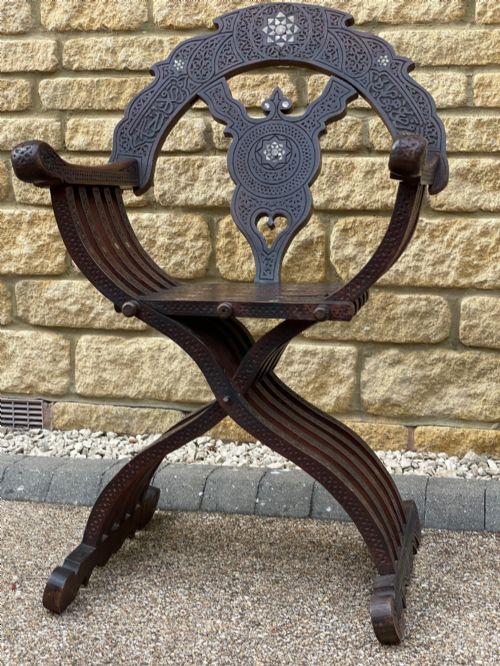
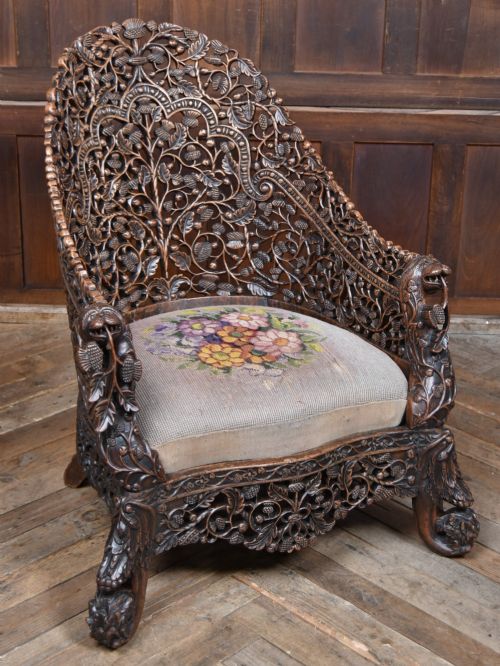
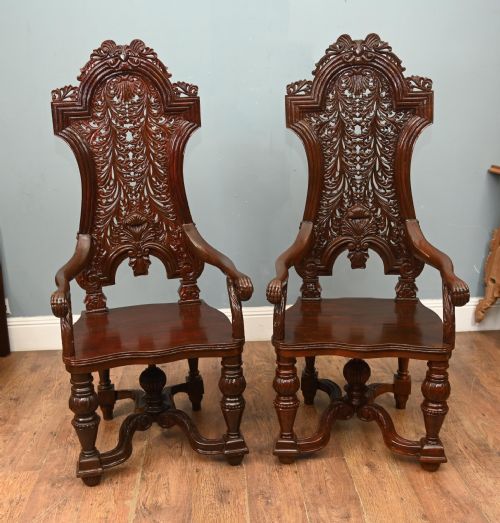
Trade and colonial expansion influenced British cabinetmakers to incorporate non-European techniques, resulting in Anglo-Indian, Ceylonese, and Syrian variations.
These pieces utilised local timbers like teak and integrated intricate mother-of-pearl inlay alongside traditional forms.