



Heavy Carved Wooden Armchairs
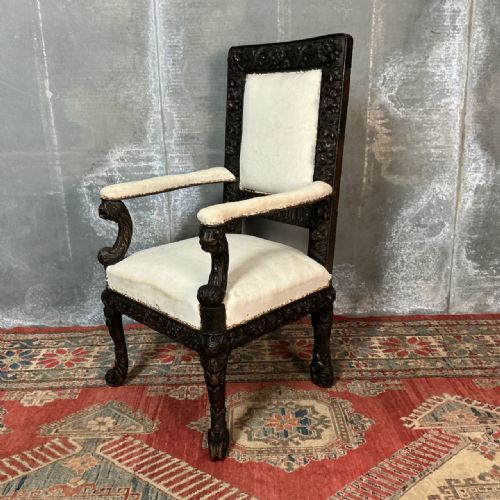
Heavy carved wooden armchairs are substantial seating pieces defined by intricate woodwork and deep historical revivals, offering both bold presence and solid craftsmanship.
Heavy Carved Wooden Armchairs
Heavy carved wooden armchairs encompass a range of imposing seating forms designed with deep relief work and substantial frames. When searching for heavy carved wooden armchairs, buyers encounter diverse regional and historical interpretations spanning multiple centuries.
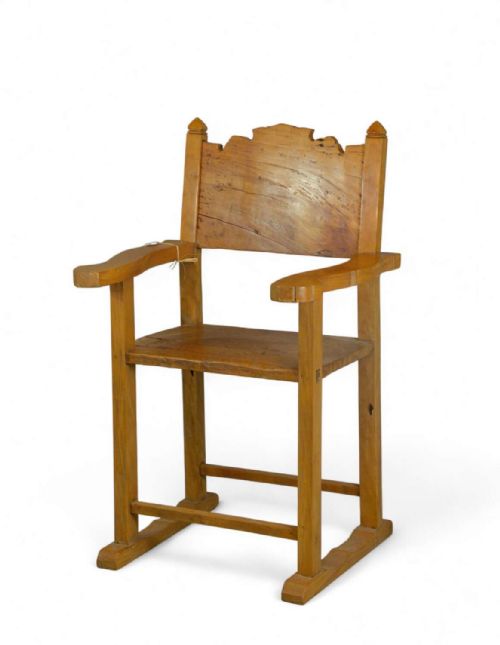
The selection on this page leans heavily toward nineteenth-century revival pieces, including Victorian Gothic thrones, Jacobean styles, and Arts and Crafts designs. These pieces draw on earlier seventeenth-century forms like the wainscot chair, utilising dense timbers and robust proportions.
Origin points vary from English workshops to colonial contexts, producing distinct regional variations such as Anglo-Indian armchairs and giant ceremonial throne chairs from the Philippines. Each form relies on solid timber construction to support the heavy ornamentation and deep carving characteristic of the type.
How they were made
Construction relies primarily on oak, English oak, pitch pine, teak, and other dense hardwoods selected for their ability to hold deep chisel work without splitting. Frames utilise traditional joinery methods such as mortise and tenon joints to bear the considerable weight of the timber and the stresses placed on large elbow seats.
Surface ornamentation is achieved through manual carving, utilising gouges and chisels to create strapwork, foliage, and figural motifs directly into the solid timber. Textile, fabric, and leather elements are sometimes integrated into the seating areas, secured with traditional tacks to complement the wooden frames.
Heavy Carved Wooden Armchairs Retail Price Guide 2026
Typical asking prices for heavy carved wooden armchairs among the pieces listed under this phrase on Sellingantiques today, from the lower quarter to the upper quarter. They describe what is for sale here now, not the wider market.
Materials documented across the inventory include English oak, pitch pine, teak, leather, and textile upholstery.
What varies in quality
Quality in these armchairs rests upon the depth, crispness, and artistic confidence of the hand carving rather than mere surface decoration. Superior pieces display fluid, well-proportioned relief work where the wood grain integrates naturally into the design, whereas lesser examples show shallow, mechanical stamping or clumsy execution.
Structural integrity also dictates worth, distinguished by the choice of seasoned timber and tight, durable joinery that remains stable under heavy use. The harmony between the original proportions of the frame and the scale of the carved ornament determines the overall visual balance of the piece.
The Heavy Carved Wooden Armchairs Glossary
- Wainscot chair
- An early form of wooden armchair constructed with paneled backboards and solid wooden seats, typical of seventeenth-century English joinery. These pieces are precursors to later revival heavy armchairs.
- Jacobean Revival
- A nineteenth-century style mimicking the robust, geometric ornamentation and dark oak finishes of the early seventeenth century. It frequently employs strapwork and turned supports.
- Gothic Revival
- An architectural and decorative movement utilising pointed arches, tracery, and heavy ecclesiastical motifs translated into domestic seating. Pitch pine and oak are common woods for this style.
- Elbow seat
- An alternative historic term for an armchair, referencing the prominent wooden rests designed for the arms. This descriptor often appears in older descriptions of vernacular seating.
- Turner's chair
- A type of chair constructed primarily from turned wooden spindles and members, creating a geometric framework. They represent an earlier form of woodworking expertise before heavy panel carving dominated.
Heavy Carved Wooden Armchairs: Frequently Asked Questions
How do I identify a Victorian Gothic revival armchair?
Victorian Gothic revival armchairs typically feature architectural motifs such as pointed arches, quatrefoils, and heavy carved tracery. They are frequently constructed from pitch pine or oak to achieve an imposing, ecclesiastical appearance.
These pieces often take the form of throne chairs, designed to look dramatic and monumental within a nineteenth-century interior.
Are these armchairs comfortable for daily use?
These chairs are built primarily from solid timber with upright wooden backs, offering a firm and supportive sit rather than deep cushioning. Some examples include leather or fabric pads on the seat or back for added comfort.
Because of their substantial weight and rigid construction, they function best as statement pieces in studies, halls, or living spaces.
What woods were commonly used?
Oak and English oak are the most frequent materials found in these heavy armchairs, valued for their strength and traditional appearance. Other dense timbers such as teak, pitch pine, and general hardwoods also appear across colonial and nineteenth-century examples.
The choice of wood directly influences the weight and the depth of the carving that the frame can support.
What distinguishes Arts and Crafts armchairs?
Arts and Crafts armchairs emphasise honest construction, visible joinery, and simpler lines compared to heavily ornamented revival styles. They showcase the natural grain of the timber, often utilising oak with minimal applied decoration.
These pieces reflect a late nineteenth-century shift toward handcrafted quality and functional design over historical imitation.