



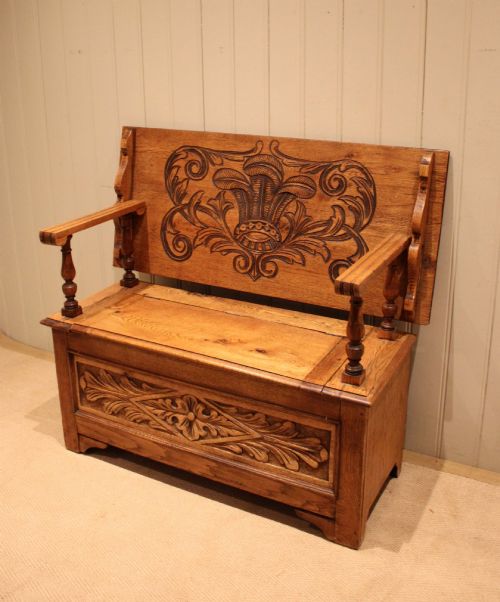


Antique Carved Coffer Chairs
These antique carved coffer chairs are solid timber hall seats with lift-up lids and fold-over tops, offering clever storage for any hallway.
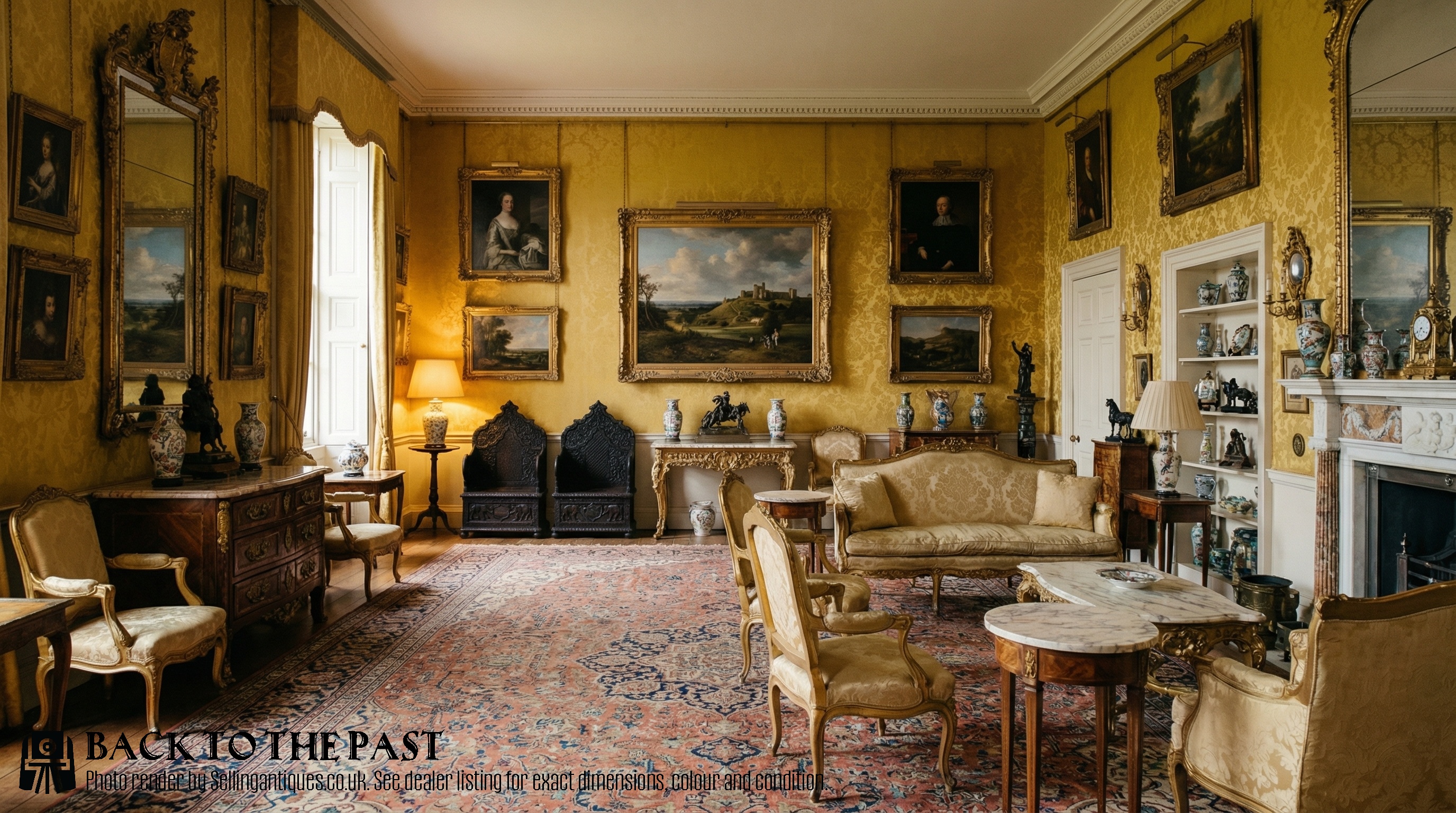
Antique Carved Coffer Chairs
When you search for antique carved coffer chairs, you encounter practical oak seating forms that double as storage boxes or transform into small tables. The pieces on this page span several eras, including the Victorian period, 1880, 1910, 1920, 1930, and the 18th and 19th centuries.
The primary forms appearing here include monks benches, hall benches, hall seats, benches, and armchairs. Oak and solid oak dominate the selection, alongside hardwood, walnut, teak, fruitwood, and mixed wood inlay.
Stylistic influences range from Jacobean Revival and English Country to Gothic Revival, Anglo-Indian, Italian Renaissance Revival, and Victorian and Gothic. The most common format met here is the oak monks bench featuring a fold-over top and lift-up seat compartment.
How they were made
Cabinet makers constructed these seats primarily from solid oak and other hardwoods, utilising thick panels for durability. Construction relied on traditional joinery methods suited to heavy daily use in entrance halls.
Carving was applied by hand to panels, backs, and arm supports, often drawing on Gothic or Renaissance revival motifs. Mixed wood inlay and secondary timbers such as fruitwood or walnut appear in specific regional examples.
Antique Carved Coffer Chairs Retail Price Guide 2026
Typical asking prices for carved coffer chairs among the pieces listed under this phrase on Sellingantiques today, from the lower quarter to the upper quarter. They describe what is for sale here now, not the wider market.
Some folding tabletops still retain faint ink marks from centuries of ledger writing in draughty historic hallways.
What varies in quality
The crispness and depth of the hand carving distinguish finer examples from simpler provincial work. Deeper, more intricate relief work on the panels and backrests signals a higher grade of craftsmanship.
The weight and selection of the timber also determine the standard of the piece, with dense solid oak providing superior heft compared to mixed wood alternatives. Original mechanisms for the fold-over tops and lift-up seats retain better integrity than later replacements.
The Antique Carved Coffer Chairs Glossary
- Cofer chair
- A hybrid seat combining a chest or coffer base with a chair back, often featuring a hinged lid for storage.
- Monks bench
- A multifunctional hall seat with a backrest that folds forward to create a small table top over the box base.
- Jacobean Revival
- A 19th and early 20th-century decorative style emulating 17th-century English furniture with geometric panelling and strapwork.
- Gothic Revival
- An architectural and furniture style utilising pointed arches, tracery, and heavy carved mouldings inspired by medieval design.
Antique Carved Coffer Chairs: Frequently Asked Questions
What is a monks bench?
A monks bench is a versatile hall seat that functions as both a chair and a small table. The backrest pivots downward to rest on the armrests, creating a flat surface.
Beneath the seat, a compartment provides hidden storage for gloves, blankets, or everyday items. This dual purpose made them popular in historical hallways and smaller rooms.
How do I date these chairs?
Dating relies on examining the timber, construction methods, and stylistic revival motifs present in the carving. Pieces from the 18th century display different patination and joinery compared to Victorian or 1920s revival items.
Comparing the panel construction and hardware against known historical periods helps establish the approximate age. Revival pieces often borrow heavily from Jacobean or Gothic design languages.
Where should I place one?
These seats suit entrance halls, boot rooms, or landings where their storage capacity is practically useful. Their compact footprint allows them to sit flat against a wall without obstructing narrow walkways.
The fold-over top also makes them adaptable as occasional display surfaces when not used for seating.
How do I care for the wood?
Maintain the timber by applying traditional beeswax periodically to nourish the surface and preserve the natural grain. Avoid placing the furniture near direct heat sources or in strong sunlight to prevent the solid oak from drying out.
Dust regularly with a soft, dry cloth to keep the carved recesses free from debris.