
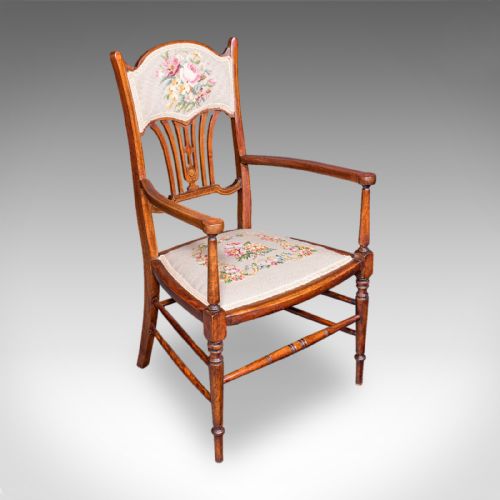
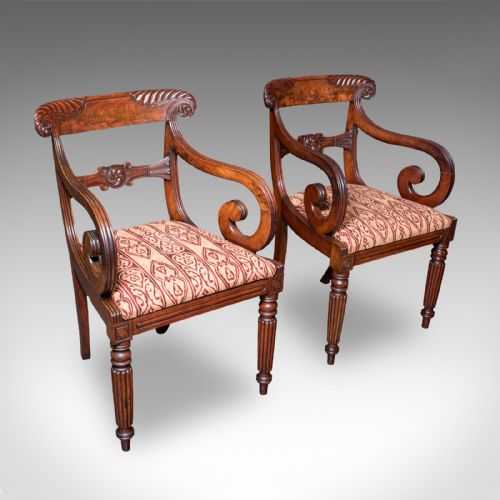
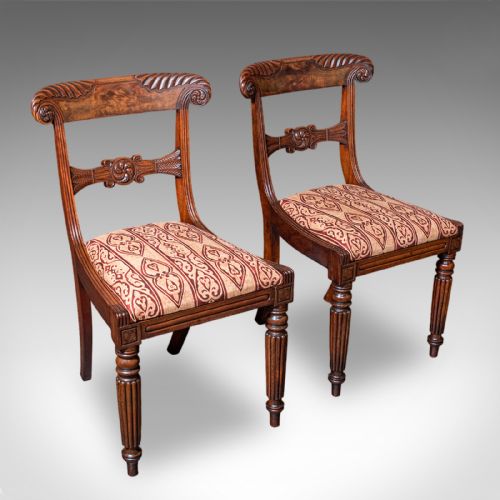
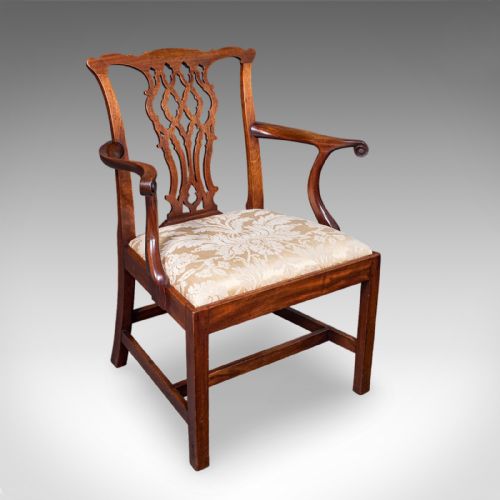


Antique Morning Room Chair
An antique morning room chair offers refined seating designed for early daylight hours, combining the comfort of an armchair with lighter proportions suitable for a parlour or sitting room.
Antique Morning Room Chair
An antique morning room chair is typically designed as an elbow chair, side chair, or wing back armchair intended for domestic reception spaces. These pieces date across Georgian, Regency, William IV, Victorian, and Edwardian periods, reflecting changing domestic fashions from the late eighteenth century onward. You will frequently encounter English examples alongside occasional French or Scottish pieces.
The forms span sturdy desk seats, reception seats, and lounging elbow chairs fashioned in various regional workshops. Styles range from classical Georgian and Regency lines to Gothic Revival and Art Nouveau expressions. Each piece adapts the seating requirements of its era to the private morning routine of the household.
Materials and construction
Timbers form the structural foundation of these chairs, with mahogany, walnut, beech, and oak shaping the frames. Cabinetmakers utilised dense hardwoods to construct durable legs, rails, and curved elbow supports that withstand daily use.
Upholstery materials soften the rigid timber frames, featuring fabrics such as velvet, velour, silk cotton, tapestry, and textile coverings. Skilled craftspeople secured these textiles over padded seats and backs to provide comfortable support.
Listings feature pieces spanning the Georgian, Regency, Victorian, and Edwardian periods, constructed primarily from mahogany, walnut, beech, and oak.
Distinguishing quality
Quality rests in the precision of the timber framing and the refinement of stylistic details such as carved arm supports or slender legs. Finer examples display harmonious proportions and careful selection of figured wood grains that enhance the visual appeal of the piece.
The standard of upholstery work and the selection of textile coverings also set superior examples apart from simpler utilitarian seating. Original or sympathetic restorations maintain the integrity of the maker's intended design without masking the underlying construction.
Shoolbred
The Antique Morning Room Chair Glossary
- Elbow chair
- A seating piece featuring supportive arms, distinct from a standard armless side chair. These seats were commonly placed around desks or occasional tables.
- Wing back
- An armchair featuring protective side panels attached to the backrest. This design originally shielded the sitter from draughts in cooler rooms.
- Side chair
- A light, armless chair intended for placement against a wall or around a table. They offer flexible seating arrangements within reception spaces.
- Gothic Revival
- A nineteenth-century design movement inspired by medieval architecture. Pieces in this style often incorporate pointed arches and heavy timber detailing.
- William IV
- A stylistic period spanning the 1830s characterised by robust classical forms and substantial proportions. Furniture from this era often shows strong Greek Revival influences.
Antique Morning Room Chair: Frequently Asked Questions
What is a morning room chair?
A morning room chair is a domestic seat designed for light daily activities such as reading, writing letters, or taking breakfast in private sitting spaces. They bridge the gap between heavy formal armchairs and lightweight reception seating.
These pieces usually feature supportive elbow rests or upholstered backs tailored for comfort during morning routines. Their versatile proportions allowed them to be moved easily between desks, windows, and firesides.
How do I date an antique morning room chair?
Dating relies on examining the timber species, structural joinery, and stylistic vocabulary characteristic of specific periods like the Georgian era or Victorian times. Regional building traits and secondary woods inside the frame also provide clear chronological clues.
Changes in upholstery techniques and decorative motifs further help narrow down the decade of manufacture. Comparing the silhouette to documented cabinetmaker patterns confirms the historical context.
Where should I place an antique morning room chair?
These chairs suit studies, bedrooms, and drawing rooms where their refined proportions complement existing seating arrangements. Placing one near a window or writing desk echoes their original domestic function.
Avoid positioning antique timber and fabric directly beside intense heat sources or strong direct sunlight. Providing stable indoor humidity preserves the structural integrity of both wood and textile.
Are these chairs comfortable for daily use?
Most antique morning room chairs offer surprisingly supportive seating thanks to their traditional webbed and sprung foundations. Their dimensions reflect historical standards of comfort rather than modern deep lounging.
Modern users find them well suited for reading or desk work rather than relaxed reclining. Regular gentle maintenance of the upholstery ensures the internal padding remains supportive.