


Red Upholstered Sofa
When you seek a red upholstered sofa, you are looking for a seating piece defined by period frames and rich textile coverings.
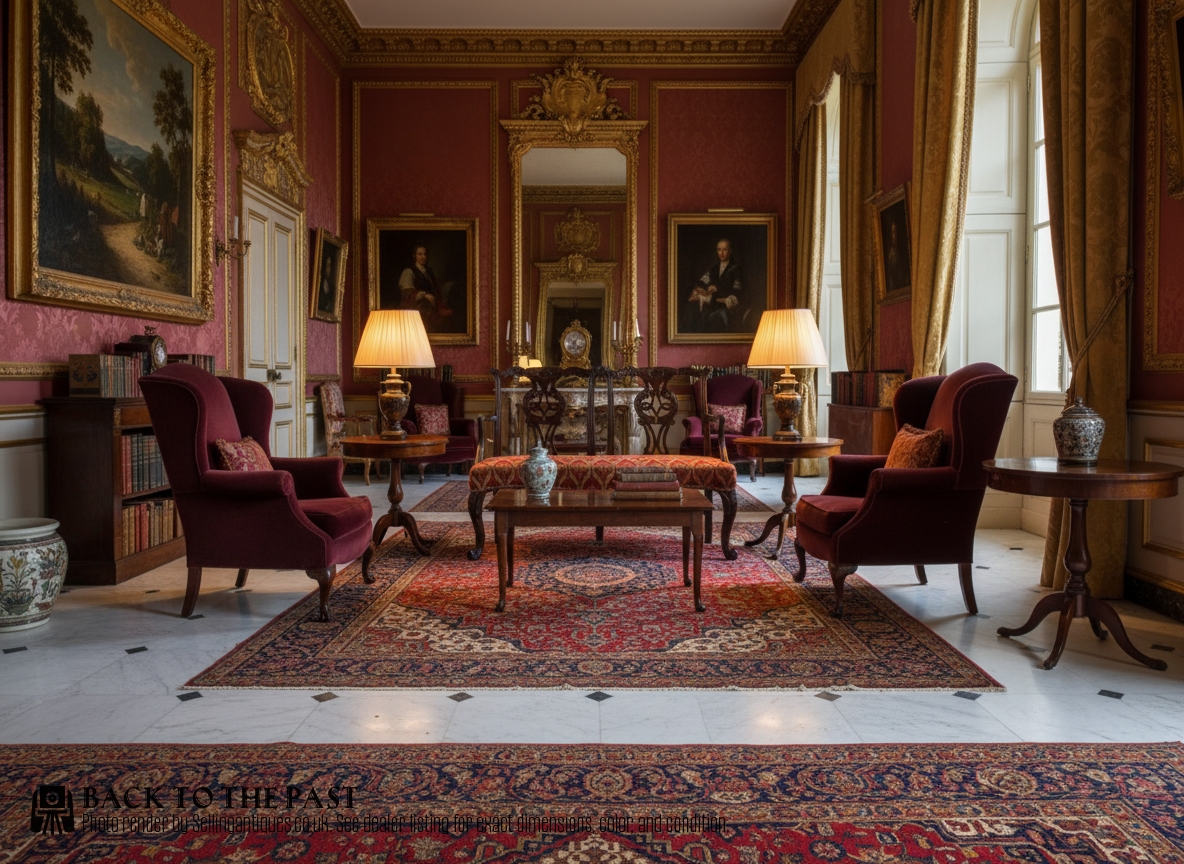
Red Upholstered Sofa
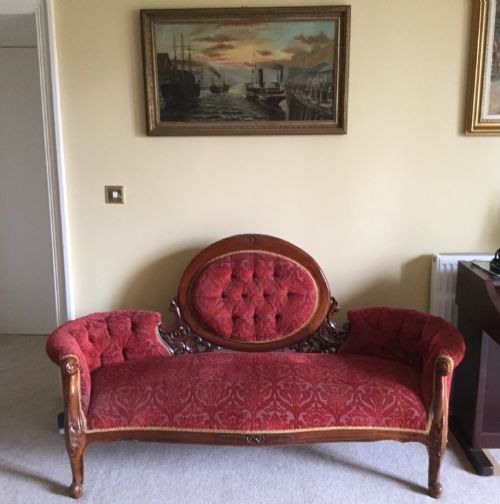
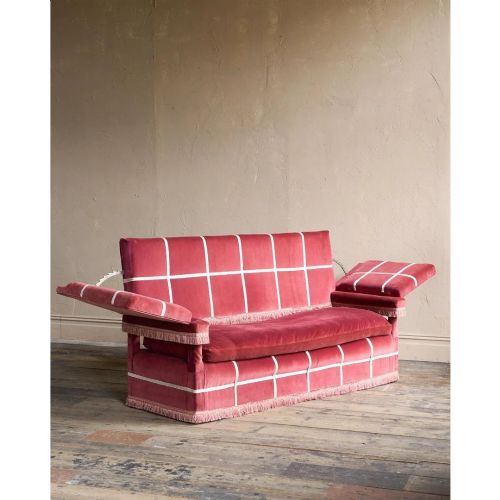
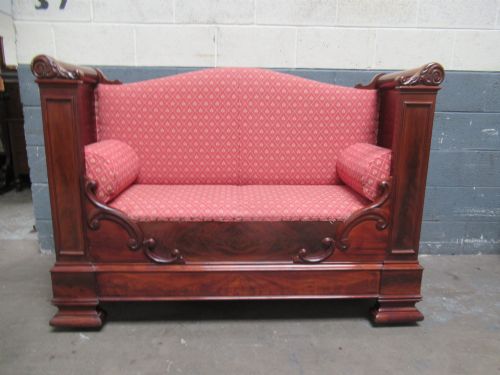
A red upholstered sofa spans centuries of design, appearing on this page in forms ranging from nineteenth-century Victorian Chesterfields and carved mahogany frames to Edwardian salon settees and nineteen-thirties low seating. Buyers search for these pieces to anchor a room with deep textile colour and traditional craftsmanship.
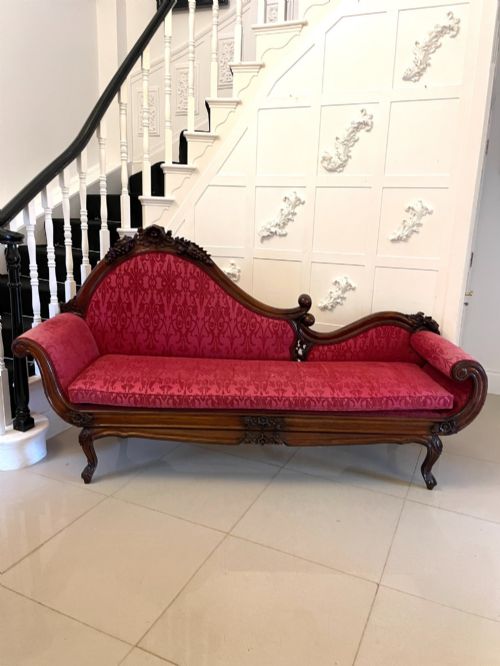
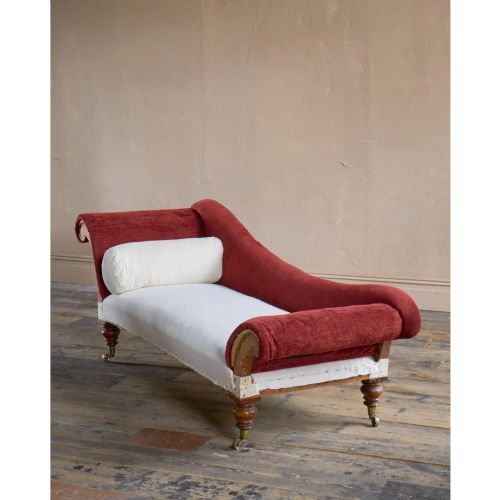
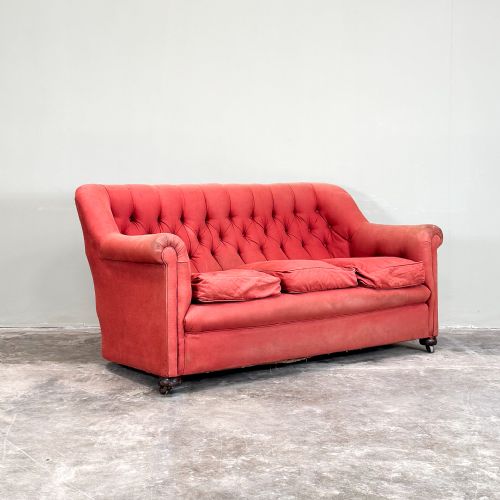
The most frequent examples encountered here include large country house settees, button-backed Victorian designs, and slender chaise longues. These pieces combine exposed timber structures with soft coverings, reflecting domestic spaces from the Regency period through to mid-century revivals.
How They Were Made
Frames rely on solid hardwoods like mahogany, walnut, and oak, shaped through carving, turning, or ebonising to provide structural integrity. These wooden skeletons support complex internal springing systems or webbed bases designed for sustained comfort.
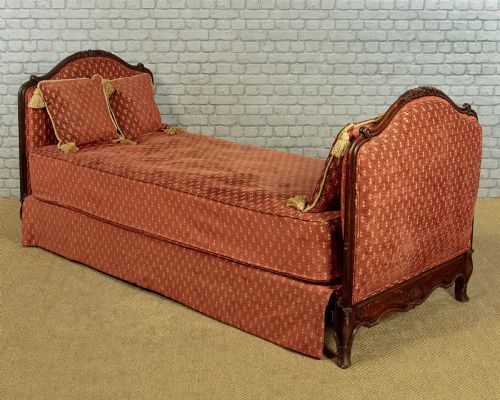
Textiles applied to the frames include velvet, damask, brocade, silk, and leather, often secured with brass detailing or tight buttoning. Artisans matched the scale of the upholstery to the architectural proportions of the sofa style.
Several sofas on record arrive dressed for the road in Alpha Romeo leather or sporting unexpected union flag textiles.
What Varies in Quality
Quality rests in the integrity of the underlying woodwork and the precision of the upholstery work. Pieces featuring deeply carved frames and substantial timber scantlings demonstrate superior origin compared to simpler structural counterparts.
The distinction between standard domestic output and high-end workshops shows in the execution of traditional joinery, the resilience of the sprung base, and the weight of the chosen textile covering.
Holland and Sons·Hampton and Sons·Jackson and Graham·C Hindley and Sons
The Red Upholstered Sofa Glossary
- Chesterfield
- A large upholstered sofa characterised by equal height arms and back, traditionally featuring deep button tufting. This form remains a staple of nineteenth-century seating design.
- Chaise Longue
- An elongated chair or daybed designed for reclining, featuring a partial backrest and single raised end. Examples in the evidence range from Regency giltwood to Victorian carved mahogany.
- Brocade
- A rich shuttle-woven fabric featuring raised patterns, often utilised in heavy textiles for period seating. It appears on nineteenth-century and early twentieth-century frames.
- Ebonised
- Wood treated with a dark finish to imitate ebony, commonly used on aesthetic movement and late Victorian frames. This technique creates a stark contrast against bright upholstery.
- Serpentine
- A gently undulating curved line shaping the front rail or back of a sofa. This contour adds fluidity to rigid timber frames.
Red Upholstered Sofa: Frequently Asked Questions
How do I identify a Victorian Chesterfield?
A Victorian Chesterfield is typically recognised by its deep buttoned upholstery and rolled arms that match the height of the backrest. These pieces often feature turned timber legs mounted on castors.
Evidence shows they appear in mahogany and walnut frames, frequently paired with heavy velvet or leather coverings suited for substantial reception rooms.
What defines a Regency period sofa?
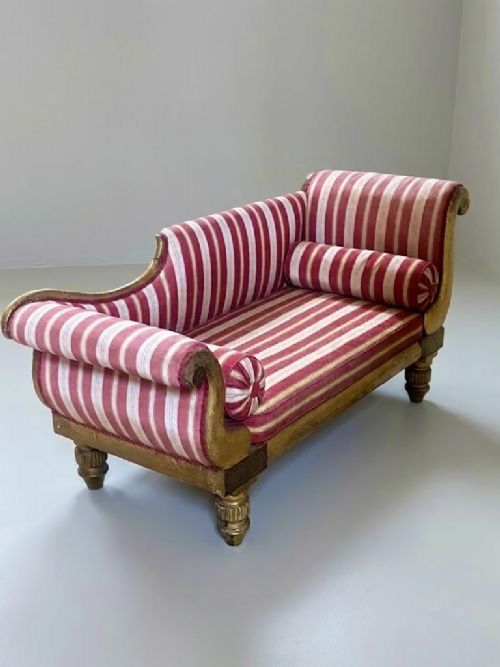
Regency sofas incorporate neoclassical motifs, scrolling arm supports, and exposed giltwood or dark mahogany frames. Their silhouettes draw inspiration from classical Greek and Roman furniture.
Listings indicate these forms frequently utilise striped silks or fine woven textiles to accentuate their architectural lines.
Where were chaise longues placed historically?
Chaise longues served as day seating in private boudoirs, dressing rooms, and formal drawing rooms. They were designed for resting without retiring fully to a bed.
In period homes, their elongated proportions allowed them to sit comfortably against long walls or in window bays.
How do Edwardian settees differ from Victorian ones?
Edwardian settees generally exhibit lighter frames, simpler lines, and less heavy carving than their Victorian predecessors. They often favour inlaid mahogany or satinwood in place of dense dark timber.
Upholstery in this era embraced lighter patterned fabrics, tapestries, and occasional wicker or cane inserts.