
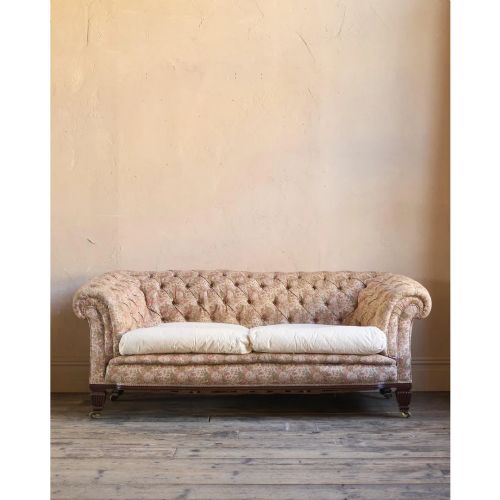
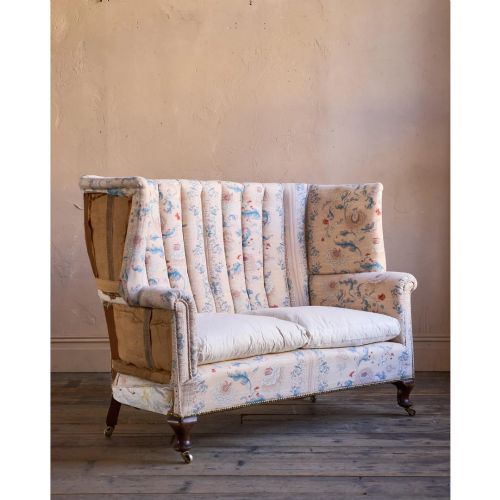
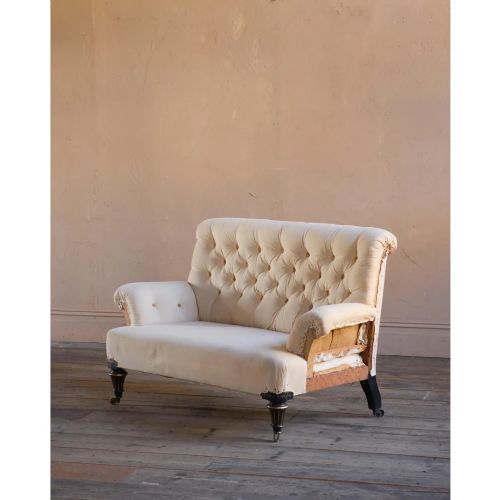
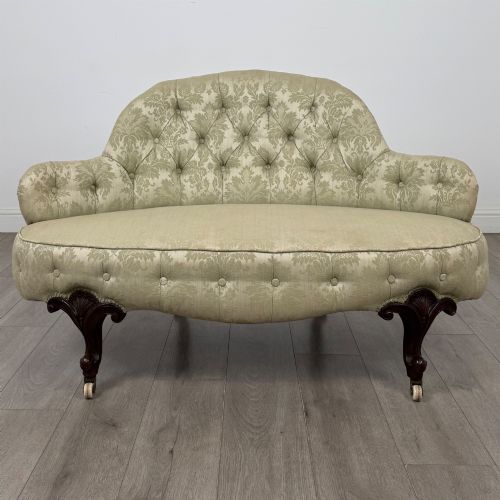
Victorian Tufted Settee
A victorian tufted settee brings deep buttoning and generous upholstery to a room, offering both traditional character and deep-seated comfort.

Victorian Tufted Settee
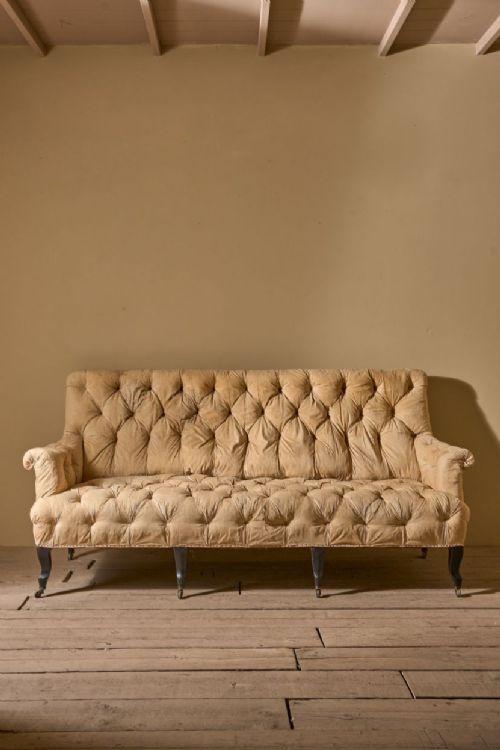
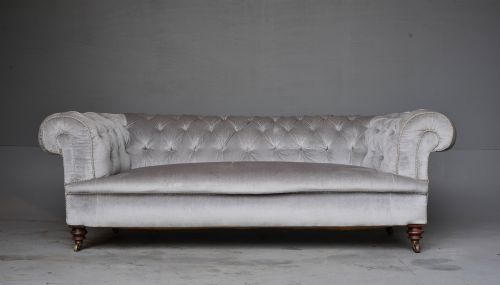
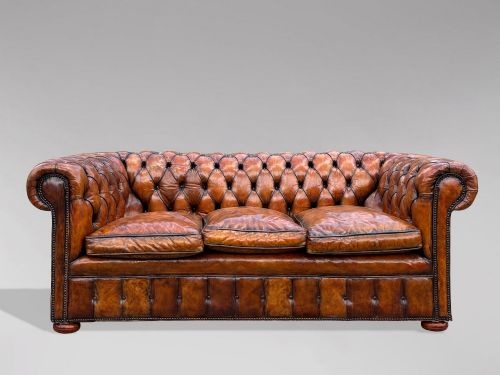
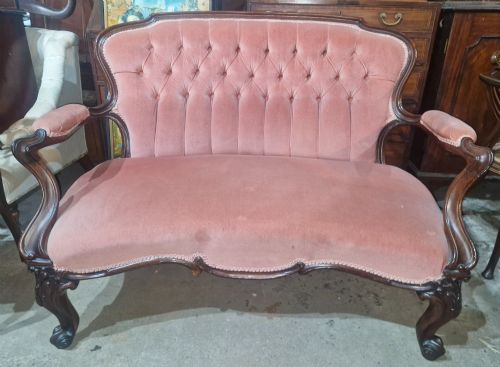
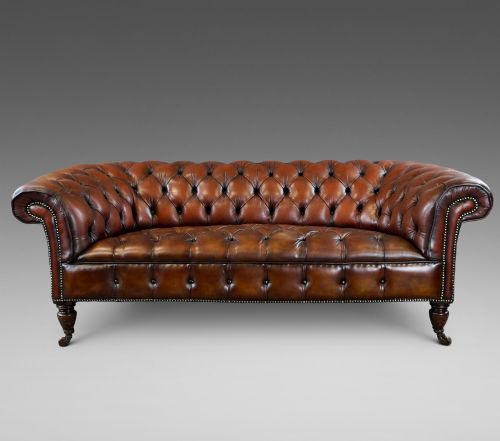
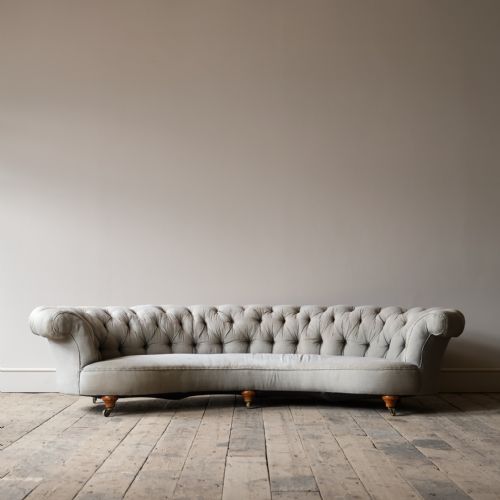
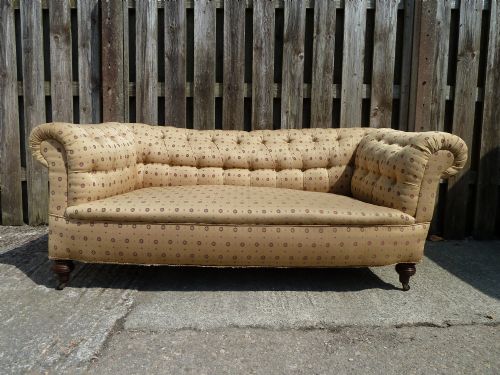
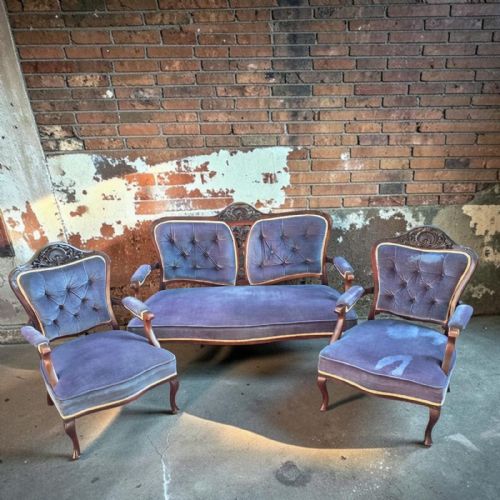
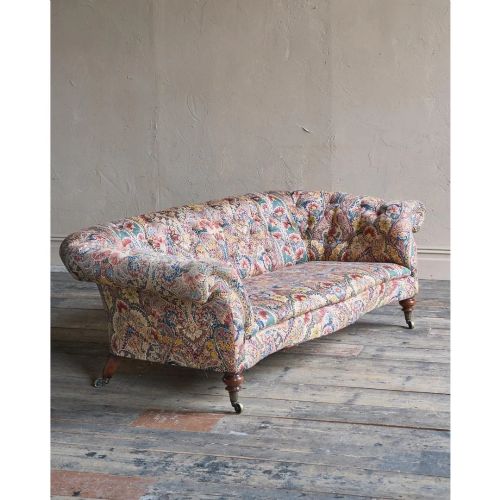
A victorian tufted settee encompasses a variety of heavily upholstered seating forms from the nineteenth century, including chesterfields, salon suites, and chaise longues. These pieces emerge predominantly from the Victorian and mid-nineteenth-century periods, alongside related examples from the Napoleon III and Edwardian eras.
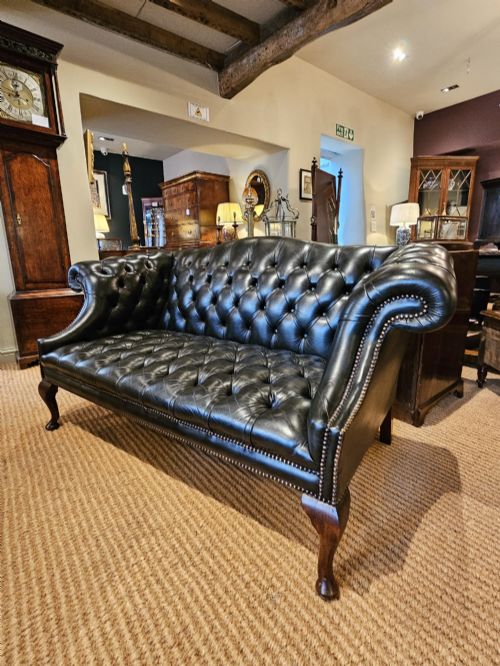
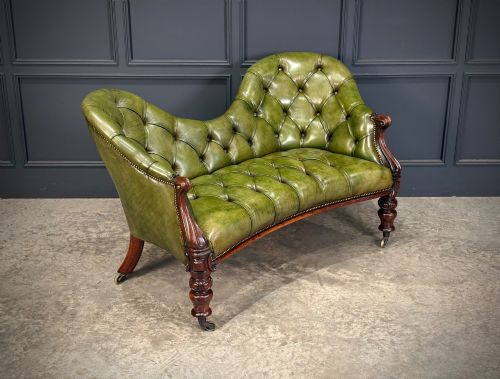
The most common formats on this page are deep-buttoned leather chesterfields and rosewood or walnut-framed settees. Makers and workshops constructed these for formal parlours and libraries, utilising rich wood frames and expansive buttoned upholstery.
Materials and construction
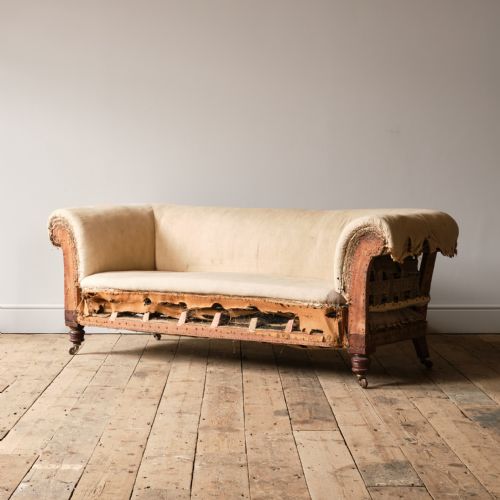
Makers built the structural frames of a victorian tufted settee using hardwoods such as mahogany, walnut, and rosewood, often featuring carved details. These timbers provided the rigid skeleton necessary to support heavy internal stuffing and complex frame shaping.
Upholstery relied on traditional stuffing materials covered in leather, velvet, or woven fabric, secured with deep buttoning and sometimes brass detailing. This technique required skilled hands to pull the tufts tight into a geometric pattern across the back and seat.
Victorian Tufted Settee Retail Price Guide 2026
Typical asking prices for victorian tufted settee among the pieces listed under this phrase on Sellingantiques today, from the lower quarter to the upper quarter. They describe what is for sale here now, not the wider market.
Listings feature woods including mahogany, walnut, and rosewood paired with leather, velvet, and fabric across the nineteenth century.
Judging quality in these settees
Quality rests in the integrity of the timber frame and the depth of the carving. Superior pieces display crisp hand-carving on rosewood or walnut and robust joinery that keeps the heavy frame rigid over decades of use.
The standard of the upholstery work also dictates the tier of the piece. Finely executed buttoning and high-grade leather or fabric distinguish a master workshop's output from simpler provincial seating.
Howard & Sons·Jackson and Graham·Holland & Sons·Hampton & Sons·H. Goodall & Sons
The Victorian Tufted Settee Glossary
- Chesterfield
- A large upholstered sofa characterised by arms and back of the same height, traditionally featuring deep button tufting. This form remains a staple of nineteenth-century seating.
- Chaise longue
- An upholstered couch shaped for reclining, combining a chair with a long seat. These often feature a single scroll end and an exposed wooden frame.
- Button-back
- An upholstery style where buttons are pulled deep into the padding to create a quilted, tufted pattern. This secures the internal stuffing while adding texture.
- Settee
- A long upholstered seat with a back and arms, designed to accommodate multiple people. The term overlaps closely with sofa in nineteenth-century inventories.
Victorian Tufted Settee: Frequently Asked Questions
How do I care for leather upholstery?
Keep leather conditioned with appropriate balms to prevent drying and cracking over time. Avoid placing the settee in direct sunlight or near heat sources.
Dust the buttoned crevices regularly with a soft brush to prevent grit accumulation in the tufts.
How do I distinguish walnut from mahogany frames?
Walnut typically displays a warmer, lighter brown tone with pronounced grain figuring and occasional dark streaks. Mahogany tends to be darker and denser with a reddish-brown hue.
Examining uncovered wood on the underside or legs usually reveals the true timber character.
Can I reupholster an antique settee?
Many pieces survive with their original upholstery worn, making professional reupholstery a common path for restoration. Choose materials and buttoning styles appropriate to the nineteenth-century period.
Retain as much of the internal webbing and traditional stuffing as possible to preserve the original sit.